


Introduction
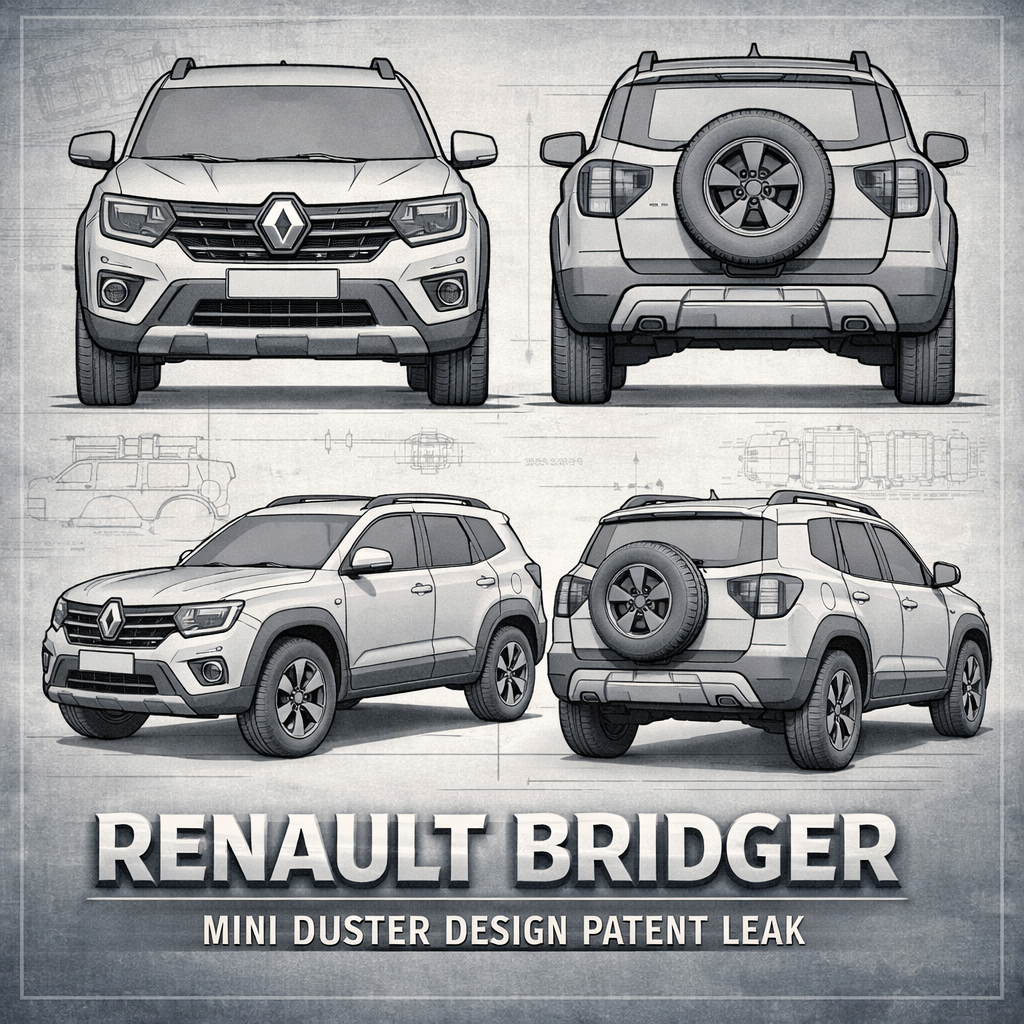
The upcoming Renault Bridger has surfaced in leaked patent images just ahead of its anticipated global reveal. The newly revealed drawings offer the clearest look yet at the compact SUV’s rugged styling and practical design. The vehicle appears to combine the muscular DNA of the Renault Duster with the compact proportions needed for modern urban markets.
Automotive enthusiasts quickly labeled the vehicle a “mini Duster” due to its boxy proportions and off-road-focused design cues. Early design insights suggest that Renault plans to introduce the Bridger as a lifestyle SUV that balances city usability with adventure-ready styling.
The leaked patent sketches reveal a bold new direction for the French automaker’s compact SUV strategy. If the production model stays close to these designs, the Bridger could emerge as one of the most distinctive small SUVs in its category.
Bold Exterior Styling Emphasizes Rugged Character
The patent drawings reveal a strong and purposeful design language. The Bridger features upright proportions, muscular fenders, and squared body panels that instantly signal toughness.
Unlike many compact crossovers that prioritize sleekness, Renault appears to focus on durability and adventure appeal.
Key design elements visible in the patent images include:
- Boxy body structure with upright stance
- Large wheel arches with protective cladding
- Chunky front and rear bumpers
- High ground clearance
- Roof rails designed for utility accessories
One of the most striking design choices is the tailgate-mounted spare wheel. This feature appears rarely in compact SUVs but commonly appears on dedicated off-road vehicles. The addition instantly strengthens the Bridger’s rugged identity.
The SUV also features short overhangs and a tall beltline. These details improve both the vehicle’s stance and its potential off-road capability.
Front Design Shows Renault’s Evolving Identity
The front fascia reflects Renault’s modern design philosophy. The grille appears bold and upright, while the lighting elements suggest a strong visual signature.
The headlamp units appear rectangular and sharply defined. These lamps likely house LED technology in the production version.
The front bumper includes sculpted air intakes and skid-plate styling. These elements not only enhance aesthetics but also reinforce the SUV’s off-road personality.
Compared with sleeker urban SUVs, the Bridger chooses a more traditional SUV appearance. The approach mirrors the success formula used by vehicles like the Suzuki Jimny and the Mahindra Thar, both known for rugged styling and strong market demand.
Rear Design Reinforces Off-Road Appeal
The rear section of the Bridger highlights its utilitarian nature. Patent images show a flat tailgate design combined with vertical tail lamps.
The spare wheel mounted on the tailgate remains the centerpiece of the rear styling. This design feature delivers both functional and visual benefits.
The rear bumper also appears robust and slightly raised. Such a layout may improve departure angles during off-road driving.
In comparison to urban crossovers that hide spare wheels under the floor, the Bridger celebrates its adventurous identity openly.
Compact Size With Big SUV Presence
Although the Bridger appears rugged, it will likely remain a compact SUV designed for urban environments.
Industry analysts believe the vehicle could sit in the sub-4-meter or compact SUV segment in several markets. This category remains one of the fastest-growing automotive segments worldwide.
Despite its compact dimensions, the Bridger’s squared design creates a larger visual footprint. The upright stance also improves cabin space and practicality.
This design philosophy resembles the approach used in the Renault Kiger, but the Bridger clearly targets a more adventurous audience.
Where the Kiger emphasizes urban styling and efficiency, the Bridger focuses on rugged capability and bold aesthetics.
Platform and Engineering Expectations
Reports suggest the Bridger may use the CMF-A+ platform, the same architecture that underpins the Renault Kiger and several other compact models.
This platform allows Renault to reduce production costs while maintaining modern safety and performance standards.
Expected engineering highlights include:
- Lightweight modular architecture
- Improved structural rigidity
- Efficient packaging for compact dimensions
The platform’s flexibility also enables multiple powertrain configurations, giving Renault room to adapt the vehicle for different markets.
Engine and Performance Possibilities
Although Renault has not officially confirmed engine details, industry sources expect the Bridger to offer efficient turbocharged petrol options.
The most likely candidate is the 1.0-liter turbocharged petrol engine currently used in the Renault Kiger.
Expected specifications may include:
- Around 100 horsepower
- Approximately 160 Nm of torque
- Manual and automatic transmission options
This engine balances performance and fuel efficiency. It suits both city driving and occasional highway travel.
More powerful variants could appear in the future depending on market demand.
Potential Off-Road Capability
The Bridger’s rugged design suggests Renault may introduce off-road-oriented features rarely seen in compact SUVs.
Possible features include:
- Increased ground clearance
- Off-road drive modes
- All-terrain tires in higher variants
Some reports even speculate about a four-wheel-drive option. If Renault introduces such capability, the Bridger could become one of the few compact SUVs with true off-road credentials.
This strategy would allow the Bridger to compete not only with mainstream crossovers but also lifestyle vehicles.
Strategic Role in Renault’s Global Plan
The Bridger could play a major role in Renault’s international expansion strategy.
The company plans to strengthen its presence in emerging markets where affordable SUVs dominate demand.
India may become a central production hub for the model. Manufacturing could take place at Renault-Nissan’s Chennai facility.
From there, the company could export the Bridger to regions including:
- Africa
- Latin America
- Southeast Asia
- Middle Eastern markets
Such a strategy aligns with Renault’s broader goal of developing globally competitive vehicles with strong cost advantages.
Market Competition and Segment Positioning
The Bridger will enter an intensely competitive SUV market. Buyers today expect style, technology, and affordability.
Potential rivals may include:
- Tata Nexon
- Hyundai Venue
- Kia Sonet
However, Renault appears to pursue a slightly different strategy.
Instead of focusing only on urban design, the Bridger emphasizes rugged styling and adventure-ready character.
This differentiation could help the SUV stand out in a crowded market.
Launch Timeline and Expected Price
While the patent leak has revealed the design, the production timeline remains uncertain.
Industry speculation suggests the Bridger could reach showrooms within the next few years after concept development and testing.
Pricing will likely target the mid-range compact SUV segment. Estimates suggest a starting price near ₹10 lakh, with higher variants potentially reaching ₹18–20 lakh depending on features and powertrains.
Such pricing would place the Bridger directly against popular compact SUVs while offering a more rugged identity.
Conclusion
The leaked patent images of the Renault Bridger reveal a bold new SUV that blends compact practicality with genuine off-road personality.
Its boxy design, spare-wheel tailgate, and strong proportions create a distinctive visual identity rarely seen in modern compact SUVs.
By combining affordability with adventure-focused styling, Renault appears ready to challenge traditional urban crossovers. The Bridger could attract buyers who want both city convenience and rugged character.
If the final production model retains the design seen in these patents, the Bridger may quickly become one of the most talked-about compact SUVs in the global market.