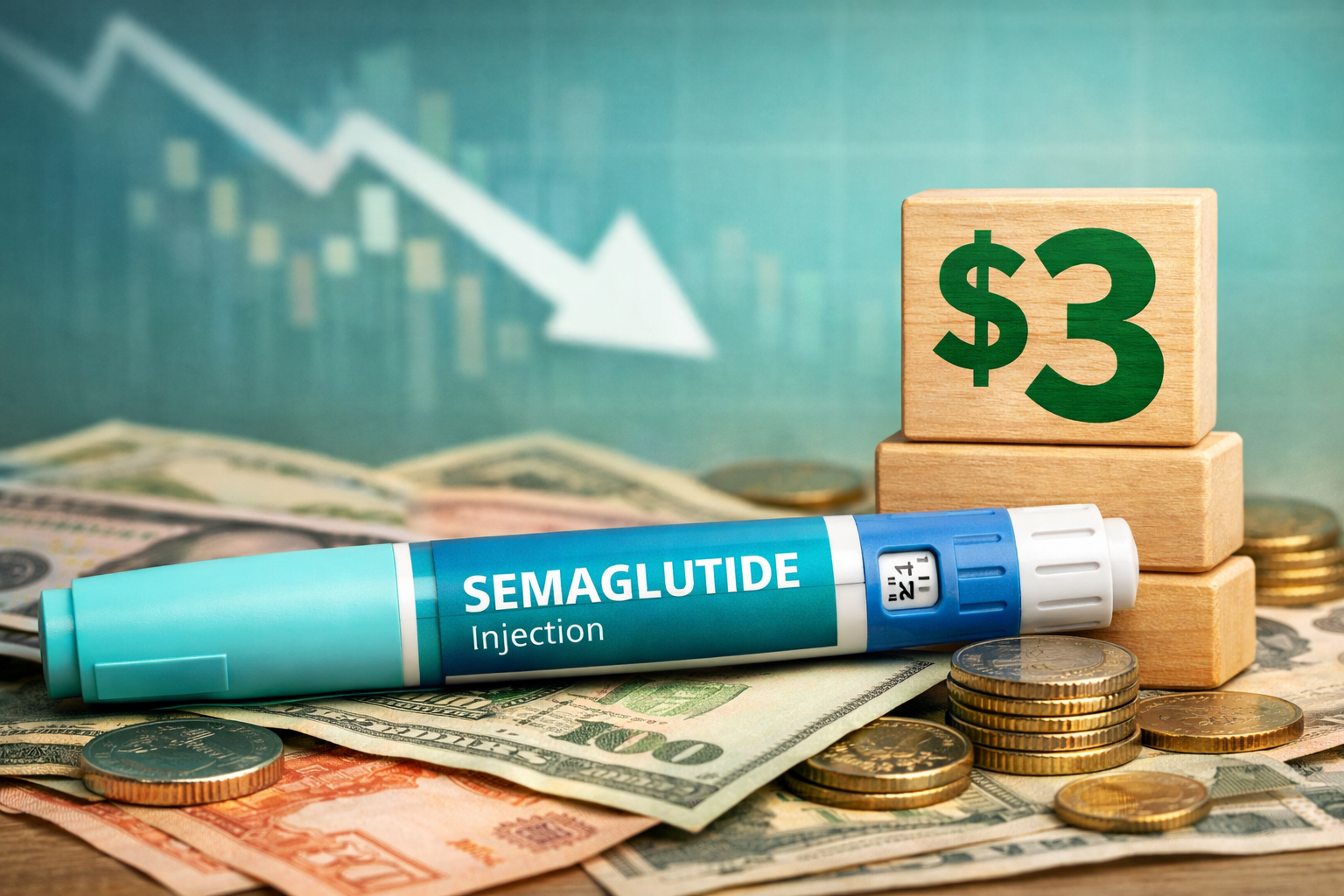
A new global analysis has sparked debate across the pharmaceutical industry. Researchers say the blockbuster weight-loss drug semaglutide—the active ingredient behind popular treatments for obesity and diabetes—could cost as little as $3 per month to manufacture once patent protections expire.
The finding highlights the dramatic gap between current market prices and estimated production costs. Today, patients in many countries pay hundreds of dollars every month for these medicines. But as patent barriers begin to fall in several regions, experts believe generic manufacturers could soon reshape the market.
The development could transform treatment access for millions of people struggling with obesity and type-2 diabetes worldwide.
The Blockbuster Drug Behind the Debate
Semaglutide belongs to a class of medicines known as GLP-1 receptor agonists. These drugs mimic a natural hormone that regulates blood sugar levels and appetite.
Doctors prescribe semaglutide for two major purposes:
- Type-2 diabetes management
- Medical weight loss
Two well-known brands dominate the global market today:
- Ozempic – primarily used to treat diabetes
- Wegovy – approved for chronic weight management
Both drugs have generated enormous demand. Social media hype, celebrity endorsements, and clinical success have turned them into some of the most talked-about medicines in recent years.
However, their price remains a major barrier.
In the United States and several other markets, monthly treatment costs can exceed $200 to $1,000, depending on insurance coverage and dosage.
This makes semaglutide inaccessible to many patients—especially in developing countries.
Researchers Reveal Stunning Manufacturing Cost
A group of public health researchers recently analyzed the chemical composition, raw materials, and production processes used to manufacture semaglutide.
Their conclusion surprised many industry observers.
According to the study, large-scale generic production could reduce the manufacturing cost to around $3 per month per patient.
Even after adding distribution costs, regulatory expenses, and modest profit margins, the final retail price could remain dramatically lower than current branded versions.
Researchers estimate:
- Injectable semaglutide could cost roughly $3 to $5 per month to produce.
- Oral semaglutide pills may cost around $16 per month due to additional formulation complexity.
The numbers highlight one of the biggest price gaps in modern medicine.
Patent Protection Keeps Prices High
The main reason behind the high cost today is patent protection.
Pharmaceutical companies invest billions of dollars in drug discovery, clinical trials, and regulatory approvals. Patent laws grant them temporary market exclusivity so they can recover those investments.
During the patent period, competitors cannot legally manufacture or sell the same drug.
This allows companies to set higher prices.
However, once patents expire, generic manufacturers can enter the market. Competition typically drives prices down dramatically.
History shows that many medicines become 80–95% cheaper after generic versions appear.
Semaglutide may soon follow the same path.
Patent Expirations Are Approaching
Patent timelines differ across countries. Some nations granted earlier patents, while others issued weaker protection or none at all.
According to researchers, semaglutide patents are already nearing expiration in several markets, including:
- India
- Brazil
- China
- South Africa
- Mexico
- Turkey
- Canada
In some jurisdictions, key patents are expected to expire around 2026.
Once these protections end, generic pharmaceutical companies could begin producing cheaper alternatives.
India, known as the “pharmacy of the world,” may play a major role in this transition.
Indian manufacturers already dominate the global market for affordable generic medicines.
Many Countries Never Had Patents
The study also found something even more striking.
Semaglutide was never patented in many parts of the world.
Researchers identified roughly 150 countries where the drug has no active patent protection.
This means generic versions could theoretically be manufactured and sold in those regions immediately—assuming regulatory approvals are obtained.
These countries include many lower- and middle-income economies where obesity and diabetes are rising rapidly.
In fact, the analysis shows that nations without semaglutide patents contain:
- Nearly 70% of people living with type-2 diabetes worldwide
- More than 80% of individuals affected by clinical obesity
Affordable generics could therefore reach a huge population that currently lacks access to these treatments.
Global Health Impact Could Be Massive
Obesity and diabetes represent two of the most serious public health challenges today.
According to international health data:
- More than 1 billion people worldwide live with obesity.
- Hundreds of millions suffer from type-2 diabetes.
- Obesity contributes to millions of deaths every year through heart disease, stroke, and metabolic disorders.
Modern weight-loss medicines like semaglutide have shown remarkable clinical results.
Patients using the drug often lose 10–15% of their body weight, a level previously achievable mainly through surgery.
For people with diabetes, the medicine also improves blood sugar control and reduces complications.
However, high prices have limited global adoption.
Cheap generics could dramatically expand treatment access.
The Coming Wave of Generic Competition
Industry analysts expect intense competition once patents expire.
Several pharmaceutical companies are already preparing to enter the GLP-1 drug market with alternative or generic products.
Generic manufacturers could replicate semaglutide using established peptide synthesis techniques. Large-scale production facilities already exist in countries such as India and China.
Competition would likely push prices downward rapidly.
Experts say the transformation could mirror the dramatic price drops seen with HIV and hepatitis medicines over the past two decades.
In those cases, generic manufacturing reduced treatment costs by more than 90%, enabling large-scale public health programs in developing countries.
Semaglutide could follow a similar trajectory.
Pharmaceutical Companies Still Hold Key Advantages
Despite the potential for generics, original drug developers still retain several advantages.
They control:
- Brand recognition
- Advanced formulations
- Improved delivery systems
- Next-generation drug versions
Pharmaceutical giants are already developing newer GLP-1 drugs with even stronger weight-loss effects.
Some experimental medicines promise 20–25% body-weight reduction, far exceeding earlier treatments.
These innovations could maintain premium pricing for cutting-edge therapies, even if older versions become cheap generics.
A Turning Point for Obesity Treatment
Experts say the potential price collapse marks a critical turning point.
For decades, effective obesity medicines remained rare and expensive. Many treatments delivered limited results or carried serious side effects.
Semaglutide changed that narrative.
Now, the next phase may focus on accessibility rather than discovery.
If generic manufacturers enter the market and prices fall to a few dollars per month, millions more patients could benefit from these therapies.
Governments, insurers, and public health systems may also integrate them into large-scale treatment programs.
The Bigger Lesson About Drug Pricing
The semaglutide case highlights a broader truth about pharmaceutical economics.
Drug prices often reflect patent protection and market exclusivity rather than pure manufacturing costs.
Once those protections expire, the market can shift rapidly.
For semaglutide, the difference is stark: a drug that sells for hundreds of dollars per month today could theoretically cost less than the price of a cup of coffee to produce.
If that transition occurs, the global fight against obesity and diabetes may enter a new era—one defined by affordability, competition, and wider access to life-changing medicines.