
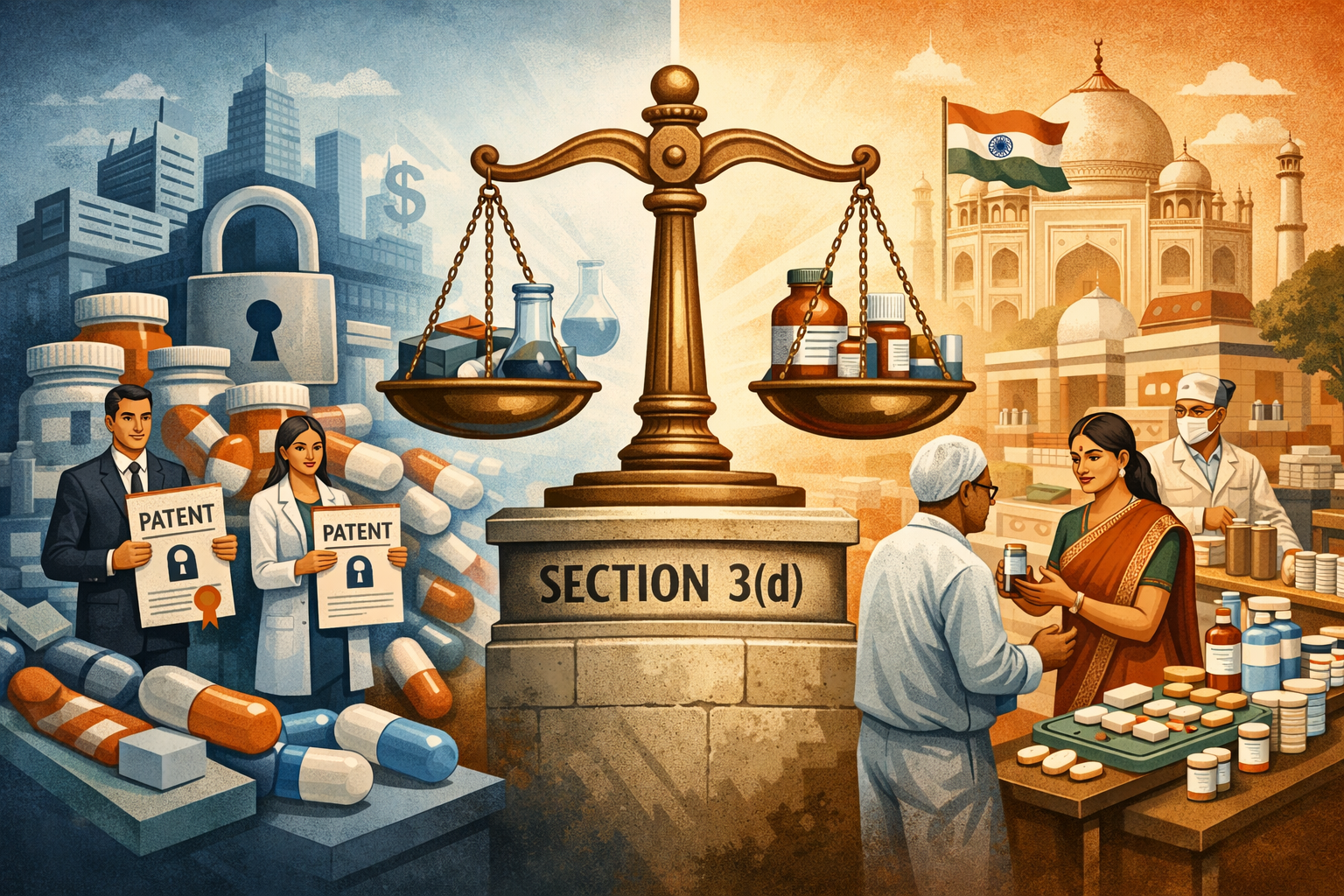
India’s pharmaceutical patent regime is heading toward a decisive moment. Several high-value drug patents are set to expire in 2026. At the same time, multinational pharmaceutical companies are attempting to extend exclusivity through secondary patents. This growing conflict is expected to test India’s strict anti-evergreening framework and reshape the country’s drug patent landscape.
Legal experts believe the coming year could trigger a wave of litigation between global drug innovators and India’s powerful generic drug manufacturers. Courts will need to determine whether new patent claims represent genuine innovation or strategic attempts to prolong monopoly rights.
The outcome could influence drug prices, access to medicines, and the future of pharmaceutical innovation in one of the world’s largest generic medicine markets.
Patent Expiries Set the Stage for a Legal Showdown
Several blockbuster medicines are approaching the end of their primary patent terms in India. Among them is semaglutide, a widely used treatment for diabetes and obesity developed by Novo Nordisk.
The drug powers globally popular brands such as Ozempic, Wegovy, and Rybelsus.
The core patent covering semaglutide is expected to expire in India in March 2026. Once that protection ends, generic manufacturers could begin producing lower-cost versions.
Indian pharmaceutical companies are preparing to enter the market. One of the most prominent players is Dr. Reddy’s Laboratories, which has already engaged in legal proceedings related to the drug.
If generic production begins after patent expiry, prices could drop dramatically. That shift would benefit millions of patients but also threaten billions of dollars in revenue for the original developer.
Understanding Patent Evergreening
The heart of the dispute lies in a controversial strategy known as patent evergreening.
Evergreening occurs when pharmaceutical companies file additional patents for small modifications to an existing drug. These modifications may include:
- new dosage forms
- improved delivery mechanisms
- different chemical salts or crystalline forms
- modified formulations
While these changes can offer minor technical improvements, critics argue that they rarely provide significant therapeutic benefits.
However, when granted, such patents can extend market exclusivity for years beyond the original 20-year protection period.
In highly competitive pharmaceutical markets, even a short extension can generate billions in additional revenue.
India’s Strong Legal Barrier: Section 3(d)
India stands apart from many other countries because of a powerful legal safeguard against evergreening.
Section 3(d) of the Indian Patents Act restricts patents on new forms of known substances unless they demonstrate significantly enhanced therapeutic efficacy.
This provision was introduced to prevent companies from obtaining patents for trivial modifications. Lawmakers designed the rule to ensure that only meaningful innovations receive patent protection.
The clause gained global attention during a landmark legal battle involving Swiss pharmaceutical giant Novartis. In that case, the Indian Supreme Court rejected a patent application for a modified version of the cancer drug Glivec, citing Section 3(d).
That decision cemented India’s reputation as a country that prioritizes access to affordable medicines.
Courts Increasingly Balance Innovation and Access
Recent court rulings suggest that Indian judges are continuing to apply a strict interpretation of patent law.
One prominent case involved the spinal muscular atrophy drug Risdiplam developed by Roche.
The medication was originally priced at several lakh rupees per bottle, making it unaffordable for many patients in India.
Domestic manufacturer Natco Pharma launched a much cheaper version after legal proceedings allowed its entry into the market.
The price difference was dramatic. The generic product cost a small fraction of the original drug’s price.
Courts ultimately declined to block the generic version, emphasizing public interest and patient access.
Another important case involved the cancer immunotherapy drug Nivolumab, marketed globally by Bristol Myers Squibb.
Indian drugmaker Zydus Lifesciences developed a biosimilar version and introduced it at a significantly lower cost.
The move highlighted the growing confidence of Indian companies in challenging patent barriers.
Generic Industry Sees Massive Opportunity
India’s pharmaceutical sector is one of the largest producers of generic medicines in the world.
Companies across the industry are closely watching the upcoming patent expiries. If courts continue to enforce strict standards against evergreening, generic manufacturers could gain access to several high-value markets.
The potential rewards are enormous.
Drugs for diabetes, cancer, autoimmune diseases, and rare conditions often generate billions of dollars annually. Once generic competition begins, prices can fall sharply.
India’s domestic manufacturers are known for producing affordable medicines at scale. This capability allows them to serve not only the Indian market but also countries across Africa, Asia, and Latin America.
For many developing nations, Indian generics provide the most affordable treatment options.
Global Pharma Faces Strategic Pressure
The evolving legal landscape in India is forcing multinational pharmaceutical companies to rethink their patent strategies.
Many global drug makers rely on layered patent portfolios to protect their products. These portfolios include dozens of patents covering manufacturing processes, formulations, and delivery systems.
In jurisdictions that allow broader patent protection, such strategies can extend exclusivity well beyond the initial patent term.
India’s stricter rules limit that approach.
As a result, some multinational companies argue that the country’s patent regime discourages incremental innovation. They claim that improvements to existing medicines deserve protection because they can enhance safety, stability, or patient compliance.
However, public health advocates strongly disagree.
They argue that evergreening artificially inflates drug prices and delays the entry of affordable alternatives.
Public Health vs Innovation Debate Intensifies
The debate over patent evergreening reflects a deeper global tension between innovation and accessibility.
Supporters of strict patent protections say that pharmaceutical research is expensive and risky. Companies invest billions of dollars in developing new medicines, and strong patent rights help recover those costs.
Without adequate protection, they warn, innovation could slow.
On the other side, health policy experts argue that life-saving medicines should not remain unaffordable due to legal loopholes.
India’s approach attempts to strike a balance.
The country grants patents for genuine innovations while rejecting minor modifications that do not significantly improve therapeutic outcomes.
This model has helped build one of the world’s strongest generic drug industries.
Why 2026 Could Be a Turning Point
The next year could prove pivotal for India’s pharmaceutical patent framework.
Several major drug patents are set to expire around the same time. Generic manufacturers are preparing for market entry. Meanwhile, originator companies are filing additional patent claims in an effort to protect their products.
This convergence is likely to generate complex legal battles.
Courts will need to decide whether new patent applications meet India’s strict standards for innovation.
Their decisions will not only shape the future of individual drugs but also define how aggressively companies can pursue secondary patents.
If courts continue to reject weak patent claims, India could reinforce its position as a global leader in affordable medicines.
The Global Impact of India’s Patent Policy
India’s decisions often influence pharmaceutical markets worldwide.
The country supplies a significant share of generic medicines used in developing countries. Its patent policies therefore affect the availability and affordability of treatments across the globe.
International organizations and governments closely monitor Indian court rulings. Some nations are considering adopting similar legal provisions to prevent evergreening.
At the same time, global pharmaceutical companies are carefully adjusting their strategies for the Indian market.
The stakes are high for both sides.
A Critical Moment for the Drug Patent System
India’s battle against patent evergreening is entering a critical phase.
As blockbuster drugs approach patent expiry and new patent claims emerge, courts will face difficult choices.
Their rulings will determine whether follow-on patents represent genuine innovation or strategic attempts to extend monopoly power.
The decisions could reshape the pharmaceutical landscape in India and beyond.
For patients, the outcome may determine how quickly affordable versions of life-saving medicines become available.
For drug makers, it will define the limits of patent protection in one of the world’s most important pharmaceutical markets.