
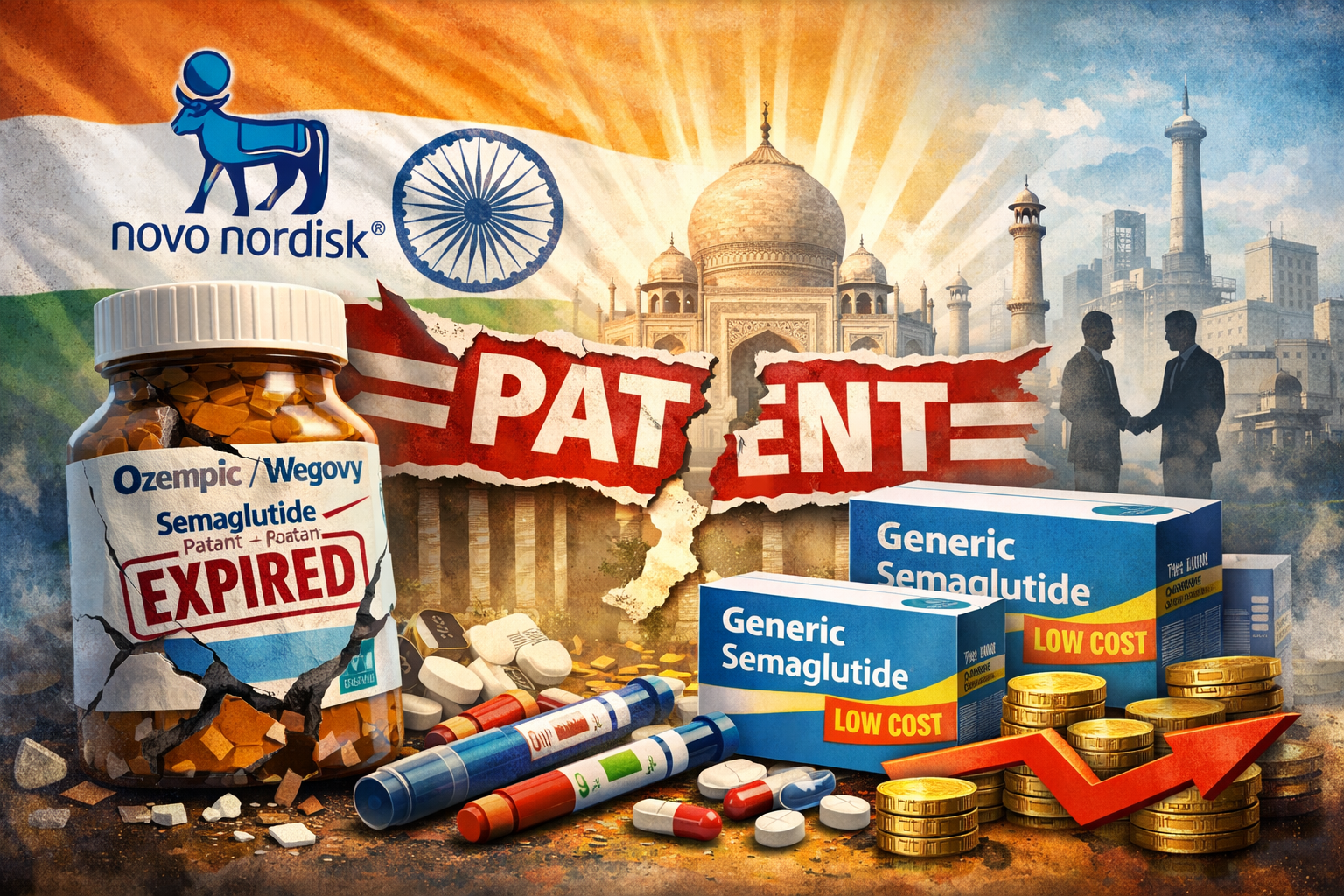
A major shift is unfolding in India’s pharmaceutical landscape. Danish drugmaker Novo Nordisk is set to lose its exclusive hold over semaglutide, the active ingredient behind its blockbuster therapies Ozempic and Wegovy. As the patent expires in March 2026, India is preparing for a wave of low-cost generic alternatives that could transform access to treatment for millions.
This development marks a decisive break from high-priced monopolies. It also sets the stage for intense competition in one of the world’s fastest-growing drug markets.
Patent Expiry: A Legal Shift With Market Shockwaves
The expiration of the semaglutide patent removes Novo Nordisk’s exclusive rights in India. The company can no longer block competitors from manufacturing or selling the drug.
This is not a courtroom defeat. It is a scheduled patent expiry. Yet the impact feels just as dramatic. Indian pharmaceutical firms can now legally produce and distribute generic versions without fear of infringement.
India’s patent framework plays a key role here. The country has long resisted “evergreening,” a practice where companies extend patent life through minor modifications. This legal stance ensures that once a patent expires, competition begins quickly and aggressively.
Before vs After: A Market Redefined
Before Patent Expiry
- Single dominant player: Novo Nordisk
- High monthly treatment costs
- Limited access for middle- and low-income patients
- Slow adoption despite high demand
After Patent Expiry
- Dozens of generic manufacturers entering the market
- Sharp price reductions expected
- Wider access across income groups
- Rapid expansion in demand and prescriptions
This contrast highlights the scale of disruption. The shift is not incremental. It is structural.
Generic Drugmakers Move Fast
India’s leading pharmaceutical companies are ready to act. Firms such as Sun Pharma, Dr. Reddy’s Laboratories, and Cipla are expected to launch generic semaglutide products soon after the patent expiry.
Industry estimates suggest that more than 50 generic versions could hit the market within months. This rapid rollout reflects India’s strength as a global hub for affordable medicines.
These companies bring scale, distribution networks, and pricing power. They also understand the domestic market better than global players.
Price War Incoming
The biggest immediate impact will be on pricing.
Currently, semaglutide-based therapies can cost between ₹8,000 and ₹11,000 per month in India. That price keeps the drug out of reach for a large segment of patients.
With generics entering the market, prices could drop by 30% to 50%, or even more over time.
This decline will not happen quietly. It will be driven by intense competition. Companies will fight for market share through aggressive pricing, wider distribution, and targeted doctor engagement.
The result: a full-scale price war in the GLP-1 drug segment.
Rising Competition: Novo Nordisk vs Rivals
Novo Nordisk will not only face Indian generics. It must also compete with global rival Eli Lilly, which is expanding its presence in the obesity and diabetes segment.
This creates a two-layered battle:
- Domestic front: Indian generics undercut prices
- Global front: Multinational firms compete on innovation and branding
Novo Nordisk still holds an advantage in brand recognition and clinical trust. However, price sensitivity in India may erode that edge quickly.
India: The Perfect Storm for Disruption
India offers a unique environment that accelerates the impact of patent expiry:
- A massive population with rising diabetes and obesity rates
- Strong domestic pharmaceutical manufacturing
- Cost-conscious consumers
- A regulatory system that promotes timely generic entry
This combination ensures that the benefits of patent expiry reach patients faster than in many other countries.
India is not just another market. It is a testing ground for how global drug pricing models hold up under pressure.
Demand Surge on the Horizon
As prices fall, demand is expected to surge.
Doctors who previously hesitated to prescribe semaglutide due to cost constraints may now recommend it more freely. Clinics and telehealth platforms are already preparing for increased patient interest.
Weight-loss treatments, once seen as premium lifestyle drugs, could become mainstream therapies.
This shift may also change public health outcomes. Better access to effective treatments could help reduce complications linked to diabetes and obesity.
Regulatory Oversight Tightens
Even as access improves, regulators are stepping in to maintain control.
Indian authorities have warned pharmaceutical companies against aggressive advertising of weight-loss drugs. The government aims to prevent misleading claims and ensure responsible use.
This move reflects a broader concern. As powerful drugs become widely available, misuse and over-promotion could create new risks.
The challenge lies in balancing accessibility with safety.
Strategic Implications for Novo Nordisk
For Novo Nordisk, India’s patent expiry presents both a challenge and an opportunity.
Challenges
- Loss of pricing power
- Erosion of market share
- Increased competition from generics and rivals
Opportunities
- Expand volume through lower pricing strategies
- Strengthen brand loyalty among doctors and patients
- Introduce next-generation therapies
The company may also shift focus toward innovation. New drug formulations and combination therapies could help it maintain a competitive edge.
Global Ripple Effects
What happens in India rarely stays in India.
The country often acts as a benchmark for affordable drug pricing. If semaglutide becomes widely accessible at lower costs here, pressure may build in other markets to follow suit.
This could influence global pricing strategies, especially in emerging economies.
Pharmaceutical companies worldwide will watch closely. The outcome in India could reshape how they approach patent lifecycles and market entry.
A Defining Moment for Healthcare Access
The expiry of semaglutide’s patent in India is more than a legal milestone. It is a turning point in healthcare access.
Millions of patients who once viewed these treatments as unaffordable may soon have options. Doctors will gain flexibility. Competition will drive innovation and efficiency.
At the same time, companies will face a new reality. Market dominance based on patents is temporary. Long-term success depends on adaptability, pricing strategy, and continuous innovation.
Conclusion
India is entering a new phase in its pharmaceutical journey. The fall of Novo Nordisk’s semaglutide monopoly signals the rise of a more competitive, accessible, and dynamic market.
The contrast is stark. What was once a high-cost, limited-access therapy is becoming a mass-market solution.
As generics flood the market and prices drop, one outcome is clear: the balance of power is shifting—from exclusivity to accessibility, from monopoly to competition.