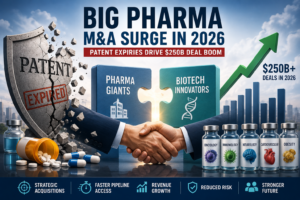
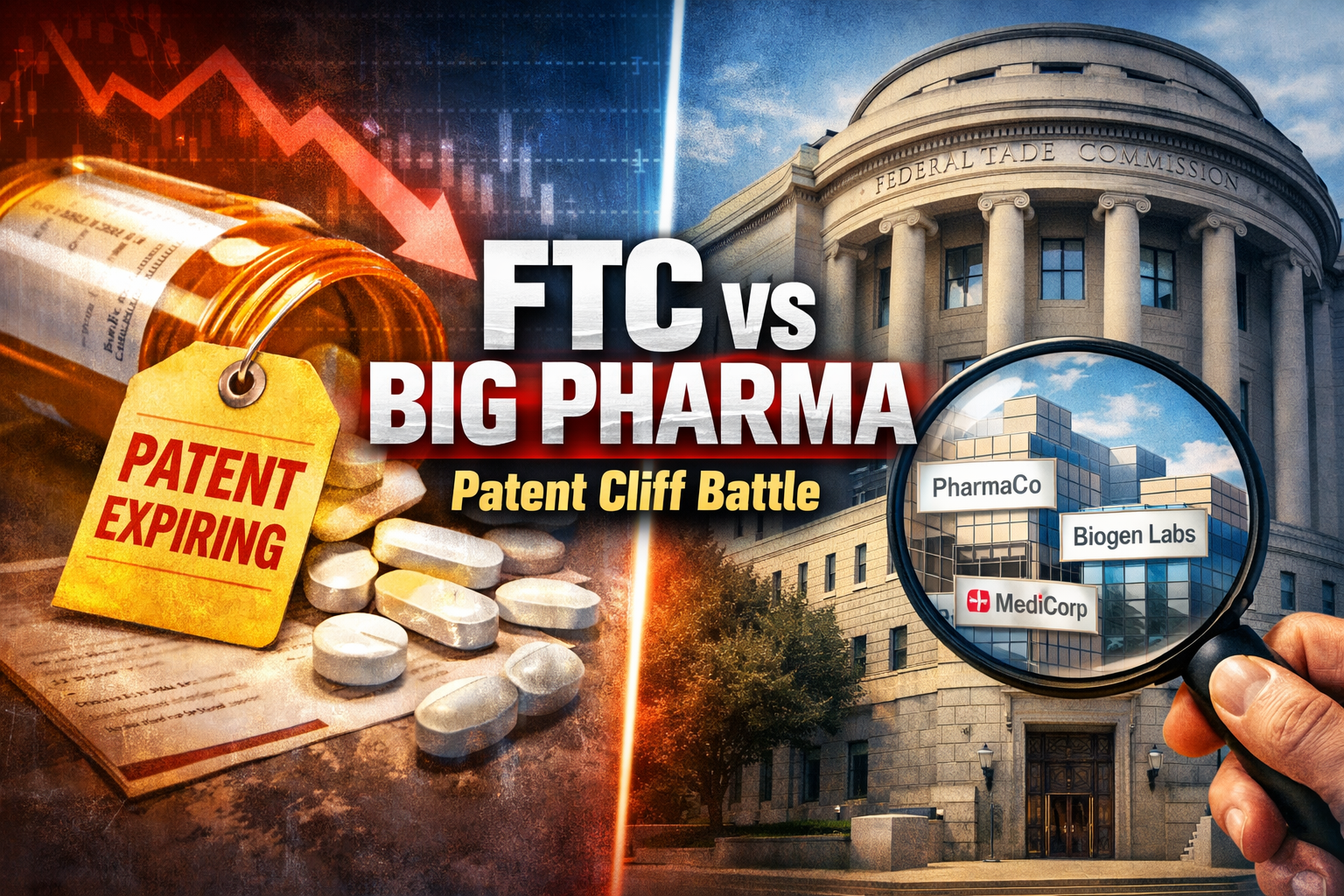
The Federal Trade Commission has stepped up its oversight of the pharmaceutical industry as a wave of high-value drug patents approaches expiration. The move signals a decisive shift in regulatory strategy. It aims to prevent anti-competitive behavior at a time when billions of dollars in drug revenues are at stake.
As blockbuster medicines lose exclusivity, the stakes are rising fast. Generic competition is set to surge. Prices could fall sharply. But regulators fear that large pharmaceutical companies may attempt to delay or weaken this transition through strategic mergers, acquisitions, and patent tactics.
Patent Expiration Wave Sparks Urgency
The global pharmaceutical industry is heading toward a major “patent cliff.” Several top-selling drugs will lose protection over the next few years. These include treatments for cancer, diabetes, and autoimmune diseases.
Once patents expire, generic manufacturers can enter the market. This typically leads to dramatic price reductions—often by as much as 80 percent. For consumers, this is good news. For originator companies, it signals a sharp drop in revenue.
The FTC sees this moment as critical. It wants to ensure that competition unfolds fairly and quickly. Officials have made it clear: they will not tolerate tactics that block or delay generic entry.
Stronger Scrutiny of Mergers and Acquisitions
At the center of the FTC’s strategy lies a tougher stance on mergers and acquisitions.
In the past, large pharmaceutical firms often acquired smaller biotech companies to strengthen their pipelines. These deals helped replace revenue lost after patent expiry. However, regulators now worry that such consolidation may reduce competition before it even begins.
The FTC is now:
- Reviewing deals more aggressively
- Examining early-stage pipeline overlaps
- Challenging acquisitions that may limit future competition
This marks a shift from earlier practices. Previously, regulators focused mainly on marketed drugs. Now, they are looking deeper—into research pipelines and future products.
The message is clear. Companies cannot simply buy their way out of the patent cliff.
Then vs Now: A Clear Regulatory Shift
Earlier Approach:
- Focus on existing products
- Limited scrutiny of early-stage drugs
- Faster approvals of pharma mergers
Current Approach:
- Deep analysis of pipeline competition
- Close monitoring of post-merger market impact
- Increased willingness to block or unwind deals
This comparative shift reflects a broader change in U.S. antitrust enforcement. Authorities are becoming more proactive. They aim to stop problems before they harm the market.
Crackdown on Anti-Competitive Tactics
The FTC is not only targeting mergers. It is also focusing on business practices that can delay generic competition.
Key areas of concern include:
1. Patent Evergreening
Companies sometimes file multiple secondary patents to extend exclusivity. These may cover minor changes in formulation or delivery. While legal in some cases, regulators argue that such tactics can be abused.
2. “Pay-for-Delay” Agreements
In these deals, brand-name companies pay generic firms to delay market entry. The FTC has long opposed such arrangements. It considers them harmful to consumers.
3. Improper Patent Listings
Some firms list questionable patents in regulatory databases. This can create legal hurdles for generic challengers. The FTC has already pushed for the removal of such listings.
By targeting these strategies, the agency aims to accelerate access to affordable medicines.
Impact on Drug Prices and Consumers
The outcome of this regulatory push could reshape drug pricing in the United States.
When generics enter the market:
- Prices typically drop sharply
- Competition increases supply
- Healthcare costs decline
For patients, this could mean greater access to life-saving treatments. For insurers and governments, it could ease financial pressure.
However, the transition is not automatic. Without strong oversight, dominant firms could slow down competition. This is exactly what the FTC wants to prevent.
Industry Pushback and Concerns
Pharmaceutical companies argue that strict regulation could harm innovation.
They claim that:
- High profits fund research and development
- Mergers help scale innovation
- Patent protections reward scientific breakthroughs
Industry leaders warn that excessive scrutiny may discourage investment in risky drug development. They also argue that not all patent extensions are abusive. Some reflect genuine improvements in therapy.
This creates a complex balancing act for regulators.
Balancing Innovation vs Competition
The FTC faces a dual challenge. It must protect competition without undermining innovation.
Competition Focus:
- Faster generic entry
- Lower drug prices
- Reduced market concentration
Innovation Focus:
- Sustained R&D investment
- Incentives for breakthrough drugs
- Support for biotech startups
Striking the right balance is critical. Too much regulation could slow innovation. Too little could keep prices high.
Global Ripple Effects
The FTC’s actions could influence regulatory approaches worldwide.
Authorities in regions like:
- European Union
- India
are also tightening scrutiny of pharmaceutical practices. Issues such as patent evergreening and market dominance are global concerns.
In India, for example, courts and regulators have already taken a strong stance against unjustified patent extensions. The U.S. move may reinforce similar trends globally.
A Turning Point for Big Pharma
The coming years will define how the pharmaceutical industry adapts to this new environment.
Companies must now:
- Rethink acquisition strategies
- Strengthen compliance frameworks
- Focus on genuine innovation
Regulators, meanwhile, will continue to expand their oversight toolkit.
This is not a temporary shift. It marks the beginning of a more assertive regulatory era.
Conclusion
The FTC’s intensified oversight comes at a pivotal moment for the pharmaceutical industry. As major patents expire, the transition to generic competition will reshape markets, pricing, and access to medicines.
By tightening control over mergers, acquisitions, and patent strategies, the FTC aims to ensure that this transition benefits consumers—not just corporations.
The battle lines are now clear. On one side stands the push for affordable healthcare. On the other stands the need to sustain innovation.
How this balance unfolds will determine the future of global pharma—and the cost of medicine for millions.