
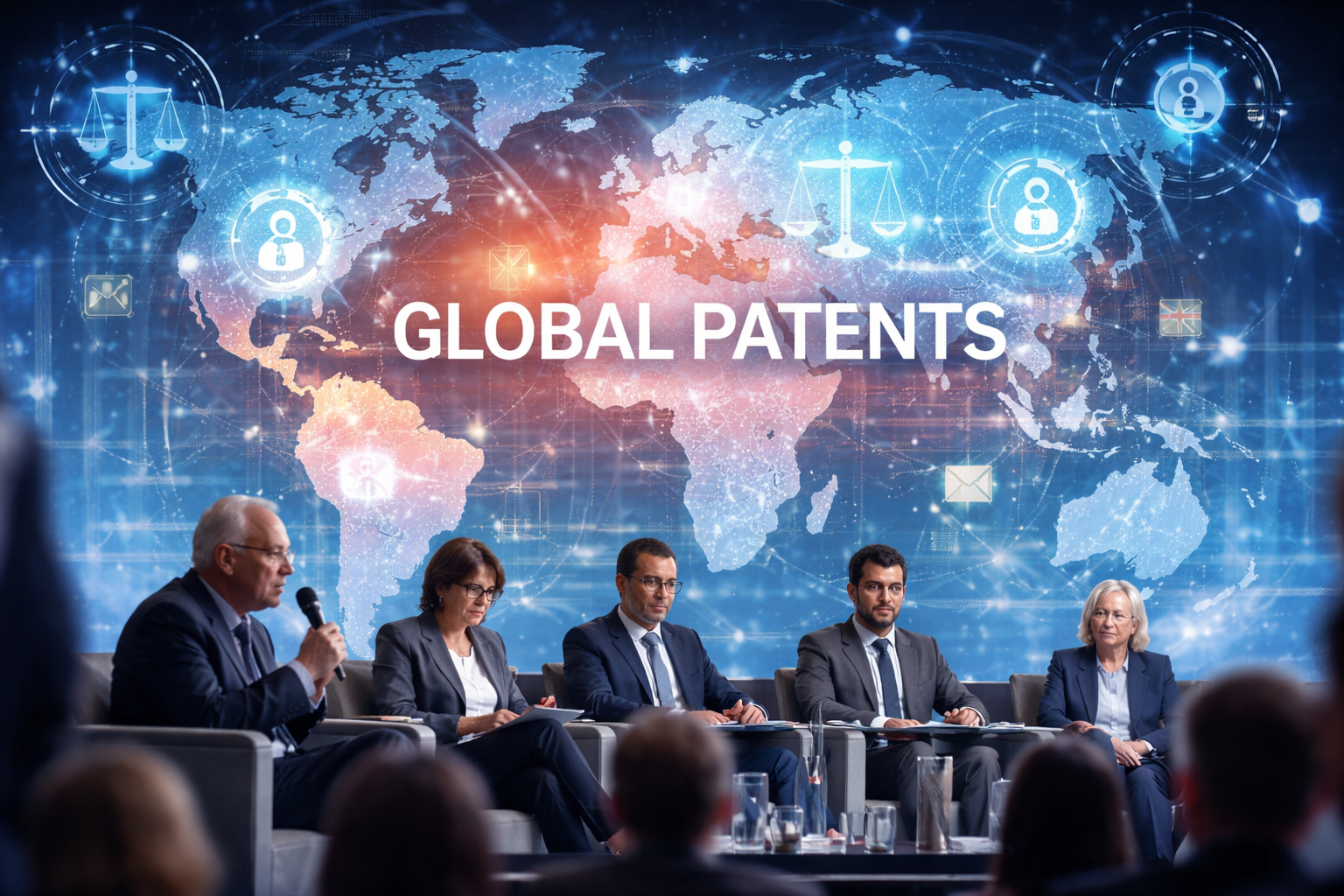
The global intellectual property (IP) landscape is entering a decisive phase. At IPWatchdog LIVE 2026, top legal minds, policymakers, and industry leaders delivered a clear and urgent message: the world is witnessing a high-stakes battle over patent rights, especially in pharmaceuticals, and the outcome will shape the future of innovation.
The event brought together influential figures, including judges, former policymakers, and corporate leaders, to assess the strength, direction, and vulnerabilities of global patent systems. Their conclusion was blunt—while some regions are accelerating reforms, others risk falling behind.
Prestigious Awards Honor IP Leadership
The conference opened with the presentation of two major awards recognizing excellence in intellectual property leadership.
- The Pauline Newman Award was presented to Corey Salsberg
- The Paul Michel Award went to Chris Israel
Speaking at the ceremony, Pauline Newman stressed the urgent need for certainty and predictability in patent systems. She warned that inconsistent rulings and unclear policies weaken investor confidence and discourage innovation.
Meanwhile, Paul Michel raised concerns about policy debates driven by misinformation rather than facts. He urged lawmakers to rely on evidence-based decisions, especially when dealing with complex patent issues.
A Growing Divide in Global Patent Systems
One of the most striking themes at the event was the widening gap between global patent regimes.
Fast-Moving Regions
Regions like Europe, China, and the United Kingdom are moving aggressively to strengthen their IP frameworks:
- Europe’s Unified Patent Court offers streamlined litigation and cross-border enforcement
- China continues to build specialized IP courts and faster dispute resolution mechanisms
- The UK maintains strong judicial expertise and efficient case handling
These jurisdictions provide speed, clarity, and enforcement strength, making them increasingly attractive for innovators and investors.
Slower Progress in the United States
In contrast, panelists argued that the United States is struggling with:
- Unclear patent eligibility standards
- Lengthy and expensive litigation processes
- Legislative gridlock preventing meaningful reform
This imbalance creates a serious risk. As global competitors improve their systems, innovators may shift investments to jurisdictions offering stronger protection and quicker outcomes.
Pharmaceutical Patents Under Intense Scrutiny
The debate around pharmaceutical patents dominated the discussion. Policymakers and advocacy groups are increasingly questioning whether patents inflate drug prices and limit access.
Rising Policy Pressure
Several legislative proposals aim to reshape drug patent protections, including:
- Measures targeting “patent thickets”
- Reforms to generic drug labeling rules
- Broader attempts to reduce exclusivity periods
Critics argue that these changes could lower drug prices and improve access.
Industry Pushback
However, industry leaders strongly pushed back against these claims. They emphasized that drug development is:
- Extremely costly
- Highly risky
- Time-intensive, often taking over a decade
Without strong patent protection, companies may struggle to recover investments. This could lead to:
- Fewer breakthrough therapies
- Reduced research funding
- Slower medical innovation
The panelists framed the issue as a delicate balance between affordability and innovation. Weakening patents may offer short-term price relief but could damage long-term healthcare progress.
The Narrative Battle: Innovation vs Access
A critical concern raised during the conference was the shifting narrative around intellectual property.
Increasingly, some policymakers view patents as barriers rather than enablers. This perception is gaining traction in political and regulatory circles.
According to Corey Salsberg, the IP community must do a better job of explaining how patents:
- Encourage innovation
- Attract investment
- Enable life-saving discoveries
He emphasized that silence is no longer an option. Advocacy and engagement are essential to counter misconceptions.
Declining Political Support for IP
Another alarming trend is the decline in strong pro-IP voices within government.
Panelists noted:
- Fewer lawmakers actively defending patent rights
- Growing bipartisan support for patent-limiting reforms
- Increased influence of public pressure on drug pricing
This shift creates uncertainty for businesses relying on patents to protect their innovations.
Comparative Snapshot: Global IP Systems
| Factor | United States | Europe / China / UK |
|---|---|---|
| Litigation Speed | Slower | Faster |
| Legal Certainty | Unclear in areas | More predictable |
| Enforcement Strength | Mixed | Strong |
| Policy Direction | Divided | Pro-reform, pro-IP |
| Investment Appeal | Under pressure | Increasing |
This comparison highlights a clear trend: global competition in IP is intensifying, and jurisdictions that adapt quickly are gaining an edge.
What This Means for the Future
The discussions at IPWatchdog LIVE 2026 point to a critical inflection point.
If Current Trends Continue:
- Innovation may shift toward stronger IP jurisdictions
- U.S. leadership in patents could weaken
- Pharmaceutical R&D may face funding challenges
If Reforms Are Implemented:
- Patent systems could regain clarity and trust
- Investment in innovation may increase
- Global competitiveness could stabilize
The Road Ahead: Urgent Need for Action
The message from the conference was not just analytical—it was a call to action.
Experts urged stakeholders to:
- Advocate for clear and consistent patent laws
- Educate policymakers about the economic value of IP
- Strengthen collaboration between industry and government
As Paul Michel highlighted, decisions made today will determine whether patent systems drive innovation or hinder it.
Conclusion
IPWatchdog LIVE 2026 made one reality unmistakably clear: the global patent system is under pressure, and the stakes are high.
The world is moving fast. Some regions are building stronger, smarter, and faster IP frameworks. Others risk stagnation.