
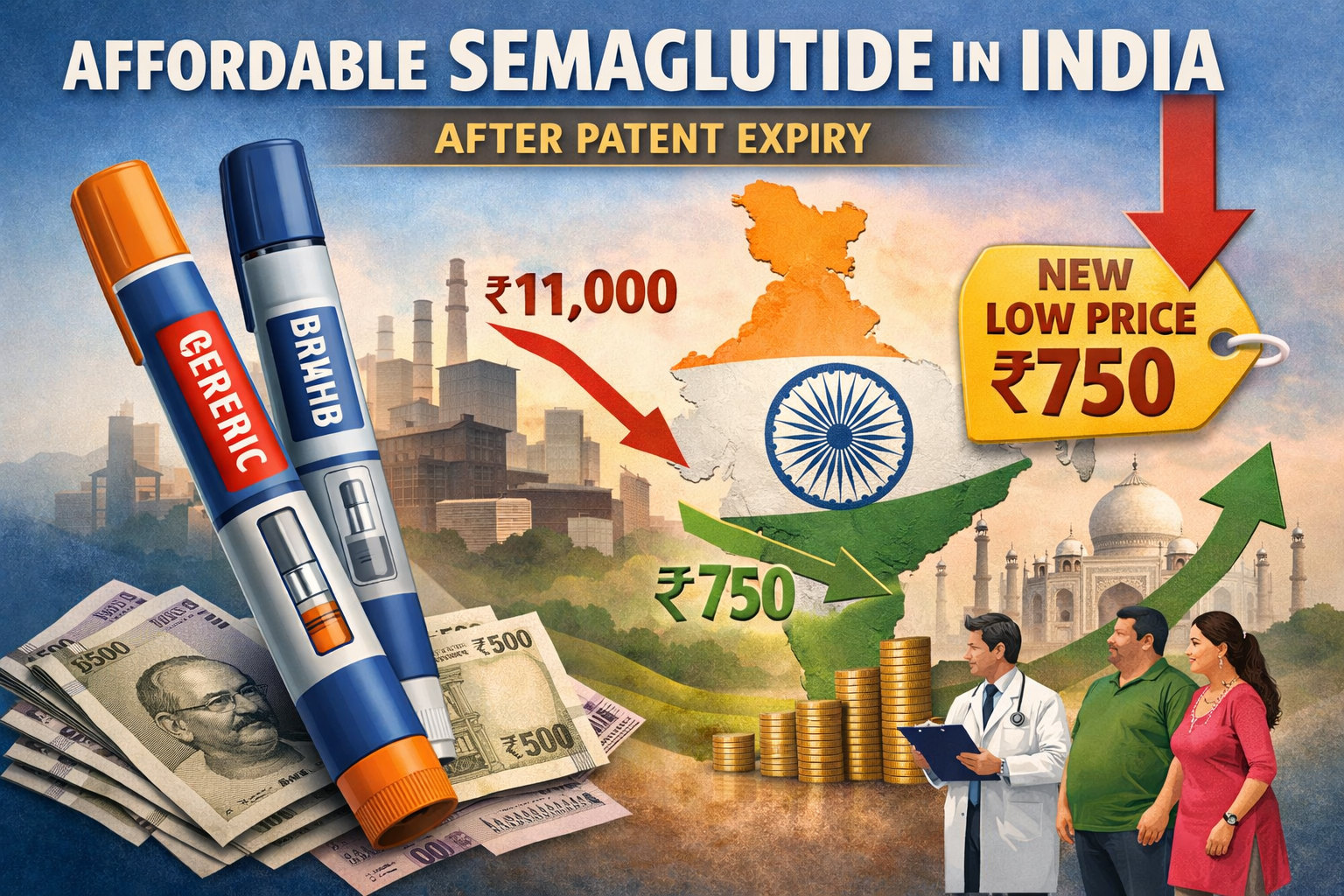
India’s pharmaceutical industry has entered a निर्णायक phase. The patent expiry of Semaglutide has unleashed a fierce price war. Leading drugmakers, especially from Gujarat, have rolled out affordable versions of the once-premium therapy. The shift is dramatic. It signals a new era of accessibility, competition, and market expansion.
A Blockbuster Drug Loses Its Monopoly
For years, semaglutide dominated global markets under brands developed by Novo Nordisk. The drug transformed diabetes care and redefined obesity treatment. However, its high cost kept it out of reach for most patients in India.
That barrier has now collapsed.
With the patent expiring in March 2026, Indian companies have wasted no time. They have launched generic versions at aggressively lower prices. This rapid rollout has disrupted the market and reshaped pricing dynamics almost overnight.
Prices Crash, Access Expands
The most visible impact is the sharp drop in cost.
Earlier, patients paid anywhere between ₹8,000 and ₹11,000 per month for semaglutide therapy. Today, multiple Indian brands offer the same treatment for as low as ₹750 to ₹4,000 per month.
This is not a marginal reduction. It is a massive shift.
Lower prices are expected to unlock demand across India’s vast patient base. Millions who could not afford treatment can now access it. Doctors anticipate a surge in prescriptions, especially in urban and semi-urban regions.
Gujarat Firms Lead the Charge
Pharma companies based in Gujarat have taken the lead. Several major players have launched their own versions of semaglutide within days of the patent expiry.
Key participants include:
- Zydus Lifesciences
- Torrent Pharmaceuticals
- Sun Pharmaceutical Industries
- Eris Lifesciences
- Natco Pharma
Each company has adopted a distinct pricing and delivery strategy. Some offer pen devices for ease of use. Others provide vial-based formats at ultra-low prices. This diversity is intensifying competition and giving patients more choices.
A High-Stakes Market Opportunity
India presents a massive opportunity for semaglutide-based therapies.
The country has over 100 million people living with diabetes. At the same time, obesity rates are rising steadily. Urban lifestyles, poor diets, and sedentary habits continue to fuel the crisis.
Experts estimate that the semaglutide market in India could reach ₹12,000 crore within the next five years. More than 40 companies are expected to enter the segment. Together, they may launch over 50 branded generics.
This is not just a product launch cycle. It is a full-scale market expansion.
Comparative Shift: Before vs After Patent Expiry
The transformation becomes clearer when viewed side by side.
Before Patent Expiry:
- Market controlled by a single global innovator
- High prices limited access
- Low competition
- Restricted patient adoption
After Patent Expiry:
- Dozens of Indian companies competing
- Prices slashed by up to 90%
- Widespread availability
- Rapid growth in patient access
This sharp contrast highlights the power of generic competition in India’s pharmaceutical ecosystem.
India’s Strategic Advantage
India’s early entry into semaglutide generics gives it a global edge.
In markets like the United States, patents for similar drugs will continue for several more years. This delay allows Indian manufacturers to scale production, refine formulations, and expand exports to emerging markets.
India has long been known as the “pharmacy of the world.” The semaglutide wave strengthens that position further. Companies are not only targeting domestic demand but also preparing for international opportunities.
Rising Concerns Over Misuse
Despite the optimism, experts have flagged critical risks.
Semaglutide is not just a diabetes drug. It has gained popularity as a weight-loss solution. This dual use raises concerns about misuse.
Doctors warn that people may begin using the drug for cosmetic weight loss without proper medical supervision. Such behavior can lead to side effects and long-term health issues.
There is also concern about self-medication. Lower prices may encourage patients to bypass professional guidance. This could undermine treatment outcomes and increase complications.
Quality and Brand Confusion
Another challenge lies in the growing number of brands.
With dozens of companies entering the market, doctors may face confusion while prescribing. Similar brand names and varying formulations can complicate decision-making.
Quality consistency will become a key differentiator. Companies that maintain strict manufacturing standards and clinical reliability will gain trust. Others may struggle to sustain credibility in a crowded market.
Regulatory Spotlight Intensifies
Regulators are watching closely.
India’s drug authorities are expected to increase inspections and tighten compliance norms. The goal is clear: ensure patient safety while encouraging innovation and competition.
Authorities may also issue guidelines to prevent misuse and regulate marketing practices. These steps will be crucial in maintaining balance in a rapidly expanding market.
What Lies Ahead
The semaglutide story is far from over.
In the short term, the market will see aggressive pricing, heavy promotions, and rapid product launches. Companies will compete fiercely to capture market share.
In the medium term, consolidation is likely. Strong brands with proven efficacy and trust will dominate. Smaller players may exit or merge.
In the long term, the focus will shift toward innovation. Companies may invest in next-generation therapies, improved delivery systems, and combination drugs.
A Turning Point for Indian Healthcare
The patent expiry of semaglutide marks a defining moment for India.
It breaks a global monopoly. It democratizes access to a life-changing drug. It creates a high-growth market with intense competition.
Most importantly, it brings hope to millions of patients.
Affordable treatment can improve health outcomes, reduce complications, and enhance quality of life. However, the benefits will depend on responsible use, strong regulation, and consistent quality.
India has seized the opportunity. The challenge now is to sustain it.
Conclusion
The fall of semaglutide’s patent barrier has triggered a powerful shift. Prices have crashed. Access has expanded. Competition has intensified.
This is more than a market event. It is a healthcare transformation.