
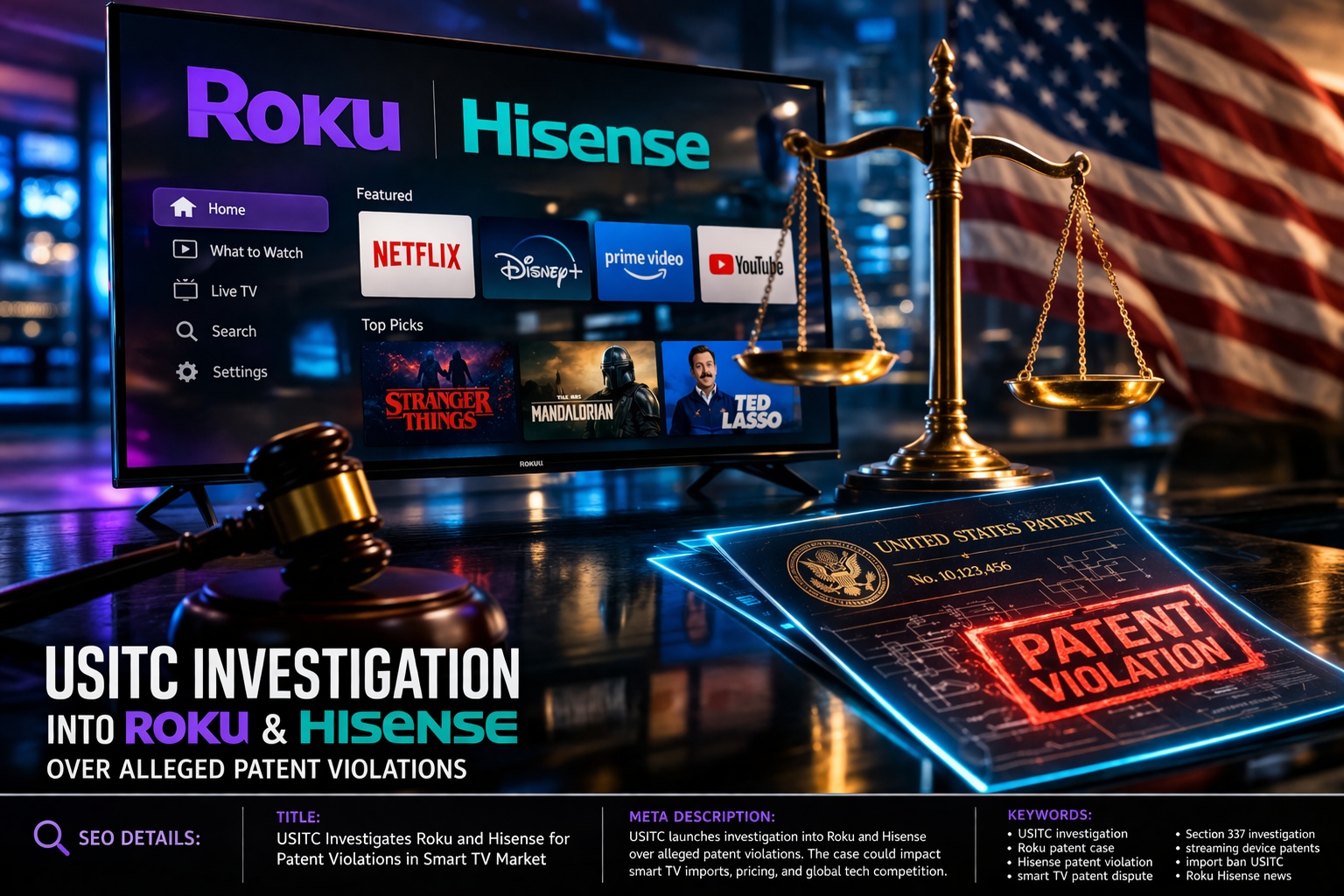
Rising Patent Tensions Hit the Smart TV Industry
The U.S. International Trade Commission (USITC) has initiated a high-stakes investigation into alleged patent violations by Roku and Hisense. This move signals a growing wave of intellectual property disputes in the fast-evolving smart TV and streaming ecosystem.
The case could reshape competition in the global television market. It also highlights how patent battles now define technological leadership as much as innovation itself.
What Triggered the Investigation?
The USITC launched the probe after receiving a formal complaint from a patent holder alleging that Roku and Hisense unlawfully used protected technologies. These technologies reportedly relate to key streaming and display functionalities embedded in modern smart TVs.
The complainant claims that both companies integrated proprietary innovations without authorization. As a result, the complaint seeks strict remedies, including a potential import ban on infringing products entering the United States.
The USITC has accepted the complaint and will now determine whether the accused companies violated Section 337 of the Tariff Act, a law designed to prevent unfair trade practices linked to intellectual property.
Understanding Section 337 Investigations
Section 337 investigations move quickly compared to traditional court cases. The USITC focuses on whether imported goods infringe valid U.S. patents and whether such imports harm domestic industries.
If the commission finds a violation, it can impose:
- Limited exclusion orders (blocking specific imports)
- General exclusion orders (blocking broader product categories)
- Cease-and-desist orders against companies already operating in the U.S.
This makes the USITC one of the most powerful forums for patent enforcement in global trade.
Roku vs Hisense: Different Roles, Shared Risk
While both companies face the same investigation, their positions in the ecosystem differ significantly.
Roku: Platform Powerhouse
Roku dominates the streaming OS market in the U.S. Its software powers millions of smart TVs and streaming devices. The company licenses its operating system to multiple TV manufacturers, including Hisense.
If the allegations prove true, Roku’s core platform business could face disruption. A ruling against Roku might force changes in its licensing model or software architecture.
Hisense: Hardware Giant
Hisense operates as a major global TV manufacturer. The company integrates Roku’s OS into many of its smart TV models.
For Hisense, the risk lies in hardware imports. An exclusion order could block shipments of its televisions into the U.S., directly impacting revenue and market share.
Why This Case Matters
This investigation goes far beyond two companies. It reflects broader tensions in the tech industry.
1. Smart TV Market Under Scrutiny
Smart TVs combine hardware, software, and content delivery. This layered structure creates multiple points for patent disputes.
2. Rising Cross-Border Conflicts
The case highlights friction between U.S. patent holders and global manufacturers, especially those based in Asia.
3. Platform vs Manufacturer Dynamics
The dispute underscores a key question: Who bears responsibility for infringement—the software provider or the hardware maker?
Potential Industry Impact
If the USITC rules against Roku and Hisense, the consequences could be severe.
Supply Chain Disruption
Retailers may face shortages of affected TV models. Import restrictions could tighten supply during peak demand seasons.
Increased Costs
Companies may need to pay licensing fees or redesign products. These costs often pass on to consumers.
Competitive Shift
Rivals could gain market share if Roku-powered TVs face restrictions. Competitors using alternative operating systems may benefit.
Legal and Strategic Responses
Both Roku and Hisense are expected to mount strong defenses. Typical strategies include:
- Challenging patent validity
- Arguing non-infringement
- Negotiating licensing agreements
In many USITC cases, companies settle before a final ruling. However, high-stakes disputes like this often proceed through full litigation due to their strategic importance.
Timeline and Next Steps
USITC investigations usually conclude within 12 to 18 months. The process includes:
- Initial review and evidence gathering
- Administrative law judge (ALJ) hearing
- Preliminary determination
- Final commission decision
If the USITC issues an exclusion order, the U.S. President has a limited window to veto it, though such vetoes are rare.
A Growing Trend in Tech Patent Wars
This case adds to a surge in patent disputes involving connected devices. As products become more integrated, the risk of overlapping intellectual property increases.
Companies now use patents not just for protection but as strategic weapons. They leverage litigation to secure licensing revenue, block competitors, and strengthen market position.
Conclusion
The USITC investigation into Roku and Hisense marks another critical chapter in the global patent landscape. The outcome could reshape the smart TV market, disrupt supply chains, and redefine accountability in technology ecosystems.
As the case unfolds, industry players, investors, and policymakers will watch closely. The decision will not only determine liability but also set a precedent for future disputes in an increasingly interconnected digital world.