
Introduction: A Radical Shift in Vehicle Safety
In a bold move to redefine road safety, General Motors (GM) has filed a patent for a cutting-edge system that can detect driver impairment—before the person even enters the vehicle. Instead of relying on traditional breathalyzers or in-car monitoring, GM’s innovation analyzes something far more subtle: how a person walks.
This new approach could transform how the automotive industry tackles drunk driving, shifting prevention from reactive to proactive.
How the Technology Works
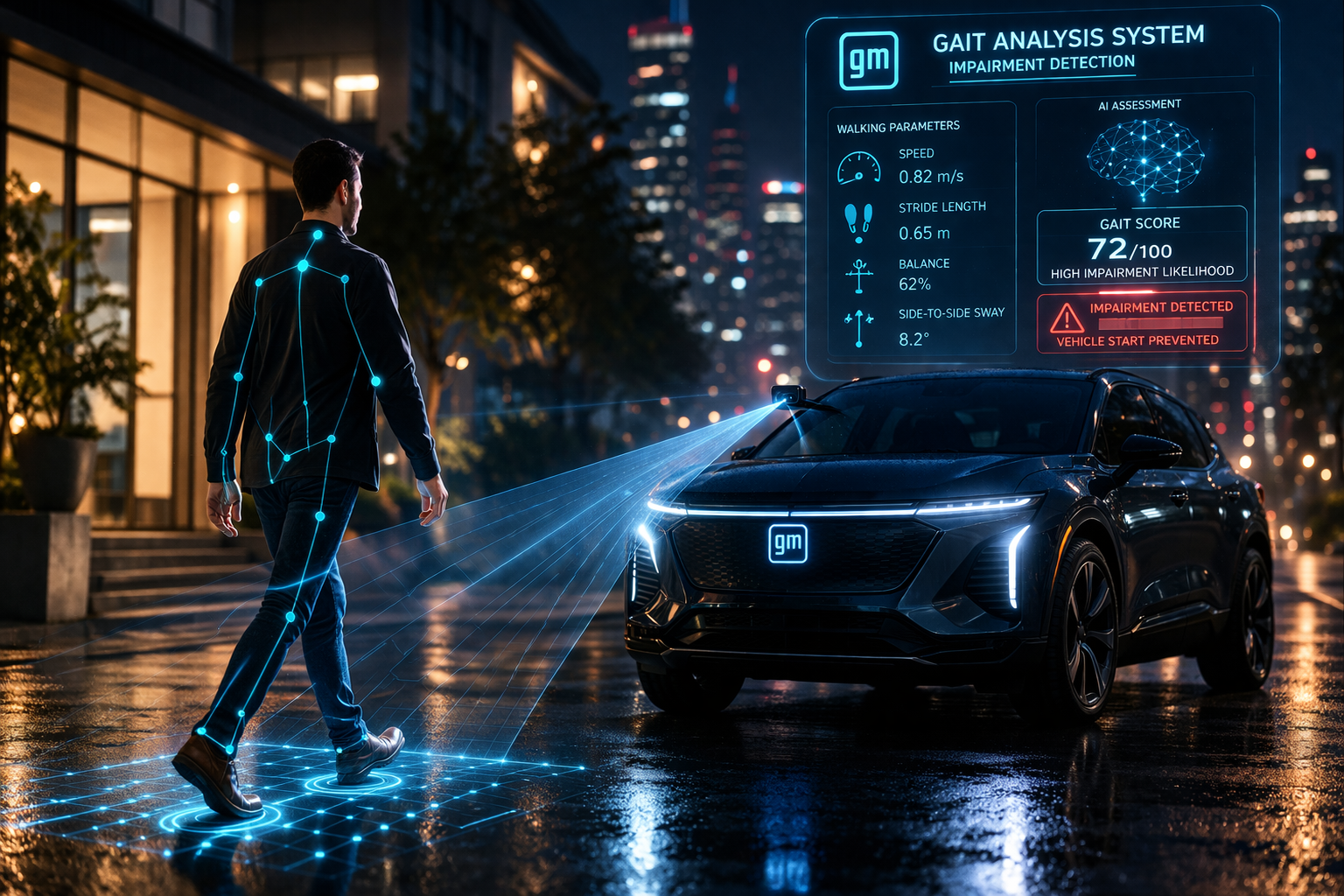
GM’s patented system relies on a combination of cameras, sensors, and artificial intelligence (AI) to monitor a person’s gait as they approach the vehicle.
Key Parameters Measured:
- Walking speed
- Stride length
- Balance and stability
- Side-to-side sway
- Ability to walk in a straight line
These behavioral indicators are captured in real time and processed using advanced machine learning models, including Long Short-Term Memory (LSTM) neural networks. (SpeedMe.ru)
The system then generates a “gait score”, which reflects the likelihood of impairment due to alcohol, drugs, fatigue, or even medical conditions.
Decision-Making: What Happens Next?
Once the gait score is calculated, the system compares it against a predefined threshold.
If No Impairment is Detected:
- The vehicle functions normally
If Impairment is Suspected:
The system can respond in multiple ways:
- Issue visual or audio warnings
- Trigger secondary checks (like a breathalyzer)
- Prevent the vehicle from starting altogether
This layered response ensures both accuracy and fairness, reducing the risk of false positives while maintaining safety. (SpeedMe.ru)
A Pre-Driving Safety Net
What makes this innovation unique is timing. Unlike current driver-monitoring systems that activate after the vehicle starts, GM’s system begins evaluation before the driver even opens the door.
It can also detect intent—such as whether the person is approaching the driver’s side—helping avoid unnecessary alerts for passengers. (Автомобильный портал 32CARS.RU)
This represents a major evolution in Advanced Driver Assistance Systems (ADAS), turning vehicles into active gatekeepers of road safety.
Why This Matters: The Scale of the Problem
Drunk driving remains a global crisis. According to safety research, alcohol-impaired driving contributes to a significant share of road fatalities every year.
Governments and regulators are increasingly pushing automakers to integrate passive impairment detection systems into vehicles. In fact, U.S. regulations are moving toward mandating such technologies in new cars within this decade. (NHTSA)
GM’s patent aligns perfectly with this regulatory direction, positioning the company ahead in the race for safer mobility.
How It Compares to Existing Technologies
Traditional Methods:
- Breathalyzers (require active participation)
- Ignition interlock devices (post-conviction use)
- In-cabin cameras (monitor after driving begins)
GM’s Gait-Based System:
- Passive and non-intrusive
- Works before vehicle entry
- Uses behavioral biometrics instead of chemical detection
This shift from chemical detection to behavioral analysis could make impairment detection faster, more seamless, and harder to bypass.
Advantages of Gait Analysis
1. Non-Invasive Monitoring
Drivers don’t need to blow into a device or perform any test.
2. Real-Time Assessment
The system evaluates impairment instantly as the user approaches.
3. Multi-Factor Detection
It can identify not just alcohol use, but also:
- Drug influence
- Fatigue
- Neurological conditions
4. Integration with Existing Sensors
Modern vehicles already use cameras and sensors, making this technology potentially cost-effective to deploy.
Challenges and Concerns
Despite its promise, the technology raises important questions:
Privacy Issues
Continuous monitoring of movement and behavior may trigger concerns about surveillance and data usage.
Accuracy and Bias
Human gait varies due to:
- Injuries
- Age
- Disabilities
Ensuring the system does not unfairly block drivers will be critical.
Legal and Ethical Questions
- Who decides the impairment threshold?
- Can drivers override the system?
- Will data be stored or shared?
These concerns could influence regulatory approval and public acceptance.
Industry-Wide Implications
GM is not alone in exploring anti-drunk-driving technologies. Automakers and researchers are experimenting with:
- Breath-based sensors
- Infrared skin detection
- Facial and eye tracking
However, gait analysis introduces a completely new dimension—external behavioral monitoring.
If successfully implemented, it could:
- Reduce accidents significantly
- Lower insurance costs
- Influence global safety regulations
Future Outlook: From Patent to Production
It is important to note that a patent does not guarantee immediate commercialization. However, GM’s consistent investment in safety technologies suggests strong intent.
With regulatory pressure mounting and AI capabilities advancing rapidly, systems like this could appear in production vehicles within the next few years.
Conclusion: Cars That Judge Before You Drive
GM’s gait analysis patent signals a future where cars don’t just assist drivers—they evaluate them.
By detecting impairment before a journey begins, this technology could prevent countless accidents and save lives. Yet, its success will depend on striking the right balance between safety, privacy, and user trust.
If that balance is achieved, the simple act of walking toward your car may soon determine whether you’re fit to drive.