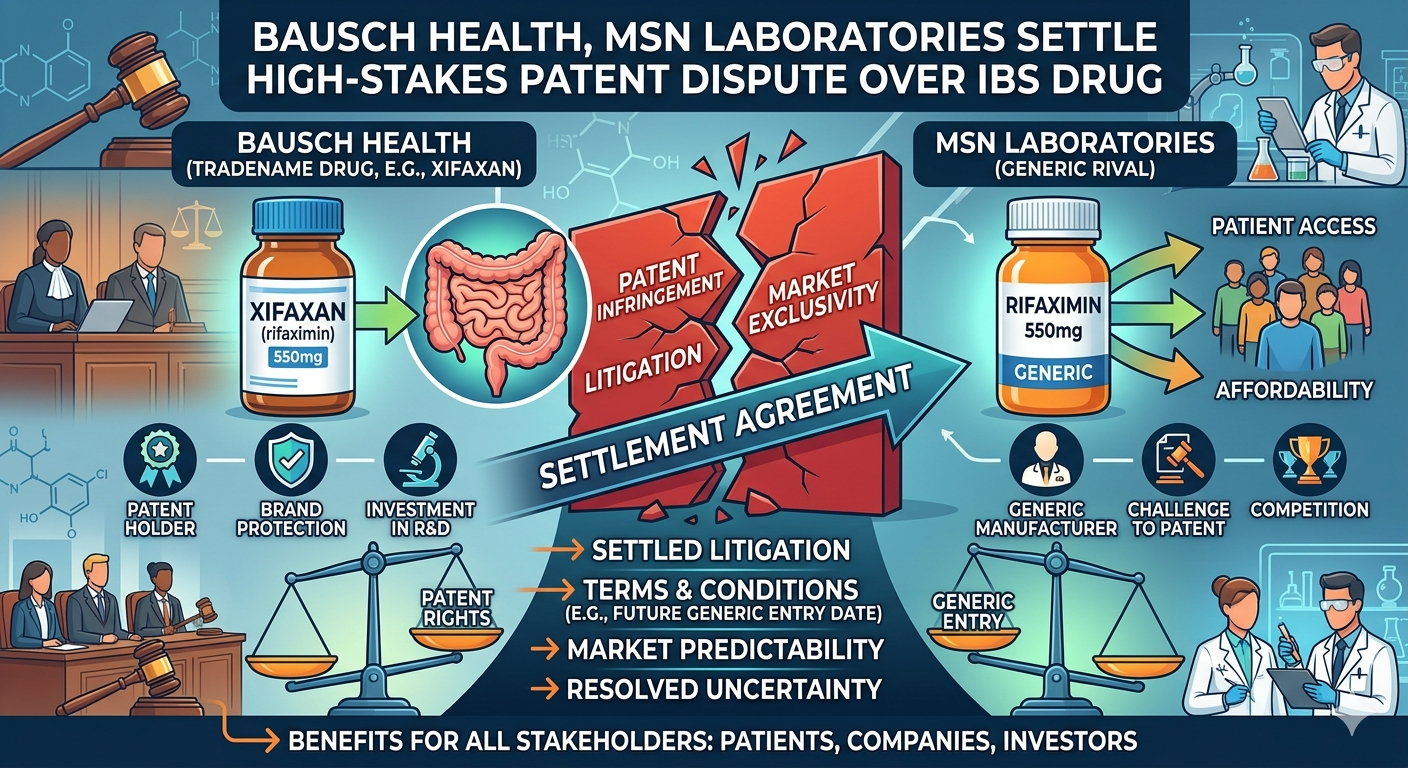
In a decisive move that ends a closely watched pharmaceutical patent dispute, Bausch Health Companies Inc. and MSN Laboratories Pvt. Ltd. have reached a settlement over a key irritable bowel syndrome (IBS) drug, bringing clarity to a contentious legal battle that had implications for both market competition and drug pricing.
The resolution signals a strategic compromise between innovation protection and generic market entry—an issue that continues to shape the global pharmaceutical landscape.
The Core of the Dispute
At the heart of the litigation was Bausch Health’s patented IBS treatment, Xifaxan, a blockbuster therapy widely prescribed for conditions such as IBS with diarrhea (IBS-D) and hepatic encephalopathy.
Bausch, through its gastroenterology unit Salix Pharmaceuticals, alleged that MSN Laboratories sought to introduce a generic version of Xifaxan before the expiration of critical patents. The company argued that MSN’s Abbreviated New Drug Application (ANDA) infringed multiple patents protecting rifaximin formulations and their methods of use.
MSN Laboratories, on the other hand, challenged the validity and enforceability of these patents, positioning itself among a growing group of generic manufacturers aiming to break into the lucrative IBS drug market.
Settlement Terms: A Strategic Middle Ground
While the exact financial terms remain confidential, both companies have agreed to settle the dispute under mutually acceptable conditions. Typically, such settlements in pharmaceutical patent cases include:
- A defined timeline for generic entry
- Licensing arrangements or royalty structures
- Agreement to dismiss ongoing litigation
The settlement likely allows MSN Laboratories to launch its generic version of rifaximin at a future agreed date, potentially before the full patent expiry—though later than it initially sought.
This approach reflects a broader industry trend where originator companies preserve a portion of exclusivity while avoiding prolonged and costly litigation.
Market Impact: Balancing Innovation and Access
The settlement carries significant implications for the IBS treatment market, particularly in the United States, where Xifaxan generates substantial annual revenue.
1. For Bausch Health
The agreement helps Bausch maintain near-term market exclusivity, protecting a key revenue stream. Xifaxan remains one of the company’s top-selling products, and any delay in generic competition directly supports its financial stability.
2. For MSN Laboratories
The deal provides a clear pathway to market entry. Instead of facing prolonged legal uncertainty, MSN can plan its manufacturing and commercialization strategy with greater confidence.
3. For Patients
Generic entry—when it occurs—will likely reduce treatment costs significantly. IBS therapies, especially branded ones, often carry high price tags, limiting accessibility for many patients.
Legal Context: A Familiar Patent Playbook
Pharmaceutical patent disputes like this one follow a well-established legal framework under the Hatch-Waxman Act, which governs generic drug approvals in the United States.
Under this regime:
- Generic manufacturers file ANDAs to seek approval for lower-cost versions
- Patent holders can sue for infringement, triggering an automatic stay on FDA approval
- Parties often settle before final court rulings
These settlements, while common, remain controversial. Critics argue they may delay affordable generics, while proponents contend they provide legal certainty and reduce litigation costs.
Industry Trends: Rise of Indian Generics
The involvement of MSN Laboratories highlights the growing influence of Indian pharmaceutical companies in global generic drug markets.
India-based firms have increasingly challenged major pharmaceutical patents, leveraging:
- Strong manufacturing capabilities
- Competitive cost structures
- Expanding regulatory expertise
Companies like MSN are now key players in shaping the timing and pricing of generic drug entry worldwide.
Strategic Implications for the Pharma Sector
This settlement underscores several broader trends reshaping the pharmaceutical industry:
Patent Monetization Remains Critical
For innovator companies like Bausch, patents are not just legal tools—they are core business assets. Protecting them ensures continued return on investment in drug development.
Litigation as a Business Strategy
Both originators and generics increasingly use litigation strategically. Filing suits or challenging patents can be as much about negotiation leverage as legal victory.
Settlements Over Courtroom Battles
Most high-stakes pharma patent disputes now end in settlements rather than final court judgments. This reflects the high costs, risks, and uncertainties of litigation.
What Comes Next?
While the immediate dispute has ended, attention now shifts to the agreed timeline for generic entry. Industry analysts will closely watch:
- When MSN launches its generic rifaximin
- Whether other generic challengers enter the market
- The impact on Xifaxan’s pricing and market share
Additionally, regulatory scrutiny of patent settlements—particularly in the U.S.—remains a key factor. Authorities continue to examine whether such agreements unfairly delay competition.
Conclusion
The settlement between Bausch Health and MSN Laboratories marks another pivotal moment in the ongoing tug-of-war between pharmaceutical innovation and affordability.
By avoiding prolonged litigation, both companies gain strategic clarity. Yet the broader debate continues: how to balance rewarding drug innovation while ensuring timely access to affordable medicines.
As generic competition edges closer, the IBS drug market stands on the brink of transformation—one that could ultimately benefit patients, even as it reshapes industry dynamics.