
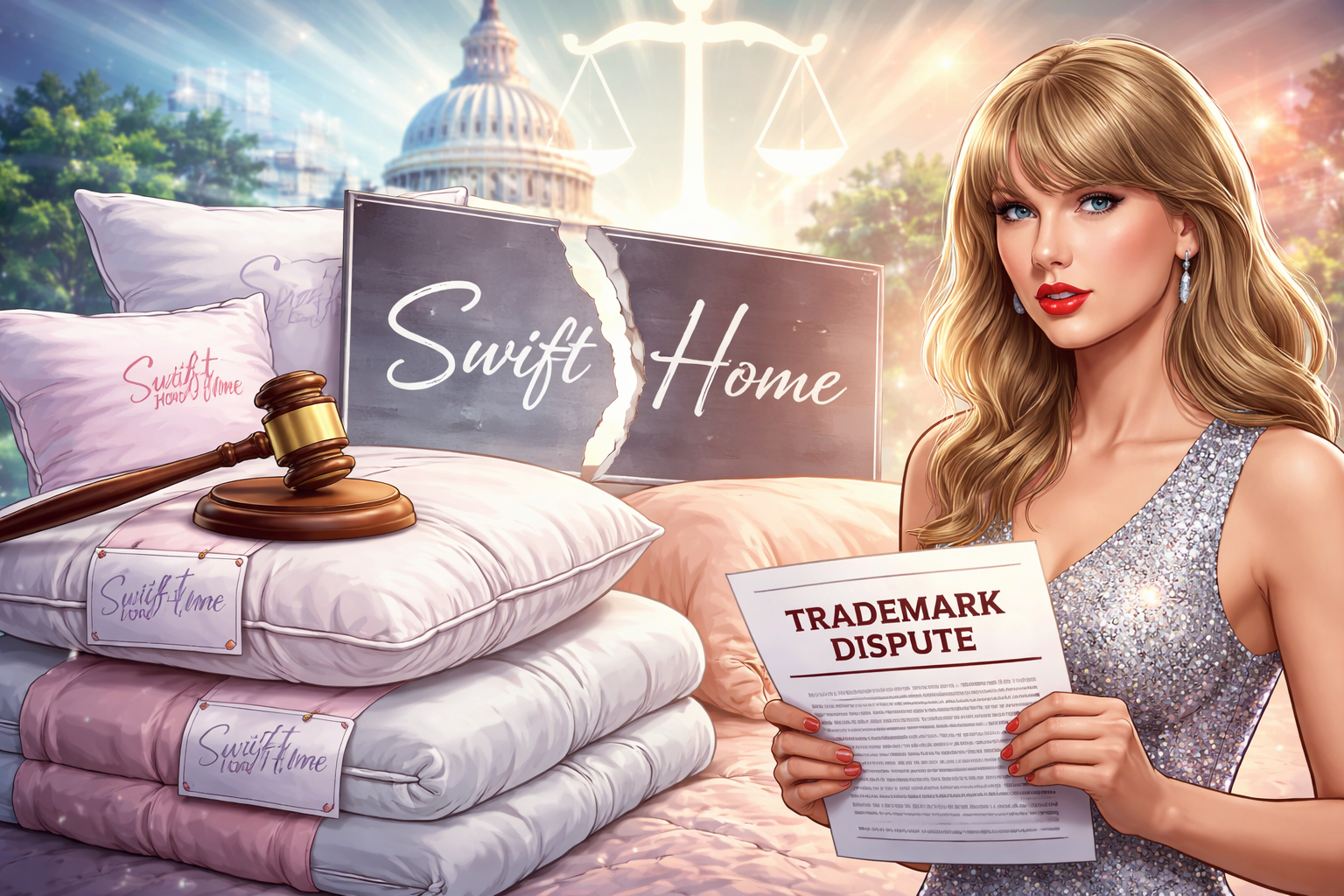
A trademark dispute between a bedding company and global music icon Taylor Swift has ended decisively, with the home goods firm withdrawing its “Swift Home” trademark application after the singer challenged the filing. The development highlights the growing power of celebrity branding and the increasing importance of intellectual property enforcement in modern commerce.
The withdrawal represents a clear win for Swift’s legal strategy and reflects a broader shift in trademark law, where personal brands carry significant commercial weight and influence consumer perception across multiple industries.
How the Dispute Began
The conflict began when a bedding manufacturer sought to register the trademark “Swift Home” for use on products such as bed linens, pillows, and related home goods. The company aimed to position the brand within the lifestyle and home décor market, a sector that has seen rapid growth and intense competition.
However, Swift’s legal team quickly filed an opposition, arguing that the name and presentation of the proposed brand created a strong likelihood of confusion among consumers. According to the opposition, customers might assume that the bedding products were connected to or endorsed by the singer, whose name carries immense global recognition.
The dispute intensified when concerns emerged about the visual design of the brand, particularly a cursive style that allegedly resembled Swift’s signature aesthetic. Swift’s lawyers asserted that the similarity went beyond coincidence and risked misleading buyers.
Company Chooses Withdrawal Over Legal Battle
Facing a formal challenge from a high-profile rights holder, the bedding company ultimately chose to abandon the trademark application. Industry observers say such decisions often reflect pragmatic business considerations rather than admissions of wrongdoing.
Trademark litigation can be costly, time-consuming, and unpredictable. Even if a company believes it has a valid claim, defending against a globally recognized celebrity with extensive intellectual property rights may not align with business priorities.
By stepping back early, the company avoided a prolonged dispute that could have involved significant legal expenses and reputational risk.
The Power of Celebrity Branding
The outcome underscores the strength of celebrity-driven trademarks in today’s marketplace. Over the past decade, artists and entertainers have transformed their personal identities into powerful commercial brands. These brands extend far beyond music or film into fashion, merchandise, and lifestyle products.
Taylor Swift stands as one of the most prominent examples of this trend. Her business strategy includes carefully managing trademarks associated with her name, image, and creative works. Such proactive enforcement helps prevent unauthorized associations that could dilute brand value.
Legal experts note that celebrity trademarks often enjoy broader protection because of their widespread recognition. When a name is strongly linked to a specific individual, even unrelated product categories can raise confusion concerns if branding overlaps.
Understanding Likelihood of Confusion
At the heart of most trademark disputes lies the concept of “likelihood of confusion.” Authorities assess whether ordinary consumers might mistakenly believe that two brands share a common source or endorsement.
Several factors typically guide this analysis:
- Similarity between the names or logos
- Overlap in product categories or target audiences
- Strength and fame of the existing trademark
- Marketing channels and branding styles
- Potential impact on consumer expectations
In the “Swift Home” case, Swift’s global fame likely amplified the risk of confusion. Even a seemingly generic word can become strongly associated with a particular individual when backed by decades of public recognition and commercial success.
A Comparative Look at Corporate vs. Personal Brands
Traditional trademark disputes often involve competing corporations with similar names. However, modern cases increasingly feature personal brands competing against commercial entities.
Corporate brands typically rely on industry-specific recognition. Celebrity brands, by contrast, benefit from cross-industry visibility. A musician’s name can instantly evoke trust, identity, and lifestyle associations, which may extend into product categories far removed from their original profession.
This dynamic changes how companies evaluate branding strategies. Businesses must now consider whether a proposed trademark could overlap with the personal brand of a widely known public figure, even if the product categories differ.
Lessons for Businesses and Entrepreneurs
The dispute offers several practical lessons for companies developing new brand identities:
- Conduct comprehensive trademark searches. A name that appears generic may still be strongly associated with a famous individual.
- Assess visual branding carefully. Fonts, stylization, and design choices can increase the risk of confusion.
- Understand the strength of celebrity trademarks. Well-known personalities often maintain broad protection across multiple product categories.
- Evaluate the cost-benefit balance. Early withdrawal may be a strategic decision if litigation risks outweigh potential brand value.
Companies entering lifestyle markets must be especially cautious, as celebrity-driven branding increasingly overlaps with everyday consumer products.
A Growing Trend in Trademark Enforcement
The resolution of this dispute reflects a broader trend toward aggressive trademark protection by public figures. As celebrities diversify into fashion, home goods, beauty products, and technology ventures, the boundaries between entertainment and commerce continue to blur.
Social media amplifies this phenomenon. Consumers frequently associate products with influencers or celebrities based on name recognition alone, making brand confusion more likely. This reality encourages celebrities to monitor trademark filings closely and challenge applications that could create misleading associations.
Legal analysts predict that similar disputes will become more common as personal brands expand into new commercial spaces.
What This Means for the Industry
For Taylor Swift, the outcome reinforces her reputation as a strategic and vigilant brand owner. Protecting intellectual property ensures that her name remains synonymous with authorized products and maintains long-term brand equity.
For the bedding company, the decision to withdraw highlights a practical business approach. Rather than engage in a lengthy legal battle, the firm chose to pivot away from a potentially contentious brand identity.
The case serves as a reminder that in today’s competitive marketplace, trademark selection requires more than creativity. It demands careful legal analysis, strategic foresight, and an understanding of how powerful personal brands shape consumer expectations.
As celebrity influence continues to expand beyond traditional entertainment industries, trademark disputes like this one will likely shape the evolving landscape of branding and intellectual property enforcement.