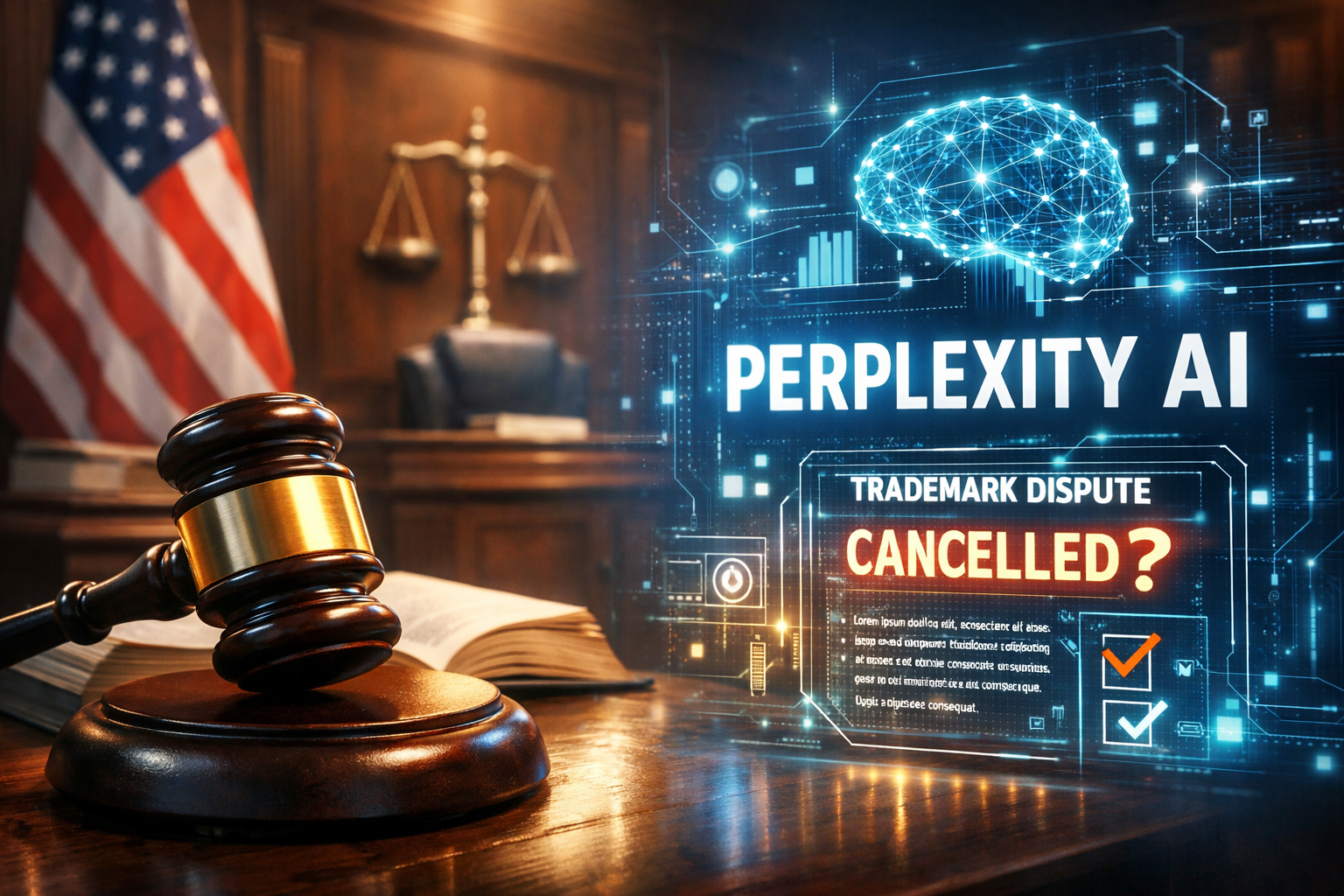
A federal trademark battle involving fast-rising AI search company Perplexity AI Inc. has taken a dramatic turn. What first looked like a decisive courtroom victory has now slipped into legal uncertainty. A U.S. judge has withdrawn an order canceling a rival firm’s trademark and reopened a critical question: Did the court have the authority to cancel it at all?
The reversal underscores how procedural law can reshape high-stakes intellectual property disputes. It also highlights the growing pressure on courts as artificial intelligence companies clash with traditional trademark holders over names, brands, and market identity.
A Swift Win, Then a Sudden Stop
In January, Perplexity AI appeared to score a clear win against Perplexity Solved Solutions Inc., a Texas-based software company that held a federal trademark registration for the word “Perplexity.” The court ruled in favor of the AI company after the Texas firm failed to defend its claims once its lawyers withdrew from the case.
The judge found that the trademark registration could be canceled due to fraud and procedural default. For Perplexity AI, the ruling offered immediate relief. It removed a legal obstacle hanging over its rapidly expanding brand and sent a strong signal to competitors and critics alike.
But that victory did not last long.
Days later, the same judge vacated the order. She raised concerns about jurisdiction, questioning whether the court retained the power to cancel the trademark after dismissing the underlying claims. The court has now ordered Perplexity AI to explain why the cancellation should still stand under federal law.
The ruling transformed a clean win into a renewed legal test.
Understanding the Jurisdiction Question
At the heart of the dispute lies a technical but powerful legal issue. Federal courts can only issue rulings when they have clear jurisdiction. If a case is dismissed too early, courts may lose authority to grant additional remedies, including trademark cancellation.
In this case, the judge signaled concern that the court may have crossed that boundary. Even if the trademark was vulnerable, the court must first confirm it had the legal right to invalidate it.
Legal analysts say this move reflects judicial caution rather than doubt about the merits of Perplexity AI’s arguments. Courts are increasingly careful when issuing orders that affect federal trademark registers, especially when one party is absent.
How the Trademark Fight Began
The dispute began when Perplexity Solved Solutions sued Perplexity AI, accusing the startup of trademark infringement and unfair competition. The Texas company argued that Perplexity AI’s name, branding, and online presence caused confusion among customers and violated its registered rights.
Perplexity Solved Solutions, founded years before the AI startup, offers enterprise software tools and collaboration platforms. It secured its federal trademark registration in 2022, years before Perplexity AI became a global name in AI-powered search.
Perplexity AI responded aggressively. It denied confusion claims and countered with a strategy aimed at wiping the trademark off the books entirely. When the Texas firm stopped actively defending the case, the AI company pushed for default judgment.
That strategy initially worked.
Default Judgment vs. Due Process
Default judgments are legal shortcuts with serious consequences. Courts issue them when one party fails to participate in litigation. While efficient, they also raise due-process concerns, especially in cases involving permanent remedies like trademark cancellation.
By vacating the cancellation order, the judge signaled the need to balance speed with fairness. The court must ensure it follows proper legal steps, even when one side stops participating.
This moment illustrates how procedure can outweigh substance. Even a strong argument can collapse if the court lacks authority to act.
A Pattern of IP Pressure on AI Firms
The trademark fight is not an isolated challenge for Perplexity AI. The company has become a central figure in broader legal battles over how artificial intelligence systems use names, content, and data.
As AI platforms grow more visible, they increasingly collide with traditional intellectual property law. Publishers, software firms, and brand owners argue that AI tools blur lines of ownership and attribution. AI companies counter that innovation demands flexibility and transformation.
Perplexity AI sits squarely in that tension. Its business model depends on summarizing, referencing, and synthesizing information at speed. That model has drawn scrutiny not only from trademark holders but also from content publishers and media organizations.
Comparing the Stakes: AI Startups vs. Legacy Brands
The Perplexity dispute highlights a growing divide in the digital economy.
AI-driven startups move fast. They scale globally. Their brands become valuable almost overnight. They often challenge existing IP frameworks and push courts to adapt.
Legacy rights holders, by contrast, rely on formal registrations and established legal protections. They see trademarks as shields against confusion and dilution. For them, enforcement is survival.
This clash creates friction. Courts must now decide how to apply decades-old trademark principles to companies whose products and reach did not exist when those rules were written.
What Happens Next
Perplexity AI now faces a clear task. It must convince the court that it still has jurisdiction to cancel the trademark, even after dismissing the original claims. If the court agrees, the cancellation may be reinstated. If not, the trademark could survive, forcing a new phase of litigation or settlement talks.
The outcome will matter beyond this case. It could influence how courts handle trademark cancellations tied to default judgments. It could also shape how aggressively AI companies pursue brand protection through litigation.
Why This Case Matters
This dispute goes beyond one word or one company. It reflects a legal system struggling to keep pace with technological change. As AI firms reshape markets and language itself, trademark law faces new tests of relevance and reach.
For Perplexity AI, the stakes are immediate. The company must protect its identity while navigating a legal maze. For the courts, the challenge is broader: enforcing the law without stifling innovation.
For now, the name “Perplexity” remains legally unresolved. The court’s next decision will determine whether the AI company can fully claim it—or whether this battle is only just beginning.