
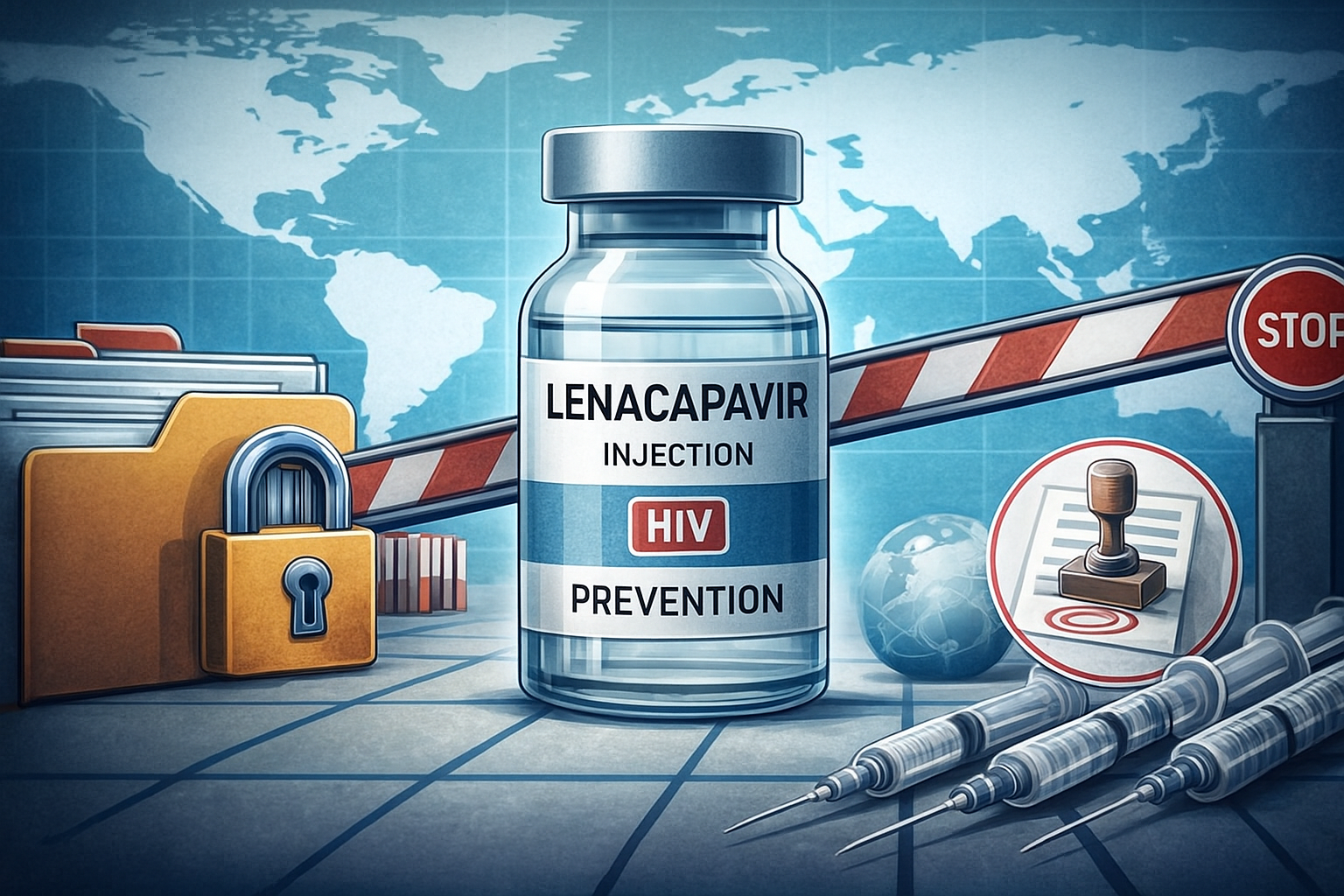
A major global health breakthrough is facing a shocking roadblock. Lenacapavir, a long-acting HIV prevention drug hailed as a game-changer, is now trapped in a web of patent disputes, regulatory hurdles, and manufacturing delays. The crisis threatens HIV-prevention programs worldwide, including in India, where millions hoped for rapid access to the powerful medicine.
Lenacapavir drew global attention because of its remarkable clinical performance. Trials showed near-perfect protection against HIV for many participants, raising hopes for an effective tool that needs dosing only twice a year. Health experts described it as one of the most promising interventions in decades.
However, the promise is now overshadowed by a deepening supply crisis — one driven by patent restrictions, stringent approval rules, and slow action from key regulatory agencies.
A Drug with Massive Potential — Now Stalled
Lenacapavir was developed by Gilead Sciences, a major US-based pharmaceutical firm. The company invested years of research and significant resources to create the drug. The injectable version quickly gained recognition for its convenience and effectiveness. For many communities, especially high-risk groups, it offered hope for a new era in HIV prevention.
Global regulators also moved fast. The US Food and Drug Administration (FDA) authorised Lenacapavir for treatment, and international bodies praised its preventive potential. Expectations soared when Gilead signed voluntary licensing agreements with several Indian manufacturers. Companies like Dr. Reddy’s Laboratories and Hetero Labs received permission to produce affordable generics for up to 120 low- and middle-income countries.
(Details: https://www.reuters.com/business/healthcare-pharmaceuticals/gilead-signs-deals-with-6-generic-drugmakers-sell-hiv-drug-low-income-countries-2024-10-02/)
The agreements were supposed to ensure wide global access. Experts predicted that generic Lenacapavir could cost less than USD 40 per year — far below Western prices.
But reality has unfolded differently.
Regulatory Hurdles in India Trigger a Crisis
India is a crucial player in global generic drug supply. Yet, the country’s regulatory framework has unexpectedly slowed Lenacapavir’s entry. The Central Drugs Standard Control Organisation (CDSCO) has not yet granted the needed waivers for local clinical trials. Without this waiver, Indian generic makers must complete extensive human studies before manufacturing and sale.
These requirements conflict with the urgent global need for rapid deployment.
Public health advocates argue that Lenacapavir already has strong safety data from international trials. They believe India should fast-track approval as it has done for other drugs in the past.
A related regulatory discussion: https://indianexpress.com/article/cities/pune/regulatory-intellectual-property-barriers-hinder-access-to-new-hiv-prevention-tool-experts-10391830/
For now, the approval delay means generic production cannot begin. That pushes widespread availability into 2026 or later, according to several analysts.
Patent Battles Intensify the Challenge
Patent issues further complicate the landscape. Gilead has filed multiple patent applications in India to expand protection for Lenacapavir. Civil society groups and patient-advocacy organisations have challenged many of these claims. They argue that some patents lack genuine innovation and could unfairly extend monopoly control.
Patent hearings continue at the Indian Patent Office.
Context: https://www.business-standard.com/india-news/indian-patent-office-to-hear-objections-on-gilead-s-hiv-drug-patent-claims-124091700981_1.html
If the patents are upheld, they could block or delay generic versions for years.
Global Impact: Programs at Risk
The supply crisis is not an isolated problem. It is rippling across continents.
Countries in Africa, Southeast Asia, and Latin America — regions with some of the highest HIV burdens — expected Indian generic manufacturers to supply affordable injections. Health ministries had already begun planning distribution pathways.
Now, those plans are on hold.
International NGOs fear a surge in new infections if prevention tools remain inaccessible. UNAIDS and global health researchers have consistently warned that long-acting treatment is essential for vulnerable groups who struggle with daily pills.
A detailed global perspective:
https://www.ianslive.in/india-must-ensure-equitable-timely-access-to-lenacapavir-to-tackle-global-hiv-cases–20250929171938
The delay also places financial strain on governments. Without generics, only the expensive branded version remains available — unaffordable for most public health programs.
Experts Call for Urgent Action
Public health experts are urging immediate reforms. They want India to:
- Fast-track regulatory approvals for generic Lenacapavir.
- Streamline clinical trial requirements when robust international data exists.
- Resolve patent disputes swiftly to prevent monopolistic delays.
- Coordinate with global health agencies to avoid supply imbalances.
Only decisive action can prevent a prolonged shortage.
Conclusion
Lenacapavir promised a revolution in HIV prevention. Its power, convenience, and long-acting profile generated global hope. But today, the supply crisis has become a serious threat. Patent battles, regulatory delays, and slow policy responses have created a bottleneck with real human consequences.
Millions await access. The world cannot afford to let bureaucracy stall a breakthrough that could save countless lives.
If authorities act with urgency, Lenacapavir can still fulfill its promise. But every month lost increases the risk — and the cost — of inaction.