
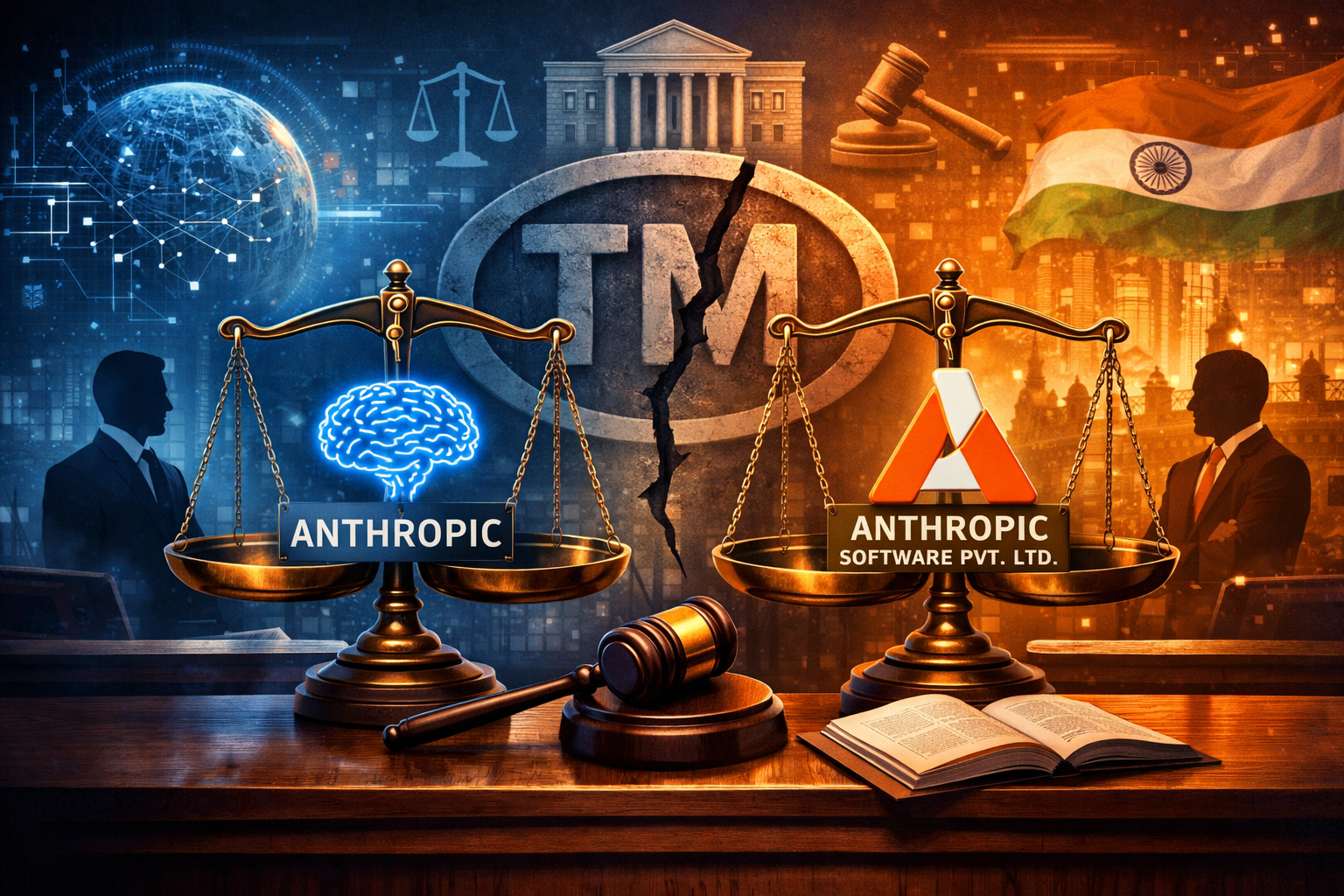
The rapid rise of artificial intelligence companies has triggered a new kind of legal battlefield — one where brand identity collides with global expansion. US-based AI company Anthropic, known for its Claude AI models and safety-focused research, now finds itself at the center of a trademark dispute in India after a local software firm filed a legal challenge over the use of the “Anthropic” name.
The case highlights a growing tension between emerging global tech giants and regional companies that claim earlier rights to similar brand identities. As India becomes a key market for AI innovation, this legal fight could shape how international technology firms approach trademark strategy when entering new jurisdictions.
Local Company Claims Prior Rights
The dispute began when Anthropic Software Pvt Ltd, an Indian company based in Karnataka, filed a lawsuit alleging trademark infringement and passing off. The Indian firm claims it has used the “Anthropic” name since 2017, well before the US AI company established its presence in the Indian market.
According to the complaint, the entry of the US-based Anthropic into India has created significant confusion among clients, partners, and online audiences. The local company argues that search engine results, media coverage, and market conversations increasingly associate the name with the global AI company, reducing visibility for the Indian business.
The plaintiff alleges that such confusion damages its brand identity and undermines goodwill built over years of operations. It has sought legal recognition of prior use rights and requested damages reportedly valued at approximately ₹1 crore.
Global AI Giant Expands into India
Anthropic has emerged as one of the most prominent AI startups globally. Founded by former OpenAI researchers, the company focuses on building advanced large language models designed with strong safety and alignment principles. Its Claude AI system competes with leading generative AI platforms and has attracted significant investor interest.
India represents a strategic growth market for global AI firms. The country offers a vast developer ecosystem, strong enterprise demand, and a rapidly growing digital economy. As part of its expansion strategy, Anthropic has reportedly begun building partnerships and exploring opportunities to scale operations within India.
However, rapid expansion often exposes companies to complex intellectual property risks. While a brand name may be globally recognized, local trademark laws operate independently in each jurisdiction. This creates potential conflicts when earlier users already exist within a specific market.
Legal Claims: Trademark Infringement vs Prior Use
The core of the dispute centers on competing claims over brand ownership and market recognition.
The Indian company argues that it holds prior use rights under Indian trademark law. Unlike some jurisdictions that prioritize registration alone, Indian law recognizes prior commercial use as a powerful basis for enforcement. Businesses that can demonstrate earlier and continuous use of a mark may succeed even against larger or internationally known brands.
The lawsuit alleges several legal violations, including:
- Trademark infringement through use of an identical or confusingly similar name.
- Passing off, where one business allegedly benefits from another’s established reputation.
- Brand dilution caused by market dominance of the global company.
From the perspective of the US-based Anthropic, the company may argue that its global reputation, distinct industry positioning, and different business scope reduce the likelihood of confusion. Courts often assess factors such as industry overlap, target customers, branding presentation, and overall market context when evaluating trademark disputes.
Court Proceedings and Early Developments
A commercial court in Karnataka has reportedly issued notice to the US company and initiated legal proceedings. However, the court did not grant an immediate interim injunction against Anthropic’s operations. This means the AI firm can continue using its name in India while the case proceeds.
The absence of an interim ban signals that the court may require deeper examination before imposing restrictions. Judges typically consider whether immediate harm exists and whether granting interim relief would cause disproportionate disruption.
Legal observers note that early stages of trademark disputes often focus on establishing evidence of prior use, consumer confusion, and market presence. Both parties are expected to present detailed documentation supporting their claims.
Comparative Challenges: Local Identity vs Global Branding
The dispute illustrates a broader trend facing international technology companies entering emerging markets.
Global AI firms often build strong brand recognition internationally. Yet regional businesses may already hold similar names, particularly in rapidly evolving sectors such as software and technology. This creates legal friction when global expansion intersects with local intellectual property frameworks.
For local companies, enforcing prior rights becomes essential to protect brand equity. Without legal action, smaller firms risk losing visibility and competitive differentiation.
For multinational startups, trademark conflicts pose strategic risks. Litigation can slow expansion, increase legal costs, and potentially force rebranding efforts in specific markets. In extreme cases, companies may need to adopt different brand identities regionally — a challenge that can disrupt marketing consistency.
Implications for India’s AI Ecosystem
India has emerged as a critical arena for artificial intelligence development. Government initiatives promoting digital transformation, combined with a large pool of engineering talent, have turned the country into a priority destination for global AI investment.
As more companies enter the market, trademark disputes may become increasingly common. Many AI startups adopt abstract or conceptual brand names, which raises the probability of overlap with existing entities.
The outcome of this case could influence how international companies approach trademark searches, registration strategies, and legal risk assessment before launching in India. It may also encourage local businesses to strengthen intellectual property protections early to avoid conflicts with future entrants.
Possible Outcomes and Industry Impact
Several potential scenarios could emerge as the case progresses.
The court could recognize the Indian company’s prior use rights and impose restrictions on the global AI firm’s branding within India. Alternatively, the court might find that the companies operate in sufficiently distinct markets to allow coexistence.
Settlement remains another likely possibility. Trademark disputes often conclude through negotiated agreements, including coexistence arrangements or licensing deals designed to minimize confusion.
Regardless of the final outcome, the case underscores a key lesson for the technology industry: brand strategy must align with local legal realities. Even fast-growing global innovators cannot assume automatic rights to their names across all jurisdictions.
A Defining Moment for AI Branding
The legal clash between two companies sharing the same name reflects the evolving complexities of the AI era. As artificial intelligence reshapes industries worldwide, brand identity has become a critical asset — and a potential source of conflict.
For Anthropic, the dispute represents a test of its international expansion strategy. For the Indian firm, it is a fight to preserve brand ownership and market recognition.
More broadly, the case highlights how intellectual property law continues to play a decisive role in shaping the future of technology markets. As AI companies expand across borders, legal frameworks governing trademarks and prior use will remain central to determining who controls the names that define the next generation of innovation.