U.S. Chipmaker Moves Aggressively to Protect Innovation
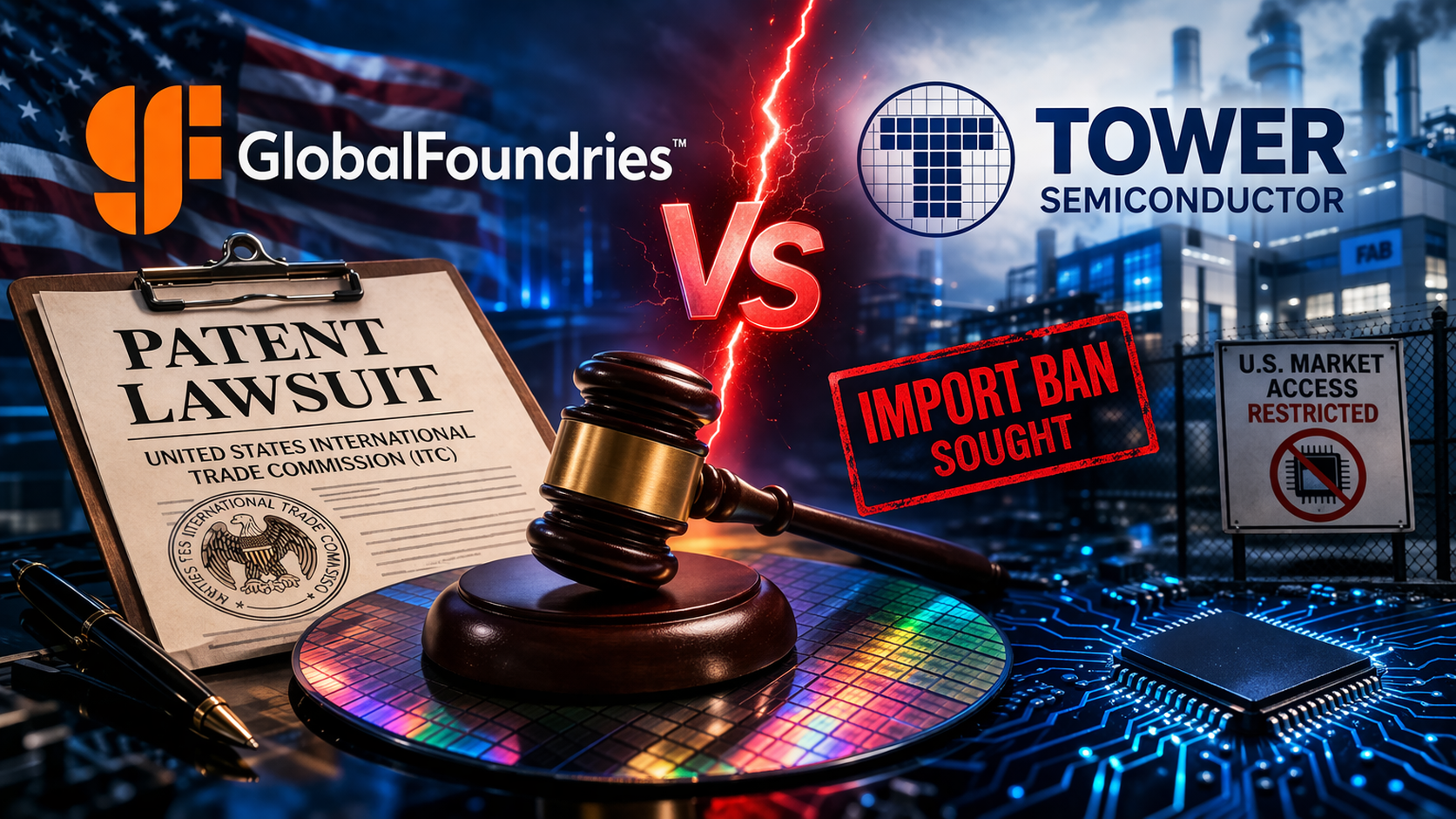
GlobalFoundries has launched a powerful legal offensive against rival Tower Semiconductor. The U.S.-based chipmaker has filed multiple patent infringement lawsuits, signaling a sharp escalation in the global semiconductor battle.
The company has taken its fight to both the U.S. International Trade Commission (ITC) and the U.S. District Court for the Western District of Texas. Its goal is clear and aggressive: block Tower Semiconductor from importing allegedly infringing chips into the United States and recover financial damages. (Investing.com India)
This move reflects more than a legal dispute. It highlights a growing war over intellectual property in the semiconductor industry, where innovation defines dominance.
11 Patents at the Center of the Dispute
GlobalFoundries claims that Tower Semiconductor has infringed 11 U.S. patents tied to critical chip manufacturing technologies. These patents cover high-performance processes used across:
- Smartphones
- Automotive systems
- Aerospace technologies
- Communications infrastructure
According to the complaint, Tower allegedly used these technologies without authorization, benefiting from years of GlobalFoundries’ research and development investments. (Investing.com India)
GlobalFoundries argues that such actions distort fair competition. The company stresses that semiconductor innovation requires massive capital, time, and expertise—none of which can be bypassed without consequences.
Import Ban Could Disrupt U.S. Chip Supply Chains
The most striking demand in the lawsuit is the import ban request.
GlobalFoundries has asked the ITC to block the entry of Tower Semiconductor chips into the U.S. market if they are found to infringe its patents. (TrendForce)
This is not a symbolic request. An ITC exclusion order could:
- Cut off Tower’s access to one of its most important markets
- Disrupt supply chains for customers relying on Tower’s chips
- Force redesigns or sourcing shifts for affected products
The U.S. remains a critical hub for semiconductor consumption and innovation. Losing access would create immediate and long-term pressure on Tower Semiconductor’s business.
Financial Stakes: Damages and Lost Profits
GlobalFoundries is not stopping at injunctive relief. The company is also seeking monetary compensation for lost profits.
The lawsuits argue that Tower’s alleged infringement diverted business away from GlobalFoundries. If proven, this could result in:
- Significant financial penalties
- Licensing fees or settlement agreements
- Long-term revenue adjustments
Legal experts note that patent disputes in the semiconductor industry often lead to high-value settlements due to the strategic importance of the technologies involved.
A Clash of Scale: Patent Strength vs Market Position
The dispute also reveals a stark contrast in intellectual property portfolios.
- GlobalFoundries: Over 8,000 patents built through decades of R&D
- Tower Semiconductor: Fewer than 500 patents (GlobalFoundries)
This imbalance forms a key pillar of GlobalFoundries’ argument. The company claims its extensive innovation base gives it a strong legal and competitive advantage.
However, market dynamics tell a more nuanced story.
Both companies operate in the specialty semiconductor segment, focusing on niches such as:
- Radio-frequency (RF) chips
- Silicon photonics
- Analog and mixed-signal technologies
Unlike giants like TSMC or Intel, they do not compete at the bleeding edge of chip miniaturization. Instead, they dominate specific, high-value applications.
Tower Semiconductor Pushes Back
Tower Semiconductor has firmly rejected the allegations.
The company states it will vigorously defend its intellectual property and technological leadership. It highlights its:
- Strong global R&D investments
- U.S.-based manufacturing facilities
- Established innovation track record (Reuters)
This response sets the stage for a prolonged legal battle. Tower’s defense will likely focus on:
- Independent development of its technologies
- Differences in manufacturing processes
- Potential invalidity of GlobalFoundries’ patent claims
Market Reaction Signals Investor Concern
The market reacted quickly to the news.
- Tower Semiconductor shares dropped sharply
- GlobalFoundries stock also declined
Both declines exceeded broader market losses, indicating investor concern about:
- Legal uncertainty
- Potential supply disruptions
- Financial exposure on both sides (Reuters)
Investors understand that patent litigation in semiconductors can drag on for years and reshape competitive dynamics.
Strategic Context: The Semiconductor Power Struggle
This lawsuit arrives at a critical moment for the global semiconductor industry.
Key trends shaping the context include:
1. Rising Importance of Intellectual Property
Chip manufacturing depends heavily on proprietary processes. Patents are not just legal tools—they are strategic weapons.
2. U.S. Push for Domestic Semiconductor Strength
GlobalFoundries has committed billions to expand U.S. manufacturing and R&D. Protecting its IP aligns with broader national priorities.
3. Intensifying Competition in Specialty Chips
While leading-edge chips grab headlines, specialty chips power essential systems—from cars to telecom networks.
This case highlights how competition in this segment is becoming just as fierce.
What Happens Next?
The legal process will unfold on two parallel tracks:
ITC Investigation
- Focus: Import ban decision
- Timeline: Typically faster than court cases
- Outcome: Possible exclusion order blocking imports
District Court Case
- Focus: Patent validity and damages
- Timeline: Longer, often years
- Outcome: Financial compensation or settlement
If GlobalFoundries succeeds at the ITC, Tower could face immediate restrictions—even before the court case concludes.
Industry Impact: A Turning Point?
This lawsuit could set a major precedent.
If the ITC grants an import ban, it will send a strong signal to the semiconductor industry:
- Patent enforcement will be aggressive
- Unauthorized use of process technologies will carry heavy risks
- Companies must strengthen IP compliance and licensing strategies
For customers, the case introduces uncertainty. Companies relying on Tower’s chips may need contingency plans.
Conclusion: Innovation War Enters a New Phase
GlobalFoundries has made a bold move. It is not just defending patents—it is defending its position in a highly competitive market.
Tower Semiconductor, meanwhile, faces a defining challenge. Its response will shape not only the outcome of this case but also its long-term standing in the industry.
The battle underscores a simple truth: in the semiconductor world, innovation is power—and patents are the battlefield.