
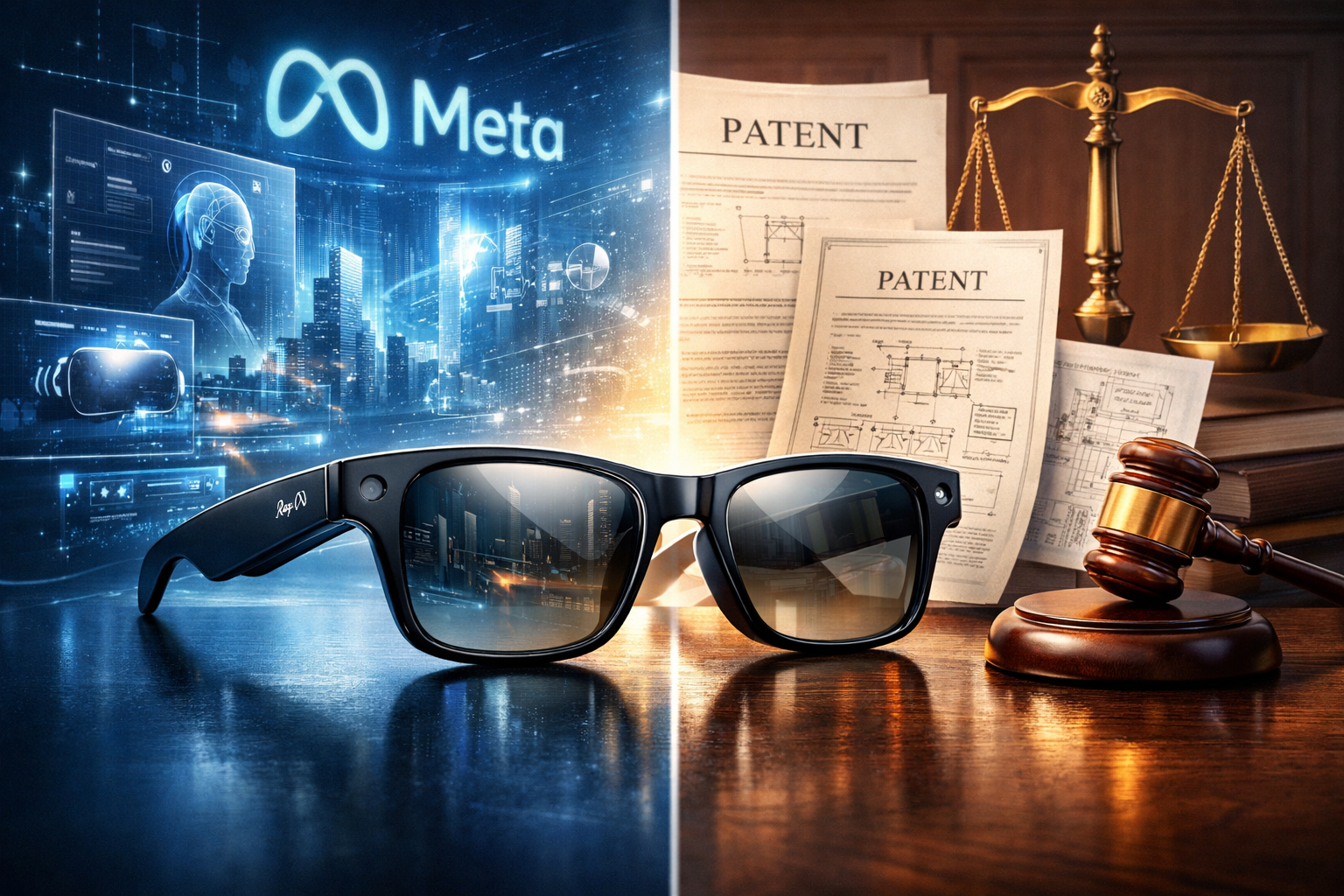
Meta Platforms Inc. is facing a high-stakes legal challenge that could disrupt its ambitious push into smart glasses and augmented reality. A smaller but highly specialised rival has accused the tech giant of infringing core patents that underpin modern smart eyewear.
The lawsuit, filed in a US federal court in Massachusetts, comes from Solos Technology Ltd., a Cambridge-based wearable technology company. Solos alleges that Meta and its eyewear partner EssilorLuxottica, owner of brands such as Ray-Ban and Oakley, unlawfully used patented technologies in Meta’s Ray-Ban smart glasses.
The complaint seeks billions of dollars in damages and demands an injunction that could block further sales of the accused products in the United States.
A Clash of Scale and Innovation
The dispute places two very different players head-to-head.
Solos is a focused innovator. It has spent more than a decade developing smart-glasses technology and holds patents covering essential systems such as advanced audio beamforming, multimodal sensors, real-time data processing, and sensor fusion. These features allow smart glasses to hear clearly, respond instantly, and interact intelligently with users.
Meta operates at a completely different scale. The company dominates social media and has invested heavily in hardware through its Reality Labs division. Smart glasses play a central role in Meta’s long-term vision of immersive computing, artificial intelligence, and hands-free digital interaction.
This lawsuit challenges whether Meta built its smart glasses independently or borrowed foundational ideas from a smaller rival.
What Solos Is Claiming
According to the lawsuit, Meta’s Ray-Ban smart glasses infringe multiple US patents owned by Solos. These patents cover technologies that are not optional add-ons but essential to how smart glasses function in real-world environments.
Solos argues that Meta and its partners were aware of its technology years before launching competing products. The complaint alleges that Solos showcased its inventions at industry events and private demonstrations, where executives and engineers from major eyewear brands gained first-hand exposure.
The lawsuit also claims that individuals with knowledge of Solos’ proprietary systems later joined Meta, giving the company access to confidential technical insights. Based on these allegations, Solos is accusing Meta of willful infringement, a charge that could significantly increase potential damages if proven in court.
Meta’s Smart Glasses Strategy
Meta entered the smart-glasses market through a partnership with EssilorLuxottica, blending consumer electronics with established fashion eyewear brands. The Ray-Ban Meta glasses combine cameras, microphones, open-ear speakers, and AI-powered features into frames that resemble traditional sunglasses.
The products have gained strong consumer traction and are widely viewed as one of the most successful smart-glasses launches to date. Meta has positioned them as a stepping stone toward fully featured augmented-reality glasses, a market the company believes will define the next computing platform.
Solos, by contrast, has focused on modular, upgrade-friendly designs and enterprise-grade functionality. Its products emphasise adaptability and long-term usability rather than mass-market scale.
The lawsuit highlights the tension between rapid commercialisation and deep-tech originality.
Why This Case Matters
Patent disputes are common in technology. What makes this case unusual is its focus on core operational technologies rather than surface-level features or design elements.
If the court finds that Meta infringed patents covering fundamental smart-glasses functions, the implications could be far-reaching. Meta may be forced to redesign hardware, negotiate costly licensing deals, or temporarily halt sales of existing products.
For EssilorLuxottica, the case introduces unexpected legal risk into a partnership that has otherwise been commercially successful. Investors are already watching closely for signs of financial or strategic fallout.
A Test for Big Tech
The lawsuit underscores a growing trend in the technology sector. Smaller innovators are increasingly willing to challenge large platforms in court, especially when patents protect foundational systems rather than incremental improvements.
Meta’s vast resources give it legal firepower, but its visibility also makes it a prime target. Solos, while smaller, holds a tightly focused intellectual property portfolio that could prove difficult to bypass if the patents hold up under scrutiny.
The case also sends a message to the broader AR and wearable-tech industry. As smart glasses move from novelty to mainstream product, intellectual property battles are likely to intensify.
What Comes Next
The legal process is expected to be lengthy. Early stages will focus on patent validity, infringement analysis, and whether Solos can secure any interim relief. Both sides may also explore settlement or licensing discussions to avoid prolonged uncertainty.
Meta and EssilorLuxottica have not yet issued detailed public responses to the allegations.
Regardless of the outcome, the lawsuit marks a critical moment for the smart-glasses market. It tests how innovation is protected, how partnerships are structured, and how aggressively large technology companies can scale new hardware categories without stepping on existing intellectual property.
A Defining Moment for Smart Glasses
Smart glasses are no longer experimental gadgets. They are emerging as powerful computing tools with direct implications for communication, work, and daily life.
This legal battle will help define who controls the technologies that make them possible.
For Meta, the case threatens momentum in one of its most important future bets. For Solos, it is a fight to defend years of research and engineering.
For the industry, it is a reminder that in the race to shape the next platform, innovation and ownership still matter.