
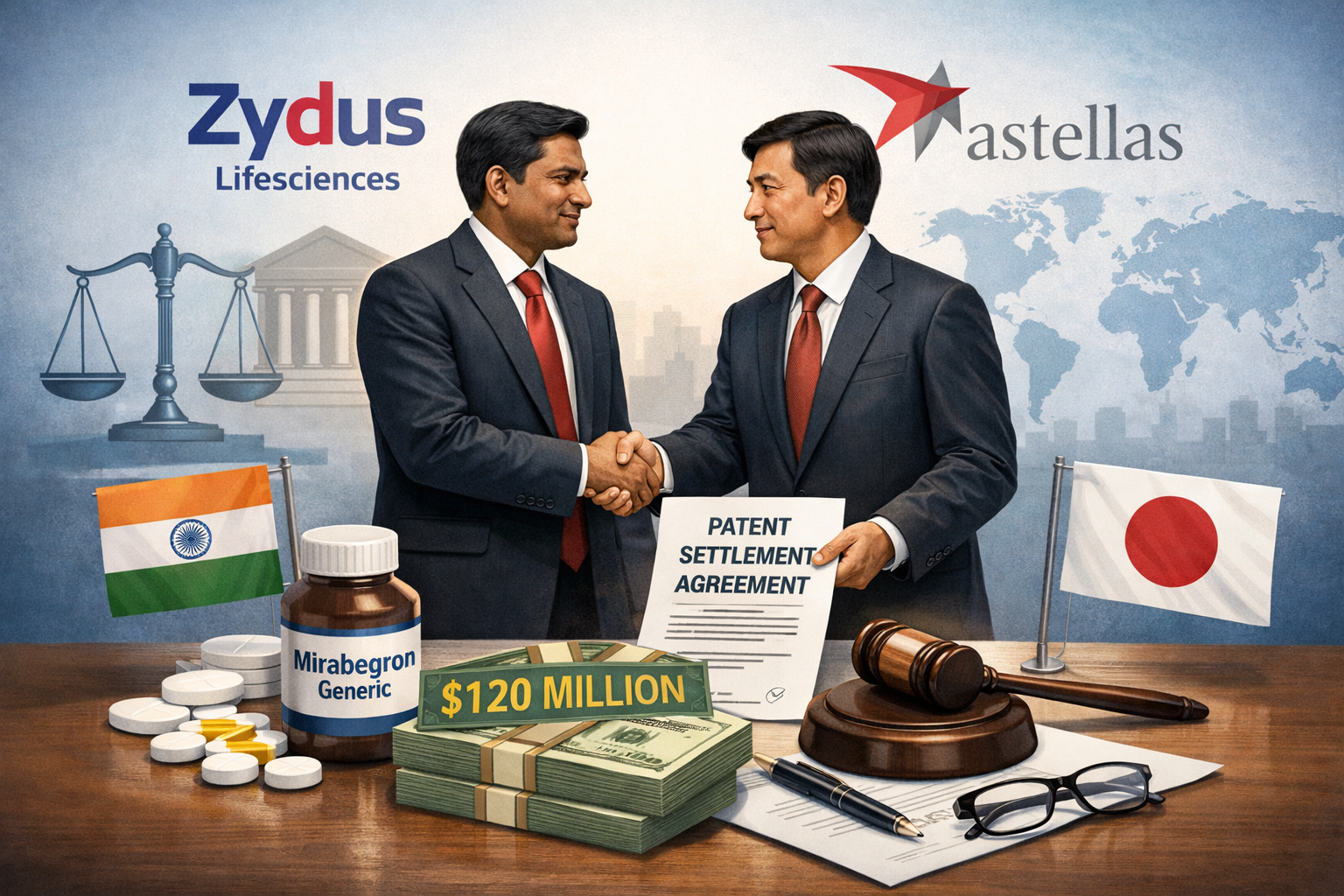
Zydus Lifesciences has agreed to pay $120 million to Japan-based Astellas Pharma to resolve long-running patent litigation over the blockbuster overactive bladder drug Mirabegron. The settlement marks a strategic turning point for both companies, ending costly legal battles while allowing Zydus to continue selling its generic version in the United States under a licensing framework.
The agreement highlights the evolving dynamics between brand-name pharmaceutical companies and generic drug manufacturers. Instead of prolonged courtroom fights, companies increasingly pursue negotiated settlements that balance patent protection with commercial opportunity.
Settlement Terms and Financial Structure
Under the settlement, Zydus will make an upfront payment of $120 million to Astellas. The Indian drugmaker will also pay ongoing licensing fees tied to sales volume until September 2027. In exchange, Astellas will resolve pending litigation related to patents covering Mirabegron formulations.
The deal effectively converts the dispute into a licensed arrangement. Zydus secures legal clarity and operational stability, while Astellas retains economic value from its intellectual property.
Industry observers view the settlement as a calculated compromise. Litigation risks remain high in pharmaceutical patent disputes, especially when key patents survive legal challenges. By agreeing to financial terms, both companies avoid the unpredictability of trial outcomes and potential market disruption.
Background of the Patent Conflict
The dispute centered on patents protecting Mirabegron’s extended-release formulation. Astellas markets the drug under the brand name Myrbetriq, a major revenue generator in the urology and bladder treatment market.
Generic manufacturers typically challenge brand patents through abbreviated new drug application (ANDA) pathways in the United States. These challenges often trigger patent infringement lawsuits under the Hatch-Waxman Act, setting the stage for complex legal battles over patent validity and infringement.
Zydus entered the market with a generic version following regulatory approvals, prompting Astellas to enforce its patent rights. Courts had previously upheld the validity of at least one key patent, strengthening Astellas’ position and increasing pressure on generic challengers.
Faced with the possibility of damages or an injunction, Zydus opted for a negotiated resolution.
Strategic Benefits for Zydus
The settlement provides significant strategic advantages for Zydus despite the large payment.
First, it removes legal uncertainty. Patent litigation in the US can drag on for years and expose companies to substantial financial penalties. By resolving disputes now, Zydus eliminates the risk of losing market access due to an unfavorable ruling.
Second, the agreement preserves revenue streams from a high-value product. The US pharmaceutical market remains the world’s largest and most profitable, making continued participation crucial for global generic companies.
Third, the licensing framework allows predictable financial planning. Instead of unpredictable litigation costs, Zydus now faces defined licensing obligations that can be integrated into its commercial strategy.
The move reflects a broader shift among generic drugmakers. Rather than pursuing aggressive litigation through final judgment, many companies now prefer negotiated settlements that guarantee access to key markets.
Advantages for Astellas Pharma
Astellas also emerges from the settlement with clear gains.
The company secures a substantial upfront payment while reinforcing the strength of its patent portfolio. By structuring the agreement around licensing fees, Astellas continues to earn revenue even as generic competition enters the market.
This approach allows Astellas to maintain brand value while managing the inevitable transition to generic competition. Instead of a sudden revenue cliff, the company converts potential losses into controlled income streams.
Moreover, settlements reduce legal costs and eliminate the risk of adverse rulings that could weaken patent protections across multiple jurisdictions.
Comparative Industry Trends
The Zydus-Astellas agreement mirrors recent settlements in the pharmaceutical sector. Patent disputes increasingly end in negotiated licensing arrangements rather than courtroom victories.
In similar cases involving Mirabegron, other generic manufacturers have reached financial settlements with Astellas. These deals signal a broader strategic shift: brand companies seek compensation and controlled competition rather than outright exclusion of generics.
From a commercial perspective, such settlements create a middle ground. Brand companies preserve patent value, while generics gain market access earlier than they might through traditional patent expiration timelines.
Critics, however, sometimes raise concerns about potential antitrust implications. Regulators closely monitor agreements to ensure they do not unlawfully delay competition or involve “pay-for-delay” structures. Licensing-based settlements typically avoid these issues by allowing market participation rather than blocking entry.
Impact on the Generic Drug Landscape
The settlement underscores how intellectual property remains the central battleground in the pharmaceutical industry. Patents determine market exclusivity, pricing power, and competitive timelines.
Generic companies aim to challenge patents to introduce lower-cost alternatives. Brand companies defend those patents to protect revenue and research investments.
The result is a continuous cycle of litigation and negotiation. Agreements like the Zydus-Astellas deal illustrate how both sides increasingly prioritize commercial certainty over prolonged legal confrontation.
For patients and healthcare systems, the outcome may produce mixed effects. Generic competition generally lowers drug prices, but licensing fees may influence pricing strategies depending on market dynamics.
Financial and Market Implications
Investors often interpret settlements as positive signals because they remove legal overhang. For Zydus, the agreement clarifies future earnings potential tied to Mirabegron sales. For Astellas, the financial terms reinforce the profitability of its intellectual property assets.
Analysts expect continued consolidation of legal disputes across major therapeutic areas as companies seek faster resolutions.
The deal also highlights the growing importance of cross-border pharmaceutical partnerships. Indian generics manufacturers continue to expand their presence in the US market, frequently navigating complex patent landscapes to do so.
The Bigger Picture
Pharmaceutical innovation relies heavily on patent protection, yet market realities demand eventual competition. The Zydus-Astellas settlement represents a pragmatic solution that reflects both forces.
Instead of a decisive legal victory for either side, the agreement creates a negotiated balance. Astellas preserves economic returns from its innovation. Zydus secures continued access to a valuable market opportunity.
As patent disputes grow more complex and costly, similar settlements are likely to become the norm rather than the exception. Companies increasingly recognize that strategic compromise can deliver faster and more predictable outcomes than courtroom battles.
The Mirabegron agreement demonstrates how legal strategy, business priorities, and market competition intersect in today’s pharmaceutical landscape. By turning litigation into licensing, both companies reshape rivalry into structured collaboration — a trend that may define the next phase of global drug competition.