
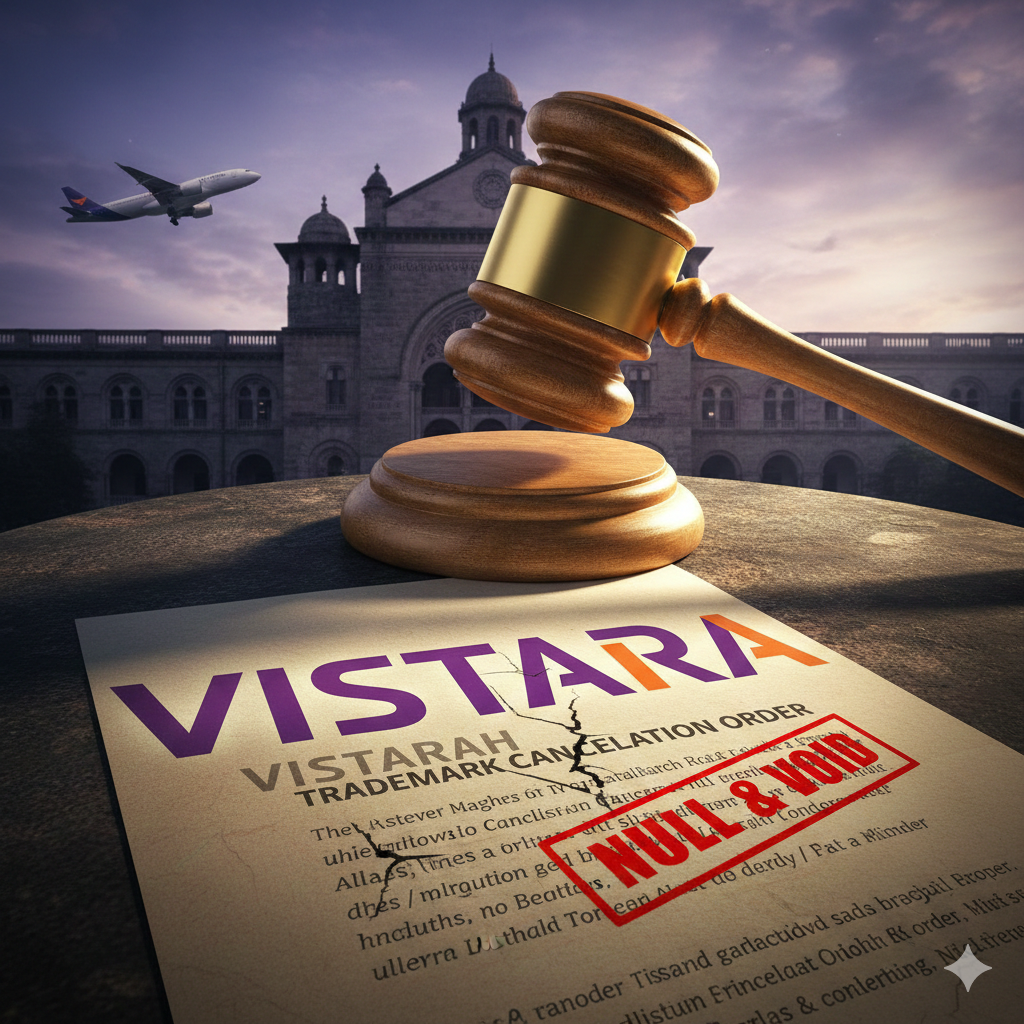
In a significant legal victory for brand integrity, the Bombay High Court has ordered the removal of the trademark “Vistarraah” from the official register. The court ruled that the name was “deceptively similar” to the internationally recognized and “well-known” brand VISTARA.
This verdict, delivered in December 2025, serves as a masterclass in how Indian courts protect iconic brands from phonetic and visual exploitation.
The Dispute: Airline vs. Agriculture
The case was initiated by Air India, which now manages the Vistara legacy following its merger. They discovered that Girish Basrimalani (trading as T.G. Exports) had registered “Vistarraah” under Class 31, a category for agricultural products and fresh produce.
Air India filed a rectification petition, arguing that the registration was illegal. They asserted that “VISTARA” had already achieved “well-known” status, a prestigious legal shield that protects a brand across all industries, regardless of the products being sold.
Why the Court Intervened
Justice Arif S. Doctor examined the evidence and found the respondent’s mark to be fundamentally flawed. The court’s decision hinged on three critical factors:
- Phonetic Identity: When spoken aloud, “Vistarraah” is indistinguishable from “Vistara.” The addition of extra letters did nothing to change its sound.
- Visual Similarity: The structural design of the mark mirrored the airline’s branding. The court noted that “the stylization adds no distinguishing characters.”
- Bad Faith: Despite multiple cease-and-desist notices and opposition from Air India, the respondent continued to use the mark. Their failure to appear in court further suggested they had no valid reason for choosing such a similar name.
“The risk of consumers believing that ‘Vistarraah’ goods originate from or are associated with VISTARA is both real and substantial.” — Justice Arif S. Doctor
The Legal Shield: Section 11(10) and Well-Known Marks
The judgment leaned heavily on the Trade Marks Act, 1999. Specifically:
- Section 11(2)(a): Prohibits marks identical to earlier, well-known trademarks.
- Section 11(10): Mandates that the Registrar protect well-known marks and consider any “bad faith” during registration.
Because Vistara provides food services in its lounges and on flights, the court found a high chance that customers would assume a “trade connection.” A consumer buying “Vistarraah” produce might wrongly believe it was an extension of the airline’s premium hospitality wing.
2025: A Year of Aggressive Brand Protection
This ruling is part of a broader shift in 2025 toward a more robust Intellectual Property (IP) landscape in India.
| Trend in 2025 | Impact on Brand Owners |
|—|—|
| New Trademark Rules 2025 | Applications and oppositions now follow a “fast-track” digital-first timeline, reducing delays. |
| Expansion of “Well-Known” Status | Courts are increasingly granting this status to brands like Nutella, Ratan Tata, and Vistara, creating a “cross-sector” shield. |
| Personality Rights Protection | Recent 2025 rulings have protected celebrities and brands from unauthorized AI-generated imitations. |
The Verdict: Trademark Canceled
The Bombay High Court concluded that allowing “Vistarraah” to remain on the register would compromise the “sanctity and credibility” of the trademark system. The court ordered the Trade Marks Registry to cancel the mark immediately.
Key Takeaways for Businesses- Do Not Mimic: Even if you operate in a different industry, using a name that “sounds like” a famous brand is a high-risk gamble.
- Reputation is Universal: If your brand is “well-known,” the law protects you from agricultural exports to aviation.
- Act Swiftly: Air India’s proactive monitoring and legal action were key to winnings.