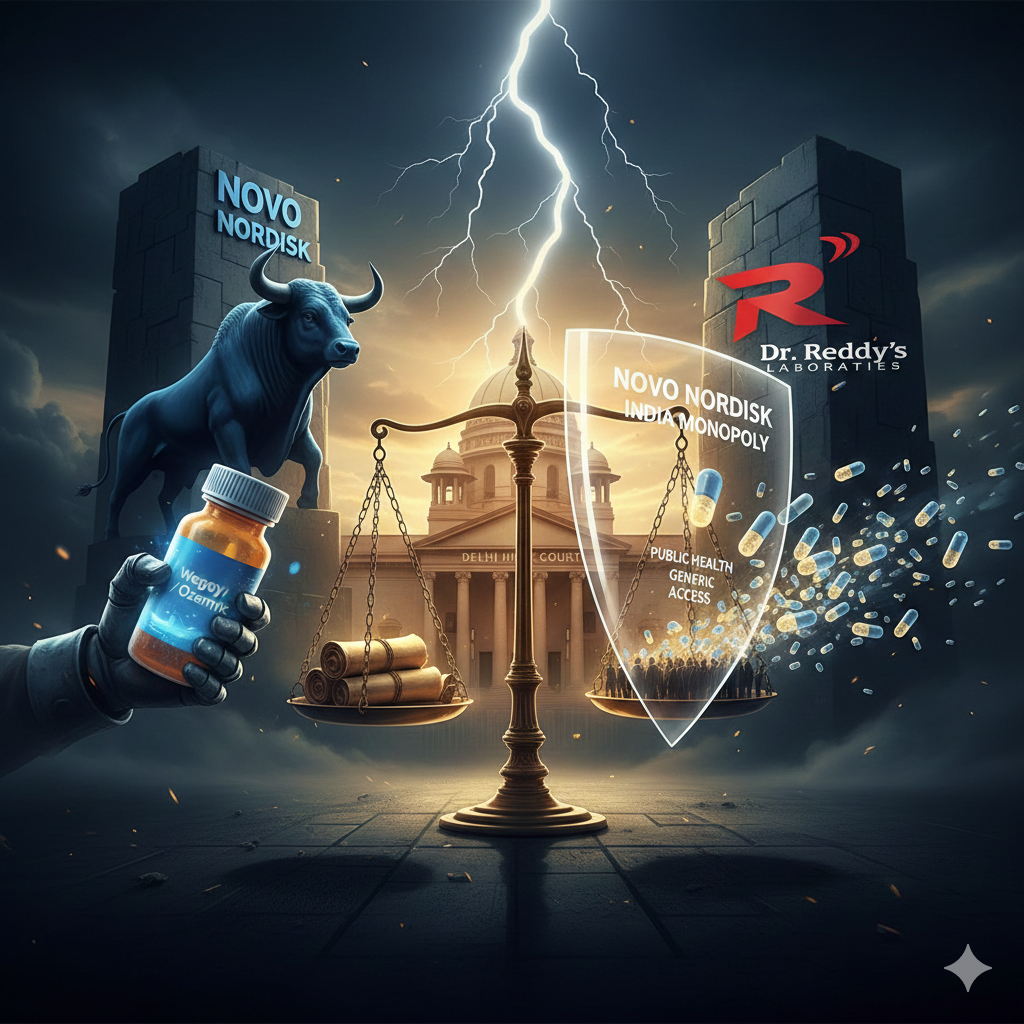
The battle over the world’s most sought-after weight-loss drug escalated this week. The Delhi High Court made a pivotal decision. It cleared the path for Dr. Reddy’s Laboratories (DRL) to manufacture and export generic semaglutide. This is the key component in Novo Nordisk’s blockbuster drugs, Wegovy and Ozempic. The ruling marks a serious legal challenge to the Danish pharmaceutical giant’s exclusivity in India. Experts call it a potential watershed moment for global access to affordable anti-obesity medicines.
High-Stakes Legal Siege
Novo Nordisk initiated the legal siege. The company sued DRL for patent infringement. Novo Nordisk claimed DRL was importing the active ingredient. DRL was allegedly producing finished formulations without consent. The Danish firm asserted its right to full exclusivity. Its Indian patent for the semaglutide formulation, IN 262697, remains valid until March 2026. Novo Nordisk is aggressively protecting this intellectual property. It is preparing for the highly anticipated launch of Wegovy in the Indian market.
The market value is enormous. Semaglutide treatments generate billions globally. India’s anti-obesity drug market is experiencing a massive surge. It has grown exponentially in recent years. This lawsuit is not just a domestic quarrel. Its outcome will fundamentally disrupt future sourcing strategies worldwide.
Court Rules: India Sales Barred, Export is Free
The Delhi High Court delivered a carefully balanced interim order. Justice Manmeet Pritam Singh Arora made a crucial distinction. The court restrained DRL from selling or marketing its generic version within India. This injunction will remain in force until Novo Nordisk’s patent expires. The court upheld Novo Nordisk’s domestic exclusivity for now.
However, the ruling offered a huge victory to Dr. Reddy’s. The court allowed DRL to continue manufacturing and exporting the drug. This export is permitted to any country where Novo Nordisk does not hold a valid patent. DRL successfully presented its case for export-only manufacturing.
Crucially, the court stated DRL established a prima facie credible challenge against the validity of Novo Nordisk’s patent. This observation severely weakens the foundation of Novo Nordisk’s claim. It signals the court’s skepticism regarding the patent’s full enforceability.
DRL’s Powerful Defiance
Dr. Reddy’s based its defense on two powerful points. First, DRL challenged the patent’s legitimacy. The firm filed a separate revocation petition. It claimed Novo Nordisk was engaging in evergreening. Evergreening is a controversial tactic. It involves making minor modifications to an existing molecule. Companies use it to extend their patent monopoly beyond the intended period. DRL argued the semaglutide formulation lacked genuine novelty. It contended that the core innovation was already disclosed in an earlier patent.
Second, DRL invoked India’s Bolar exemption (Section 107A(b)). This law is vital for generic manufacturers. It permits the making, constructing, or selling of a patented invention. These actions must be solely for uses reasonably related to regulatory approval. DRL argued its exports fall under this exemption. The products are intended for markets where the patent no longer applies. This defense is a cornerstone of India’s robust generic pharmaceutical industry.
DRL’s legal counsel assured the court of compliance. They affirmed DRL holds a license to manufacture. However, they confirmed DRL lacks a license to sell domestically. This undertaking proved critical in securing the export allowance.
The Generic Wave Looms Large
The legal uncertainty creates immediate market anxiety. Novo Nordisk faces mounting pressure. Eli Lilly’s rival drug, Mounjaro (tirzepatide), has already entered the Indian market. Novo Nordisk must now defend its patent rights aggressively. It must also accelerate its commercial strategy. The company recently reduced Wegovy’s price by 37%. It partnered with Emcure Pharma for wider distribution. These moves signal a fierce battle for market share.
Other Indian drugmakers are watching closely. Cipla, Lupin, and Glenmark are reportedly preparing for the generic wave. A successful challenge by DRL could trigger a flurry of similar generic launches. Industry analysts predict massive price drops. Generic entry could slash treatment costs by nearly 80%. This would make life-changing anti-obesity treatments accessible to millions.
The Delhi High Court’s decision to allow exports is a clear boost. It validates India’s position as a global manufacturing hub for affordable medicines. It also highlights the growing international tension. Companies must balance intellectual property rights with public health needs. The final verdict on the patent’s validity will redefine this multi-billion dollar fight. The outcome remains one of the most keenly watched legal developments in the global pharmaceutical landscape today. Novo Nordisk must now mount a final, definitive defense of its prized intellectual property. DRL stands ready to disrupt the market with its generic defiance.