
Madras High Court Crushes Intra-Court Appeals in Patent Disputes

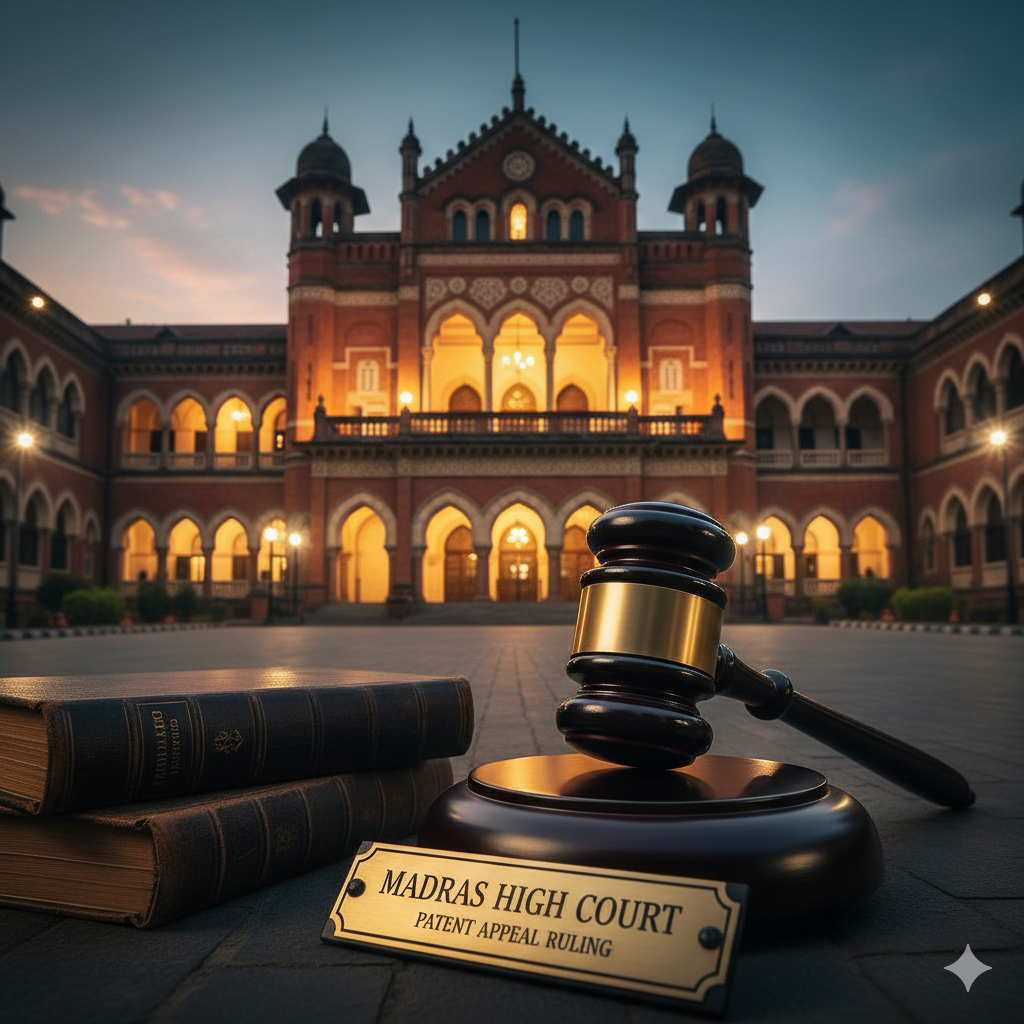
A professional legal graphic featuring the Madras High Court building in the background with a wooden gavel and law books in the foreground. A gold-embossed plaque reads "Madras High Court Patent Appeal Ruling," symbolizing the finality of the court's decision.

In a landmark ruling that reshapes the procedural landscape of intellectual property litigation in India, the Madras High Court has declared that no intra-court appeal (Letters Patent Appeal) can be entertained against a Single Judge’s decision when that judge is exercising appellate jurisdiction under the Patents Act, 1970.

The decision, delivered in the case of Italfarmaco S.p.A. v. Deputy Controller of Patents and Designs, effectively closes a long-debated procedural loophole and brings the Madras High Court in line with the Delhi High Court, ensuring a more uniform approach to patent disputes across India’s major commercial hubs.


The Legal Dispute: A Question of Procedure

The case reached the Division Bench of the Madras High Court after Italfarmaco S.p.A., an Italian pharmaceutical major, sought to challenge a Single Judge’s order that had upheld the Patent Office’s rejection of their patent application.

The central question was whether a litigant, dissatisfied with an order passed by a Single Judge in a patent appeal, could approach a two-judge (Division) bench of the same High Court under the “Letters Patent” (the founding charters of the High Courts).

Historically, “Letters Patent Appeals” (LPAs) have served as an internal mechanism for correcting errors by Single Judges. However, the Patent Office and the Deputy Controller argued that once the Intellectual Property Appellate Board (IPAB) was abolished in 2021, and its powers transferred to the High Courts, the specialized nature of the Patents Act superseded the general internal rules of the Court.


The Court’s Reasoning: A “Special Law” Precedent

The Division Bench’s judgment rests on three critical pillars of Indian law:

1. The Patents Act as a Self-Contained Code

The court emphasized that the Patents Act, 1970, is an exhaustive and specialized statute. Section 117A of the Act explicitly lists which orders of the Controller are appealable. The Court noted that the legislature chose not to include a provision for a “Second Appeal” within the High Court. By failing to provide for such an appeal, the legislature intended for the Single Judge’s appellate decision to be final within the High Court system.

2. The Impact of the Tribunals Reforms Act, 2021

Until 2021, appeals against the Patent Office were heard by the IPAB. When the IPAB was abolished, its jurisdiction was transferred to the High Courts. The Madras High Court reasoned that since there was no intra-board appeal within the IPAB, there should not be a “bonus” layer of appeal just because the jurisdiction shifted to the High Court. The High Court, in this context, is merely stepping into the shoes of the defunct tribunal.

3. Restraints of the Commercial Courts Act, 2015

The Court also highlighted Section 13(1A) of the Commercial Courts Act. This Act, which governs patent disputes as “commercial disputes,” strictly limits appeals. It mandates that an appeal shall lie only from those orders specifically enumerated in Order XLIII of the Code of Civil Procedure (CPC). Since a Single Judge’s judgment on a patent appeal is not among those listed, the Division Bench concluded it lacked the statutory authority to hear the case.


Comparison: The New Litigation Roadmap

Before this ruling, the “maintainability” of intra-court appeals in patent matters was a gray area, often leading to years of procedural delays. The following table illustrates the streamlined process following the Italfarmaco decision:

Procedure PhasePrevious Practice (Uncertain)New Legal Standard (Madras HC)
Originating OfficeIndian Patent Office (Controller)Indian Patent Office (Controller)
First AppealSingle Judge (High Court)Single Judge (High Court)
Second AppealLetters Patent Appeal (Division Bench)PROHIBITED
Highest RecourseSupreme Court of IndiaSupreme Court of India (SLP)

Industry Impact: Faster Resolution vs. Limited Recourse

Legal experts and stakeholders in the pharmaceutical and tech sectors are viewing the judgment with a mix of relief and caution.

  • Expedited Timelines: By removing one layer of litigation, the “life cycle” of a patent dispute is reduced by several years. This is crucial in sectors like electronics or pharmaceuticals, where the commercial value of an invention can diminish rapidly.
  • The “All-or-Nothing” Single Judge Round: For patent applicants, the stakes at the Single Judge level are now significantly higher. Attorneys must now treat the first appeal as their final opportunity to present technical evidence and legal arguments within the High Court.
  • National Uniformity: This ruling mirrors the stance of the Delhi High Court. For multinational corporations, this uniformity reduces “forum shopping” (choosing a court based on favorable procedural rules) and provides a predictable legal environment.

Conclusion: The Road to the Supreme Court

The Madras High Court’s ruling effectively marks the end of “internal” litigation for patent rejections. Litigants who fail to convince a Single Judge now have only one door left open: a Special Leave Petition (SLP) under Article 136 to the Supreme Court of India.

While the Supreme Court is notoriously selective in the cases it hears, this ruling ensures that only the most significant questions of law—rather than routine factual disputes—will ascend to the country’s highest court. For the Indian patent system, this move signifies a shift toward maturity, prioritizing the speed of innovation over the length of litigation.

Battle for the Bird: Musk’s X Sues to Halt “Twitter” Revival

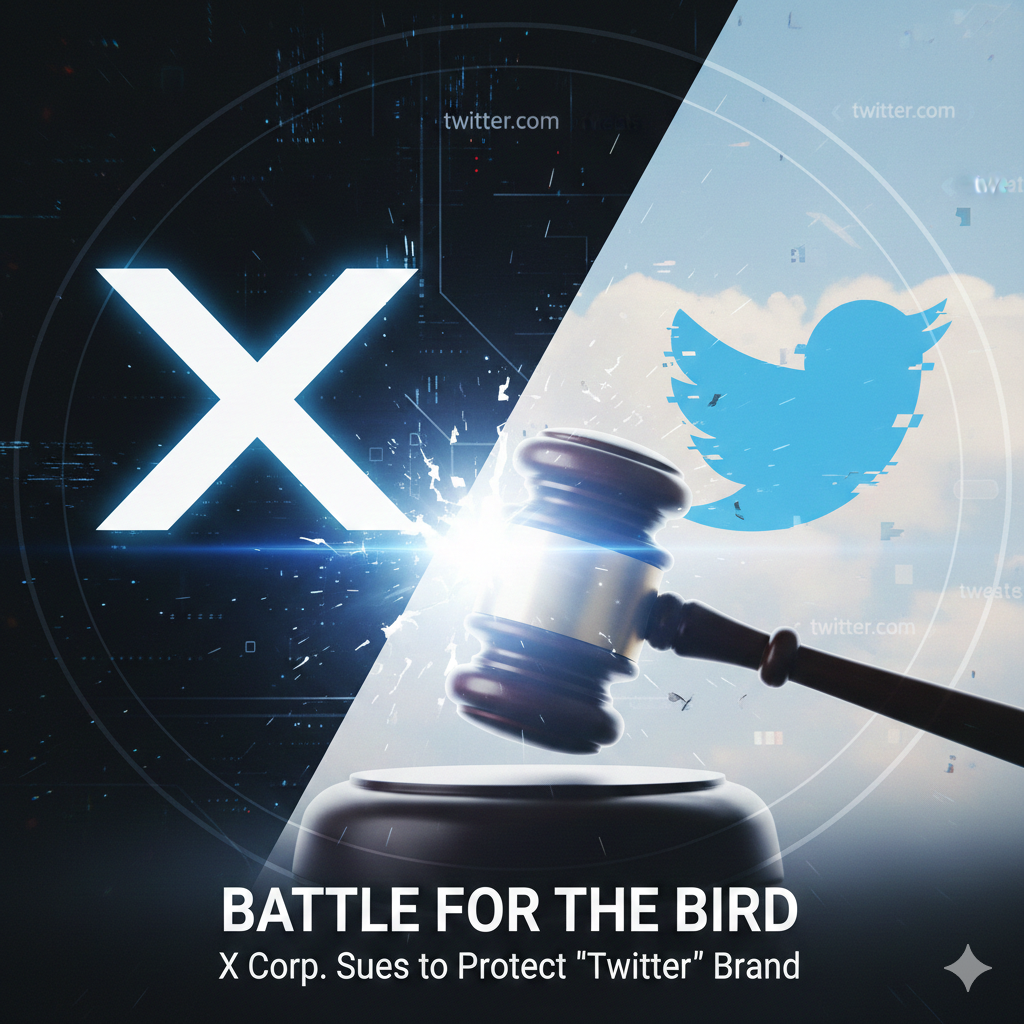
A conceptual graphic split diagonally. The left side shows a white "X" logo on a dark digital background with circuit lines. The right side shows the classic blue Twitter bird logo against a bright sky. A wooden judge’s gavel strikes the center where the two logos meet, creating a light spark.

X Corp. has launched a federal lawsuit to prevent a startup from seizing the “Twitter” brand. The legal filing, submitted on December 16, 2025, targets Operation Bluebird. This Virginia-based startup recently petitioned to cancel X’s trademarks. They argue that Elon Musk abandoned the Twitter name after his 2023 rebrand to X.

The case focuses on a central question of modern business. Does a company lose its rights if it publicly “kills” a multi-billion dollar brand?


The Move to Reclaim a Discarded Brand

Operation Bluebird is led by a team of legal experts. One key figure is Stephen Coates. He previously served as Twitter’s associate director of trademarks. His involvement brings unique expertise to the challenge.

The startup believes X Corp. has legally abandoned its legacy. Under U.S. law, a trademark is abandoned if use is discontinued with no intent to resume. Operation Bluebird points to Musk’s 2023 statement as evidence. At the time, Musk posted that the company would “bid adieu to the Twitter brand and, gradually, all the birds.”

The startup intends to launch a new social network at “twitter.new”. They have already invited users to reserve their old handles. Their website reports that over 145,000 people have signed up. They aim to restore the “town square” experience they feel was lost during the transition to X.


X Corp. Defense Strategy

X Corp. responded with a lawsuit in a Delaware federal court. The company asserts that the Twitter brand is still “alive and well.” They argue the brand is “not ripe for the picking.” X Corp. accuses the startup of a “brazen attempt to steal” its property.

The defense for X Corp. rests on three key points:

  1. Direct Traffic: Millions of users still visit twitter.com, which currently redirects to X.
  2. Cultural Use: The public and businesses still use terms like “Twitter” and “tweets” daily.
  3. Active Ownership: X Corp. claims it still enforces these trademarks in business contracts.

“A rebrand is not an abandonment of trademark rights,” the lawsuit states. X Corp. is seeking monetary damages. They also want a court order to stop the startup from using any Twitter-related branding.


Legal Precedents and Challenges

Legal experts are watching the case with interest. It could set a new standard for corporate rebranding. Usually, companies maintain “skeleton” uses of old brands to prevent others from taking them.

However, trademark law is very specific. To keep a brand, an owner must show “bona fide use” in commerce. Operation Bluebird argues that removing the bird logo from offices and app icons proves X has stopped using the marks.

X Corp. recently updated its Terms of Service. Effective January 2026, the terms explicitly state that users have no right to use the X or Twitter names. This update appears to be a defensive move against the startup’s claims.


Consumer Confusion vs. Brand Evolution

X Corp. argues that a rival named Twitter would cause “consumer confusion.” This is a primary test in trademark law. If two different companies use the same name, the public might not know which is which. X Corp. claims this would harm its business.

Operation Bluebird counters this by citing X Corp.’s own marketing. For two years, X has told the world it is not Twitter. The startup believes the public can distinguish between the new “X” and their proposed “Twitter” revival. They plan to focus on stricter moderation and a return to the original microblogging format.


The Path Ahead

The dispute is moving through two legal channels:

  • The USPTO: The trademark office will decide if the marks should be canceled based on non-use.
  • Federal Court: The Delaware court will rule on whether the startup’s actions infringe on X’s current rights.

If X Corp. loses, it would be a major blow. The Twitter name still carries immense global recognition. For now, the “blue bird” is at the center of a high-stakes legal tug-of-war. X Corp. wants to keep the brand locked away. Operation Bluebird is fighting to set it free.

Delhi High Court Rules in Favor of Bata in Power Flex Infringement Case

Bata POWER shoe logo vs Red Chief POWER FLEX footwear - Delhi High Court ruling

In a significant victory for established brands protecting their intellectual property, the Delhi High Court has dismissed appeals challenging a 2019 interim injunction that bars the use of the mark “POWER FLEX” in footwear products. The ruling reinforces Bata India Limited’s exclusive rights to its iconic “POWER” trademark, highlighting the risks of adopting similar marks even in slightly different product segments.

A Division Bench comprising Justices C. Hari Shankar and Om Prakash Shukla upheld the single-judge order from 2019, which had initially restrained Leayan Global Private Limited – the company behind the popular Red Chief footwear brand – from using “POWER FLEX” pending the outcome of the main trademark infringement suit.

The dispute dates back to 2019 when Bata, a household name in India’s footwear market, filed a suit alleging infringement, passing off, and unfair competition. Bata claimed that Leayan’s adoption of “POWER FLEX” for its leather shoes diluted the distinctiveness and goodwill associated with Bata’s “POWER” brand, primarily used for sports and canvas footwear since the 1970s.

Bata has multiple trademark registrations for “POWER,” both as a standalone word and in combination with devices or other terms. The company argued that “POWER” had acquired secondary meaning through decades of exclusive use, massive sales figures, and endorsements by sports personalities, making it strongly associated with Bata in consumers’ minds.

Leayan, on the other hand, contended that “POWER” is a common laudatory term meaning strength or durability, unsuitable for monopoly. They further argued that “POWER FLEX” was always used alongside their house mark “RED CHIEF,” targeted leather footwear rather than sports shoes, and posed no real confusion risk. Leayan also proposed undertakings to limit usage and avoid prominence to “POWER.”

The Division Bench rejected these defenses, finding a prima facie case of confusion. The court noted that “POWER” forms the dominant and essential part of “POWER FLEX,” potentially leading average consumers – who may not scrutinize differences in sub-categories like leather versus canvas – to believe the products originate from or are affiliated with Bata.

Importantly, the judges observed that even if “POWER FLEX” appears on packaging with “RED CHIEF,” its standalone use inside shoes could still mislead buyers. The court also dismissed arguments on delay or honest concurrent use, emphasizing Bata’s vigilance in opposing similar marks over the years.

However, the bench allowed Leayan to continue using the tagline “THE POWER OF REAL LEATHER,” viewing it as descriptive of material quality rather than a trademark, provided no undue emphasis is given to “POWER.”

This decision underscores the strength of well-established trademarks in India, even when they incorporate common words, if long-term use has built unique goodwill. Legal experts say it serves as a cautionary tale for competitors entering crowded markets: adding suffixes like “FLEX” to a dominant registered mark may not suffice to avoid infringement claims, particularly in related goods like footwear variants.

The underlying suit for permanent injunction, damages, and other reliefs remains pending before the single judge. Leayan may explore further appeals, but the upheld interim order maintains the status quo in Bata’s favor for now.

The ruling aligns with broader judicial trends protecting brand equity in India’s growing consumer market, where established players like Bata continue to dominate through rigorous IP enforcement.

Former Champion Jinder Mahal Challenges WWE “The Maharaja” Trademark

Digital illustration showing Jinder Mahal dressed as The Maharaja on the left, holding a scroll labeled 'The Maharaja Trademark Pending,' facing a shadowy, muscular figure representing WWE on the right. A lightning bolt separates them, and the WWE figure stands near a cracked tombstone labeled 'Intellectual Property Law,' with two judge's gavels on the ground.

The world of professional wrestling is buzzing. Former WWE Champion Jinder Mahal, whose real name is Raj Dhesi, has launched a major legal challenge against his former employer, World Wrestling Entertainment (WWE).

Dhesi is fighting for ownership of the in-ring persona, “The Maharaja.”


The Heart of the Battle

This dispute reveals a critical industry-wide conflict. Who truly owns a wrestler’s identity? Is it the performer who brings the character to life? Or is it the multi-million dollar corporation that employs and markets them?

WWE holds the trademark for “The Maharajah.” They secured this ownership in 2017.

Raj Dhesi contests this claim. He asserts he developed and used the “Maharaja” name as early as 2015. This was before the company made its official trademark claim. Dhesi argues the character belongs to him. He insists the persona is his creation, not a product of WWE’s creative team.


Legal Action Escalates

Dhesi first tried to register his own trademark. The U.S. Patent and Trademark Office (USPTO) rejected his attempts. They cited a “likelihood of confusion” with WWE’s existing ownership.

Dhesi refused to back down. He changed tactics. On December 4, 2025, Dhesi submitted a formal petition. This filing asks the USPTO to cancel WWE’s trademark entirely. Dhesi accuses the company of obtaining the trademark by “wrongful means.”

WWE must now prepare a defense. The wrestling giant has until February 3, 2026, to respond to Dhesi’s petition.


Industry Consequences Loom

The outcome of this case holds massive implications. It threatens to overturn decades of established wrestling business practices.

For years, WWE has kept tight control. They rarely allow talent to use their character names outside the company. If Dhesi wins, this legal precedent could have widespread effects.

  • Talent Empowerment: A victory could encourage other former wrestlers. They might sue to reclaim names and personas they helped develop.
  • IP Redefinition: The challenge forces WWE and the entire industry to rethink character ownership. It may redefine the line between talent creative rights and corporate intellectual property (IP).

Since his WWE release in April 2024, Dhesi has continued to use the name. He performs as “The Maharaja” on the independent circuit. This ongoing usage strengthens his claim. He aims to prove that the identity remains his own, separate from the corporation.

The industry watches closely. The final ruling will impact how wrestling companies manage their most valuable assets: their performers and their characters.

COURT CLEARS SUN PHARMA TO EXPORT KEY WEIGHT LOSS DRUG; RESTRICTS INDIA SALE

Delhi High Court ruling in Sun Pharma versus Novo Nordisk patent dispute over the semaglutide drug (Ozempic/Wegovy) formulation.

The Delhi High Court today delivered a split verdict. It allowed Sun Pharmaceutical Industries to manufacture and export its version of the blockbuster drug semaglutide. However, the court strictly barred the company from selling the product in the domestic Indian market.

Court Upholds Patent Expiry Timeline

The decision is a major development in the pharmaceutical patent battle. Danish giant Novo Nordisk markets semaglutide globally. It is the active ingredient in its widely-used diabetes and weight-loss drugs, Ozempic and Wegovy.

Novo Nordisk sued Sun Pharma for patent infringement. The Danish company seeks to protect its secondary patent. This patent covers specific formulations and the delivery system of the drug. The patent remains valid until March 2026.

The court’s ruling respects this expiration date. It ordered Sun Pharma to refrain from all sales within India until the patent lapses.

Exports Allowed: A Win for Generics

Crucially, the court granted Sun Pharma permission to continue manufacturing. It also allowed exports to countries where Novo Nordisk does not hold patent protection.

This order mirrors a recent ruling against Dr. Reddy’s Laboratories (DRL). Justice Manmeet Pritam Singh Arora heard both cases. She had previously allowed DRL similar manufacturing and export rights.

Sun Pharma provided a formal undertaking to the court. The company will comply with the domestic sales ban. It will also provide the court with full details of its manufacturing and export accounts.

Evergreening Challenge Cited

The ongoing dispute centers on the validity of Novo Nordisk’s secondary patent. Generic makers argue the patent constitutes evergreening.

Evergreening is a common practice. Companies attempt to extend their patent monopoly. They secure new patents on minor modifications to an existing drug.

The Indian Patents Act, specifically Section 3(d), prohibits this. This section denies patents for new forms of a known substance. The new form must show a significant enhancement in therapeutic efficacy.

The court noted that Sun Pharma and DRL raised a “credible challenge” to the secondary patent’s validity. This legal challenge bolstered the generic companies’ position.

Market Impact: A Race for 2026

The ruling is a clear signal. It encourages Indian generic companies to prepare for market entry.

The global market for GLP-1 drugs like semaglutide is massive. Indian drug makers are now lining up to launch their generic versions.

The ban on domestic sales protects Novo Nordisk’s current market exclusivity. Yet, the export green light allows generic firms to gain a foothold. This prepares them for a competitive domestic launch in March 2026.

Novo Nordisk still holds an advantage in the Indian market. It recently cut the price of its product, Wegovy. This move increases competition against rivals like Eli Lilly’s Mounjaro.

Novo Nordisk has indicated it intends to appeal the court’s earlier decision in the DRL case. The legal battle for the lucrative weight-loss drug market will continue.

Delhi High Court Restores Trademark Infringement Suit

Delhi High Court building at dusk with overlaid text: "Trademark Ruling" and "Jurisdiction Restored," symbolizing the Kohinoor Seed vs Veda Seed case.

The Delhi High Court’s Division Bench restored the trademark infringement suit filed by Kohinoor Seed Fields India Pvt. Ltd. against Veda Seed Sciences Pvt. Ltd., setting aside an earlier order by a Single Judge that had returned the plaint due to a lack of territorial jurisdiction.

The Court held that a substantial part of the cause of action arose within Delhi’s jurisdiction, thereby allowing the suit to proceed on its merits.


Key Grounds for Restoring Jurisdiction

The Division Bench identified two primary factors that conferred territorial jurisdiction on the Delhi High Court:

  1. Registration of Trademarks in Delhi:
    • Kohinoor Seed’s registered trademarks, “TADAAKHA” and “SADANAND”, were registered in Delhi.
    • The Court held that the mere fact that the asserted marks were registered within the jurisdiction of the High Court was a factor that, by itself, entitled the appellant to institute the suit in Delhi.
  2. Execution of Marketing Agreement in Delhi:
    • The non-exclusive co-marketing agreement, which was at the heart of the dispute, was executed in New Delhi. This agreement allowed Veda Seed to market Kohinoor’s seeds under the marks (including the unregistered mark “BASANT”) until it expired in 2022.
    • The Court ruled that since the agreement formed an integral part of the cause of action—as the alleged infringement occurred after the agreement’s termination and involved marks initially licensed—the Court within whose jurisdiction the agreement was executed has jurisdiction to adjudicate the dispute.

Details of the Dispute

  • Kohinoor’s Marks: Registered trademarks “TADAAKHA” and “SADANAND”, and unregistered mark “BASANT”, all used for cotton hybrid seeds.
  • Veda Seed’s Allegedly Infringing Marks: “VEDA TADAAKHA GOLD BG II,” “VEDA SADANAND GOLD BG II,” and “VEDA BASANT GOLD BG II.”
  • Background: The parties had a co-marketing agreement from 2014 to 2022. Post-termination, Kohinoor alleged that Veda Seed began selling its own seeds using deceptively similar marks.
  • Single Judge’s View (Set Aside): The Single Judge had accepted Veda Seed’s argument that its operations were limited to Andhra Pradesh and Telangana, and that online listings (on IndiaMart/Kalgudi) were insufficient to establish jurisdiction.
  • Division Bench’s View on Online Listings: The Division Bench observed that the question of Veda Seed’s direct or indirect involvement in the online listings of the allegedly infringing goods was a matter that required a full trial and could not be dismissed at the preliminary stage.

The Division Bench, therefore, allowed the appeal, setting aside the previous order, and restored the trademark infringement suit to be heard on its merits.

Delhi High Court Rejects Interim Patent Block on Semaglutide, Calls Out ‘Evergreening’ Tactics

The Delhi High Court has delivered a decisive order in the high-stakes battle over semaglutide, the blockbuster diabetes and weight-loss drug. The court refused to grant Novo Nordisk a temporary injunction against Dr Reddy’s Laboratories (DRL), dealing a major blow to the Danish pharmaceutical giant’s attempt to control the Indian market until 2026. The ruling carries far-reaching implications for patent strategy, market competition, and the future of GLP-1 drugs in India.

The court held that DRL had raised a “credible challenge” to Novo Nordisk’s second patent on semaglutide. It found strong indicators of double-patenting, a practice that Indian law treats as an attempt to “evergreen” expired monopolies. The court’s message was clear: companies cannot use secondary patents to prolong control over blockbuster drugs.


Two Patents, One Molecule: How the Dispute Began

Novo Nordisk held two Indian patents related to semaglutide:

  1. Composition Patent (IN 275964)
    This patent covered the semaglutide molecule itself. It expired in September 2024, opening the door for generic manufacturing.
  2. Formulation Patent (IN 262697)
    This patent claims a specific formulation and delivery system for the same drug. It remains valid until March 2026.

When the core composition patent lapsed, DRL secured regulatory approval from the Central Drugs Standard Control Organization (CDSCO) to manufacture semaglutide for export. The approval triggered immediate friction. Novo Nordisk rushed to court, claiming that the formulation patent protected not only the delivery mechanism but effectively covered the drug.

It sought an emergency injunction to stop DRL’s manufacturing and export operations. The company argued that any commercial activity—even export—would cause irreparable harm.


The Court’s Ruling: A Firm Stand Against Evergreening

Justice Anish Dayal rejected the injunction request. The court held that DRL’s objections to the formulation patent were strong enough to deny temporary relief to Novo Nordisk.

1. Double-Patenting Concern

The court noted that the formulation patent appeared to reclaim the same invention for which Novo Nordisk’s composition patent had already expired. The claims overlapped heavily.

This amounted to “evergreening”—a tactic where pharmaceutical companies file secondary patents to extend monopoly periods.

Indian patent law, especially after Section 3(d), firmly discourages such strategies.

2. Lack of Inventive Step

The court observed that Novo Nordisk’s claimed improvements in the formulation patent did not appear novel or non-obvious.
The modifications were routine optimizations well known in pharmaceutical science. They did not represent a genuine leap in innovation.

This significantly weakened the validity of the formulation patent.

3. Balance of Convenience Favoured DRL

Since the core patent had expired, the court held that public interest and market competition must be prioritized.

Blocking DRL without conclusive proof of infringement would be unfair, especially when DRL was manufacturing the drug only for export markets.


Exports Allowed, But Indian Market Stays Closed—for Now

The court made a nuanced distinction. DRL may:

  • continue manufacturing semaglutide, and
  • export it freely to international markets.

However, domestic sales remain prohibited until the formulation patent expires in March 2026, unless the patent is invalidated earlier.

This split ruling reinforces India’s position as the world’s largest exporter of affordable generics, while still respecting valid patent rights inside the country.


A Major Win for Generic Manufacturers

The decision strengthens the confidence of Indian pharmaceutical companies entering high-value therapeutic categories. Semaglutide, widely used for Type-2 diabetes and explosive global demand for weight-loss treatments, represents one of the most lucrative drug classes today.

DRL is not alone. Cipla, Sun Pharma, Biocon, and Mankind Pharma are exploring GLP-1 opportunities. The Delhi HC’s ruling sends a bold signal: secondary patents will face strict scrutiny.

Indian courts have repeatedly warned against evergreening. This judgment continues that legacy, following similar rulings in the cases of imatinib, sofosbuvir, and darunavir.


Why This Case Matters Globally

The global pharmaceutical industry is watching India closely. Semaglutide is one of the world’s most valuable drugs, powering Novo Nordisk’s meteoric rise in recent years.

A single ruling from an Indian court can influence:

  • global supply chains,
  • generic entry timelines,
  • price dynamics across continents.

India produces nearly 40% of the world’s generics. Any shift in the patent landscape here disrupts international markets.

By allowing export manufacturing, the court has opened a potential pipeline of affordable semaglutide to emerging markets struggling with diabetes and obesity crises.


What Happens Next?

Novo Nordisk has several options:

  • Appeal before a division bench of the Delhi High Court.
  • Initiate a full trial to defend the validity of the formulation patent.
  • Seek tighter regulatory restrictions on generic manufacturing.

DRL, meanwhile, may accelerate export production and explore challenging the patent’s validity to unlock the domestic market earlier.

Legal experts expect this case to set an important precedent for future GLP-1 patent disputes, especially as rival companies race to launch their own weight-loss drugs.


Conclusion

The Delhi High Court’s rejection of Novo Nordisk’s interim injunction is a striking affirmation of India’s sharp stance against patent evergreening. The ruling protects open competition, enables affordable access through exports, and reinforces India’s leadership in generic pharmaceuticals.

As demand for semaglutide surges worldwide, the judgment could reshape the global supply chain for one of modern medicine’s most influential drug classes.

Nutella Recognized as a Well-Known Trademark by Delhi High Court, Strengthening Ferrero’s Brand Rights in India

In a significant win for global confectionery company Ferrero SpA, the Delhi High Court has officially granted Nutella the status of a well-known trademark under Indian trademark law. This legal recognition provides Nutella with stronger protection against unauthorized use and counterfeit products in India.


⚖️ Court Ruling: A Landmark in Trademark Protection

The case was heard in the matter of Ferrero SpA v. MB Enterprises by Justice Saurabh Banerjee, who concluded that Nutella had built substantial brand equity in India and deserved the enhanced legal safeguards that come with being classified as a well-known trademark.

The Court issued a permanent injunction against MB Enterprises, a firm found producing and distributing counterfeit Nutella jars. In addition to the injunction, the company was directed to pay ₹30 lakh in damages and ₹2 lakh in legal costs to Ferrero.


🧃 Nutella’s Growth in India: A Strong Market Presence

Although Nutella was launched internationally in 1964, it officially entered the Indian market around 2009. Since then, Ferrero has significantly expanded Nutella’s visibility and market penetration across India.

Evidence submitted in court showed that Ferrero invested heavily in brand promotion, with advertising budgets ranging between ₹3 crore and ₹16 crore annually. The company also reported substantial sales, including ₹233 crore in revenue during the 2020–21 financial year, followed by ₹145 crore in 2021–22 and ₹106 crore in 2022–23 (Source – Economic Times).


🚨 Counterfeiting Crisis: Serious Risks for Consumers

The case originated after a Maharashtra FDA raid in October 2021 revealed a large-scale counterfeit operation. Authorities discovered over 950,000 fake Nutella jars and hundreds of thousands of packaging materials mimicking Ferrero’s original branding. The products were being sold across Indian markets under deceptive names.

The court observed that counterfeit edible goods pose serious public health risks, particularly when they target children and families, who are the primary consumers of Nutella.


📜 Legal Implication: Why “Well-Known” Trademark Status Matters

A “well-known” status under Indian trademark law provides extraordinary legal protection, even beyond related categories. It prevents other entities from using similar branding or packaging—even on unrelated goods—if it causes confusion or dilutes the reputation of the original brand.

The ruling is in alignment with international recognition of Nutella’s trademark by global bodies like the World Intellectual Property Organization (WIPO) and the International Trademark Association (INTA).


🌍 Global Brands and Indian Courts: A Growing Trend

Nutella joins a growing list of global names, including Red Bull, Burger King, DHL, and New Balance, that have been granted “well-known” status by Indian courts. These decisions reflect a broader trend in Indian jurisprudence that values trans-border reputation and protects international trademarks from local misuse (Reference – APAA).


✅ Conclusion

With this judgment, Ferrero has secured stronger trademark enforcement in India, protecting its iconic Nutella brand from unauthorized use and market dilution. The decision strengthens consumer trust, promotes brand authenticity, and reinforces the judiciary’s commitment to intellectual property rights.


🔗 External Links:

India Reiterates Ban on Patent Evergreening: Piyush Goyal Emphasizes Public Health Over Pharma Profits

Union Commerce and Industry Minister Piyush Goyal has reiterated that India will not allow evergreening of pharmaceutical patents. Speaking at a recent trade event, Goyal highlighted India’s commitment to affordable healthcare and equitable access to medicines. He firmly stated that evergreening contradicts Indian law and undermines public health.


🔍 What Is Evergreening?

Evergreening is a strategy where pharmaceutical firms seek new patents for minor changes to existing drugs. These changes often include alterations in formulation, dosage, or delivery methods. The intent is to extend monopoly rights and delay generic drug entry.

India’s Patents Act, 1970, under Section 3(d), prohibits such practices unless the new version offers significantly enhanced therapeutic efficacy.

👉 Read Section 3(d) of the Indian Patents Act
👉 What is Evergreening – WHO Definition


🗨️ Goyal’s Firm Stand Against Evergreening

Piyush Goyal emphasized that India has faced repeated pressure from multinational pharmaceutical companies to weaken its IP laws. He stated:

“India does not permit evergreening. We protect genuine patents. But we will not let companies misuse the system to maintain monopolies.”

He challenged critics to show a single instance where India violated intellectual property rights. According to Goyal, none have been able to do so.


⚖️ The Legal Foundation: Section 3(d)

India’s Section 3(d) is a globally recognized provision. It has prevented the misuse of the patent system and has been upheld by the Supreme Court of India in the Novartis vs. Union of India case.

In 2013, India’s top court rejected Novartis’ patent for a modified version of the cancer drug Glivec, ruling it lacked increased efficacy.

👉 Learn more about the Novartis Case

This ruling became a milestone in India’s public health jurisprudence and strengthened the nation’s stance on patent quality over quantity.


🌍 Public Health Over Profits

Goyal underlined that India’s patent system aims to balance innovation with access. He noted:

“Our goal is to make life-saving medicines available at affordable rates—not to support super-profits for a few companies.”

India’s approach supports global healthcare. The country is known as the “Pharmacy of the Global South”, supplying low-cost generics to over 200 nations.

The government also runs Ayushman Bharat, one of the world’s largest public health programs, covering more than 620 million people.

👉 Visit Ayushman Bharat official website


🌐 Global Support and Recognition

India’s position has gained support from global health advocates. Organizations like Médecins Sans Frontières (MSF) have praised Section 3(d) for preventing abusive patent extensions.

International forums including the World Trade Organization (WTO) have acknowledged India’s right to use TRIPS flexibilities to protect public health.

👉 TRIPS Agreement – WTO


🧾 Summary Table: India’s Policy on Patent Evergreening

IssueIndia’s Position
EvergreeningStrictly prohibited under Section 3(d)
Valid PatentsFully respected during legal term
TRIPS ComplianceYes, with use of flexibilities
Pressure to Amend IP LawsResisted to safeguard public health
Generic Medicine PromotionEncouraged for affordable drug access

🔑 Key Takeaways

  • India will not compromise its patent law to favor big pharma.
  • Section 3(d) remains the cornerstone of India’s patent policy.
  • The government remains committed to TRIPS-compliant innovation and global medicine accessibility.

Delhi High Court Awards ₹8 Lakh to Puma in Trademark Infringement Suit Over Counterfeit Goods

The Delhi High Court has awarded ₹8 lakh in damages to global sportswear giant PUMA SE in a trademark infringement case against a seller of counterfeit products. The court also issued a permanent injunction restraining the defendant from using Puma’s registered trademarks.

⚖️ Court Decision

Justice Saurabh Banerjee, presiding over the case, held that the defendant had willfully violated Puma’s trademark rights by selling fake products bearing identical marks. The court observed that the imitation was not accidental but a deliberate attempt to deceive consumers.

The court noted:

“The products being sold by the defendant are counterfeit, carrying the same logos, marks, and branding, which clearly shows the intent to ride upon the reputation of the plaintiff.”

Since the defendant failed to appear or submit any response despite several notices—especially after February 2024—the case proceeded ex parte.

🔗 Read full judgment coverage on LiveLaw

🛑 Counterfeiting and Consumer Deception

The court emphasized that Puma’s trademarks are well-known globally and have established significant goodwill and consumer trust in India. The defendant, by selling goods with identical marks in the same trade channels, violated the Trade Marks Act, 1999, and engaged in unfair competition.

This judgment aims to set a precedent for stricter action against counterfeiters who infringe on the rights of established brands and mislead Indian consumers.

“This is not a mere case of passing off; it is a case of outright counterfeiting,” the court held.

💰 Damages and Penalty

The High Court awarded Puma ₹8 lakh as compensation, citing the following reasons:

  • The damage to the brand’s reputation.
  • The loss of genuine sales and business.
  • The need to deter such unlawful conduct.

The court rejected symbolic damages and instead granted substantial monetary relief, reinforcing the seriousness of trademark violations.

🧾 Background of the Case

Puma filed the lawsuit after discovering the unauthorized sale of counterfeit Puma products by a local trader. The company sought:

  • A permanent injunction.
  • Damages for trademark infringement.
  • Disclosure of profits earned from fake goods.

Despite several summonses and notices, the defendant remained absent, prompting the court to decide based on the material available.

🔍 Legal Significance

This case highlights India’s growing judicial commitment to protecting IP rights, especially for well-known trademarks. Courts are increasingly awarding higher damages to deter counterfeiting, sending a clear signal to violators.

A similar ruling by the Delhi High Court in March 2025 also awarded ₹11 lakh in damages to Puma in a separate counterfeit case, showing judicial consistency in protecting brand owners.