

Amritsar-Born Scientist Surpasses Thomas Edison’s Patent Record

A lesser-known but extraordinary Indian-origin scientist, Dr. Gurtej Singh Sandhu, has etched his name in history by surpassing the U.S. patent record once held by the legendary Thomas Alva Edison. Sandhu, who hails from Amritsar and is an alumnus of Guru Nanak Dev University (GNDU), now ranks among the world’s top inventors with more than 1,300 U.S. patents, outshining Edison’s lifetime tally of 1,093.

Who is Gurtej Singh Sandhu?

Dr. Sandhu completed his B.Sc. in physics from GNDU and later pursued a master’s degree and Ph.D. in physics from University of North Carolina, Chapel Hill. His academic brilliance and research mindset led him into the semiconductor industry, where his contributions revolutionized memory chip technologies.

Currently serving as Senior Fellow and Vice President at Micron Technology, a leading U.S.-based semiconductor company, Sandhu has quietly built a reputation as one of the most impactful scientists in the world of electronics.

Surpassing Edison’s Century-Old Record

For over a century, Thomas Edison—the inventor of the electric bulb, phonograph, and motion picture camera—held the image of the world’s most prolific inventor, with 1,093 U.S. patents. However, in the last three decades, Sandhu has outpaced that milestone with groundbreaking innovations.

As of 2025, he holds between 1,325 and 1,432 U.S. utility patents (depending on source), placing him in the top 7 prolific inventors globally. Unlike Edison, whose patents spanned household technologies, Sandhu’s focus has been on semiconductors and nanoscale memory devices, powering the backbone of the digital age.

His Key Innovations

Dr. Sandhu’s work is vital for the evolution of computing, smartphones, cloud storage, and artificial intelligence. Some of his notable contributions include:

Atomic Layer Deposition (ALD) techniques for high-volume chip manufacturing.

Development of Oxygen-free Titanium Nitride (TiN) layers, critical for memory devices.

Pitch-doubling lithography methods, which allowed circuits to be shrunk far beyond conventional limits.

Pioneering work in 3D NAND flash memory, the foundation of modern data storage.

These breakthroughs extended Moore’s Law, enabling faster, smaller, and more efficient devices that power billions of digital systems today.

Recognition and Awards

Sandhu’s contributions have earned him global respect. Notably, he received the IEEE Andrew S. Grove Award (2018), one of the highest honors in the semiconductor industry, for his pioneering role in device scaling. His work has also been recognized by academic institutions and scientific bodies worldwide.

Despite his towering achievements, Sandhu has remained relatively low-profile compared to Silicon Valley celebrities, focusing quietly on research and innovation.

A Moment of Pride for India

For India, his journey from Amritsar to global innovation leadership is a source of immense pride. GNDU, his alma mater, has publicly celebrated his achievements, calling him an inspiration for young Indian scientists and innovators.

Sandhu’s story demonstrates how Indian-origin scientists continue to redefine global technology frontiers. By surpassing Edison’s century-old patent record, he has not only set a new benchmark in inventorship but also highlighted India’s contribution to the modern knowledge economy.
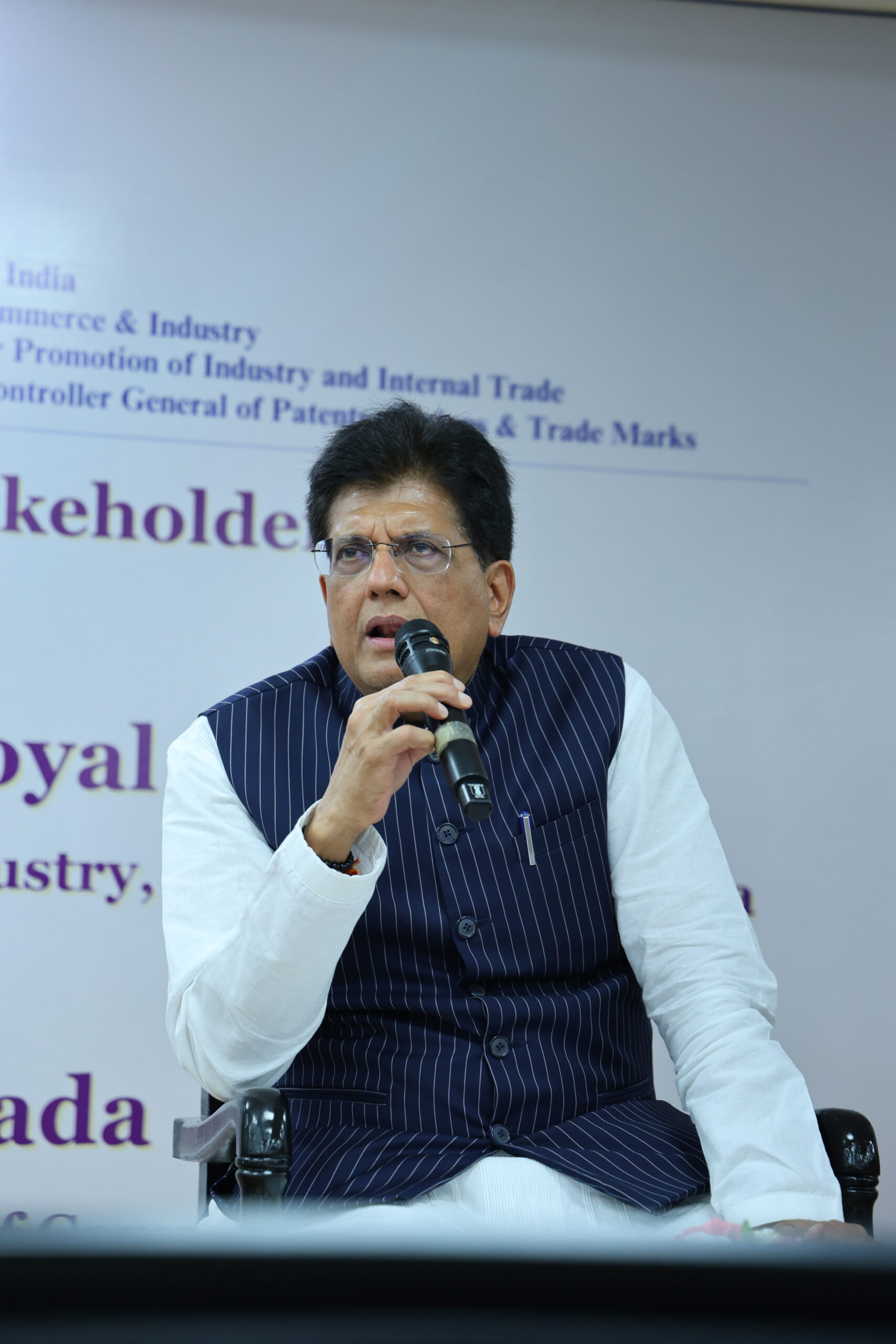

India Plans Major Overhaul of Intellectual Property Laws

Commerce and Industry Minister Piyush Goyal has signalled a sweeping reform of India’s intellectual property (IP) framework. The government aims to simplify laws, speed up processes, and create new avenues for commercial use of registered rights.

Goyal said the government is open to introducing new laws and making amendments where needed. He added that officials will study how trademarks can be better leveraged for revenue and economic growth.

The minister highlighted that India’s IP ecosystem has made significant progress in recent years. Patent grants have risen sharply. Trademark filings have also surged, making India the sixth-largest filer worldwide. Yet, Goyal acknowledged that trademark registration timelines remain long and need to be reduced.

The reforms come after the Jan Vishwas (Amendment of Provisions) Act, 2023 took effect on August 1, 2024. The law decriminalised several minor IP offences and replaced prison terms with monetary penalties. It also introduced a 10% automatic increase in fines every three years.

To boost efficiency, the government recently launched AI- and machine-learning-based tools for trademark searches. The new IP Saarthi chatbot offers guidance in local languages, making the process more accessible to entrepreneurs and small businesses.

Goyal stressed that technology will play a central role in modernising IP administration. Faster examinations, digital tools, and better enforcement mechanisms will help India attract innovation and investment.

He also pointed to the potential of monetising trademarks. While he did not give details, experts say this could involve licensing, brand valuation, and broader commercial use of registered marks.

The push to ease compliance is part of the government’s broader plan to cut outdated rules. According to Goyal, many provisions are redundant and create unnecessary burdens for businesses.

India’s reforms aim to balance protection of rights with ease of doing business. If successful, they could position the country as a global leader in IP administration and innovation-driven growth.

German Firm ParTec Sues Nvidia, Seeks AI Hardware Ban Across 18 European Countries

German supercomputing specialist ParTec AG has launched a fresh legal offensive against U.S. chip giant Nvidia, filing a patent infringement lawsuit at the Unified Patent Court (UPC) in Munich. The company aims to secure an injunction that would block the sale of Nvidia’s DGX AI supercomputers in 18 European countries.

ParTec alleges that Nvidia copied its patented dynamic Modular System Architecture (dMSA), a design that enables real-time coordination between CPUs and GPUs for high-efficiency AI computing. According to the filing, the technology is central to modern supercomputing performance and powers some of Europe’s largest AI installations.

The lawsuit marks the third patent dispute ParTec has initiated against Nvidia. The company has also demanded that Nvidia disclose detailed sales figures for the DGX line and pay damages for the alleged infringement.

Collaboration Talks Turned Sour
ParTec claims the dispute began in 2019, when it shared details of its dMSA technology and ParaStation software with Nvidia during discussions about a potential partnership. Despite initial interest, the two firms never formalized an agreement. ParTec says Nvidia later integrated the patented design into its DGX systems without permission.

Nvidia continued to supply GPUs to supercomputing projects linked to ParTec, but the German company argues that the absence of a licensing deal made such use unlawful. ParTec also suggests Nvidia’s reluctance to negotiate may stem from its earlier patent case in Texas against Microsoft, one of Nvidia’s largest customers, over the same technology.

Legal and Market Stakes
If the UPC grants the injunction, Nvidia could be forced to redesign its AI hardware or strike a licensing deal with ParTec before re-entering these 18 European markets. The outcome could disrupt Nvidia’s dominance in AI infrastructure across the region and set a precedent for enforcing European technology patents against major U.S. firms.

ParTec’s legal representative, BF exaQC AG, emphasised that protecting Europe’s home-grown innovations is essential for the continent’s technological sovereignty. “Our inventions power some of the most advanced supercomputers in Europe. We have a duty to defend them,” a company spokesperson said.

The Unified Patent Court’s ruling will carry weight well beyond this dispute. As one of the first high-profile AI hardware cases before the UPC, it could shape how Europe balances innovation protection with global competition in the race for AI supremacy.

Delhi High Court Allows Use of Section 104A at Interim Stage in Patent Cases

In a significant development, the Delhi High Court has ruled that Section 104A of the Patents Act, 1970, can be invoked at the interim stage of a patent infringement suit. This allows the plaintiff to seek disclosure of the defendant’s manufacturing process before the trial begins. Justice Amit Bansal delivered the verdict while hearing a case between Roche and Zydus Lifesciences.


Background of the Case

Swiss pharmaceutical giant Roche filed a patent infringement suit against Zydus, alleging that the latter had used a patented process to manufacture a biosimilar of Pertuzumab, a drug used to treat breast cancer. Roche claimed that Zydus’s product was identical to the product made using its patented process.

At the interim stage, Roche invoked Section 104A, seeking disclosure of Zydus’s process. Zydus opposed this request, arguing that Section 104A could not be used before the trial. It also claimed its product was different and that such disclosures would harm its trade secrets.


Court’s Observations

Justice Bansal held that the law does not prohibit the use of Section 104A at the interlocutory stage. The Court emphasized that if the plaintiff shows that the defendant’s product is identical to the patented product, then the burden can shift to the defendant. The defendant would then have to prove that they used a different process.

“There is no bar under the Patents Act to invoke Section 104A at the interim stage,” said Justice Bansal.

He further clarified that the section was designed to address the difficulty patent holders face in proving process infringement, especially in complex pharmaceutical cases.


Protection for Trade Secrets

The Court acknowledged Zydus’s concern regarding confidential business information. It stated that while disclosure may be necessary, the court must ensure that commercial secrets are protected. The ruling allows for controlled disclosure, possibly through confidentiality clubs or similar safeguards.

Understanding Section 104A


Section 104A of the Patents Act provides for a burden-shifting mechanism. It comes into play when:

The patent is for a new product made using a patented process.

The plaintiff reasonably believes that the defendant is using the same process.

The plaintiff cannot determine the process used by the defendant through reasonable means.

If these conditions are met, the defendant must then prove that their process is different.


Impact of the Judgment

This ruling is expected to have a major impact on process patent litigation in India, particularly in the pharmaceutical and biotech industries. It strengthens the ability of patent holders to enforce their rights early in the litigation process.

The Court’s decision ensures that genuine claims by patentees are not delayed unnecessarily. At the same time, it balances commercial interests by protecting trade secrets.


Conclusion

The Delhi High Court’s judgment sets a crucial precedent in Indian patent law. It confirms that Section 104A can be used at the interim stage, provided the plaintiff meets the necessary thresholds. This will likely aid companies facing infringement of process patents, especially in cases involving biosimilars and generic drugs.

BMW F 450 GS Set to Launch in India by Late 2025: A Twin-Cylinder Adventure Bike with Global Appeal

BMW Motorrad is gearing up to enter the competitive mid-capacity adventure motorcycle market in India with the all-new BMW F 450 GS. This upcoming adventure tourer brings a 450cc parallel-twin engine, advanced electronic features, and a design inspired by the flagship GS range. With local production handled by TVS Motor Company, BMW aims to offer the perfect balance between performance, affordability, and global quality.

🔧 Engine and Performance: Twin-Cylinder Efficiency
The BMW F 450 GS will debut a newly developed 450cc liquid-cooled parallel-twin engine. It generates an estimated 48 horsepower and around 45 Nm of torque, placing it in the A2 license-compliant category for international markets. BMW pairs this engine with a 6-speed gearbox and a slip-and-assist clutch to ensure smoother shifts and better low-speed control — ideal for both city traffic and off-road trails.

The brand’s focus on mid-range torque ensures the F 450 GS delivers usable power across varied terrain, whether navigating urban roads or heading into rugged adventure zones.

🛠️ Design and Frame: Lightweight ADV Dynamics
BMW has designed the F 450 GS with clear visual inspiration from its bigger siblings like the BMW R 1300 GS and F 900 GS. Spy shots and patent images reveal a tall beak-style front fairing, angular fuel tank extensions, and a slim LED headlight setup — giving it an unmistakably aggressive ADV stance.

Built on a steel trellis frame with a bolt-on subframe, the motorcycle promises structural strength and easier repairs in remote locations. A 19-inch front and 17-inch rear wheel setup — currently seen with alloy wheels — will likely support dual-purpose tires, while higher variants may feature spoked wheels for better off-road credibility.

🧠 Technology and Features: Smart Rider Aids
BMW has equipped the F 450 GS with a 6.5-inch full-color TFT display, Bluetooth connectivity, and multiple ride modes, including Road, Rain, and Off-Road options. Riders can expect standard features like dual-channel ABS, with more premium models offering cornering ABS and switchable traction control.

These features aim to make the F 450 GS one of the most technologically advanced motorcycles in the sub-500cc adventure category. Optional accessories may include a quickshifter, adjustable windscreen, and heated grips — reinforcing BMW’s premium image.

🏭 Made-in-India Manufacturing: BMW x TVS Partnership
In a strategic move to price the F 450 GS competitively in India, BMW Motorrad will manufacture the motorcycle at TVS Motor Company’s Hosur plant. This is the same facility that currently builds the BMW G 310 GS, G 310 R, and G 310 RR for global markets.

By leveraging local sourcing and Indian manufacturing, BMW aims to reduce production costs without compromising on quality. This partnership with TVS also ensures better serviceability and parts availability across India.

💰 Expected Price and Launch Timeline in India
Industry insiders expect BMW to price the F 450 GS between ₹4.0 lakh and ₹4.5 lakh (ex-showroom), placing it slightly above the KTM 390 Adventure and Royal Enfield Himalayan 450 but below the Honda NX500. The official launch is expected in late 2025, possibly at the EICMA 2025 show in Milan, with Indian deliveries starting by early 2026.

BMW is expected to open bookings shortly after the unveiling, with test rides and showroom displays in key Indian cities.

⚔️ Rivals in the Segment
The BMW F 450 GS will compete directly with the following adventure bikes in India:

| Motorcycle | Engine | Power | Price (Ex-Showroom) |
| ———————————– | ———— | ——- | ——————- |
| **KTM 390 Adventure SW** | 373cc single | 43.5 hp | ₹3.60 lakh |
| **Royal Enfield Himalayan 450** | 452cc single | 40 hp | ₹2.85 lakh |
| **Honda NX500** | 471cc twin | 47 hp | ₹5.90 lakh |
| **CFMoto 450 MT** | 449cc twin | 43 hp | ₹4.60 lakh |
| **Aprilia Tuareg 457** *(upcoming)* | 457cc twin | \~48 hp | ₹5.0 lakh (est.) |


Despite being the most premium in this price bracket, the BMW F 450 GS could appeal to adventure enthusiasts seeking a well-rounded twin-cylinder machine with high brand value and loaded features.

📣 What Riders Say
Online forums and motorcycle communities have shown strong interest in the BMW F 450 GS. Many riders praise the bike’s balanced specs and adventure-ready chassis, while others express cautious optimism about its pricing.

“This is the bike the GS series needed — lighter, more accessible, but still a BMW,” one Reddit user commented on a recent spy shot thread.
“If it stays under 180 kg and under ₹4.5 lakh, I’m booking it on day one,” added another enthusiast from the Indian biking community.

✅ Conclusion: BMW Enters Compact Adventure Space with Purpose
With the F 450 GS, BMW Motorrad is set to redefine India’s mid-range ADV motorcycle segment. Backed by global engineering, local manufacturing, and a rider-focused feature list, this motorcycle brings the iconic GS lineage to a wider audience.

As BMW prepares for the official reveal later this year, adventure riders in India and abroad eagerly await a twin-cylinder machine that combines technology, durability, and everyday practicality in one smart package.

AMU Researchers Secure Patent for Breakthrough Breath-Based Diabetes Detection Sensor


In a significant stride towards non-invasive medical diagnostics, a team of researchers at Aligarh Muslim University (AMU) has been granted a patent for developing an innovative breath-based sensor designed to detect diabetes by analyzing exhaled breath. The development signals a potential shift away from painful blood pricks towards more convenient and patient-friendly diagnostic methods.

🔬 The Innovation: Breath-Based Acetone Sensor

The patented device is a nano-engineered sensor system capable of identifying volatile organic compounds (VOCs)—particularly acetone—in the breath of individuals. Elevated levels of acetone are commonly associated with Type 1 and uncontrolled Type 2 diabetes. The sensor uses a ternary nanocomposite material, which reacts sensitively to trace concentrations of acetone in the exhaled breath, enabling real-time analysis.

The invention was led by Dr. Mohammad Zain Khan, Associate Professor in the Department of Industrial Chemistry at AMU. His research team has focused on the development of cost-effective, portable, and non-invasive diagnostic tools. The breath sensor marks a significant departure from conventional methods of glucose monitoring that involve finger-prick blood sampling or continuous glucose monitors (CGMs), which can be expensive and invasive.

🏥 Why This Matters

India has the second-highest number of diabetes patients in the world, with over 100 million diabetics and 136 million pre-diabetics, according to the ICMR-INDIAB study (2023). Early detection is critical, especially in rural or underserved areas where blood-testing infrastructure is minimal.

The breath-based sensor provides:

  • Painless diagnosis
  • Rapid results
  • Lower risk of infection
  • Ease of use for home-based monitoring

🧪 Scientific Details

The sensor works by detecting acetone molecules in exhaled breath using a functionalized carbon nanotube or ternary nanocomposite film, which shows changes in electrical conductivity upon acetone exposure. These signals are then interpreted using embedded electronics to determine diabetic status.

Key features:

  • High sensitivity to low acetone concentrations (in ppm range)
  • Selectivity against interfering gases
  • Operates at room temperature
  • Compact and energy-efficient design

📜 Patent Details and Recognition

The patent has been granted under the Indian Patent Act, recognizing the novelty and industrial applicability of the sensor. The device is expected to enter prototype validation and clinical testing stages in collaboration with medical institutes.

Dr. Khan has also filed international patent applications, and two additional Indian patents are under process. His work has been widely published in peer-reviewed journals and has earned recognition at several innovation showcases.

“Our goal is to make diabetes screening as simple as blowing into a device, especially for people in resource-poor settings,” said Dr. Khan.

🧭 The Road Ahead

The AMU team is currently exploring partnerships for pilot-scale manufacturing, clinical trials, and potential commercialization. If successful, the device could significantly reduce the cost and burden of diabetes detection, not only in India but globally.

🔗 Related Links


Operation Sindoor’ Trademark Bids Rejected Amid Public Backlash and Legal Concerns


In a significant move, the Indian government has rejected multiple trademark applications filed for the term “Operation Sindoor”. These applications, submitted shortly after India’s cross-border military action in May 2025, sparked widespread public outrage and legal scrutiny.


🔺 Background: What Is Operation Sindoor?

Operation Sindoor refers to a military operation launched by India on May 7, 2025, targeting terror camps in Pakistan and Pakistan-occupied Kashmir. The action came after the deadly Pahalgam terror attack, which killed 26 people, including security personnel and civilians.

The codename quickly became a symbol of national pride and military valor. However, its use in trademark filings triggered criticism for trying to commercialize a sensitive national event.

Learn more about India’s military operations.


📝 Trademark Race Begins

On the same day as the operation, at least four trademark applications for “Operation Sindoor” were filed with the Indian Trademark Registry under Class 41. This class includes services such as film production, education, and entertainment.

The applicants included:

  • Reliance Industries (Jio Studios)
  • A retired Air Force officer
  • A Mumbai-based lawyer
  • An individual from the entertainment industry

Class 41 under Indian Trademark Law


🛑 Reliance Withdraws Application

Facing public outrage, Reliance Industries swiftly withdrew its application. On May 8, 2025, the company clarified that the filing was inadvertent and made by a junior employee without authorization.

“Reliance has no intention to use or commercialize a term that reflects the courage and sacrifice of our armed forces,” the company said in a public statement.

Read the full Reliance withdrawal statement here.


⚖️ Government Rejects All Applications

On August 1, 2025, the Commerce and Industry Ministry confirmed in the Rajya Sabha that all applications related to “Operation Sindoor” were formally rejected.

This decision was based on:

  • Section 9(2)(b) of the Trade Marks Act, 1999, which bars marks that offend public sentiment
  • The Emblems and Names (Prevention of Improper Use) Act, 1950, which prohibits using military names for private gains

View the Trade Marks Act, 1999
View the Emblems and Names Act, 1950


🔊 Public and Legal Reactions

The trademark filings led to a strong backlash from civil society, legal experts, and political leaders.

  • Many labeled the act as “moment trademarking”—a trend where individuals or companies rush to claim terms from national events.
  • Legal experts warned this could set a dangerous precedent and harm the dignity of national operations.
  • A Public Interest Litigation (PIL) has been filed in the Supreme Court, demanding that such terms be barred from commercial registration permanently.

Read more on India’s trademark ethics debate.


📌 What the Law Says

Indian Trademark Law prevents:

  • Use of marks that hurt public order or morality
  • Misleading names that imply government endorsement
  • Registration of military or national symbols

Global Perspective:

Other countries like the US and UK also have provisions barring the trademarking of government or military-related terms.

Explore India’s IPR regime
Compare with US Trademark Law (USPTO)


🔍 What’s Next?

  • All “Operation Sindoor” trademark applications have been officially canceled.
  • The Supreme Court may decide on broader legal safeguards to prevent future misuse of national phrases.
  • Industry experts call for clearer IP policy reforms to address ethical concerns in trademark registration.

📈 SEO Summary

Keywords: Operation Sindoor, Trademark Rejected, Reliance Industries, India Military Operation, Trademark Law India, Public Interest Litigation, Trade Marks Act 1999, National Symbol Trademark

Conclusion:
The rejection of the “Operation Sindoor” trademark filings sends a clear message: national identity is not for sale. As India navigates the complex balance between intellectual property rights and public sentiment, this case may well shape future IP policy.


Nutella Recognized as a Well-Known Trademark by Delhi High Court, Strengthening Ferrero’s Brand Rights in India

In a significant win for global confectionery company Ferrero SpA, the Delhi High Court has officially granted Nutella the status of a well-known trademark under Indian trademark law. This legal recognition provides Nutella with stronger protection against unauthorized use and counterfeit products in India.


⚖️ Court Ruling: A Landmark in Trademark Protection

The case was heard in the matter of Ferrero SpA v. MB Enterprises by Justice Saurabh Banerjee, who concluded that Nutella had built substantial brand equity in India and deserved the enhanced legal safeguards that come with being classified as a well-known trademark.

The Court issued a permanent injunction against MB Enterprises, a firm found producing and distributing counterfeit Nutella jars. In addition to the injunction, the company was directed to pay ₹30 lakh in damages and ₹2 lakh in legal costs to Ferrero.


🧃 Nutella’s Growth in India: A Strong Market Presence

Although Nutella was launched internationally in 1964, it officially entered the Indian market around 2009. Since then, Ferrero has significantly expanded Nutella’s visibility and market penetration across India.

Evidence submitted in court showed that Ferrero invested heavily in brand promotion, with advertising budgets ranging between ₹3 crore and ₹16 crore annually. The company also reported substantial sales, including ₹233 crore in revenue during the 2020–21 financial year, followed by ₹145 crore in 2021–22 and ₹106 crore in 2022–23 (Source – Economic Times).


🚨 Counterfeiting Crisis: Serious Risks for Consumers

The case originated after a Maharashtra FDA raid in October 2021 revealed a large-scale counterfeit operation. Authorities discovered over 950,000 fake Nutella jars and hundreds of thousands of packaging materials mimicking Ferrero’s original branding. The products were being sold across Indian markets under deceptive names.

The court observed that counterfeit edible goods pose serious public health risks, particularly when they target children and families, who are the primary consumers of Nutella.


📜 Legal Implication: Why “Well-Known” Trademark Status Matters

A “well-known” status under Indian trademark law provides extraordinary legal protection, even beyond related categories. It prevents other entities from using similar branding or packaging—even on unrelated goods—if it causes confusion or dilutes the reputation of the original brand.

The ruling is in alignment with international recognition of Nutella’s trademark by global bodies like the World Intellectual Property Organization (WIPO) and the International Trademark Association (INTA).


🌍 Global Brands and Indian Courts: A Growing Trend

Nutella joins a growing list of global names, including Red Bull, Burger King, DHL, and New Balance, that have been granted “well-known” status by Indian courts. These decisions reflect a broader trend in Indian jurisprudence that values trans-border reputation and protects international trademarks from local misuse (Reference – APAA).


✅ Conclusion

With this judgment, Ferrero has secured stronger trademark enforcement in India, protecting its iconic Nutella brand from unauthorized use and market dilution. The decision strengthens consumer trust, promotes brand authenticity, and reinforces the judiciary’s commitment to intellectual property rights.


🔗 External Links:

India’s New Trade Deal Safeguards Generic Drug Industry, Rejects Patent Extensions and Data Exclusivity

India has reaffirmed its commitment to affordable medicines and public health safeguards in its latest Free Trade Agreement (FTA), signed on **July 24**. The government announced that the deal does **not include provisions** for **patent term extensions** or **data exclusivity**, commonly sought by multinational pharmaceutical companies to extend their market monopolies.

The **Ministry of Commerce and Industry** clarified that critical sections of the **Indian Patents Act, 1970** — notably **Section 3(d)** and **Section 3(b)** — will remain fully protected under the FTA. These provisions are key to India’s rejection of “**evergreening**” practices, which involve patenting minor modifications of existing drugs to delay generic competition.

> 🔗 [Section 3(d) – Indian Patents Act](https://ipindia.gov.in/writereaddata/Portal/Images/pdf/Patent_Amendment_Act_2005.pdf)

**Section 3(d)** allows patents only for new drug forms that demonstrate **enhanced efficacy**, while **Section 3(b)** restricts patents for inventions that are **contrary to public interest** or lack significant therapeutic benefit.

> “India’s patent regime remains intact. There is no obligation under the new agreement to extend patent terms or introduce data exclusivity for pharmaceuticals or agrochemicals,” the ministry said in an official release.

The government emphasized that the FTA **does not include**:

* **Patent term extensions** to compensate for regulatory delays.
* **Data exclusivity** that would prevent Indian regulators from using innovator data to approve generics.
* **Patent linkage**, which ties drug approval to patent status.
* **Automatic injunctions** that delay generic entry during litigation.

> 🔗 [Understanding Data Exclusivity – WHO](https://www.who.int/news-room/questions-and-answers/item/intellectual-property-data-exclusivity)

These exclusions are a win for India’s **USD 25 billion generic drug industry**, which supplies nearly **50% of its pharmaceutical output** to global markets, including **life-saving drugs for HIV/AIDS, tuberculosis, and cancer** in low- and middle-income countries.

> 🔗 [India’s Generic Pharmaceutical Sector – Brookings](https://www.brookings.edu/articles/the-indian-pharmaceutical-industry/)

The deal follows similar resistance by India during talks with the **European Free Trade Association (EFTA)** — comprised of **Switzerland, Norway, Iceland, and Liechtenstein** — where India successfully opposed attempts to insert stricter IP protections in their FTA finalized in **March 2023**.

> 🔗 [EFTA–India FTA Overview](https://www.efta.int/free-trade/Free-Trade-Agreement/India)

Pressure to include such IP provisions often comes from countries with large pharmaceutical industries, including the **UK** and **Switzerland**, home to global players like **AstraZeneca**, **GlaxoSmithKline (GSK)**, **Novartis**, and **Roche**.

However, India’s stance remains consistent with its obligations under the **World Trade Organization’s (WTO) TRIPS Agreement**, which does not require countries to implement **data exclusivity** or **patent extensions**. Experts argue that such measures are “**TRIPS-plus**” provisions that go beyond international norms.

> 🔗 [WTO TRIPS Agreement](https://www.wto.org/english/tratop_e/trips_e/trips_e.htm)

India also draws strength from the **Doha Declaration on TRIPS and Public Health (2001)**, which affirms the right of WTO members to protect public health and promote access to medicines.

> 🔗 [Doha Declaration – WTO](https://www.wto.org/english/thewto_e/minist_e/min01_e/mindecl_trips_e.htm)

“This agreement reinforces India’s role as the ‘pharmacy of the developing world’ by ensuring that domestic laws prioritize **access to affordable medicines** over extended monopolies,” said a Delhi-based trade policy expert.

The FTA will undergo legislative procedures before coming into effect, expected within the next year. For now, the government’s firm stance is seen as a strategic move to protect its pharmaceutical export economy and uphold public health imperatives.

India Reiterates Ban on Patent Evergreening: Piyush Goyal Emphasizes Public Health Over Pharma Profits

Union Commerce and Industry Minister Piyush Goyal has reiterated that India will not allow evergreening of pharmaceutical patents. Speaking at a recent trade event, Goyal highlighted India’s commitment to affordable healthcare and equitable access to medicines. He firmly stated that evergreening contradicts Indian law and undermines public health.


🔍 What Is Evergreening?

Evergreening is a strategy where pharmaceutical firms seek new patents for minor changes to existing drugs. These changes often include alterations in formulation, dosage, or delivery methods. The intent is to extend monopoly rights and delay generic drug entry.

India’s Patents Act, 1970, under Section 3(d), prohibits such practices unless the new version offers significantly enhanced therapeutic efficacy.

👉 Read Section 3(d) of the Indian Patents Act
👉 What is Evergreening – WHO Definition


🗨️ Goyal’s Firm Stand Against Evergreening

Piyush Goyal emphasized that India has faced repeated pressure from multinational pharmaceutical companies to weaken its IP laws. He stated:

“India does not permit evergreening. We protect genuine patents. But we will not let companies misuse the system to maintain monopolies.”

He challenged critics to show a single instance where India violated intellectual property rights. According to Goyal, none have been able to do so.


⚖️ The Legal Foundation: Section 3(d)

India’s Section 3(d) is a globally recognized provision. It has prevented the misuse of the patent system and has been upheld by the Supreme Court of India in the Novartis vs. Union of India case.

In 2013, India’s top court rejected Novartis’ patent for a modified version of the cancer drug Glivec, ruling it lacked increased efficacy.

👉 Learn more about the Novartis Case

This ruling became a milestone in India’s public health jurisprudence and strengthened the nation’s stance on patent quality over quantity.


🌍 Public Health Over Profits

Goyal underlined that India’s patent system aims to balance innovation with access. He noted:

“Our goal is to make life-saving medicines available at affordable rates—not to support super-profits for a few companies.”

India’s approach supports global healthcare. The country is known as the “Pharmacy of the Global South”, supplying low-cost generics to over 200 nations.

The government also runs Ayushman Bharat, one of the world’s largest public health programs, covering more than 620 million people.

👉 Visit Ayushman Bharat official website


🌐 Global Support and Recognition

India’s position has gained support from global health advocates. Organizations like Médecins Sans Frontières (MSF) have praised Section 3(d) for preventing abusive patent extensions.

International forums including the World Trade Organization (WTO) have acknowledged India’s right to use TRIPS flexibilities to protect public health.

👉 TRIPS Agreement – WTO


🧾 Summary Table: India’s Policy on Patent Evergreening

IssueIndia’s Position
EvergreeningStrictly prohibited under Section 3(d)
Valid PatentsFully respected during legal term
TRIPS ComplianceYes, with use of flexibilities
Pressure to Amend IP LawsResisted to safeguard public health
Generic Medicine PromotionEncouraged for affordable drug access

🔑 Key Takeaways

  • India will not compromise its patent law to favor big pharma.
  • Section 3(d) remains the cornerstone of India’s patent policy.
  • The government remains committed to TRIPS-compliant innovation and global medicine accessibility.