
Apple has a long history of patent applications focused on the development of glass-based device designs, dating back to at least 2014, particularly with concepts like an all-glass iPhone. Today, the U.S. Patent and Trademark Office granted Apple a significant patent, which could be considered a key patent for glass enclosures in electronic devices. This patent covers a variety of devices, including the Apple Watch, iPhone, Mac, and introduces a distinctive iPhone design with displays on both sides of the device. In addition, Apple was granted three design patents today, further emphasizing their commitment to advancing this area of technology.
The granted patent applies to electronic devices such as iPhones, iPads, Macs, and Apple Watches, where the enclosures are made from glass. Traditionally, glass has been used primarily as a transparent cover for the touchscreen. However, the new patent introduces a novel concept where glass forms multiple sides of the device’s enclosure.
For example, an enclosure with a rectangular shape could feature glass on the front, back, and sides. In some designs, the entire device could be made from glass, including the front, back, and all sides, creating a seamless, unified appearance. Although the enclosure could be made of multiple separate glass pieces, it would appear as if it were one continuous piece.
This innovative glass-enclosure design opens up several new possibilities for functionality. For instance, transparent glass on the back and sides of the device could allow for additional displays, which users could view and interact with. These side and back displays could be equipped with touch or force-sensing capabilities, turning them into interactive input surfaces for the user.
The patent also covers a specific design where a glass element forms part of the six-sided enclosure of the device, with varying thicknesses along the peripheral side. In the patent’s illustrations (FIGS. 26A to 26C), one display component could be used to create six distinct display regions—one for each side of the transparent enclosure. Not all sides of the device may feature a display, in which case those sections would be either inactive or omitted.
This patent represents an important advancement in Apple’s work on innovative device designs, potentially paving the way for new, interactive devices with unique user experiences.
AI
Apple’s Future Smartwatch May Feature a Foldable Display and Dual Cameras, Patent Reveals
In an exciting development for wearable technology, Apple may be gearing up to take the Apple Watch to the next level with a foldable display, according to a recently published patent application. Originally filed in September 2023, the patent was published by the US Patent and Trademark Office earlier this month, revealing new details about a potential future Apple Watch design that could rival the functionality of smartphones.
The patent application describes an innovative smartwatch with a flexible, foldable display that could open to reveal a secondary screen. The new design aims to transform the Apple Watch into an even more powerful device, providing users with enhanced functionality and additional features typically associated with smartphones.
A New Vision for the Apple Watch
Apple’s foldable smartwatch concept highlights the company’s desire to push the boundaries of wearable tech. The foldable screen, which would be incorporated into the device’s existing display, would enable users to expand the watch’s screen when needed. This would allow for more on-screen content, offering a tablet-like experience but in a compact, wearable form.
The two displays would be designed to fold seamlessly into each other, much like modern foldable phones, offering users the flexibility to switch between a compact smartwatch mode and a larger, more expansive display when required. This feature would dramatically improve user interaction, enabling tasks such as reading emails, viewing detailed maps, and multitasking, which are typically difficult on the small screen of a traditional Apple Watch.
Dual Cameras for Enhanced Functionality
One of the standout features of the patent is the inclusion of two separate cameras on the foldable smartwatch. While details on their specific functions are not fully outlined, the cameras could be used for a range of applications, such as FaceTime calls, scanning barcodes, or capturing photos and videos. This addition could make the foldable Apple Watch a far more capable device, combining the functions of a smartphone, smartwatch, and even a basic camera, all into one wearable gadget.
The incorporation of dual cameras is particularly notable, as it could allow the Apple Watch to take high-quality photos or video while remaining compact and portable. Additionally, having two cameras could open the door to more advanced features like 3D scanning, augmented reality (AR) experiences, and improved video conferencing capabilities.
Improved Usability and User Experience
The design described in the patent also takes into consideration the user experience, featuring a hinge mechanism that would allow the Apple Watch to fold and unfold smoothly. This hinge system would ensure that the device maintains its sleek and minimalistic design, even while offering expanded functionality.
The foldable display would also aim to improve multitasking capabilities. A larger screen would allow users to engage with more apps simultaneously, such as viewing maps, checking notifications, or controlling music, without feeling cramped on a single, small display.
Additionally, Apple’s focus on incorporating cameras could indicate a greater push towards making the Apple Watch a more independent device. This could minimize the need to rely on the iPhone for tasks like video calls, photography, or augmented reality applications, making the smartwatch a more self-sufficient tool.
Expanding the Apple Ecosystem
If realized, this foldable Apple Watch could represent a major leap in the evolution of wearables. Apple’s current smartwatch lineup is already known for its seamless integration with the broader Apple ecosystem, including the iPhone, iPad, and Mac. By introducing a foldable display and cameras, the company would further enhance this integration, offering a device that can handle more tasks while keeping users connected to the Apple ecosystem.
Such a device could serve as a bridge between traditional smartphones and wearables, offering the convenience of a smartwatch with the added capabilities of a foldable smartphone. This would make the Apple Watch a more attractive option for users seeking an all-in-one device that can handle communication, media, and productivity without needing to pull out their phone.
Challenges and Possibilities
While the foldable Apple Watch concept sounds promising, there are still several challenges to overcome before such a device becomes a reality. Foldable displays, while increasingly common in smartphones, are still a relatively new technology in the wearable space. Ensuring that the display is durable, flexible, and able to withstand the wear and tear of daily use will be a key concern for Apple’s engineers.
Additionally, integrating dual cameras into the small form factor of a smartwatch could present design challenges. Cameras typically require space for lenses and sensors, which may conflict with the compact, minimalist design Apple is known for. Achieving the balance between a larger display and maintaining the signature slim profile of the Apple Watch would require significant innovation.
That said, Apple’s track record of pioneering new technology in its devices, coupled with its deep expertise in the smartwatch market, means that the company is well-positioned to tackle these challenges. The foldable smartwatch could usher in a new era of wearables that are more versatile, functional, and integrated into users’ daily lives.
Looking Ahead: When Could We See This Foldable Apple Watch?
As with many Apple patents, it is important to note that the filing does not necessarily mean the foldable Apple Watch will arrive in stores anytime soon. Apple files numerous patents each year for a variety of potential products, and not all of them come to fruition. However, the foldable smartwatch concept aligns with Apple’s ongoing efforts to innovate and expand the capabilities of its wearable devices.
If Apple decides to move forward with this foldable design, it could be several years before we see it hit the market. The company would need to refine the technology, ensure durability, and undergo extensive testing to ensure the product meets Apple’s high standards. Additionally, the company may want to see how the market for foldable devices evolves before committing to a release.
Regardless, the publication of this patent signals that Apple is actively exploring new ways to revolutionize the smartwatch market. Whether or not a foldable Apple Watch becomes a reality, the idea shows that Apple is thinking ahead and continuously striving to improve its products in innovative ways.
Conclusion
Apple’s recent patent application hints at the future of smartwatches—one that is more powerful, more versatile, and more integrated into our daily lives. The potential for a foldable Apple Watch with dual cameras could blur the lines between smartwatches and smartphones, providing users with a truly all-in-one device. While there are challenges to overcome, Apple’s reputation for innovation and design excellence suggests that we may soon see a wearable that offers functionality previously reserved for larger devices, all within the convenience of a smartwatch.
U.S. Supreme Court Rules on Corporate Separateness in Trademark Infringement Damages – Key Implications for Lanham Act Claims
In a landmark decision, the U.S. Supreme Court has issued a unanimous ruling in Dewberry Group, Inc. v. Dewberry Engineers Inc. that underscores the importance of corporate separateness in calculating damages for trademark infringement. The Court vacated a $43 million profit disgorgement award, a ruling that has far-reaching implications for corporate liability and the recovery of profits under the Lanham Act.
Case Overview: Dewberry Engineers vs. Dewberry Group
The case centers around Dewberry Engineers, a holder of the “Dewberry” trademark, which filed a lawsuit against Dewberry Group, a competing real estate management company. Dewberry Engineers alleged trademark infringement and unfair competition under the Lanham Act, along with a breach of contract claim under state law. The dispute arose from Dewberry Group’s unauthorized use of the Dewberry trademark in promoting its real estate services, despite a prior settlement agreement that prohibited such use.
The U.S. District Court for the Eastern District of Virginia ruled that Dewberry Group violated the Lanham Act, concluding that the infringement was “intentional, willful, and in bad faith.” Despite Dewberry Group reporting no profits and relying on cash infusions from its owner, the District Court aggregated the profits of Dewberry Group and its affiliates—non-party entities that held income-generating properties—to calculate the damages, awarding nearly $43 million. The Fourth Circuit Court of Appeals affirmed this decision, citing the “economic reality” of Dewberry Group’s operations.
Supreme Court’s Holding: Corporate Separateness Matters
The U.S. Supreme Court reversed the lower court’s decision, ruling that profit disgorgement under the Lanham Act is limited to the profits of the named defendant—Dewberry Group in this case—and does not extend to its non-party affiliates. The Court emphasized the longstanding legal principle that separately incorporated entities are distinct legal units with their own rights and obligations.
In this case, because Dewberry Group’s affiliates were not named as defendants and no evidence was presented to pierce the corporate veil, the Court held that the profits of these affiliates could not be included in calculating “defendant’s profits” under 15 U.S.C. § 1117(a). As the Court noted in remanding the case for a new damages award, “The ‘defendant’s profits’ are the defendant’s profits, not its plus its affiliates.”
Key Unanswered Questions
While the Court addressed the issue of corporate separateness, it did not fully resolve several critical aspects of the case. Specifically, the Court declined to comment on whether the lower court could have used the Lanham Act’s “just-sum” provision (15 U.S.C. § 1117(a)) to award a more equitable recovery by considering affiliate profits. This provision allows courts to adjust profit-based recovery when it is deemed “inadequate or excessive,” but the Supreme Court did not rule on whether this approach would have been appropriate.
Additionally, the Court did not address whether plaintiffs could rely on other methods—such as looking beyond a defendant’s accounting records—to assess the “true financial gain” of an infringing party. Nor did it definitively rule on the potential for veil-piercing, leaving open the possibility for future arguments regarding corporate formalities and liability.
Justice Sotomayor’s Concurring Opinion: A Caution on Creative Accounting
In her concurring opinion, Justice Sonia Sotomayor raised concerns that corporate separateness could be exploited by defendants to avoid liability through creative accounting. She urged that courts remain vigilant in considering “economic realities” when calculating trademark infringement damages. Justice Sotomayor suggested that the trial court might reopen the record to explore methods of calculating profits that go beyond a defendant’s books, particularly when analyzing financial inflows from affiliates.
Implications for Trademark Owners and Businesses
The Supreme Court’s ruling highlights the importance of corporate formalities and the need for careful litigation strategy. Trademark owners pursuing Lanham Act claims must ensure they identify and include all relevant entities from the outset of litigation, especially when dealing with related or affiliate companies that may have benefited from the infringement.
Failing to name all responsible parties could result in an unenforceable judgment, even if the defendant is found liable. Plaintiffs should also consider whether a veil-piercing argument could be made in cases where affiliates may be used to shield profits from infringement.
While the Court’s decision focused narrowly on the aggregation of affiliate profits, it left open significant questions regarding the methods available for determining a defendant’s true financial gain. This leaves room for further litigation on the most accurate and fair way to calculate damages under the Lanham Act.
Conclusion
The Dewberry Group decision reinforces the principle that corporate separateness must be respected in calculating trademark infringement damages under the Lanham Act. It also raises important considerations for plaintiffs in trademark disputes, urging early and strategic planning to ensure a comprehensive approach to damages. While the Court’s ruling narrows the scope of profit recovery, it also leaves open avenues for creative legal arguments and future litigation on corporate liability.
Apple Tackles Vision Pro Criticisms with New Head Securement Patents for Future Smart Glasses
Apple has clearly heard the feedback regarding its Vision Pro and its smart glasses ambitions. While the device made waves for its immersive experience and innovative features, critics quickly pointed out several key shortcomings: exorbitant pricing, excessive weight, insufficient processing power, and the overall securement system. Apple seems to have taken these critiques seriously, as the company has recently unveiled a series of new patents aimed at improving one of the key pain points — the securement system of the Vision Pro and future smart glasses.
Apple’s New Securement Concepts
In a surprise move, Apple has bypassed the typical public patent application stage and jumped straight to a granted patent for a new securement system titled “Adjustable Head Securement For Head-mountable Device”. This patent, which was revealed this week, introduces a number of fresh and adjustable concepts that aim to make wearable tech more comfortable and efficient for the user.
The patents, identified by numbers 01, 02, 03, and 04, reveal various approaches to enhancing the fit and wearability of Apple’s head-mountable devices (HMDs), such as headsets, visors, smart glasses, and other related devices like head-up displays. The company has made it clear that the securement system plays a crucial role in the overall user experience, and Apple is aiming for a design that is not only adjustable but also significantly more comfortable than the current Vision Pro model.
The Challenge of Securement: A Key Focus for Apple Engineering Teams
Apple’s engineering teams have always faced the challenge of balancing functionality with comfort in head-mounted devices. The company’s Vision Pro received praise for its capabilities, but the head securement system was one area that drew significant criticism. Many users found the device to be too heavy and awkwardly secured, making extended use uncomfortable.
It’s fascinating to watch Apple’s internal teams, often working on competing concepts, push their designs forward. In some cases, the final solution is a hybrid of features from multiple teams. This collaborative but competitive design environment may have led to the array of securement innovations now captured in the new patents.
Apple’s approach often includes iterations on previously proposed solutions, so it’s possible that the final securement design may blend aspects from these patents in an effort to refine the Vision Pro and future smart glasses. The focus appears to be on adjustability, comfort, and seamless integration with the rest of the device’s functions, ensuring that users get the most from both the immersive experience and the wearable’s fit.
What’s New in the Patents?
The newly-granted patents explore adjustable headbands, strap configurations, and weight distribution techniques that aim to optimize the user experience. These systems take into account the different head shapes and sizes of potential users while distributing the device’s weight more evenly across the head.
Additionally, Apple is experimenting with advanced materials that could reduce the overall weight of its smart glasses or headsets without compromising the necessary components. This means that future Vision Pro models and other HMDs will likely feature lighter, more ergonomic designs that don’t sacrifice performance or stability.
Below is a brief look at the potential elements detailed in these patents:
Adjustable Strapping Mechanisms:
Apple’s proposed systems include adjustable straps that could be customized for individual users, offering better comfort during prolonged use.
These designs would work alongside memory foam padding and gel inserts for added cushioning.
Innovative Weight Distribution:
Instead of the front-heavy feeling experienced with the current Vision Pro, Apple’s patent discusses weight balancing technology that spreads the load more evenly, which could alleviate neck strain.
Smart Material Choices:
Apple seems to be experimenting with lightweight alloys or even composite materials that make the devices less cumbersome, thus improving overall comfort.
Auto-Adjusting Headbands:
Some concepts hint at auto-adjusting headbands that can sense the shape and size of the user’s head and adjust accordingly, ensuring the device stays secure without excessive tightness or discomfort.
Customizable Fit:
Other patents explore options for customizable fit for different users, including those with glasses, offering a more personalized experience.
How These Patents Impact Future Smart Glasses and Vision Pro
Apple’s decision to address user concerns head-on with a revised securement system could pave the way for a much-needed evolution in the wearable tech space. The future of smart glasses hinges on creating devices that blend cutting-edge technology with wearability. Apple appears determined to improve its wearable tech offerings and streamline the user experience, and these recent patents provide a glimpse into what could be coming.
Apple’s Strategic Move
The company’s direct jump to granting patents for the securement system indicates that Apple is moving quickly to refine its designs and possibly bring them to market in the near future. This move also shows how Apple adapts its products based on feedback and is a testament to the company’s innovative mindset.
As smart glasses and head-mounted displays become more mainstream, Apple’s enhancements to the Vision Pro, particularly in comfort and usability, could have a significant impact on how consumers view these devices. If Apple succeeds in solving the comfort and weight issues while maintaining the product’s performance, it could position the Vision Pro and future smart glasses as game-changers in the wearable technology market.
Conclusion
Apple’s latest granted patents reveal a concerted effort to address past criticisms of its Vision Pro and to lay the groundwork for more comfortable, secure, and functional smart glasses in the future. With a focus on adjustability, ergonomics, and weight distribution, Apple is looking to improve the overall experience for users. The company is clearly setting the stage for the next evolution of wearable tech, and it will be exciting to see how these patents play out in future products.
IT Stock jump after a Patent for new data processing technology
Intense Technologies Ltd. has granted a patent for its invention “Method for Rule-Based Control Processing of Multiple Input Data Ingestions in Parallel,” a development that has positively influenced its stock performance after grant.
Stock Performance Post-Patent Grant:
Share Price Increase: Intense Technologies’ share price rose by approximately 4% after grant of patent, reflecting investor interest in the company’s enhanced technological capabilities.
Current Stock Price: As of February 20, 2025, the stock is trading at ₹94.71, marking a 6.33% increase over the past 24 hours.
Historical Stock Performance:
52-Week Range: The stock has fluctuated between ₹87.66 (low) and ₹178.32(high) over the past year, indicating significant volatility according to market run.
Recent Trends: Over the last three months, the stock has declined by 23.17%, and over the past year, it has decreased by 25.55%.
Investor Considerations:
Although, the recent patent grant has positively impacted the stock price, but it is important to note that Intense Technologies has experienced a 26% decline in share value over the past month.
Before investment in stock of Intense Technologies Ltd, Investors should consider this alongside the company’s financial health, market position, and the potential long-term benefits of the new patent.
In summary, the patent grant may have a favorable short-term effect on Intense Technologies’ share price, but investors should remain mindful of the company’s broader financial performance and market dynamics.
This patent positions Intense Technologies as a leader in large-scale data processing, offering solutions that enhance efficiency and intelligence in data management.
Madras HC Uphold Controller’s Decision Of new AI Patent technology

In a recent judgement, the Madras High Court has upheld the controller’s decision of rejection of a patent application for an invention aimed at integrating human intelligence with artificial intelligence (AI). The applicant, Caleb Suresh Motupalli, had filed a patent application for a system designed to enhance human capabilities by merging human and AI functionalities.
Background of the Invention:
The invention, titled “Necktie Persona-Extender/Environment-Integrator and Method for Super-Augmenting a Persona to Manifest a Pan-Environment Super-Cyborg,” proposed a method to augment human abilities through the integration of AI. The applicant argued that this system would function alongside the user, enhancing both cognitive and physical abilities.
Patent Office Examination:
After examination, the Indian Patent Office issued a First Examination Report (FER) raising objections regarding the applicability, novelty, and compliance of the claimed invention with the provisions of the Patents Act 1970. The applicant made certain amendments to the patent claims and filed for reconsideration. Despite these amendments, the Controller of Patents maintained the objections and refused the application for Patent.
Court’s Decision:
The Madras High Court, presided over by Justice Senthil Kumar Ramamoorthy, dismissed the appeal of restoration of the patent application, stating that there are no sufficient grounds to interfere with the Controller’s decision. The court concluded that the invention lacked sufficient technical detail, clarity, inventive step, and failed to demonstrate patentable subject matter, rendering it non-patentable under the statutory requirements.
Implications:
This decision of the Madras High Court underscores the importance of providing clear and detailed technical features of invention in patent applications, especially in emerging fields like AI integration. It also highlights the necessity for inventions to demonstrate a clear inventive step and technical clarity to meet the patentability criteria under the Patents Act 1970.
Apple’s New Patent: iPhone can become All in one Universal Remote control

Apple has granted a patent titled “Controlling Electronic Devices Based on Wireless Ranging”. Apple has developed a technology that can allow users to control a wide range of devices—such as smart TVs, smart home appliances, vehicles key remote, and gaming consoles with wireless technology. This is achieved using an iPhone or iPad.
How the Wireless Controlling System Works
In its new patent, Apple explains that in this wireless controlling system, the device (iPhone) will detect when a user wants to control a device and determine which one is being targeted. This could involve factors such as proximity, orientation, and possibly even gesture-based commands. If a user points their iPhone toward a TV, the phone will recognize that action and display relevant controls without requiring the user to unlock the device or navigate through menus. The same logic could apply to smart thermostats, lights, or even gaming consoles, making device control as intuitive as a simple wave of the hand. By facilitating control of the object from a distance, this technique may eliminate the need for a user to be in physical contact with a user interface on or associated with the device. The patent also suggest that there is no need of passcode or biometric identifier to unlock the device.
Apple keeps its employees busy make new ideas and possible innovations across its ecosystem to make devices more user friendly. In fact, it has not only brainstorms ideas but also rushes to get the patent as soon as something comes to the table. That’s the reason that, Apple has filed 95,500 patents globally till December 2024, out of which 78,104 patents has been granted and active.
AI based stock jumps 8% after being granted a patent for Intelligent Conversational Agents

An AI based stock which deals in proprietary consumer intelligence platforms and transforms advertisements into recommendations to assist marketers identify, engage, and acquire effectively, was up by 8 percent after the company’s patent was granted on Intelligent Conversational Agents.
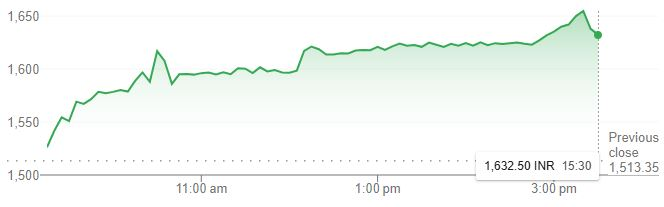
The shares of Affle (India) Limited were up by 8 percent in the day’s trade touching a day’s high of Rs. 1,654.80 per share. The stock reiterated from the day’s high and was trading at Rs. 1,632.50 which is 7.87 percent higher than the previous closing price of Rs. 1,513.35. With a market capitalization of Rs. 22,420.02 Crores, the Affle (India) Limited has a significant place in AI market.
Affle (India) has been granted a patent in the area of a System for switching and handover between one or more intelligent conversational agents. The intelligently of the patent decides which system or agent is better suited to handle tasks assigned. These are specific and based on multiple factors such as the intent or complexity or preference of a query of a user. Without losing the context of the conversation, its past performance, and Agent engagement costs it ensures a smooth switching between multiple AI systems.
Affle (India) has filed more than 36 patent application, out of which 12 patents are granted.