
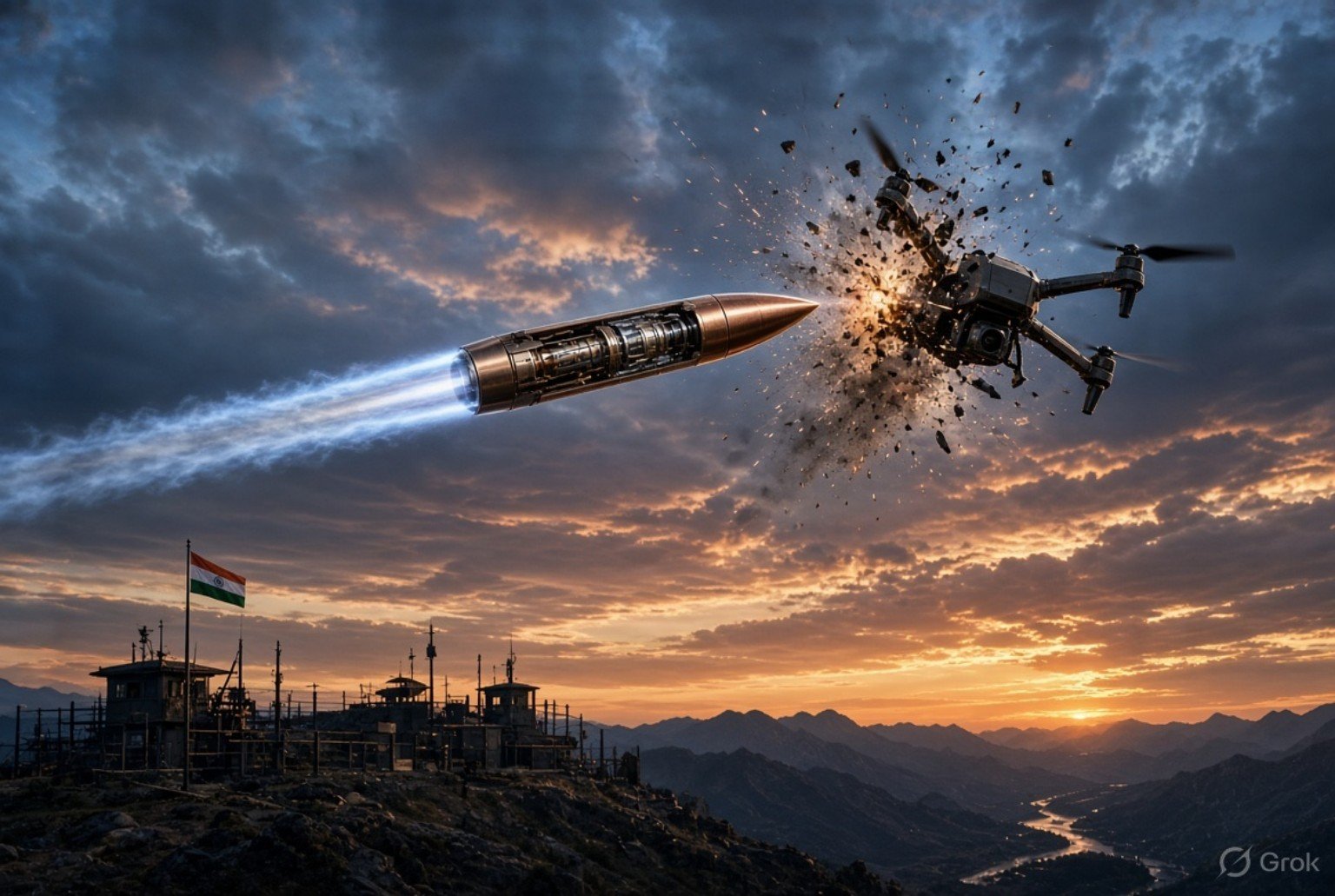
RRV Defence Claims India’s First Patented Anti-Drone Bullet

RRV Defence anti-drone bullet concept for counter-UAS operations in India

Indian defence technology company RRV Defence has announced the development of a patented anti-drone projectile that it says could offer a low-cost kinetic solution against small unmanned aerial vehicles (UAVs).

The concept, described as an “anti-drone bullet,” is designed around the principle of physically intercepting an incoming drone rather than relying solely on electronic warfare techniques such as jamming or spoofing.

According to information reported by IDRW, RRV Defence began developing the concept in 2022, as the growing use of small and relatively inexpensive drones highlighted the need for affordable counter-UAS technologies.

A Kinetic Approach to Counter-Drone Warfare

Most conventional counter-drone systems use one or more of several approaches, including electronic jamming, radar-guided interception, directed energy and physical destruction of the target.

RRV Defence’s proposed system falls into the last category. Instead of attempting to disrupt a drone’s communications or navigation systems, the projectile is intended to physically engage the UAV.

The underlying concept addresses one of the major challenges in modern counter-UAS operations: cost asymmetry.

Small commercial and military drones can be comparatively inexpensive, while conventional air-defence interceptors can cost substantially more. A low-cost kinetic interceptor could therefore have applications in situations where using a conventional missile against a small UAV would be economically difficult to justify.

Designed for Integration With Existing Systems

RRV Defence has indicated that its technology could potentially be integrated with existing weapon and counter-drone architectures rather than requiring an entirely new air-defence ecosystem.

Such an approach could be significant for military and security forces seeking additional layers of protection against small UAVs.

The proliferation of drones has created increasingly complex threats for military installations, logistics sites and other sensitive infrastructure. Their relatively small size, low radar cross-section and ability to operate at low altitude can make detection and engagement challenging.

A compact kinetic interceptor could potentially form one component of a layered counter-UAS system alongside sensors, electronic warfare equipment and conventional air-defence weapons.

Development and Testing Remain Important

Despite the company’s claims, the system remains a technology under development, and publicly available information does not yet establish independent operational performance.

In particular, publicly reported information does not provide sufficient independently verified data on parameters such as engagement range, accuracy, probability of kill, performance against different classes of drones or performance under operational conditions.

RRV Defence has indicated that further development and testing are required.

This distinction is important when assessing emerging defence technologies. A patent demonstrates that an invention has been claimed and protected through the relevant intellectual-property process; it does not, by itself, establish that a weapon has achieved operational effectiveness or been inducted into military service.

Potential Role in India’s Counter-UAS Efforts

India has been expanding its focus on counter-drone capabilities as UAVs become increasingly relevant to both military operations and security threats.

A successful low-cost kinetic interceptor could potentially complement existing counter-UAS technologies by providing another option for engaging small drones.

The broader trend is toward layered counter-drone defence, in which detection, identification, tracking and engagement are combined rather than relying on a single technology.

RRV Defence’s anti-drone bullet therefore represents an interesting indigenous approach to the problem. However, its eventual significance will depend on the results of testing, system integration, reliability, production scalability and evaluation by potential users.

For now, the technology should be viewed as an Indian defence-industry development with potential, rather than as a fully validated operational counter-drone weapon.
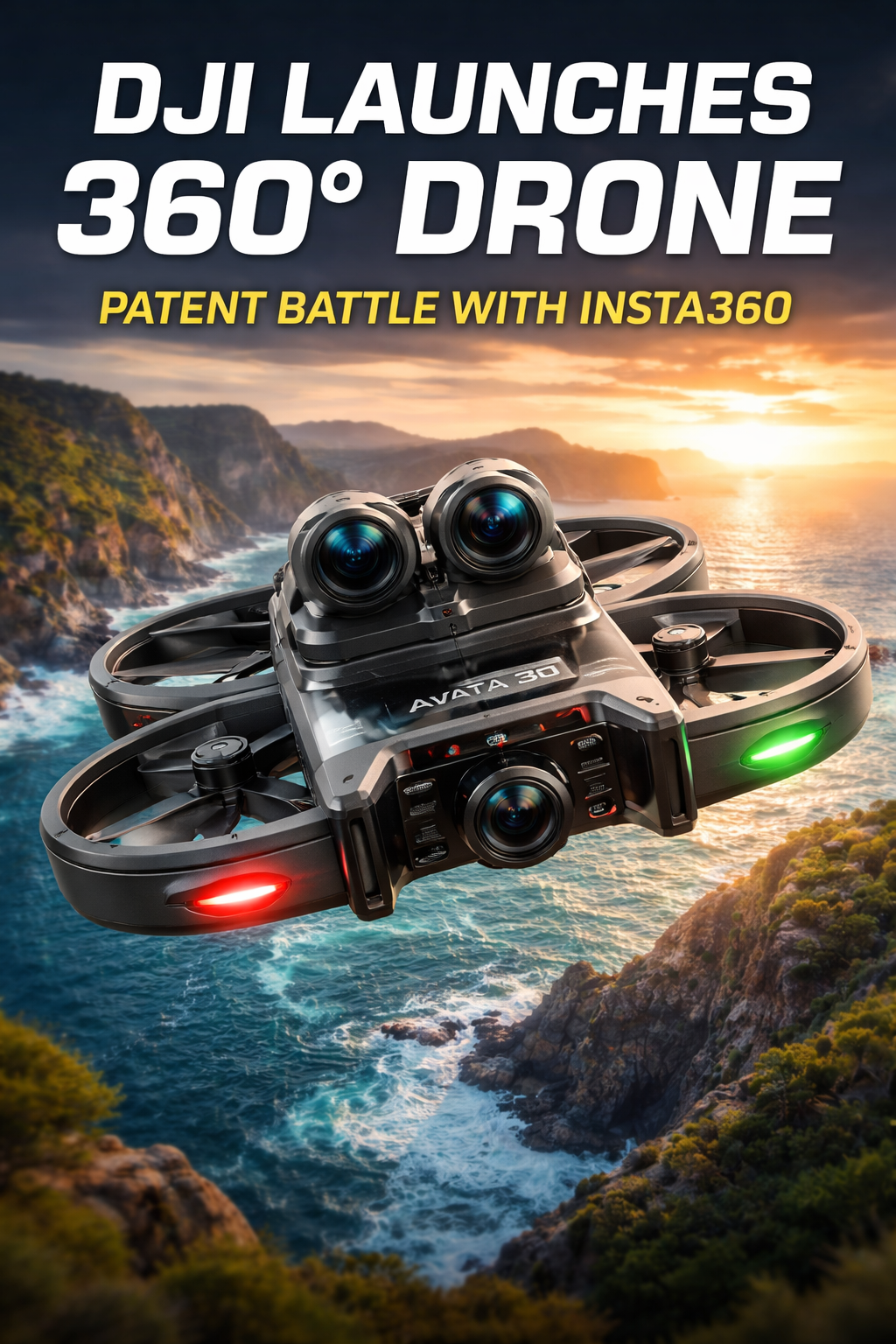
DJI Enters 360-Degree Drone Race Amid High-Stakes Patent Clash With Insta360

DJI Avata 360 drone capturing immersive 8K aerial footage with dual lens system

A New Era of Aerial Imaging Begins

Image
Image
Image
Image
Image

In a bold and strategic move, DJI has unveiled its first-ever 360-degree drone, signaling a dramatic shift in the consumer drone landscape. The launch places DJI in direct competition with Insta360, a fast-rising rival that pioneered the 360-degree drone segment.

The announcement arrives at a critical moment. Both companies are now locked in an escalating patent dispute. This collision of innovation and litigation sets the stage for one of the most intense rivalries in the drone industry.

The Product: DJI’s Ambitious Leap Into 360-Degree Flight

DJI’s newly launched Avata 360 represents a significant technological leap. The company, long known for dominating traditional drone markets, now aims to redefine immersive aerial imaging.

The Avata 360 features a dual-lens system capable of capturing fully spherical video. It delivers ultra-high-definition footage, offering up to 8K resolution. This enables users to reframe shots after capture, a key advantage in modern content creation.

The drone also integrates DJI’s signature flight stability and obstacle detection systems. It supports both FPV (first-person view) flying and standard stabilized flight modes. This hybrid functionality expands its appeal across beginners and professionals.

The product signals DJI’s intent to lead—not follow—in the next generation of aerial imaging.

Insta360’s First-Mover Advantage

Image
Image
Image
Image
Image
Image

Before DJI entered the segment, Insta360 had already made a decisive move. Its Antigravity A1, launched earlier, marked the world’s first dedicated 8K 360-degree drone.

Insta360 built its reputation on compact 360 cameras. It translated that expertise into aerial platforms with speed and precision. The A1 emphasizes portability, immersive capture, and intuitive editing tools.

This early entry gave Insta360 a crucial edge. It defined user expectations. It shaped the market narrative. And it forced DJI to respond.

Feature Showdown: Power vs Agility

The competition between DJI and Insta360 now hinges on performance, usability, and ecosystem strength.

DJI Avata 360 focuses on power and versatility:

  • Higher frame rates for smoother footage
  • Advanced obstacle sensing for safer flights
  • Long-range transmission capabilities
  • Dual-mode operation (FPV + stabilized flight)

Insta360 A1 prioritizes agility and innovation:

  • Lightweight, portable design
  • Seamless 360 content workflow
  • Strong integration with editing software
  • First-mover advantage in immersive storytelling

This contrast defines the rivalry. DJI leverages engineering dominance. Insta360 bets on creative freedom and speed.

Patent War Intensifies

At the heart of this competition lies a serious legal battle.

DJI has filed multiple patent infringement claims against Insta360. The dispute involves at least six patents. These reportedly cover flight control systems, imaging technologies, and drone architecture.

DJI alleges that some innovations used by Insta360 originated within its own research ecosystem. It has also suggested links to former employees who joined the rival firm.

Insta360 has strongly denied these allegations. The company claims it holds independent intellectual property rights. It has even hinted at possible counterclaims.

This legal clash could reshape the competitive landscape. Court decisions or settlements may influence product design, licensing, and market access.

Strategic Stakes: More Than Just Drones

This is not just a product battle. It is a strategic inflection point for the industry.

DJI currently dominates the global consumer drone market. Its market share remains unmatched. However, emerging categories like 360-degree drones open new fronts where incumbents face disruption.

Insta360 represents that disruption. It moves fast. It experiments boldly. And it targets niche segments before they go mainstream.

The outcome of this rivalry could determine:

  • Who defines the future of immersive aerial content
  • How intellectual property shapes innovation cycles
  • Which company captures the next wave of creators

Industry Impact: A New Category Takes Flight

Image
Image
Image
Image
Image
Image

The emergence of 360-degree drones signals a broader transformation.

Content creators now demand more flexibility. They want to shoot once and decide framing later. They want immersive footage for VR, AR, and interactive media.

360 drones meet these needs. They combine capture and creativity into a single workflow.

This trend could accelerate adoption across industries:

  • Film and media production
  • Travel and tourism marketing
  • Real estate visualization
  • Virtual reality experiences

As competition intensifies, innovation will likely accelerate. Prices may fall. Features will expand. And the category will mature rapidly.

The Road Ahead

DJI’s entry into the 360-degree drone segment marks a turning point. It challenges Insta360’s early lead. It raises the stakes across technology, law, and market strategy.

The patent dispute adds uncertainty. It could slow momentum—or trigger new licensing frameworks that benefit both players.

One thing remains clear. The battle between DJI and Insta360 will shape the next chapter of drone innovation.

In this high-altitude contest, the winners will not just capture images. They will capture the future of immersive storytelling.