COURT CLEARS SUN PHARMA TO EXPORT KEY WEIGHT LOSS DRUG; RESTRICTS INDIA SALE

Delhi High Court ruling in Sun Pharma versus Novo Nordisk patent dispute over the semaglutide drug (Ozempic/Wegovy) formulation.

The Delhi High Court today delivered a split verdict. It allowed Sun Pharmaceutical Industries to manufacture and export its version of the blockbuster drug semaglutide. However, the court strictly barred the company from selling the product in the domestic Indian market.

Court Upholds Patent Expiry Timeline

The decision is a major development in the pharmaceutical patent battle. Danish giant Novo Nordisk markets semaglutide globally. It is the active ingredient in its widely-used diabetes and weight-loss drugs, Ozempic and Wegovy.

Novo Nordisk sued Sun Pharma for patent infringement. The Danish company seeks to protect its secondary patent. This patent covers specific formulations and the delivery system of the drug. The patent remains valid until March 2026.

The court’s ruling respects this expiration date. It ordered Sun Pharma to refrain from all sales within India until the patent lapses.

Exports Allowed: A Win for Generics

Crucially, the court granted Sun Pharma permission to continue manufacturing. It also allowed exports to countries where Novo Nordisk does not hold patent protection.

This order mirrors a recent ruling against Dr. Reddy’s Laboratories (DRL). Justice Manmeet Pritam Singh Arora heard both cases. She had previously allowed DRL similar manufacturing and export rights.

Sun Pharma provided a formal undertaking to the court. The company will comply with the domestic sales ban. It will also provide the court with full details of its manufacturing and export accounts.

Evergreening Challenge Cited

The ongoing dispute centers on the validity of Novo Nordisk’s secondary patent. Generic makers argue the patent constitutes evergreening.

Evergreening is a common practice. Companies attempt to extend their patent monopoly. They secure new patents on minor modifications to an existing drug.

The Indian Patents Act, specifically Section 3(d), prohibits this. This section denies patents for new forms of a known substance. The new form must show a significant enhancement in therapeutic efficacy.

The court noted that Sun Pharma and DRL raised a “credible challenge” to the secondary patent’s validity. This legal challenge bolstered the generic companies’ position.

Market Impact: A Race for 2026

The ruling is a clear signal. It encourages Indian generic companies to prepare for market entry.

The global market for GLP-1 drugs like semaglutide is massive. Indian drug makers are now lining up to launch their generic versions.

The ban on domestic sales protects Novo Nordisk’s current market exclusivity. Yet, the export green light allows generic firms to gain a foothold. This prepares them for a competitive domestic launch in March 2026.

Novo Nordisk still holds an advantage in the Indian market. It recently cut the price of its product, Wegovy. This move increases competition against rivals like Eli Lilly’s Mounjaro.

Novo Nordisk has indicated it intends to appeal the court’s earlier decision in the DRL case. The legal battle for the lucrative weight-loss drug market will continue.

Delhi High Court Restores Trademark Infringement Suit

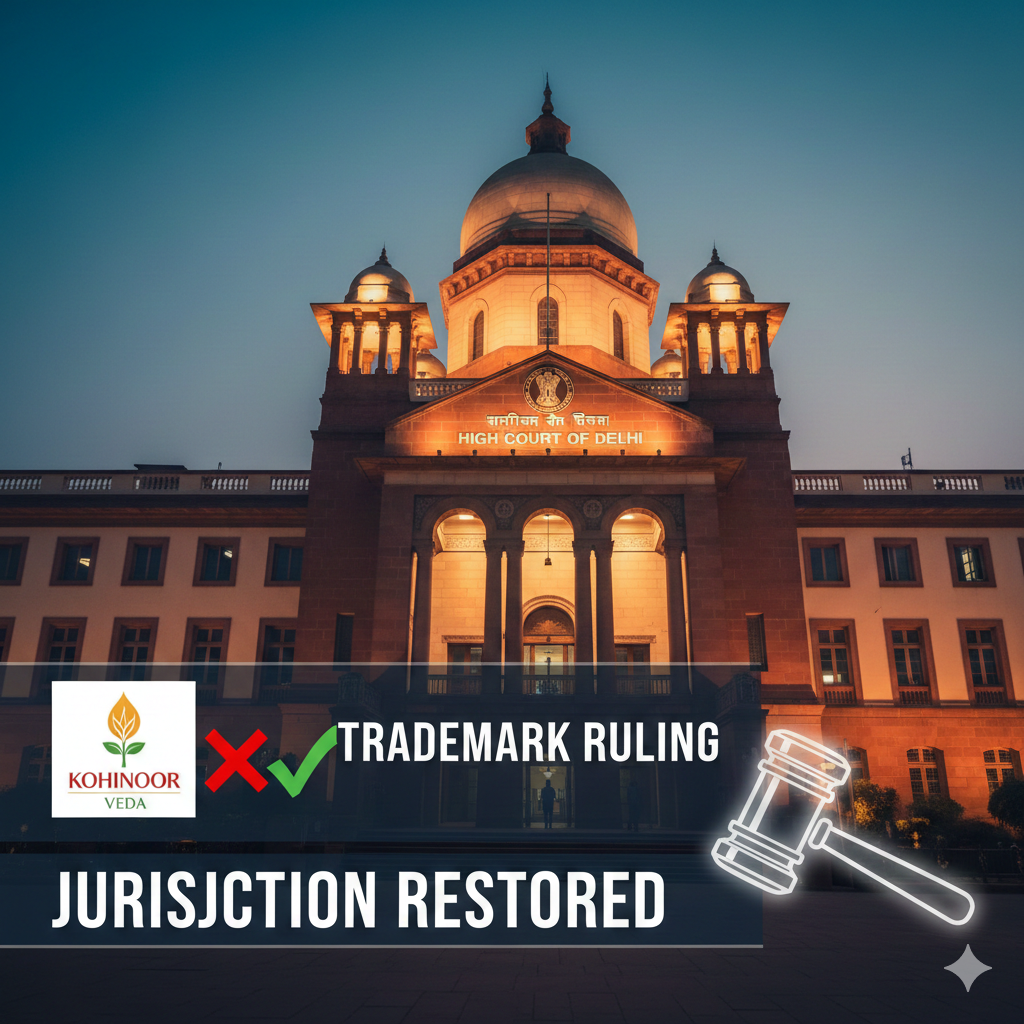
Delhi High Court building at dusk with overlaid text: "Trademark Ruling" and "Jurisdiction Restored," symbolizing the Kohinoor Seed vs Veda Seed case.

The Delhi High Court’s Division Bench restored the trademark infringement suit filed by Kohinoor Seed Fields India Pvt. Ltd. against Veda Seed Sciences Pvt. Ltd., setting aside an earlier order by a Single Judge that had returned the plaint due to a lack of territorial jurisdiction.

The Court held that a substantial part of the cause of action arose within Delhi’s jurisdiction, thereby allowing the suit to proceed on its merits.


Key Grounds for Restoring Jurisdiction

The Division Bench identified two primary factors that conferred territorial jurisdiction on the Delhi High Court:

  1. Registration of Trademarks in Delhi:
    • Kohinoor Seed’s registered trademarks, “TADAAKHA” and “SADANAND”, were registered in Delhi.
    • The Court held that the mere fact that the asserted marks were registered within the jurisdiction of the High Court was a factor that, by itself, entitled the appellant to institute the suit in Delhi.
  2. Execution of Marketing Agreement in Delhi:
    • The non-exclusive co-marketing agreement, which was at the heart of the dispute, was executed in New Delhi. This agreement allowed Veda Seed to market Kohinoor’s seeds under the marks (including the unregistered mark “BASANT”) until it expired in 2022.
    • The Court ruled that since the agreement formed an integral part of the cause of action—as the alleged infringement occurred after the agreement’s termination and involved marks initially licensed—the Court within whose jurisdiction the agreement was executed has jurisdiction to adjudicate the dispute.

Details of the Dispute

  • Kohinoor’s Marks: Registered trademarks “TADAAKHA” and “SADANAND”, and unregistered mark “BASANT”, all used for cotton hybrid seeds.
  • Veda Seed’s Allegedly Infringing Marks: “VEDA TADAAKHA GOLD BG II,” “VEDA SADANAND GOLD BG II,” and “VEDA BASANT GOLD BG II.”
  • Background: The parties had a co-marketing agreement from 2014 to 2022. Post-termination, Kohinoor alleged that Veda Seed began selling its own seeds using deceptively similar marks.
  • Single Judge’s View (Set Aside): The Single Judge had accepted Veda Seed’s argument that its operations were limited to Andhra Pradesh and Telangana, and that online listings (on IndiaMart/Kalgudi) were insufficient to establish jurisdiction.
  • Division Bench’s View on Online Listings: The Division Bench observed that the question of Veda Seed’s direct or indirect involvement in the online listings of the allegedly infringing goods was a matter that required a full trial and could not be dismissed at the preliminary stage.

The Division Bench, therefore, allowed the appeal, setting aside the previous order, and restored the trademark infringement suit to be heard on its merits.

Delhi High Court Rejects Interim Patent Block on Semaglutide, Calls Out ‘Evergreening’ Tactics

The Delhi High Court has delivered a decisive order in the high-stakes battle over semaglutide, the blockbuster diabetes and weight-loss drug. The court refused to grant Novo Nordisk a temporary injunction against Dr Reddy’s Laboratories (DRL), dealing a major blow to the Danish pharmaceutical giant’s attempt to control the Indian market until 2026. The ruling carries far-reaching implications for patent strategy, market competition, and the future of GLP-1 drugs in India.

The court held that DRL had raised a “credible challenge” to Novo Nordisk’s second patent on semaglutide. It found strong indicators of double-patenting, a practice that Indian law treats as an attempt to “evergreen” expired monopolies. The court’s message was clear: companies cannot use secondary patents to prolong control over blockbuster drugs.


Two Patents, One Molecule: How the Dispute Began

Novo Nordisk held two Indian patents related to semaglutide:

  1. Composition Patent (IN 275964)
    This patent covered the semaglutide molecule itself. It expired in September 2024, opening the door for generic manufacturing.
  2. Formulation Patent (IN 262697)
    This patent claims a specific formulation and delivery system for the same drug. It remains valid until March 2026.

When the core composition patent lapsed, DRL secured regulatory approval from the Central Drugs Standard Control Organization (CDSCO) to manufacture semaglutide for export. The approval triggered immediate friction. Novo Nordisk rushed to court, claiming that the formulation patent protected not only the delivery mechanism but effectively covered the drug.

It sought an emergency injunction to stop DRL’s manufacturing and export operations. The company argued that any commercial activity—even export—would cause irreparable harm.


The Court’s Ruling: A Firm Stand Against Evergreening

Justice Anish Dayal rejected the injunction request. The court held that DRL’s objections to the formulation patent were strong enough to deny temporary relief to Novo Nordisk.

1. Double-Patenting Concern

The court noted that the formulation patent appeared to reclaim the same invention for which Novo Nordisk’s composition patent had already expired. The claims overlapped heavily.

This amounted to “evergreening”—a tactic where pharmaceutical companies file secondary patents to extend monopoly periods.

Indian patent law, especially after Section 3(d), firmly discourages such strategies.

2. Lack of Inventive Step

The court observed that Novo Nordisk’s claimed improvements in the formulation patent did not appear novel or non-obvious.
The modifications were routine optimizations well known in pharmaceutical science. They did not represent a genuine leap in innovation.

This significantly weakened the validity of the formulation patent.

3. Balance of Convenience Favoured DRL

Since the core patent had expired, the court held that public interest and market competition must be prioritized.

Blocking DRL without conclusive proof of infringement would be unfair, especially when DRL was manufacturing the drug only for export markets.


Exports Allowed, But Indian Market Stays Closed—for Now

The court made a nuanced distinction. DRL may:

  • continue manufacturing semaglutide, and
  • export it freely to international markets.

However, domestic sales remain prohibited until the formulation patent expires in March 2026, unless the patent is invalidated earlier.

This split ruling reinforces India’s position as the world’s largest exporter of affordable generics, while still respecting valid patent rights inside the country.


A Major Win for Generic Manufacturers

The decision strengthens the confidence of Indian pharmaceutical companies entering high-value therapeutic categories. Semaglutide, widely used for Type-2 diabetes and explosive global demand for weight-loss treatments, represents one of the most lucrative drug classes today.

DRL is not alone. Cipla, Sun Pharma, Biocon, and Mankind Pharma are exploring GLP-1 opportunities. The Delhi HC’s ruling sends a bold signal: secondary patents will face strict scrutiny.

Indian courts have repeatedly warned against evergreening. This judgment continues that legacy, following similar rulings in the cases of imatinib, sofosbuvir, and darunavir.


Why This Case Matters Globally

The global pharmaceutical industry is watching India closely. Semaglutide is one of the world’s most valuable drugs, powering Novo Nordisk’s meteoric rise in recent years.

A single ruling from an Indian court can influence:

  • global supply chains,
  • generic entry timelines,
  • price dynamics across continents.

India produces nearly 40% of the world’s generics. Any shift in the patent landscape here disrupts international markets.

By allowing export manufacturing, the court has opened a potential pipeline of affordable semaglutide to emerging markets struggling with diabetes and obesity crises.


What Happens Next?

Novo Nordisk has several options:

  • Appeal before a division bench of the Delhi High Court.
  • Initiate a full trial to defend the validity of the formulation patent.
  • Seek tighter regulatory restrictions on generic manufacturing.

DRL, meanwhile, may accelerate export production and explore challenging the patent’s validity to unlock the domestic market earlier.

Legal experts expect this case to set an important precedent for future GLP-1 patent disputes, especially as rival companies race to launch their own weight-loss drugs.


Conclusion

The Delhi High Court’s rejection of Novo Nordisk’s interim injunction is a striking affirmation of India’s sharp stance against patent evergreening. The ruling protects open competition, enables affordable access through exports, and reinforces India’s leadership in generic pharmaceuticals.

As demand for semaglutide surges worldwide, the judgment could reshape the global supply chain for one of modern medicine’s most influential drug classes.

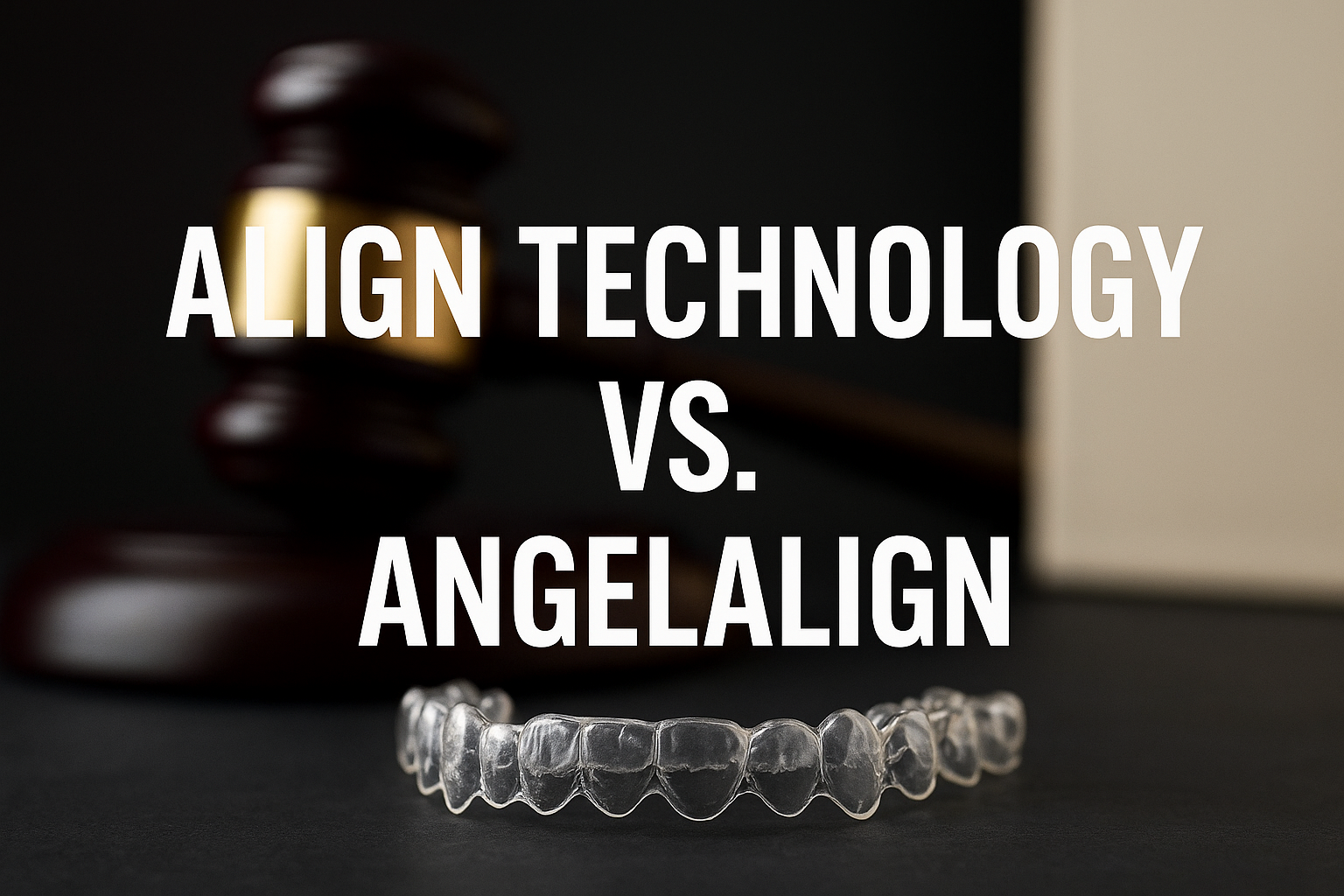
Align Technology Sues Angelalign Technology Over Patent Infringement

Align Technology, the maker of Invisalign clear aligners, has launched a series of patent infringement lawsuits against Shanghai-based Angelalign Technology. The cases have been filed in the United States, Europe, and China, targeting Angelalign’s aligner products and digital orthodontic software.

According to Align Technology, the lawsuits accuse Angelalign of infringing patents related to multilayer aligner materials, advanced treatment planning systems, and proprietary aligner designs. The company is seeking both injunctions to block sales and monetary damages.

Align Defends Innovation

Align emphasized its long-term commitment to research and development. The company invests more than $300 million annually and has spent nearly $2 billion since 2001 on new technologies. Executives said these lawsuits are necessary to protect Align’s intellectual property portfolio and ensure “fair competition” in the global clear-aligner market.

“Intellectual property is the foundation of our leadership in digital orthodontics,” Align stated in its announcement.

Global Enforcement Strategy

The decision to file cases across three major markets signals a broad legal strategy. The U.S. and Europe remain Align’s largest commercial regions, while China is a fast-growing market where Angelalign has a strong presence. By pursuing parallel lawsuits, Align is increasing the legal and commercial pressure on its rival.

Industry observers believe the outcome could reshape competition in the clear-aligner sector. If courts issue injunctions, Angelalign may face restrictions on selling its aligners in critical markets.

Legal Battles in Context

This is not the first time Align has turned to litigation. In 2019, the company reached a $35 million settlement with ClearCorrect after years of disputes (Straumann). In 2022, it settled patent and antitrust claims with 3Shape, a leading scanner manufacturer (Dentistry Today).

More recently, Align prevailed in antitrust lawsuits in the U.S. and secured preliminary approval of a $31.75 million settlement tied to SmileDirectClub-related claims (ClassAction.org).

What’s Next

The litigation against Angelalign is expected to proceed over the coming months. Patent cases in multiple jurisdictions can be lengthy and complex, often involving parallel hearings and appeals.

For Align, the lawsuits reinforce its aggressive stance on protecting innovation. For Angelalign, they represent a significant challenge that could limit expansion in key global markets.

As the legal process unfolds, orthodontists, patients, and investors will closely watch whether courts uphold Align’s claims or allow Angelalign to continue its international growth.

Delhi High Court Clarifies Patent Law Standards in Landmark Ruling on Section 3(d) of the Indian Patents Act, 1970

In a landmark judgment, the Delhi High Court has provided critical clarity on the interpretation and application of Section 3(d) of the Indian Patents Act, 1970, particularly in cases concerning pharmaceutical innovations. The decision, rendered in the matter of Ischemix LLC v. The Controller of Patents, emphasizes the standards of patentability and the admissibility of post-filing data in applications involving new forms of known substances.

Section 3(d): A Barrier to Evergreening
Section 3(d) of the Indian Patents Act is a unique provision designed to prevent the “evergreening” of patents—where pharmaceutical companies attempt to extend patent monopolies by making minor modifications to known substances. The provision stipulates that a new form of a known substance is patentable only if it results in a significant enhancement of efficacy. In the context of pharmaceutical inventions, the Supreme Court, in its 2013 ruling in Novartis AG v. Union of India, interpreted “efficacy” to mean “therapeutic efficacy.”

The Ischemix LLC Case: Background
Ischemix LLC filed an appeal against the rejection of its patent application (No. 9739/DELNP/2011) by the Indian Patent Office on the grounds of Section 3(d). The applicant argued that they had submitted robust data—spanning in-vitro, in-vivo, and clinical trial results—along with expert opinions to demonstrate the enhanced therapeutic efficacy of the compound.

The Patent Office, however, rejected the application, noting that while comparative data had been submitted after the oral hearing, the data was not clearly explained or sufficiently correlated to therapeutic enhancement as claimed in the specification.

High Court’s Ruling: Key Takeaways
1. Therapeutic Efficacy as the Benchmark
The Delhi High Court reaffirmed the principle established in Novartis AG v. Union of India—that efficacy in the context of pharmaceutical patents must be understood as therapeutic efficacy. Mere improvements in physicochemical properties like stability or solubility are insufficient unless they translate to demonstrable therapeutic benefits.

2. Comparative Data: A Necessary Requirement
Drawing from its earlier ruling in DS Biopharma Limited v. Controller of Patents, the Court stressed that applicants must furnish comparative efficacy data to demonstrate enhancement over known substances. Importantly, this data should be provided in the form of structured comparative tables and supported by appropriate scientific evidence.

3. Admissibility of Post-Filing Data
The Court recognized the inherent delay in generating empirical efficacy data, especially in the pharmaceutical sector where clinical trials are time-intensive. It ruled that while some indication of efficacy should be included at the time of filing, post-filing data may be considered if it corroborates the technical effects disclosed in the original specification. This position is consistent with the Calcutta High Court’s judgment in Oyster Point Pharma Inc. v. Controller of Patents, which acknowledged the prolonged timeline for drug development.

4. Timing and Explanation of Additional Data
The Court made it clear that post-filing data must be submitted well before the final hearing at the Patent Office and should be clearly explained. Submitting complex efficacy data during written submissions post-hearing without oral explanation could render it ineffective, as the Controller may struggle to appreciate the technical details.

5. Requirement for Correlation with Specification
Referring to AstraZeneca AB v. Intas Pharmaceuticals Ltd., the Court ruled that post-filing data should only confirm technical effects already hinted at or described in the specification. It cannot be used to introduce an entirely new technical effect.

Court’s Direction in Ischemix Case
Recognizing the importance of the data but noting the lack of explanation linking the data to therapeutic efficacy, the Court directed Ischemix LLC to submit an explanatory note correlating the submitted evidence to enhanced efficacy. Upon the Patent Office’s consent, the Court remanded the application for re-examination, thereby allowing a fair opportunity for reconsideration.

Broader Implications for Patent Law
This judgment offers significant guidance to pharmaceutical companies and patent practitioners navigating Section 3(d). It strikes a delicate balance between encouraging genuine innovation and preventing the misuse of the patent system to monopolize marginal improvements. The judgment also reinforces procedural discipline, requiring that critical data be timely, complete, and clearly presented.

Conclusion
The Delhi High Court’s decision in Ischemix LLC v. The Controller of Patents builds upon the jurisprudence laid down in Novartis and contributes to a growing body of case law interpreting Section 3(d). As patent litigation continues to evolve in India’s dynamic pharmaceutical sector, such decisions will serve as important references for determining the scope of patentable subject matter and the treatment of post-filing evidence.

Legal experts expect that the continued engagement of the judiciary with Section 3(d) will bring greater predictability and transparency to India’s patent system, particularly for drug-related inventions.

Delhi High Court Grants Relief to Indian Businessman in ‘ELFY’ Trademark Dispute with Pakistani National

In a significant ruling, the Delhi High Court has granted relief to an Indian businessman in a trademark dispute involving the mark ‘ELFY’ against Pakistani national Mohammed Younus Sheikh. The court’s decision underscores the importance of protecting intellectual property rights and upholding fair business practices.

Background of the Case

The dispute centers around the use of the ‘ELFY’ trademark, which the Indian businessman claims to have developed and used in commerce for several years. Mohammed Younus Sheikh, a Pakistani national, had claimed that his company had been using the ‘ELFY’ mark for industrial adhesives since 1981. Sheikh’s company had registered the mark in Pakistan and asserted that it had acquired a transborder reputation, particularly in India.

The Indian businessman contended that he had been using the ‘ELFY’ mark in India since 1988 and had built a significant reputation and goodwill associated with the mark. He argued that Sheikh’s adoption of the same mark in India was likely to cause confusion among consumers and harm his business interests.

Court’s Findings

The Delhi High Court examined the evidence presented by both parties, including the dates of adoption and use of the ‘ELFY’ mark, marketing materials, and consumer testimonials. The court found that the Indian businessman had established prior use of the mark in India and had built a recognizable brand associated with ‘ELFY.’

In contrast, the court noted that Mohammed Younus Sheikh had not provided sufficient evidence to demonstrate prior use or registration of the ‘ELFY’ mark in India. The court emphasized the principle of territoriality in trademark law, asserting that the rights to a trademark are generally confined to the jurisdiction where the mark is used and recognized.

Legal Implications

This ruling reinforces the importance of establishing and maintaining clear records of trademark use and registration. It also highlights the challenges businesses may face when operating in international markets, where the risk of trademark disputes can arise due to similarities in branding.

Legal experts suggest that businesses should conduct thorough trademark searches before adopting new marks and consider registering their trademarks in key markets to protect their brand identity and prevent potential conflicts.

Conclusion

The Delhi High Court’s decision serves as a reminder of the complexities involved in trademark law and the need for businesses to be vigilant in protecting their intellectual property. As global commerce continues to expand, understanding and navigating trademark rights across different jurisdictions will be crucial for businesses seeking to safeguard their brands.

Metro Brands Gets Interim Relief from Bombay High Court in Trademark Dispute with MetBrands

In a significant development in a closely watched intellectual property dispute, the Bombay High Court has granted interim relief to Metro Brands Ltd., a leading Indian footwear retailer, in its trademark infringement case against a startup operating under the name “MetBrands.”

On Monday, the court acknowledged Metro Brands’ longstanding presence in the Indian market and the strong consumer association with its brand name. Justice Manish Pitale, presiding over the matter, directed MetBrands to refrain from using the contested name or any deceptively similar mark until further orders.

Background of the Dispute

Metro Brands, incorporated in 1955, is a household name in Indian footwear retail with a wide footprint across premium malls and shopping destinations. The company claimed that MetBrands, a relatively new player in the fashion and lifestyle segment, was deliberately using a name strikingly similar to its own, thereby creating confusion in the minds of consumers and riding on the goodwill it has established over decades.

In its petition, Metro Brands argued that “MetBrands” not only shares phonetic and visual similarities but also overlaps in the domain of lifestyle and fashion retail, increasing the likelihood of trademark dilution and brand misappropriation.

Court’s Observations

The Bombay High Court, while hearing the interim plea, noted the potential harm to Metro Brands’ reputation and consumer trust due to the similarity between the two names. The court stated that prima facie, the use of “MetBrands” could amount to infringement under the Trade Marks Act, 1999.

Justice Pitale observed: “Given the longevity and recognition enjoyed by the plaintiff [Metro Brands] in the Indian market, and the phonetic resemblance of the defendant’s brand name, a case for interim injunction is clearly made out.”

Response from MetBrands

MetBrands, in its defense, claimed that the brand name was independently conceived and not intended to mislead consumers. The company also emphasized its limited operational scale compared to Metro Brands, suggesting there was no deliberate attempt to confuse or exploit.

Despite this, the court ruled in favor of granting temporary relief to Metro Brands, citing the need to prevent potential consumer deception and preserve brand integrity.

Legal and Industry Implications

Legal experts see the decision as a strong reinforcement of the importance of brand protection and the judiciary’s proactive stance in safeguarding intellectual property rights. “This interim order sends a clear message to emerging businesses about the necessity of conducting thorough trademark checks and building brand identities distinct from existing market players,” said Renu Arora, a Mumbai-based IP attorney.

What’s Next

The matter is scheduled for further hearing in July 2025, when the court will examine the merits of the case in greater detail. Until then, MetBrands has been restrained from using the disputed mark in any commercial context, including advertising, packaging, and digital presence.

For now, the order comes as a strategic win for Metro Brands, reinforcing its hold over its brand identity while the legal proceedings continue.

“Judge Signals Sanctions Against Patent Attorney for Sharing Netflix’s Confidential Data with Litigation Funder”

A federal judge in Oakland has signaled his intent to impose sanctions on patent attorney Bill Ramey and his firm, Ramey LLP, for violating a protective order by sharing Netflix Inc.’s confidential information with a litigation funder. The case stems from a patent infringement lawsuit filed by Finnish inventor Lauri Valjakka against Netflix, in which Ramey represented Valjakka.

During a hearing the U.S. District Court indicated that attorneys’ fees would be an appropriate sanction, noting that they would likely be substantial. The dispute centers on Ramey’s disclosure of Netflix’s source code and financial information to AiPi LLC, a litigation funding company, without proper authorization. Netflix contends that these materials, described as the “crown jewels of its business,” were shared in violation of the court’s protective order, which restricts access to sensitive information to authorized individuals only.

At the hearing, Netflix’s attorney, Sarah Piepmeier of Perkins Coie, argued that AiPi had access to the confidential information before Netflix was aware of the funding arrangement. She expressed concern that AiPi’s possession of Netflix’s proprietary data could influence its decisions in future litigation or inspire new lawsuits. Ramey defended his actions, asserting that the protective order allowed him to share the information with “affiliates,” a category he believed included AiPi’s attorneys. He further claimed that no harm had occurred because AiPi’s lawyers assured him they hadn’t used the materials inappropriately.

Judge Tigar expressed skepticism about Ramey’s defense, stating that having individuals affiliated with a litigation funder review Netflix’s source code constituted a situation of harm. He also indicated that he would consider referring Ramey to the California State Bar or another disciplinary body for further review.

This development adds to a series of legal challenges faced by Ramey and his firm. Earlier this year, Judge Tigar denied Ramey’s application for pro hac vice admission in a separate case, CyboEnergy Inc. v. Netflix Inc., ruling that Ramey had been practicing law in California without a state bar license. Additionally, Ramey has faced scrutiny over his firm’s handling of multiple patent cases in California without proper licensure, leading to questions about his compliance with state ethical standards .

The case, Valjakka v. Netflix Inc., continues to unfold, with potential implications for the intersection of patent law, litigation funding, and the protection of confidential business information.

Unilin Technologies Secures European Patent for Groundbreaking Osiris Wood Recycling Technology

Unilin Technologies, the intellectual property division of Unilin, has been awarded European patent EP 4114629 for its pioneering Osiris recycling technology. This patent marks a significant milestone in the company’s mission to foster circular practices in the wood industry and reflects Unilin’s ongoing investment in sustainable innovation.

The patented Osiris system represents the first industrial-scale technology capable of recycling fiberboards—a long-standing challenge in the wood-based panel industry. Historically, the composite structure of fiberboards, which combines wood fibers with adhesives and resins, made them difficult to disassemble and therefore unfit for effective recycling. As a result, these boards typically ended up in landfills or were incinerated, contributing to environmental degradation.

With Osiris, Unilin has developed a scalable and practical solution to this issue. The technology enables the efficient separation of wood fibers from waste fiberboards, which can then be reintegrated with virgin wood to manufacture new fiberboards. This process not only reduces waste but also conserves natural resources by decreasing reliance on fresh wood material.

The Osiris technology is exclusively offered for licensing by Unilin Technologies in partnership with Dieffenbacher, a leading provider of wood-based panel production systems.

“We are proud to receive this patent, which underscores the innovation behind Osiris and the impact it can have on the sustainability of the fiberboard industry,” said a spokesperson from Unilin Technologies. “Our goal is to create real-world solutions that allow manufacturers to reduce their environmental footprint while maintaining high production standards.”

The granting of this European patent further strengthens Unilin’s intellectual property portfolio and opens the door for wider adoption of circular technologies across the board manufacturing sector. With global attention increasingly focused on sustainable production methods, Osiris offers a viable path forward for companies seeking to align with environmental targets without compromising efficiency or quality.

Navigating the Genomics Revolution: The Evolving Role of Intellectual Property Protection

More than two decades after the landmark announcement of the Human Genome Project’s completion in 2003, the field of genomics is undergoing a profound transformation. What began as a focus on decoding linear DNA sequences has expanded into a multidisciplinary understanding of the genome’s structural and functional complexity. This includes insights into protein folding, post-translational modifications like glycosylation, and the critical functions of non-coding DNA segments once dismissed as “junk,” such as introns.

In healthcare, personalized medicine, pharmacogenomics, and CRISPR-Cas9 gene editing are transitioning from research to real-world application. Genomic research is also driving the development of disease-resistant crops in agriculture and, in the biotech industry, is converging with artificial intelligence (AI) to accelerate innovations like next-generation sequencing and data interpretation.

This rapid evolution brings renewed focus on how intellectual property (IP) laws can safeguard innovation while keeping pace with scientific complexity. A strategic approach to IP is essential to protect genomics-related breakthroughs across multiple domains.

Patents: The Traditional Tool — and Its Limitations
Utility patents remain a cornerstone of IP strategy in genomics. In the competitive life sciences market, such exclusivity can determine commercial viability. However, the scope of what is patentable, especially in the U.S., is becoming increasingly restrictive.

Key genomic discoveries — like isolated human genes — when naturally occurring, are not patentable under U.S. law. Similarly, diagnostic methods that link biomarkers with disease states often fall outside the scope of patent-eligible subject matter. AI-driven components, such as algorithms used to interpret genomic data, also face hurdles, as abstract ideas and software in isolation typically don’t qualify for patent protection.

Disclosure Challenges in Patent Law
Patents require inventors to fully disclose their invention. This becomes problematic when critical elements of an innovation — like proprietary algorithms or data models — aren’t patentable but are vital to the invention’s function. In such cases, companies may be reluctant to disclose sensitive information that could be exploited by competitors, forcing them to weigh the benefits of limited patent protection against the risk of exposing valuable trade secrets.

Trade Secrets: A Flexible but Fragile Option
When patenting isn’t viable or would reveal too much, trade secrets offer an alternative. This form of protection doesn’t require disclosure and isn’t limited by subject matter rules or duration, as long as the information remains confidential. Genomics-based innovations — such as algorithm development, data modeling, and experimental optimization — are well-suited to trade secret strategies.

However, trade secrets are vulnerable. A single leak — from an employee, partner, or regulatory disclosure — can irreversibly compromise protection. Therefore, robust internal controls, clear access policies, and legal safeguards are essential to maintain secrecy.

Copyright: Protecting the Expression of Genomic Insights
While traditionally associated with creative works, copyright law has found new relevance in the digital era. It now extends to software, source code, and potentially, some aspects of genomics-related data and algorithms. Unlike patents, copyright protects the expression of an idea, not the idea itself — which means competitors can replicate the core concept using different language or methods, provided they don’t copy the exact expression.

For genomics, copyright might apply to algorithmic code, databases, or visualization tools used in analyzing genetic data. However, it is a limited tool that works best in conjunction with other forms of IP protection.

Toward an Integrated IP Strategy for Genomics
As genomics continues to push scientific boundaries, no single form of IP protection is sufficient. A multi-layered approach is often required — combining patents for core inventions, trade secrets for proprietary methods or data, and copyright for software or data presentation.

Careful coordination is essential. Over-disclosure in a patent could undermine trade secret protection, while an overly secretive approach might prevent the grant of a meaningful patent. Developing a clear, strategic IP roadmap that aligns with scientific goals and commercial interests is critical for ensuring innovations are protected without sacrificing competitive advantage.