Tesla is rewriting the rules of connectivity. A bombshell patent filing reveals a future where dead zones vanish. Elon Musk is merging his two greatest empires: Tesla and SpaceX. The goal is simple. Total global dominance through satellite-integrated vehicles.
For years, drivers faced a digital wall. Metal car roofs act like cages. They block signals. They kill high-speed data. Tesla’s new patent, published on December 4, 2025, shatters that wall. It introduces a revolutionary “Radio Frequency Transparent” roof. This is not just a sunroof. It is a gateway to the stars.
The Death of the Dead Zone
Connectivity is the lifeblood of the modern electric vehicle. Tesla relies on data. It needs data for Autopilot. It needs data for over-the-air updates. It needs data for the massive screens inside the cabin. Today, that data comes from cellular towers.
But towers have limits. They fail in mountains. They disappear in deserts. They collapse during natural disasters. This is a fatal flaw for a self-driving future. A Robotaxi cannot lose its mind in a tunnel or a rural valley. It must stay awake. It must stay connected.
Tesla’s solution is the Starlink antenna. By burying these receivers directly into the car’s roof, Tesla creates a permanent link to the SpaceX constellation. This is “always-on” internet. It works in the middle of a hurricane. It works in the heart of the Sahara.
The Engineering Miracle: Hidden in Plain Sight
Traditional satellite dishes are ugly. They are bulky. They ruin aerodynamics. Tesla refuses to sacrifice style. The new patent describes a multi-layered sandwich of high-tech polymers.
Engineers are using Polycarbonate (PC) and Acrylonitrile Styrene Acrylate (ASA). These are not standard plastics. These materials offer the strength of steel. They offer the clarity of glass. Crucially, they allow radio waves to pass through like ghosts.
The antenna sits beneath this skin. It is invisible to the eye. It is perfectly aerodynamic. It adds zero drag. This engineering feat allows Tesla to maintain its sleek, futuristic silhouette while housing the most powerful communication tool on Earth.
Powering the Robotaxi Revolution
Why does this matter now? The answer is autonomy. Tesla is betting everything on the Robotaxi. These autonomous fleets require massive bandwidth. They need real-time HD maps. They need constant communication with a central command.
A cellular glitch could paralyze an autonomous fleet. Starlink removes that risk. It provides a redundant, high-speed backbone. If the 5G network fails, the car switches to space. This seamless handoff ensures safety. It ensures reliability. It makes Tesla the only car company capable of operating truly anywhere.
An Entertainment Powerhouse
The benefits aren’t just for the computers. They are for the humans inside. As cars become mobile lounges, passengers want more. They want 4K streaming. They want lag-free gaming. They want high-fidelity video calls.
Current LTE and 5G connections often throttle during peak hours. Starlink does not. With a direct-to-satellite link, every Tesla becomes a rolling high-speed office. It becomes a theater on wheels. This transforms the commute. It turns a boring drive into a productive or entertaining experience. This is a massive competitive edge. Other manufacturers are tethered to the ground. Tesla is tethered to the heavens.
The Musk Synergy: A Vertical Empire
No other automaker can do this. Ford cannot build its own satellite network. Toyota cannot launch rockets. Elon Musk owns the infrastructure of the future.
SpaceX has already launched thousands of Starlink satellites. They are already testing “Direct-to-Cell” technology. The “STARLINK MOBILE” trademark is already active. This patent is the final piece of the puzzle. It creates a closed-loop ecosystem.
Tesla builds the car. SpaceX provides the internet. The customer gets an unparalleled experience. The revenue stays within the Musk empire. It is a masterstroke of vertical integration. It creates a barrier to entry that legacy carmakers cannot overcome.
Breaking the Regulatory Chains
Tesla currently faces intense scrutiny. Regulators in California are questioning “Full Self-Driving” claims. Market competition is fierce. Sales have fluctuated. Tesla needs a “wow” factor.
This satellite integration is that factor. It moves the goalposts. It shifts the conversation from battery range to digital capability. In the 20th century, horsepower was king. In the 21st century, data is the crown. Tesla is hoarding that data.
The Global Impact
This technology has massive implications for global safety. Imagine a Tesla in a remote area during a wildfire. The driver needs evacuation routes. The cell towers are burned out. The Tesla remains online. It receives emergency broadcasts. It guides the family to safety via satellite.
Imagine a scientist in the Arctic. Imagine a doctor in a developing nation. This technology brings the world closer. It democratizes information. It proves that the car is no longer just a mode of transport. It is a tool for survival and connection.
The Competition is Scrambling
Rivian and Lucid are watching. They are trying to catch up on battery tech. But they are lightyears behind on connectivity. While they negotiate with telecom giants, Tesla is building its own sky.
The industry is at a crossroads. Some companies will remain “dumb” cars with big batteries. Tesla is becoming a “smart” node in a global mesh network. The gap is widening. The “Invisible Starlink Shield” is more than a patent. It is a declaration of war against the status quo.
Looking Ahead: 2026 and Beyond
Production of the RF-transparent roof could begin soon. Reports suggest the Cybertruck or the upcoming “Model 2” might be the first to feature this tech. If successful, it will become standard across the fleet.
The world is changing. The sky is no longer the limit; it is the source. Tesla’s patent is a bold step into the unknown. It promises a world where you are never lost. A world where you are never offline. A world where your car is your most powerful connection to the rest of humanity.
Elon Musk promised the future. With this patent, he is delivering it—one satellite beam at a time. The era of the truly connected car has arrived.
intellectual property
intellectual property news
Safe Pro Group (SPAI) Files New AI Patent for Drone-Based Threat Detection
As the global reliance on Unmanned Aerial Systems (UAS) transitions from simple reconnaissance to complex, high-stakes decision-making, the bottleneck has remained the same: the human ability to process vast amounts of visual data accurately and in real-time. Addressing this critical gap, Safe Pro Group Inc. (NASDAQ: SPAI), a leader in AI-driven security and survival solutions, recently announced the filing of a groundbreaking patent application that promises to redefine the standards of computer vision in drone-based operations.
The new patent, titled “Object Detection Precision Enhancement Methods, Tools and Systems,” introduces a sophisticated algorithm specifically designed to enhance the detection of minute, high-risk objects within expansive datasets. This development marks a significant milestone for the company’s intellectual property (IP) portfolio and signals a paradigm shift for industries ranging from humanitarian demining to national defense.
The Challenge of the “Small Object” Problem
In the world of computer vision, “small object detection” is a notorious technical hurdle. When a drone flies at a high altitude to cover more ground, a landmine or an unexploded ordnance (UXO) may only occupy a few pixels on a 4K image. Standard AI models often struggle with these “needle in a haystack” scenarios, frequently resulting in false negatives (missed threats) or overwhelming false positives that paralyze operations.
Safe Pro’s new algorithm directly addresses this by utilizing a novel approach to image analysis. By refining how the AI interprets geospatial data and high-resolution imagery, the technology can maintain extreme precision even when processing massive datasets at high speeds. This capability is not merely a theoretical improvement; it is a necessity for “wide-area” operations where thousands of hectares must be cleared of threats to ensure human safety.
SpotlightAI™ and the Future of Demining
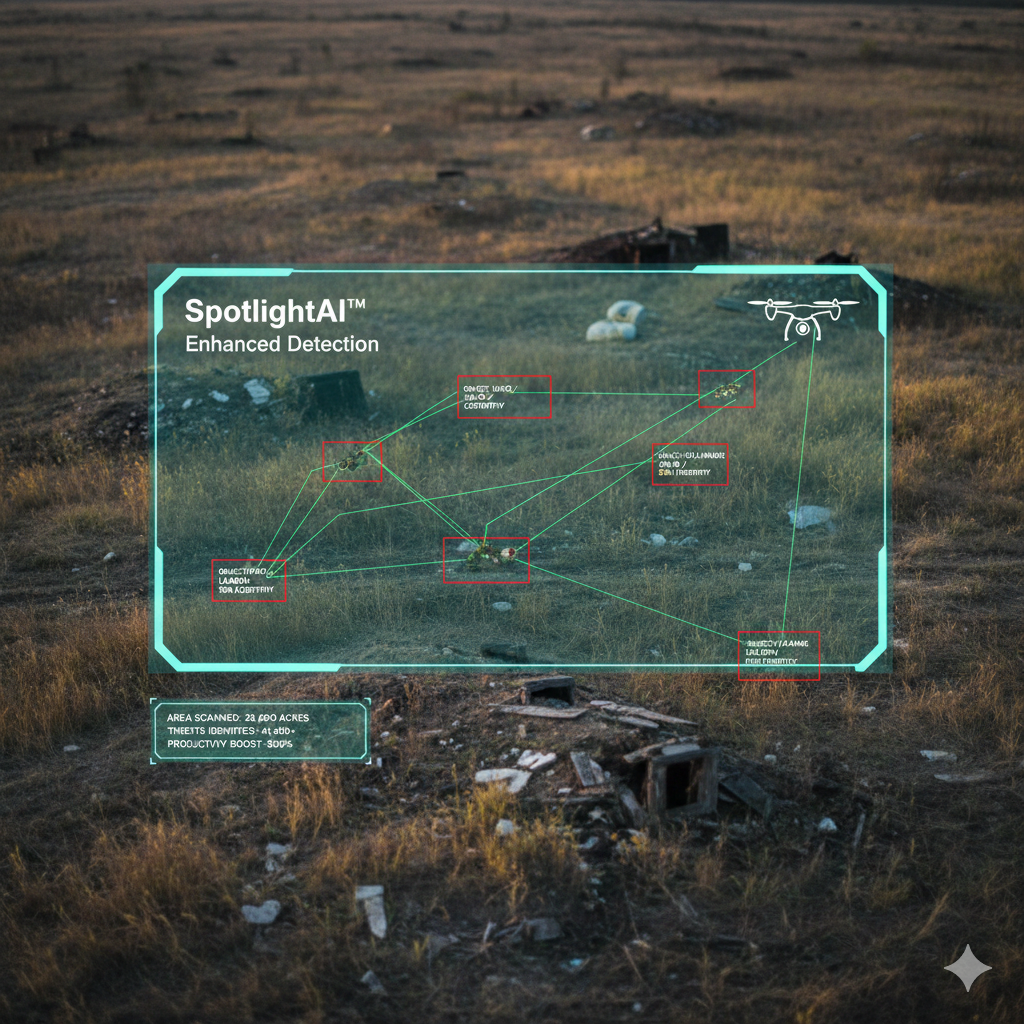
At the heart of Safe Pro’s technological ecosystem is SpotlightAI™, a platform that transforms standard drone imagery into actionable intelligence. The company’s newly filed patent acts as an “engine upgrade” for this platform.
The effectiveness of this technology has already been demonstrated in one of the world’s most challenging environments: Ukraine. Recent reports indicate that Safe Pro’s AI has delivered an 800% surge in productivity for demining surveys. By automating the identification of explosives, the system allows human demining teams to focus their efforts on confirmed danger zones, significantly reducing the time and risk involved in land clearance.
To date, Safe Pro’s unique datasets—which include over 2.2 million drone images and more than 41,400 identified threats across 28,000 acres—provide a “real-world” training ground that few competitors can match. This data-driven approach ensures that the algorithm is battle-tested and optimized for the chaotic visual environments of active conflict zones and post-war reconstruction sites.
Strategic Integration with the U.S. Military
The filing of this patent comes at a strategic time as Safe Pro deepens its relationship with the U.S. Department of Defense. The company has confirmed it will showcase these enhanced AI capabilities during several high-profile events with the U.S. Army throughout 2026.
Key demonstrations will include:
- The Concept Focused Warfighter Experiment (CFWE): A venue for testing cutting-edge tech in simulated combat scenarios.
- The Live Breach Event: Where the AI’s ability to detect obstacles and explosives in real-time will be put to the test.
- CFWE Maneuver (CFWE-M): A demonstration focusing on how autonomous detection can support troop movement and battlefield awareness.
By securing the IP for these “Precision Enhancement” methods, Safe Pro is positioning itself as a vital contractor for modern “mosaic warfare,” where distributed drone networks provide the primary eyes for ground commanders.
A Growing Global IP Fortress
This latest filing is a continuation of Safe Pro’s aggressive strategy to protect its technological moat. The company already holds US Patent No. 12,146,729, which covers the autonomous detection, identification, and labeling of explosives in orthomosaic images. Valid until 2043, this foundational patent establishes Safe Pro as a primary gatekeeper of AI-driven explosive detection.
Furthermore, Safe Pro is expanding its reach far beyond U.S. borders. The company has entered the “national phase” of its international applications under the Patent Cooperation Treaty (PCT). This includes seeking protection in 47 jurisdictions, including the European Union, Canada, Australia, Japan, Israel, and Ukraine.
“Protecting our innovations through a robust international IP strategy is paramount,” the company noted in its disclosure. “Whether deployed on the ‘edge’ via SpotlightAI™ OnSite for real-time analysis or leveraging the cloud via Amazon Web Services (AWS), our technology is built to scale globally.”
Commercial and Humanitarian Implications
While defense applications often capture headlines, the commercial and humanitarian implications of this patent are equally profound. In the agricultural sector, the same “small object detection” precision can be used to identify specific crop pests or early signs of disease from the air, long before they are visible to the naked eye.
In humanitarian terms, the technology offers a path toward a “mine-free world.” By lowering the cost and increasing the speed of landmine detection, Safe Pro’s AI can help return agricultural land to farmers and safe paths to school children in post-conflict nations. The ability to distinguish between a rusted soda can and a lethal anti-personnel mine with high confidence is the “holy grail” of demining—and Safe Pro’s new patent suggests they are closer than ever to achieving it.
Market Outlook and Investor Sentiment
The market has taken notice of Safe Pro’s momentum. Despite the inherent volatility in the tech and defense sectors, the company’s steady accumulation of IP and its $14 million in recent funding from partners like Ondas Holdings Inc. suggest strong institutional confidence.
Investors are increasingly looking for “AI-plus” companies—those that don’t just develop software, but apply it to tangible, high-barrier-to-entry physical problems. Safe Pro Group fits this description perfectly, combining sophisticated machine learning with the rugged requirements of field security and explosive ordnance disposal (EOD).
Conclusion
The filing of the “Object Detection Precision Enhancement” patent is more than just a legal formality; it is a statement of intent. By solving the technical limitations of drone-based computer vision, Safe Pro Group is making the world safer, one pixel at a time.
As the company prepares for its 2026 demonstrations with the U.S. Army, the focus will remain on the transition from “seeing” to “understanding.” In the high-stakes environments where Safe Pro operates, the difference between a successful mission and a tragedy often comes down to the speed and accuracy of an algorithm. With this new patent, Safe Pro Group has ensured that its AI will remain at the forefront of that life-saving frontier.
About Safe Pro Group Inc.
Safe Pro Group Inc. is a US-based provider of safety and survival solutions for military, law enforcement, and humanitarian organizations. Their SpotlightAI™ platform represents the cutting edge of autonomous threat detection, leveraging massive geospatial datasets to identify risks in complex environments.
MDU Rohtak Patent: Laser-Free Tech Cuts Osmotic Tablet Cost
Maharshi Dayanand University (MDU) scientists achieved a major breakthrough. They secured a design patent for a new tablet manufacturing technique. This innovation directly affects the production of high-tech osmotic tablets.
New Tooling Cuts Production Costs
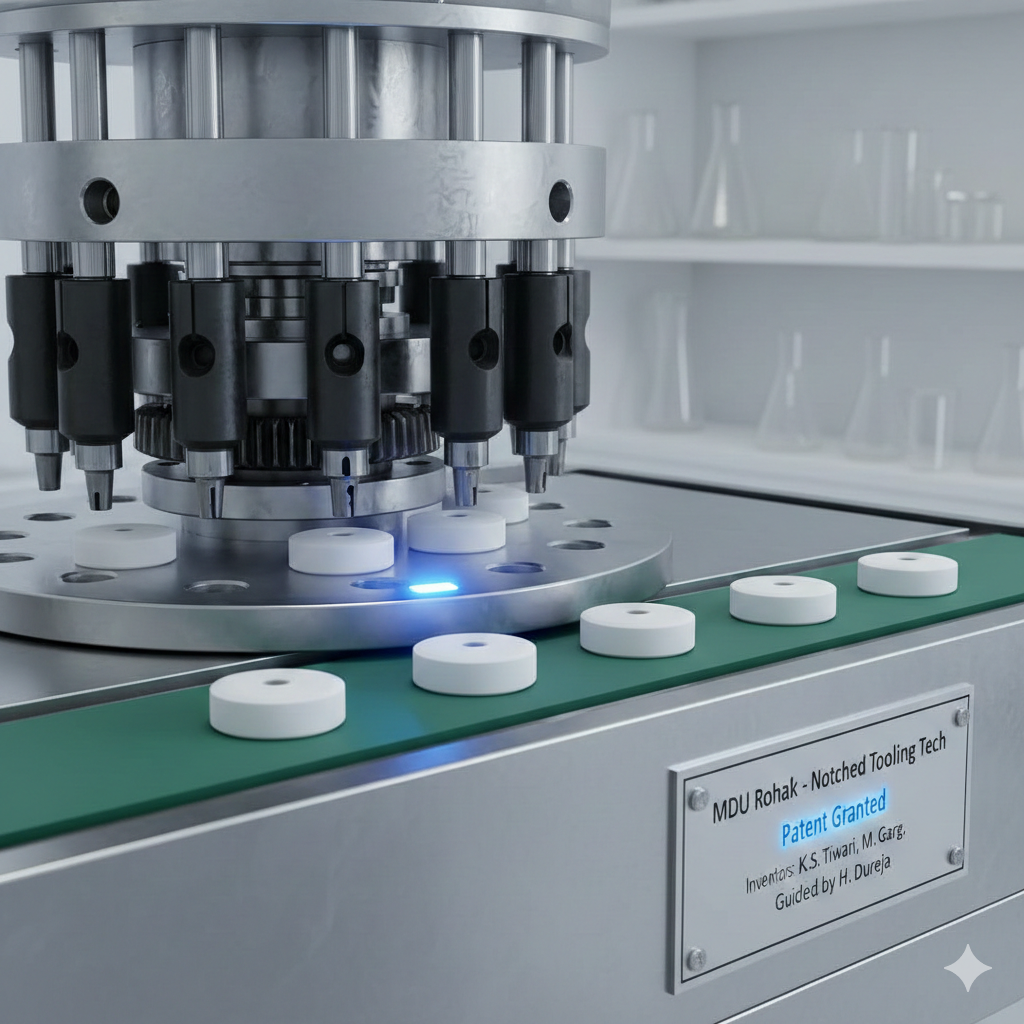
The MDU Pharmaceutical Sciences Department developed the technology. It uses notched tooling for standard tablet compression machines. This new tool creates the necessary hole in the tablet. The hole allows for controlled, constant drug release.
“This is a game-changer,” said a university spokesperson.
Expensive Lasers Become Obsolete
The pharmaceutical industry currently uses expensive laser drilling to create this orifice. This specialized step adds significant cost and time. The MDU team bypasses this costly process entirely.
Their notched tooling creates the precise hole during compression. This single-step method eliminates the need for extra laser equipment.
Faster, Cheaper Medication Delivery
The patented technology offers clear benefits:
- Cost Reduction: Manufacturers save money on expensive machinery.
- Time Savings: The process integrates drilling into the main production line.
- Affordability: Reduced production costs can make complex drugs cheaper for patients.
Osmotic tablets treat chronic conditions. These include hypertension, diabetes, and ADHD. They rely on the small hole to deliver medication over many hours. This technology makes controlled-release dosage forms more accessible.
The team included Kirpa Shankar Tiwari, Professor Munish Garg, and Professor Harish Dureja. MDU’s research now promises to revolutionize the efficiency of tablet manufacturing worldwide.
Korea Neuromorphic Chip Patent Growth: Secures Global Second Spot
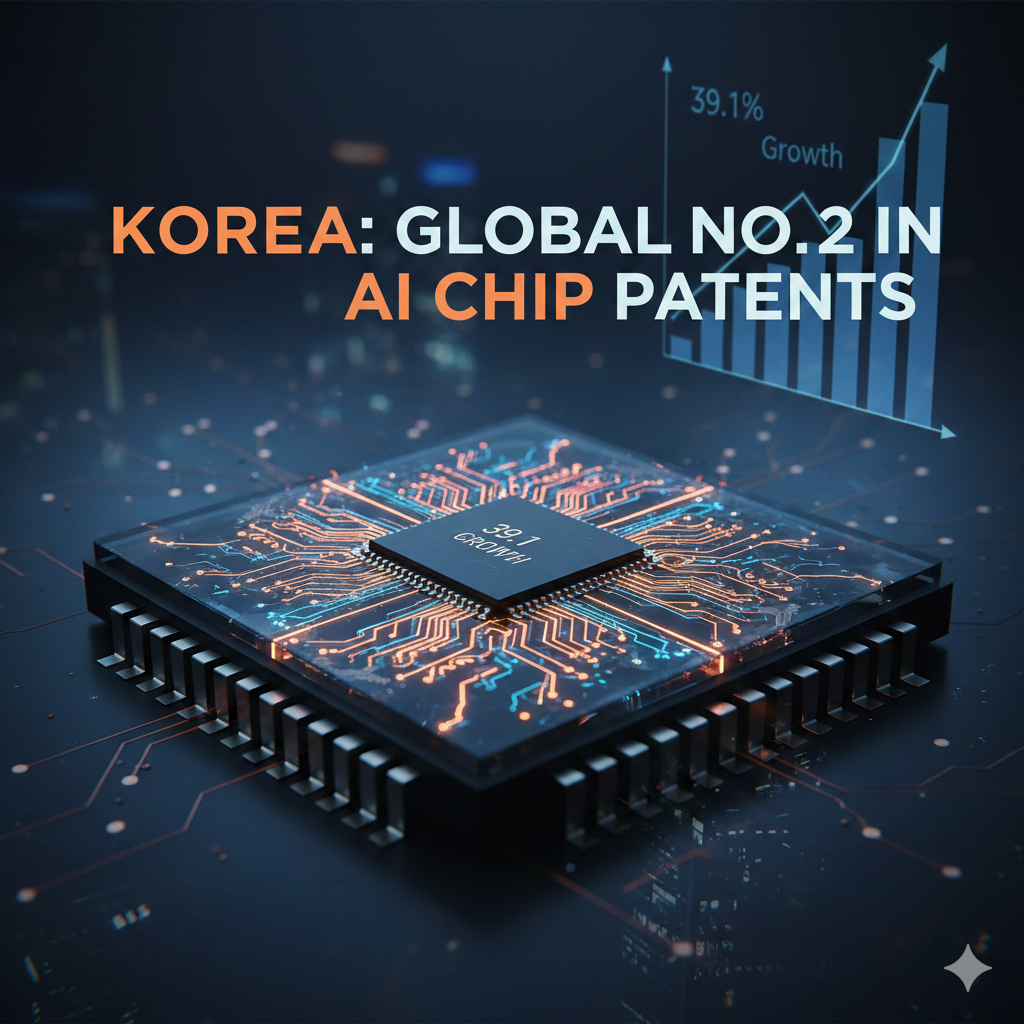
South Korea secured a significant global ranking. The nation stands second worldwide in neuromorphic chip patent growth. These chips are crucial for the next generation of artificial intelligence.
PATENT GROWTH EXPLODES
Korea’s growth rate reached 39.1%. This spans a 22-year period. Officials analyzed data from 2003 to 2024. This growth places Korea right behind China. China’s growth rate was 39.3%. The United States, China, the EU, and Japan also submitted data. These nations form the IP5 group.
Korea also boasts high application volume. It ranks third globally in total applications. The nation filed 702 patents. The US leads the world with 1,528 filings. China holds second place with 839 applications.
KOREAN FIRMS DOMINATE TOP 10
Korean corporations show strong technological leadership. Four institutions appear in the global top 10 list.
- Samsung Electronics ranks highest. It secured the third overall spot. The firm filed 183 patents.
- The Electronics and Telecommunications Research Institute (ETRI) followed. It holds the sixth position with 85 filings.
- SK hynix came in seventh. It filed 84 applications.
- Seoul National University also made the list. The university ranked ninth with 56 filings.
Globally, IBM and Qualcomm led the individual applicant rankings.
CHIPS MIMIC THE HUMAN BRAIN
Neuromorphic semiconductors mimic the human brain. They copy the brain’s neural network structure. This design allows for computations with lower power consumption. They use less power than traditional methods.
Experts expect wide adoption of the technology. Key application fields include Autonomous Driving and intelligent robots. They will also impact biometric recognition and medical diagnostics.
The market is set for massive growth. Last year, the market value was $28.5 million. Analysts project huge expansion by 2030. They forecast a market size of $1.3252 billion. This reflects an average annual growth rate of 89.7%.
Delhi High Court Restores Trademark Infringement Suit
The Delhi High Court’s Division Bench restored the trademark infringement suit filed by Kohinoor Seed Fields India Pvt. Ltd. against Veda Seed Sciences Pvt. Ltd., setting aside an earlier order by a Single Judge that had returned the plaint due to a lack of territorial jurisdiction.
The Court held that a substantial part of the cause of action arose within Delhi’s jurisdiction, thereby allowing the suit to proceed on its merits.
Key Grounds for Restoring Jurisdiction
The Division Bench identified two primary factors that conferred territorial jurisdiction on the Delhi High Court:
- Registration of Trademarks in Delhi:
- Kohinoor Seed’s registered trademarks, “TADAAKHA” and “SADANAND”, were registered in Delhi.
- The Court held that the mere fact that the asserted marks were registered within the jurisdiction of the High Court was a factor that, by itself, entitled the appellant to institute the suit in Delhi.
- Execution of Marketing Agreement in Delhi:
- The non-exclusive co-marketing agreement, which was at the heart of the dispute, was executed in New Delhi. This agreement allowed Veda Seed to market Kohinoor’s seeds under the marks (including the unregistered mark “BASANT”) until it expired in 2022.
- The Court ruled that since the agreement formed an integral part of the cause of action—as the alleged infringement occurred after the agreement’s termination and involved marks initially licensed—the Court within whose jurisdiction the agreement was executed has jurisdiction to adjudicate the dispute.
Details of the Dispute
- Kohinoor’s Marks: Registered trademarks “TADAAKHA” and “SADANAND”, and unregistered mark “BASANT”, all used for cotton hybrid seeds.
- Veda Seed’s Allegedly Infringing Marks: “VEDA TADAAKHA GOLD BG II,” “VEDA SADANAND GOLD BG II,” and “VEDA BASANT GOLD BG II.”
- Background: The parties had a co-marketing agreement from 2014 to 2022. Post-termination, Kohinoor alleged that Veda Seed began selling its own seeds using deceptively similar marks.
- Single Judge’s View (Set Aside): The Single Judge had accepted Veda Seed’s argument that its operations were limited to Andhra Pradesh and Telangana, and that online listings (on IndiaMart/Kalgudi) were insufficient to establish jurisdiction.
- Division Bench’s View on Online Listings: The Division Bench observed that the question of Veda Seed’s direct or indirect involvement in the online listings of the allegedly infringing goods was a matter that required a full trial and could not be dismissed at the preliminary stage.
The Division Bench, therefore, allowed the appeal, setting aside the previous order, and restored the trademark infringement suit to be heard on its merits.
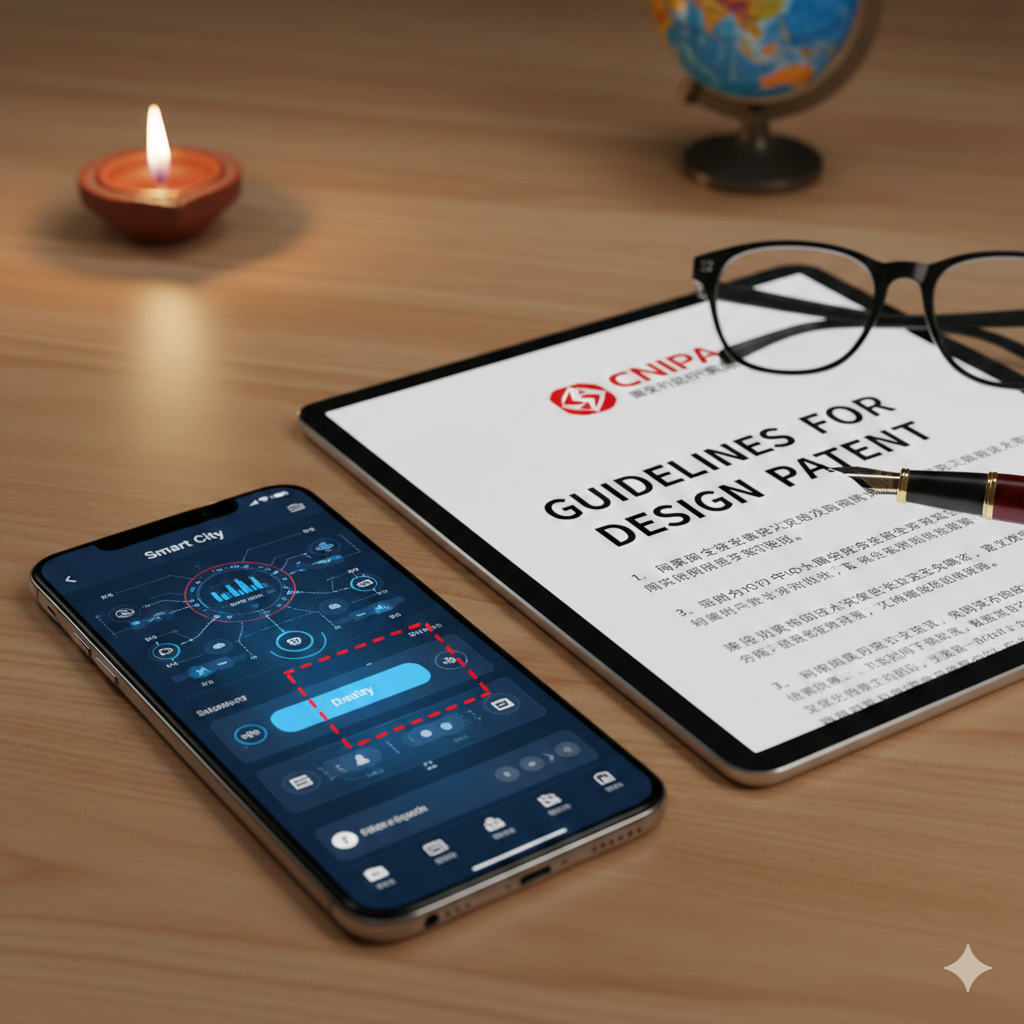
CNIPA GUI Patent Guidelines: New Rules for China Design IP
China has updated its rules for design patents. This move focuses on Graphical User Interfaces (GUIs).
The country’s Intellectual Property Administration (CNIPA) issued the new guidelines.
What Is New?
The new rules are very specific. They aim to improve the quality of GUI patent applications.
- Product is Key: A GUI must be shown on a physical product. Examples are a phone or a car screen.
- Icons are Not Enough: A simple icon alone cannot get a patent. It must be part of an interactive product.
- Interaction is a Must: The design must involve human interaction. It must do something when a user clicks or swipes.
- Exclusions: Wallpaper, boot screens, and game interfaces are generally not protectable. They are not considered interactive.
- Partial Protection: You can protect only a part of a GUI. But that part must be a complete design unit.
Why Does This Matter for India?
Indian tech and software companies often sell to China. They file patents there.
These stricter rules mean Indian firms must change their strategy. Patent applications must be very precise. They need to clearly link the GUI to a product’s function.
This change highlights the growing importance of design IP in global tech. Indian companies must update their filings quickly. They need to meet the high new standards set by China.
Godavari Biorefineries Secures US Patent for Cancer-Fighting Compounds; Stock Soars
Godavari Biorefineries Limited (GBL) has achieved a major scientific and strategic breakthrough. The company has secured a United States patent for a new class of cancer-fighting compounds designed to inhibit unregulated cell growth. These compounds show strong potential against cancer stem cells, a highly resistant category of cancer-driving cells.
The announcement sparked immediate excitement in the market. GBL’s stock surged nearly 17–18% in early trade as investors responded to what could become a transformative development for the company and for cancer research in India. The rally underscores growing investor confidence in the company’s expanding biotechnology capabilities.
A closer look at the patented science
The patented invention, titled “Compounds for the Inhibition of Unregulated Cell Growth,” gives GBL exclusive rights in the United States to produce, license, and commercialize the molecules.
According to the patent filing, the compounds demonstrate targeted action against cancer stem cells (CSCs). This is a small but powerful subset of tumour cells that fuel the growth, recurrence, and spread of cancer. CSCs are often responsible for treatment resistance, which is why many cancers return even after chemotherapy or radiation.
The patent includes compounds listed across multiple novel chemical formulae. Laboratory studies indicate promising results against breast and prostate cancer cell lines. These two cancer types remain among the most prevalent globally, making the discovery especially significant.
What makes the patented approach compelling is its precision. Traditional anti-cancer treatments target rapidly dividing cells, but they often miss slow-dividing or dormant CSCs. By attacking the core drivers of tumour regeneration, these molecules could one day lead to therapies that significantly reduce relapse rates.
A growing global footprint in cancer innovation
The US patent builds on GBL’s accelerating global presence in advanced cancer research. Earlier this year, the company secured a European patent for a similar anti-cancer molecule. The validation extended across Spain, the United Kingdom, and several European Union member nations, boosting the company’s intellectual-property coverage across major regulatory regions.
The company also received a Chinese patent earlier this year for another breakthrough anti-cancer compound known for inhibiting cancer cell proliferation and targeting CSCs. Preclinical research highlighted its strong activity against breast and prostate cancer lines, adding another high-value asset to its growing research portfolio.
To support its expansion, GBL has also established a dedicated subsidiary in the United States. This move positions the company to engage directly with the world’s largest pharmaceutical market and collaborate with global research institutions and biotech partners.
Why this matters: opportunities on the horizon
A breakthrough for Indian bioresearch
Securing a US patent in the oncology domain is a rare achievement for an Indian company. It signals that GBL is not just a leader in the biorefinery and biofuel sectors but is evolving into a serious contender in medical biotechnology.
Promising pathway toward targeted therapies
If future research validates the patented molecules, they could form the foundation for next-generation cancer drugs that destroy tumour-regenerating cells. Targeting CSCs represents one of the most ambitious goals in cancer science. Successful therapies in this space could dramatically reshape cancer treatment outcomes.
Attractive for global collaborations
The company’s expanding patent portfolio across three major regions — the US, Europe, and China — places it in a powerful position. Pharmaceutical giants often seek partnerships with early-stage innovators who hold strong patents. GBL could attract licensing deals, co-development agreements, or investment partnerships as its molecules advance.
Market confidence and investor traction
The sharp rise in the stock price reflects more than short-term excitement. Investors see growing scientific depth, diversified business potential, and long-term value creation opportunities driven by high-impact IP.
The challenges ahead: long journey to the clinic
Despite the breakthrough, the patented molecules are still in early-stage development. A patent protects the innovation, but it does not guarantee clinical success.
To become approved cancer therapies, the compounds must pass through multiple stages:
- Preclinical safety testing
- Toxicology assessments
- Pharmacokinetics and pharmacodynamics studies
- Phase I, II, and III human trials
- Regulatory approvals in each market
Oncology drug development is expensive and time-intensive. Success rates are low, and many promising compounds fail due to toxicity or lack of efficacy. GBL may require strategic partnerships, research collaborations, or significant investment to advance the molecules through clinical trials.
A milestone moment — and the beginning of a new chapter
Godavari Biorefineries’ US patent win marks a bold moment for Indian innovation. The company is rapidly expanding beyond its traditional identity as a biorefinery pioneer. With patents across the world’s largest markets, GBL is positioning itself as a future player in global oncology research.
If the science progresses well, this breakthrough could transform not only the company’s trajectory but also contribute to a new generation of targeted cancer therapies. The recognition, the rising investor confidence, and the global IP strategy together point to a powerful new chapter in India’s biotech evolution.
Delhi High Court Rejects Interim Patent Block on Semaglutide, Calls Out ‘Evergreening’ Tactics
The Delhi High Court has delivered a decisive order in the high-stakes battle over semaglutide, the blockbuster diabetes and weight-loss drug. The court refused to grant Novo Nordisk a temporary injunction against Dr Reddy’s Laboratories (DRL), dealing a major blow to the Danish pharmaceutical giant’s attempt to control the Indian market until 2026. The ruling carries far-reaching implications for patent strategy, market competition, and the future of GLP-1 drugs in India.
The court held that DRL had raised a “credible challenge” to Novo Nordisk’s second patent on semaglutide. It found strong indicators of double-patenting, a practice that Indian law treats as an attempt to “evergreen” expired monopolies. The court’s message was clear: companies cannot use secondary patents to prolong control over blockbuster drugs.
Two Patents, One Molecule: How the Dispute Began
Novo Nordisk held two Indian patents related to semaglutide:
- Composition Patent (IN 275964)
This patent covered the semaglutide molecule itself. It expired in September 2024, opening the door for generic manufacturing. - Formulation Patent (IN 262697)
This patent claims a specific formulation and delivery system for the same drug. It remains valid until March 2026.
When the core composition patent lapsed, DRL secured regulatory approval from the Central Drugs Standard Control Organization (CDSCO) to manufacture semaglutide for export. The approval triggered immediate friction. Novo Nordisk rushed to court, claiming that the formulation patent protected not only the delivery mechanism but effectively covered the drug.
It sought an emergency injunction to stop DRL’s manufacturing and export operations. The company argued that any commercial activity—even export—would cause irreparable harm.
The Court’s Ruling: A Firm Stand Against Evergreening
Justice Anish Dayal rejected the injunction request. The court held that DRL’s objections to the formulation patent were strong enough to deny temporary relief to Novo Nordisk.
1. Double-Patenting Concern
The court noted that the formulation patent appeared to reclaim the same invention for which Novo Nordisk’s composition patent had already expired. The claims overlapped heavily.
This amounted to “evergreening”—a tactic where pharmaceutical companies file secondary patents to extend monopoly periods.
Indian patent law, especially after Section 3(d), firmly discourages such strategies.
2. Lack of Inventive Step
The court observed that Novo Nordisk’s claimed improvements in the formulation patent did not appear novel or non-obvious.
The modifications were routine optimizations well known in pharmaceutical science. They did not represent a genuine leap in innovation.
This significantly weakened the validity of the formulation patent.
3. Balance of Convenience Favoured DRL
Since the core patent had expired, the court held that public interest and market competition must be prioritized.
Blocking DRL without conclusive proof of infringement would be unfair, especially when DRL was manufacturing the drug only for export markets.
Exports Allowed, But Indian Market Stays Closed—for Now
The court made a nuanced distinction. DRL may:
- continue manufacturing semaglutide, and
- export it freely to international markets.
However, domestic sales remain prohibited until the formulation patent expires in March 2026, unless the patent is invalidated earlier.
This split ruling reinforces India’s position as the world’s largest exporter of affordable generics, while still respecting valid patent rights inside the country.
A Major Win for Generic Manufacturers
The decision strengthens the confidence of Indian pharmaceutical companies entering high-value therapeutic categories. Semaglutide, widely used for Type-2 diabetes and explosive global demand for weight-loss treatments, represents one of the most lucrative drug classes today.
DRL is not alone. Cipla, Sun Pharma, Biocon, and Mankind Pharma are exploring GLP-1 opportunities. The Delhi HC’s ruling sends a bold signal: secondary patents will face strict scrutiny.
Indian courts have repeatedly warned against evergreening. This judgment continues that legacy, following similar rulings in the cases of imatinib, sofosbuvir, and darunavir.
Why This Case Matters Globally
The global pharmaceutical industry is watching India closely. Semaglutide is one of the world’s most valuable drugs, powering Novo Nordisk’s meteoric rise in recent years.
A single ruling from an Indian court can influence:
- global supply chains,
- generic entry timelines,
- price dynamics across continents.
India produces nearly 40% of the world’s generics. Any shift in the patent landscape here disrupts international markets.
By allowing export manufacturing, the court has opened a potential pipeline of affordable semaglutide to emerging markets struggling with diabetes and obesity crises.
What Happens Next?
Novo Nordisk has several options:
- Appeal before a division bench of the Delhi High Court.
- Initiate a full trial to defend the validity of the formulation patent.
- Seek tighter regulatory restrictions on generic manufacturing.
DRL, meanwhile, may accelerate export production and explore challenging the patent’s validity to unlock the domestic market earlier.
Legal experts expect this case to set an important precedent for future GLP-1 patent disputes, especially as rival companies race to launch their own weight-loss drugs.
Conclusion
The Delhi High Court’s rejection of Novo Nordisk’s interim injunction is a striking affirmation of India’s sharp stance against patent evergreening. The ruling protects open competition, enables affordable access through exports, and reinforces India’s leadership in generic pharmaceuticals.
As demand for semaglutide surges worldwide, the judgment could reshape the global supply chain for one of modern medicine’s most influential drug classes.
The Patent Paradox: Why India’s Startup Filing Surge is 83% Failure and All About Optics
A deep dive into the intellectual property (IP) landscape of India’s booming startup sector reveals a critical gap between ambition and execution, suggesting that the much-lauded surge in patent filings is predominantly a tactical exercise in investor signalling rather than a genuine marker of technological innovation. The core issue, critics argue, is a “crisis of intent” where patents function as “decorative rather than functional” assets.
While global bodies like the World Intellectual Property Organization (WIPO) have celebrated India’s rapid ascent—the WIPO 2024 report noted a phenomenal 15.7% growth in patent applications in 2023, positioning the country 6th globally with 64,480 filings —the internal data paints a sobering picture of weak follow-through.
The Data Gap: 83% of Startup Patents Fail to Secure a Grant
Analysis of the startup patent pipeline from 2021 through 2025 reveals a profound drop-off rate, demonstrating that the vast majority of filings are not carried through to completion.
During this five-year period, Indian startups filed a robust 13,089 patent applications. Yet, only 2,174 of these successfully navigated the examination process to achieve the grant stage. This results in a grant success rate of barely 16.6%, meaning approximately one out of every six startup filings becomes an enforceable, proprietary asset.
The failure rate is compounded by active abandonment. Nearly 500 startup patent applications were explicitly withdrawn or abandoned early, often due to the filers failing to complete detailed specifications or respond to subsequent office actions required by the Patent Office.
This pattern extends beyond patents. Startups filed 44,517 trademark applications during the same period, with over 1,300 subsequently abandoned. Analysts suggest this widespread non-prosecution across IP types confirms that the primary function of the filing is “brand optics” rather than a rigorous, long-term IP strategy. The high volume of dropped applications confirms that for many, the intent was temporary and instrumental: the patent filing was merely a transaction used to secure funding, not an investment in an enduring intellectual asset.
Investor Mandate: Patents as Pitch Deck Tools
The distortion in filing behaviour is traced back to the venture capital (VC) ecosystem’s preference for strong valuation narratives. In competitive fundraising rounds, a pending patent application, particularly a cheap and fast provisional filing, serves as a high-visibility proxy for technological differentiation and market moat potential.
A provisional patent application, which secures an immediate priority date, is leveraged as a “fast, affordable way to strengthen a fundraising narrative” and “create the appearance of a breakthrough innovation”. This mechanism enables a “Capital first, commitment later” ethos.
The systemic issue is rooted in the fact that investors often prioritize the inclusion of an IP slide over demanding proof of prosecution commitment or demonstrated R&D investment. As the analysis notes, “Once the funding round closes, priorities may shift,” leading to a predictable loss of enthusiasm for the labour-intensive and expensive work required to turn provisional filings into complete specifications. This rational response by founders—underinvesting in expensive, long-term R&D in favour of cheap, high-volume filing tactics—systematically shifts resources away from core innovation.
Structural Deficiency: India’s R&D Investment Stagnation
The crisis of intent at the startup level is underpinned by a deep, structural R&D deficit at the national level. The commitment to deep, foundational research necessary to generate truly novel and patentable inventions remains structurally low in India.
Official data from the Department of Science & Technology (DST) confirms that India’s Gross Expenditure on Research and Development (GERD) as a percentage of GDP stood at 0.64% during the fiscal year 2020–21, having remained stagnant between 0.6% and 0.7% in the preceding years (0.66% in 2018–19 and 2019–20).
This figure is significantly “below global average and lower than countries like China, South Korea and US”. This structural weakness is compounded by low private sector contribution, which accounted for only 36.4% of the total GERD in 2020–21, in sharp contrast to innovation-leading nations where private industry drives over 70% of R&D expenditure.
This macro-level underinvestment directly correlates with the micro-level deficiencies, as most startups lack “dedicated research teams, technical drafting expertise, prior-art assessment systems, and time for iterative processes” necessary for rigorous patent prosecution.
Policy Flaw: Incentives Reward Filing, Not Granting
Current government policies designed to stimulate IP activity, while successful in boosting filing volume, have inadvertently intensified the focus on volume over quality. The government successfully implemented significant fee concessions, including an 80% reduction in patent filing fees for startups, MSMEs, and educational institutions.
However, the design flaw is that these incentives are tied to the input stage (filing) rather than the output stage (grant or commercialization). By heavily subsidizing the initial filing, the state inadvertently subsidizes the creation of the fundraising narrative for VCs. Once the provisional application is lodged, the startup has secured its priority date and the narrative benefit, but the subsequent costly work of prosecution remains unassisted, cementing the low-commitment behaviour.
Blueprint for Genuine Innovation: Shifting from Decoration to Depth
To foster genuine innovation and correct the systemic inefficiencies, experts advocate for a strategic overhaul of incentives and infrastructure.
- Realign Incentives: Government benefits, including subsidies and fast-track examination provisions, must be decoupled from the act of filing and strategically tied to demonstrable outcomes, such as patent grants, successful long-term renewal, or demonstrable commercial utilization.
- Enhance Capacity: Urgent investment in the Patent Office is mandatory, including expansion of examiner capacity and specialized domain expertise. There is a pronounced need for more technically specialized patent officers, particularly in cutting-edge technological areas like AI, biotech, semiconductors, climate-tech, and advanced manufacturing.
- Strengthen R&D Culture: The government should offer targeted, co-funded grants and innovation-linked incentives for startups that demonstrate a commitment to establishing and maintaining dedicated R&D teams or formalized collaboration with research institutions.
- Promote Co-patenting: Actively promoting policy frameworks that encourage joint patent filings (co-patenting) between startups and premier academic/research institutions, such as the IITs and national labs, would guarantee a higher technical standard for the filings and create structured pathways for knowledge transfer.
The conclusion remains clear: for India to genuinely transition from an IP volume leader to a global innovation power, the focus must shift from decorative filings to functional intellectual assets. Only then can “depth replace decoration” and solidify India’s reputation as a serious, quality-driven innovation hub.
Fitterfly Patent Victory: AI-Driven PGR Tech Secures IP, Revolutionizes Diabetes Care in India
Digital health just scored a decisive victory. Fitterfly, the pioneering digital therapeutics arm of PB Health, secured a crucial Government of India patent. This patent protects its proprietary Personalised Glycemic Response (PGR) technology. The move cements Fitterfly’s dominant position. It dramatically alters the future of chronic disease management in India.
AI Engine Powers Precision Care
The patent covers the core of Fitterfly’s diabetes program. This AI-led engine is the PGR technology. It allows data-driven care at massive scale. PGR helps millions manage diabetes better. It predicts how specific foods and activities impact blood sugar. It makes this prediction up to three hours in advance.
This prediction power is a game-changer. It removes the daily burden of food decisions for patients. PGR moves far beyond standard, generic advice.
The model boasts a huge training dataset. It analysed over 10 lakh (1 million) Continuous Glucose Monitoring (CGM) data points. It studied over 1.21 lakh individual meals. The algorithm factors in every critical metric. These include age, BMI, heart rate, sleep, and co-morbidities. This process delivers highly accurate, personalised glucose predictions.
Clinical Outcomes Prove Efficacy
The technology already boasts unmistakable clinical success. Over 40,000 members have benefited from the PGR-powered programs. The results are clinically significant, matching high-grade pharmaceutical interventions.
In 2025, 94% of members with very high baseline HbA1c levels (above 9%) saw massive improvement. They recorded an average reduction of 2.8 points within 6 to 12 months. This outcome is comparable to standard multi-drug regimens.
Furthermore, Fitterfly’s data confirms that diabetes remission is possible. It applies to a large number of Type 2 Diabetes cases, particularly in the early stages. The program also delivers holistic health gains. Members improved critical markers. These include reduced serum cholesterol, lower triglycerides, and better blood pressure control. This success transforms patients’ quality of life. It substantially reduces future complication risks.
Dr. Vineet Nair, Head of Program Design at Fitterfly, affirmed the approach. “PGR helps us go beyond standard protocols,” he said. “It delivers care that adapts to each member’s data. This drives better adherence. It guarantees improved glucose control and more consistent progress.”
Patent Builds a Commercial Fortress
The patent acquisition is a legal triumph. It gives Fitterfly a formidable fortress of Intellectual Property (IP).
The Government of India approval confirms the unique nature of the PGR algorithm. It grants Fitterfly exclusive commercial rights. This protection shields the company from direct competition. It also exponentially increases PB Health’s valuation. The technology shifts from a service model to a protected, scalable asset.
Dr. Arbinder Singal, Head of Preventive and Digital Health at PB Health and Co-founder at Fitterfly, emphasized the strategic importance. “Our proven outcomes and proprietary technology add significant value,” he stated. “The patent secures the technical core of our chronic disease management offering.”
The move reinforces PB Health’s vision. They aim to create a tech-first, integrated healthcare ecosystem. Fitterfly’s digital expertise becomes the crucial preventative arm. This balances PB Health’s growing hospital network in the Delhi-NCR region.
India’s Health System Faces Transformation
Chronic conditions devastate India’s population. Nearly 40 percent of Indian adults suffer from diabetes, hypertension, or obesity. This is an immense, growing crisis.
Technology like PGR offers the only viable path to scale positive change. It empowers patients, doctors, and insurers alike.
For Insurers: Diabetes remains the biggest cost driver. Fitterfly’s outcome-led programs offer a clear solution. They reduce the risk of progression and expensive hospitalizations. Several leading insurance companies already recognize this shift. They integrate Fitterfly’s programs into their policyholder ecosystem. This acts as a proactive risk management measure. It lowers long-term claims.
For Patients: PGR grants control. It is a fundamental shift from reactive treatment. It establishes continuous, outcome-led management. This approach improves long-term disease stability. It leads to huge cost savings and boosts work productivity.
Dr. Singal added, “We are working closely with leading insurers. We are shifting the focus from treatment to long-term health stability. This is a crucial step. It builds a more sustainable, future-ready healthcare model for India.”
The successful patenting of PGR technology marks a definitive moment. It confirms that Digital Therapeutics (DTx) is not a supplement. DTx is becoming the first line of defence against India’s escalating chronic disease epidemic. This victory is a resounding signal. Personalised, AI-driven healthcare is now locked in. It is set to dominate the market.