Delhi High Court Delivers Landmark Ruling: LG Sponsorship Payments to ICC Classified as Taxable Royalty

In a move that sends shockwaves through the corporate sponsorship landscape, the Delhi High Court has delivered a definitive blow to LG Electronics India. The Court ruled that payments made for sponsorship rights involving the use of international trademarks constitute “royalty.” This landmark decision mandates the deduction of Tax Deducted at Source (TDS), fundamentally altering how multi-million dollar sports deals are taxed in India.
The Division Bench, comprising Justice V. Kameswar Rao and Justice Vinod Kumar, dismissed the writ petition filed by LG Electronics. This judgment ends a long-standing battle between the consumer electronics giant and the Indian Revenue authorities.
The Core of the Dispute
The conflict traces back to a massive global partnership agreement. LG Electronics entered into a contract with Global Cricket Corporation (GCC), Singapore. GCC held the commercial rights for major International Cricket Council (ICC) events, including the 2003 World Cup.
LG paid a staggering USD 27.5 million for these global rights. Out of this, USD 11 million was attributed specifically to the Indian entity. LG argued that these payments were purely for “advertisement services.” They claimed the money paid for stadium space and media visibility represented business profits. Since GCC had no Permanent Establishment (PE) in India, LG argued the income was not taxable in India.
However, the Income Tax Department disagreed. The Revenue asserted that the agreement did not just buy “space.” It bought the “brand.”
The “Royalty” Breakthrough
The Court’s analysis centered on the nature of the rights transferred. The Revenue had previously split the payment into two categories. They attributed two-thirds of the payment to advertisement and one-third to the “right to use trademarks.”
The Delhi High Court upheld this 1/3rd apportionment. The judges ruled that the right to use the ICC logo, the World Cup mascot, and other proprietary marks on LG’s packaging and promotional material was a transfer of intellectual property rights.
Under the Income Tax Act and the India-Singapore Double Taxation Avoidance Agreement (DTAA), such payments fall under the definition of “royalty.”
A Defeated Defense
LG’s legal team fought hard to categorize the trademark use as “incidental.” They argued that the primary goal was brand exposure through advertisement. They claimed the logo was merely a tool to facilitate that advertisement.
The Court rejected this logic with surgical precision. The Bench noted that LG did not just display the ICC marks; they exploited them. The company used the prestige of the ICC to enhance its own brand equity. By placing the World Cup logo on its refrigerators and televisions, LG gained a commercial advantage that exceeded simple billboard placement.
“The use of the mark was not a side effect,” the Court indicated. “It was a core component of the commercial value LG sought to acquire.”
The Power of the Trademark
This ruling emphasizes the immense value of intellectual property in sports. In modern marketing, the “Official Partner” status is a potent weapon. It allows a corporation to weave its identity into the fabric of a global event.
The Court observed that the agreement gave LG the right to use the “ICC Trophy” and other protected symbols in its global marketing campaigns. This privilege is distinct from buying a 30-second television spot or a boundary board. It is a license to use a protected brand. Therefore, it is a royalty.
Financial Implications for Corporates
The immediate impact is financial. The Court upheld the requirement for LG to deduct 15% TDS on the portion of the payment deemed royalty.
For multinational corporations (MNCs), this creates a significant compliance hurdle. Every sponsorship deal must now be meticulously dissected. Companies cannot simply label a payment as “advertisement” to avoid the tax net. The Revenue will look past the label to find the true substance of the transaction.
If a deal includes the right to use a logo on products, websites, or merchandise, the TDS clock starts ticking.
The Global Precedent
Tax experts believe this ruling will resonate far beyond the borders of India. It clarifies the intersection of sports law, intellectual property, and international taxation.
India has consistently taken a firm stance on “Source-Based Taxation.” This means if the income is generated from the Indian market, India wants its share of the tax. By classifying these payments as royalty, the Delhi High Court has fortified the Revenue’s ability to tax foreign entities earning from Indian sports passion.
Key Takeaways from the Judgment

  • Substance Over Form: The Court will examine the actual rights exercised, not just the title of the agreement.
  • Apportionment is Valid: The Revenue has the power to split composite payments into taxable and non-taxable components.
  • Trademark Value: The use of an event’s logo for “association” is a taxable event under the royalty clause.
  • TDS Responsibility: The Indian payer is strictly responsible for deducting tax before remitting money to foreign entities.
    A New Era for Sports Sponsorship
    The timing of this judgment is critical. With the rise of the IPL, the Cricket World Cup, and various global leagues, sponsorship money is flowing at record levels. The Delhi High Court has sent a clear message: The taxman is a silent partner in every deal.
    Lawyers and tax consultants are already advising clients to restructure future agreements. Many may attempt to separate “Media Rights” from “Intellectual Property Rights” in distinct contracts. However, given the Court’s “substance over form” approach, such attempts may face heavy scrutiny.
    The Final Verdict
    LG Electronics India failed to convince the Court that its payments were tax-exempt. The dismissal of the writ petition reinforces the authority of the 2004 order passed under Section 264 of the Income Tax Act.
    This case serves as a stern warning to global brands. In the high-stakes world of sports marketing, the “mark” you use carries a price. That price includes a mandatory contribution to the national exchequer.
    As the dust settles, one thing is certain: The boundary between advertisement and royalty has been clearly drawn. The Delhi High Court has ensured that when it comes to the business of sports, the rules of the game are transparent, firm, and taxable.
    Case Profile:
  • Court: Delhi High Court
  • Parties: LG Electronics India Pvt. Ltd. vs. Director of Income Tax (International Taxation)
  • Statutes Involved: Income Tax Act, 1961; India-Singapore DTAA
  • Key Verdict: Sponsorship payments for trademark usage are “Royalty” subject to TDS.

Bombay High Court Slams Local Firms Over FedEx Trademark Infringement

In a landmark victory for global branding, the Bombay High Court has ordered a group of Mumbai-based financial companies to stop using the name “FEDEX.” Justice Riyaz Chagla delivered a stinging blow to the defendants, ruling that their use of the mark constitutes blatant trademark infringement, passing off, and brand dilution.
The court granted sweeping interim relief to the US-based Federal Express Corporation. This decision forces Fedex Securities Private Limited, Fedex Stock Broking Limited, and Fedex Finance Private Limited to strip the iconic name from their corporate identities.
A Decisive Legal Strike
The court found that the global logistics giant holds exclusive rights to the “FEDEX” name. The judge rejected the defendants’ claims of honest adoption. He described their defense as an “afterthought.”
The ruling bars the three companies from using “FEDEX” or any similar mark as:

  • A Corporate or Trading Name
  • A Service Mark or Trademark
  • A Domain Name or Email Identity
  • Branding on Business Papers and Advertising
    The “Well-Known” Powerhouse
    A major pillar of the case was the 2024 declaration by the Trade Marks Registry, which officially recognized “FEDEX” as a well-known mark in India. This elite status gives the brand extraordinary protection. It prevents other businesses from using the name, even if they operate in completely different industries like finance or stockbroking.
    Justice Chagla emphasized that “FEDEX” is a “household word.” The court ruled that the defendants’ use of the name was “bound to deceive” the public. Most people would naturally assume these financial firms were subsidiaries or sister concerns of the global courier giant.
    Fact-Checking the Defense
    The Mumbai firms claimed they had used the name since the mid-1990s. They tried to hide behind Section 159(5) of the Trade Marks Act, 1999, which protects certain “prior uses” of names.
    The court shredded this argument. The judge noted that Federal Express Corporation registered the “FEDEX” mark for financial services (Class 36) after the 1999 Act came into force. Therefore, any continued use by the defendants after that registration constitutes fresh infringement every single day.
    | Feature | Federal Express Corporation | Fedex Securities / Stock Broking |
    |—|—|—|
    | Industry | Global Logistics & Business Services | Financial Services & Stock Broking |
    | Recognition | Certified “Well-Known” Mark (2024) | Claimed “Prior Use” from mid-1990s |
    | Court Ruling | Exclusive rights upheld | Ordered to cease and desist |
    | Risk Factor | Brand dilution and confusion | Dishonest adoption and “passing off” |
    The Cost of “Dishonest Adoption”
    The court looked closely at how the Mumbai firms chose the name. One defendant claimed they used “FEDEX” because their directors were former executives of Federal Bank.
    The judge called this explanation “implausible.” He noted that only one director had any link to Federal Bank. Furthermore, this reason never appeared in official records when the firms changed their names years ago. The court concluded the adoption was a calculated move to piggyback on a global reputation.
    Impact on the Financial Sector
    This ruling sends a shockwave through the Indian business landscape. It warns local companies that they cannot hide behind “different sectors” to use famous global names.
    Legal experts suggest the ruling reinforces three critical points:
  • Identity Matters: Adding a generic word like “Securities” to a famous brand does not make a new name distinctive.
  • Dilution is Real: Using a famous name for unrelated services hurts the original brand’s “selling power.”
  • No Safety in Delay: Even if a company has used a name for decades, a “well-known” status can still trigger a legal shutdown.
    What Happens Next?
    The Bombay High Court has granted a six-week stay on the order. This gives the defendants a narrow window to:
  • Appeal the decision to a higher bench.
  • Begin the process of rebranding and renaming their entire corporate infrastructure.
    If they fail to act, they face severe legal consequences for defying a court injunction. For now, the global giant has secured its territory in the Indian market.

Bombay High Court Denies Interim Relief to House of Mandarin in ‘HOM’ Trademark Dispute

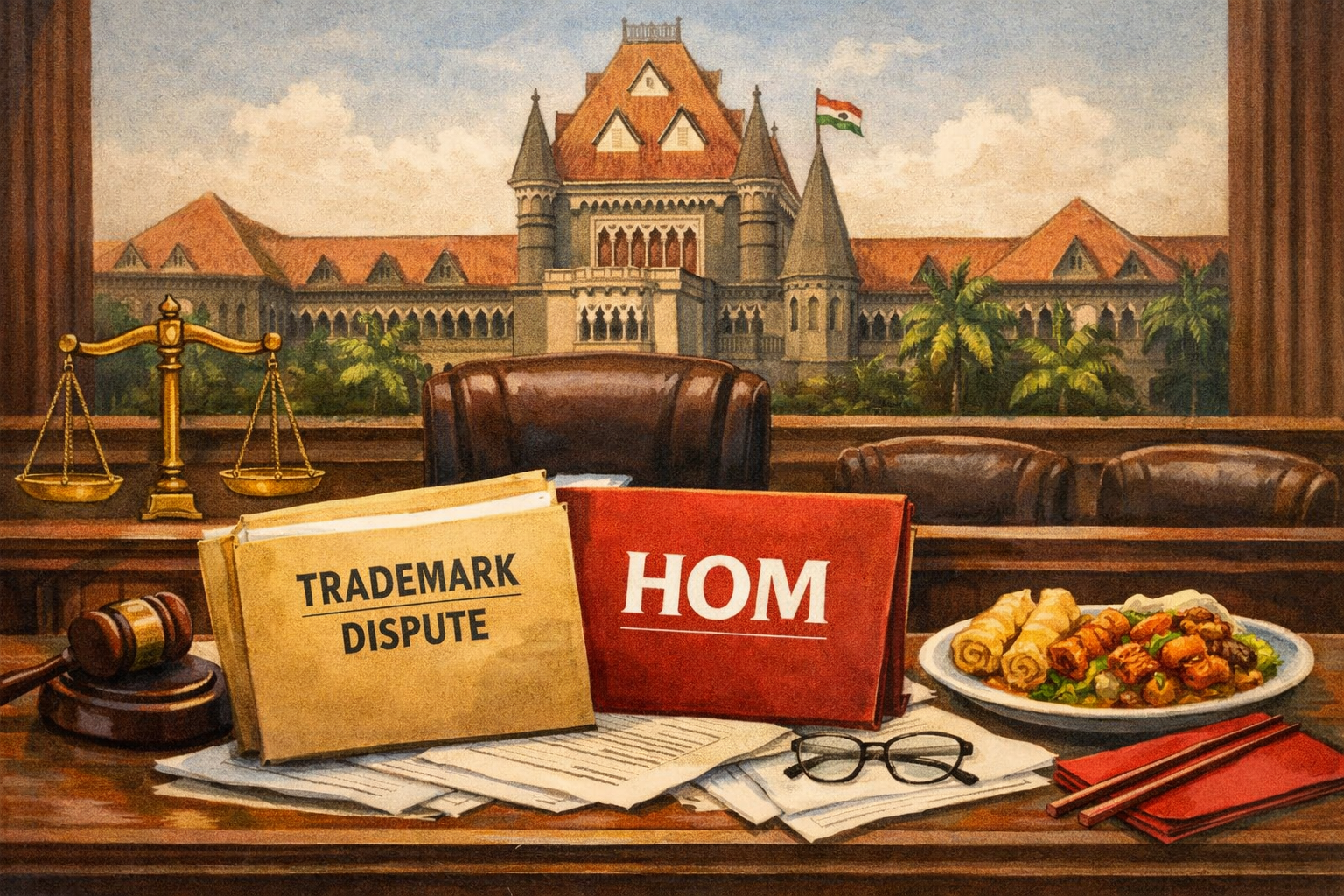
Bombay High Court building representing the denial of interim relief to House of Mandarin in the HOM trademark dispute

The Bombay High Court has refused to grant interim relief to the Chinese cuisine restaurant House of Mandarin in a trademark dispute involving the use of the acronym “HOM.” The court ruled that the restaurant failed to establish a strong prima facie case of trademark infringement or passing off. The decision highlights the strict legal standards applied in intellectual property disputes, especially those involving abbreviations and acronyms.

Justice Sharmila U. Deshmukh, who heard the matter, delivered the order on December 19, 2025. The judge held that House of Mandarin did not provide sufficient evidence to show that “HOM” had acquired a distinctive identity exclusively linked to its business. As a result, the court declined to restrain the rival restaurant from using the acronym at this stage.

Background of the Dispute

House of Mandarin operates as a Chinese restaurant in Mumbai and has built a presence in the city’s competitive food and beverage market. The restaurant filed a civil suit alleging trademark infringement and passing off against another restaurant that used the acronym “HOM” in its branding.

The plaintiff argued that customers, food critics, and regular patrons commonly refer to House of Mandarin as “HOM.” It claimed that the acronym had become a shorthand identifier of its brand. According to the restaurant, the rival’s use of the same acronym created confusion among consumers and diluted its goodwill.

The restaurant therefore sought an interim injunction. It asked the court to immediately restrain the defendant from using “HOM” until the final disposal of the suit.

Court’s Assessment of the Claim

The Bombay High Court carefully examined whether the plaintiff met the legal requirements for interim relief. Under trademark law, a party seeking such relief must prove three elements. These include a strong prima facie case, the likelihood of irreparable harm, and a balance of convenience in its favor.

Justice Deshmukh found that House of Mandarin failed at the very first stage.

The court observed that the restaurant did not establish that “HOM” had acquired an independent and distinctive reputation in the market. While the acronym may be used informally, the judge noted that informal references alone do not automatically create trademark rights.

The court also examined how the restaurant presents itself commercially. It observed that on popular food delivery platforms and menus, the business appears prominently under its full name, House of Mandarin. The acronym “HOM” does not function as the primary public-facing identifier of the restaurant.

This weakened the claim that consumers strongly associate “HOM” with the plaintiff alone.

Failure to Prove Consumer Confusion

A key element in trademark infringement and passing off cases is consumer confusion. The court stressed that the plaintiff must show that an average consumer is likely to be misled into believing that the rival’s business is connected with the plaintiff.

In this case, the court found no convincing evidence of such confusion.

The judge noted that restaurants typically attract informed customers who make deliberate choices. Dining decisions often involve reviewing menus, locations, prices, and brand identities. In such circumstances, the likelihood of confusion based solely on an acronym becomes lower.

The plaintiff did not present consumer surveys, complaints, or documented instances of mistaken identity. In the absence of such material, the court said it could not presume confusion.

Passing Off Claim Not Established

The court also examined the claim of passing off. To succeed in a passing off action, a plaintiff must prove goodwill, misrepresentation, and damage.

Justice Deshmukh acknowledged that House of Mandarin may enjoy goodwill under its full name. However, she clarified that goodwill in a full brand name does not automatically extend to an abbreviation unless the abbreviation has independently acquired recognition.

The court found no evidence to show that the rival restaurant misrepresented its services as being associated with House of Mandarin. There was also no material to demonstrate actual or imminent damage to the plaintiff’s business.

As a result, the passing off claim did not justify interim protection.

Defendant’s Position

The defendant restaurant argued that it used “HOM” independently and legitimately. It denied any intention to exploit the reputation of House of Mandarin. The defendant maintained that its branding, presentation, and customer base were distinct.

At the interim stage, the court accepted that the defendant’s use did not appear deceptive on the face of the record. The judge stated that these issues would require deeper examination during trial.

Legal Threshold for Interim Injunctions

The High Court reiterated that interim injunctions are extraordinary remedies. Courts must exercise caution before restraining a business from operating under its chosen name.

Justice Deshmukh emphasized that trademark rights over abbreviations demand strong proof. A party must demonstrate long, consistent, and prominent use of the acronym as a standalone brand. Without this, courts are unlikely to grant immediate relief.

The judge clarified that the refusal of interim relief does not decide the final rights of the parties. It only reflects the court’s view that the plaintiff did not meet the high threshold required at this early stage.

What the Ruling Means

With this order, House of Mandarin cannot prevent the rival restaurant from using “HOM” for now. The main suit will continue, and both sides will have the opportunity to present detailed evidence during trial.

The ruling sends an important message to businesses. It underscores that abbreviations and short forms are not automatically protected under trademark law. Brand owners must actively establish distinctiveness and consumer association if they wish to claim exclusive rights over acronyms.

Legal experts believe the judgment could influence future trademark disputes in the hospitality sector. Restaurants often rely on catchy abbreviations and nicknames. This ruling makes it clear that courts will demand concrete proof before recognizing such claims.

Next Steps in the Case

The case will now proceed to the evidence stage. House of Mandarin may attempt to strengthen its position by submitting additional material. This could include advertising records, media references, customer testimonials, or survey evidence.

The final outcome will depend on whether the restaurant can demonstrate that “HOM” has become a distinctive badge of origin linked solely to its business.

Until then, the Bombay High Court’s order stands as a reminder. Trademark protection depends not on intention or belief, but on proof, perception, and public association.

Bombay High Court Strikes Down ‘Vistarraah’ for Trademark Infringement

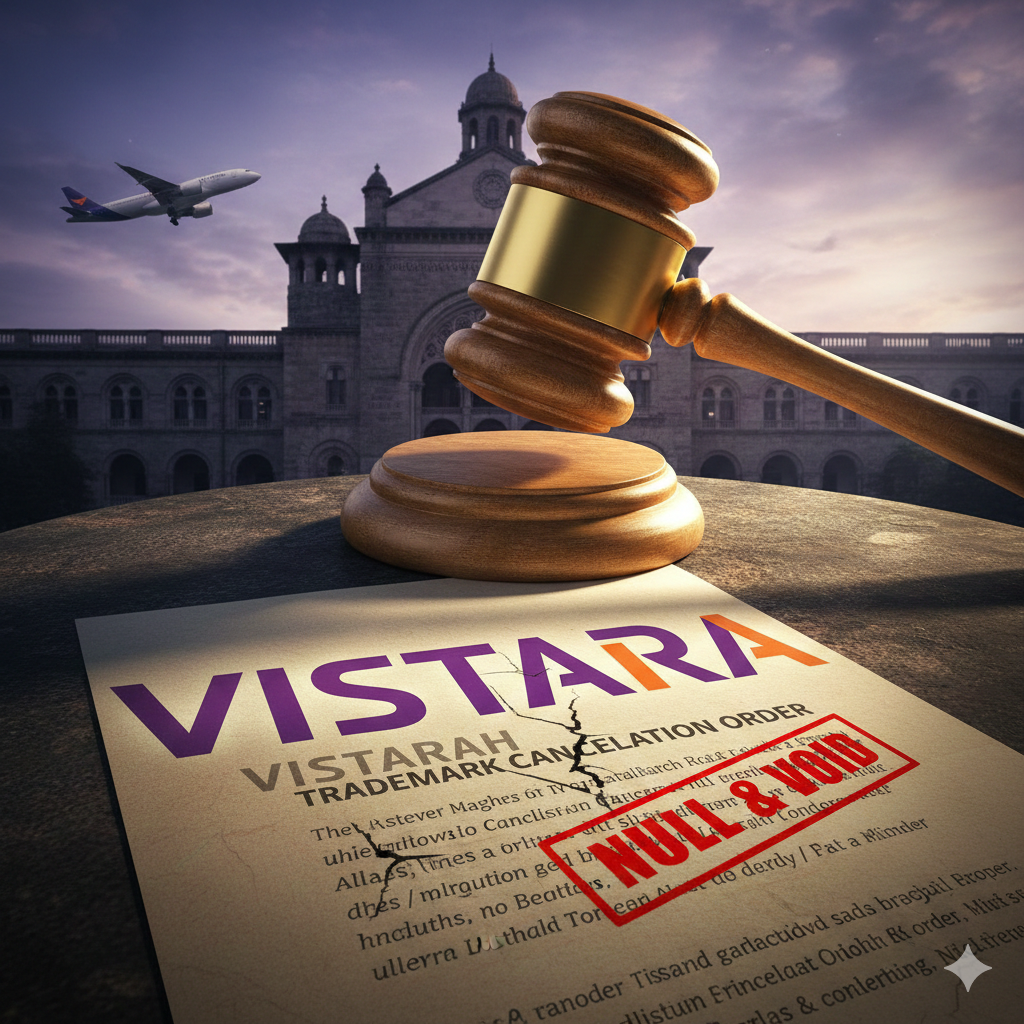
In a significant legal victory for brand integrity, the Bombay High Court has ordered the removal of the trademark “Vistarraah” from the official register. The court ruled that the name was “deceptively similar” to the internationally recognized and “well-known” brand VISTARA.
This verdict, delivered in December 2025, serves as a masterclass in how Indian courts protect iconic brands from phonetic and visual exploitation.
The Dispute: Airline vs. Agriculture
The case was initiated by Air India, which now manages the Vistara legacy following its merger. They discovered that Girish Basrimalani (trading as T.G. Exports) had registered “Vistarraah” under Class 31, a category for agricultural products and fresh produce.
Air India filed a rectification petition, arguing that the registration was illegal. They asserted that “VISTARA” had already achieved “well-known” status, a prestigious legal shield that protects a brand across all industries, regardless of the products being sold.
Why the Court Intervened
Justice Arif S. Doctor examined the evidence and found the respondent’s mark to be fundamentally flawed. The court’s decision hinged on three critical factors:

  • Phonetic Identity: When spoken aloud, “Vistarraah” is indistinguishable from “Vistara.” The addition of extra letters did nothing to change its sound.
  • Visual Similarity: The structural design of the mark mirrored the airline’s branding. The court noted that “the stylization adds no distinguishing characters.”
  • Bad Faith: Despite multiple cease-and-desist notices and opposition from Air India, the respondent continued to use the mark. Their failure to appear in court further suggested they had no valid reason for choosing such a similar name.

“The risk of consumers believing that ‘Vistarraah’ goods originate from or are associated with VISTARA is both real and substantial.” — Justice Arif S. Doctor

The Legal Shield: Section 11(10) and Well-Known Marks
The judgment leaned heavily on the Trade Marks Act, 1999. Specifically:

  • Section 11(2)(a): Prohibits marks identical to earlier, well-known trademarks.
  • Section 11(10): Mandates that the Registrar protect well-known marks and consider any “bad faith” during registration.
    Because Vistara provides food services in its lounges and on flights, the court found a high chance that customers would assume a “trade connection.” A consumer buying “Vistarraah” produce might wrongly believe it was an extension of the airline’s premium hospitality wing.
    2025: A Year of Aggressive Brand Protection
    This ruling is part of a broader shift in 2025 toward a more robust Intellectual Property (IP) landscape in India.
    | Trend in 2025 | Impact on Brand Owners |
    |—|—|
    | New Trademark Rules 2025 | Applications and oppositions now follow a “fast-track” digital-first timeline, reducing delays. |
    | Expansion of “Well-Known” Status | Courts are increasingly granting this status to brands like Nutella, Ratan Tata, and Vistara, creating a “cross-sector” shield. |
    | Personality Rights Protection | Recent 2025 rulings have protected celebrities and brands from unauthorized AI-generated imitations. |
    The Verdict: Trademark Canceled
    The Bombay High Court concluded that allowing “Vistarraah” to remain on the register would compromise the “sanctity and credibility” of the trademark system. The court ordered the Trade Marks Registry to cancel the mark immediately.
    Key Takeaways for Businesses
  • Do Not Mimic: Even if you operate in a different industry, using a name that “sounds like” a famous brand is a high-risk gamble.
  • Reputation is Universal: If your brand is “well-known,” the law protects you from agricultural exports to aviation.
  • Act Swiftly: Air India’s proactive monitoring and legal action were key to winnings.

Battle for the Bird: Musk’s X Sues to Halt “Twitter” Revival

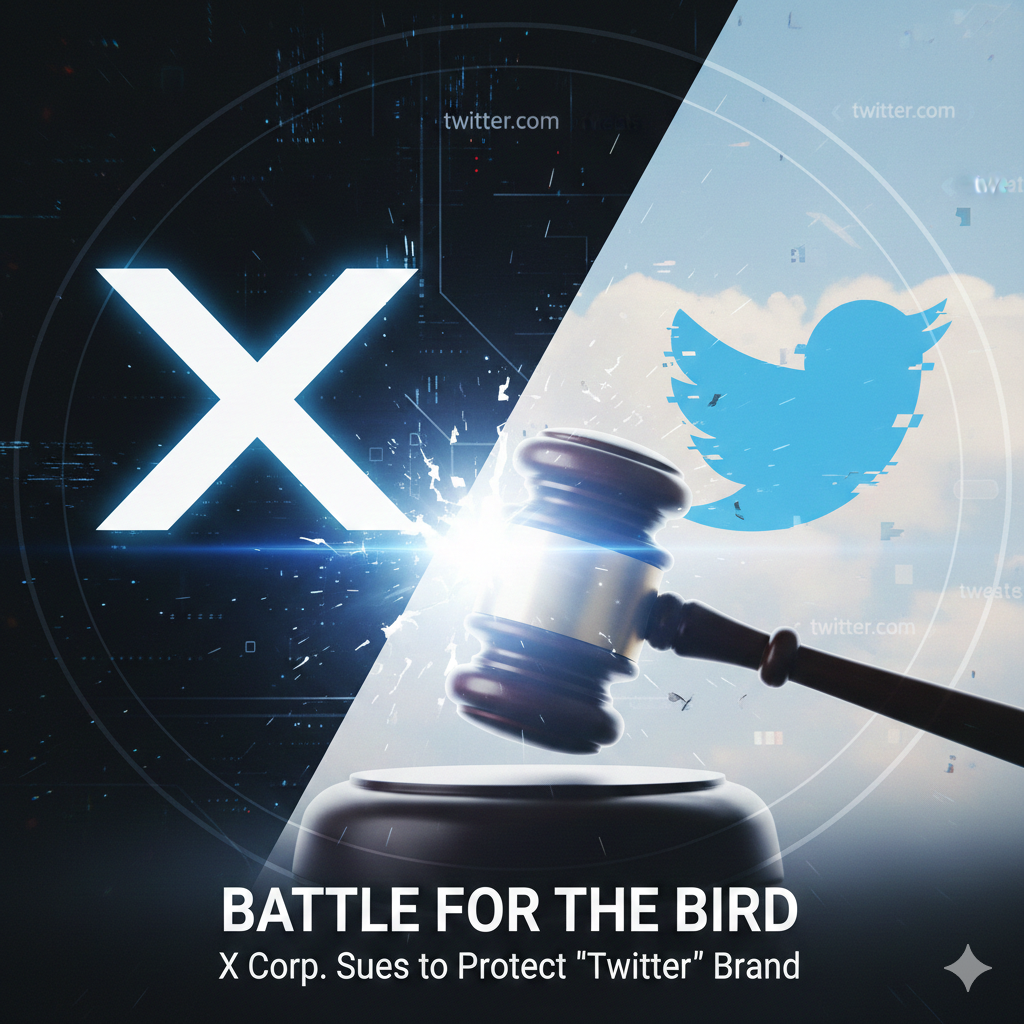
A conceptual graphic split diagonally. The left side shows a white "X" logo on a dark digital background with circuit lines. The right side shows the classic blue Twitter bird logo against a bright sky. A wooden judge’s gavel strikes the center where the two logos meet, creating a light spark.

X Corp. has launched a federal lawsuit to prevent a startup from seizing the “Twitter” brand. The legal filing, submitted on December 16, 2025, targets Operation Bluebird. This Virginia-based startup recently petitioned to cancel X’s trademarks. They argue that Elon Musk abandoned the Twitter name after his 2023 rebrand to X.

The case focuses on a central question of modern business. Does a company lose its rights if it publicly “kills” a multi-billion dollar brand?


The Move to Reclaim a Discarded Brand

Operation Bluebird is led by a team of legal experts. One key figure is Stephen Coates. He previously served as Twitter’s associate director of trademarks. His involvement brings unique expertise to the challenge.

The startup believes X Corp. has legally abandoned its legacy. Under U.S. law, a trademark is abandoned if use is discontinued with no intent to resume. Operation Bluebird points to Musk’s 2023 statement as evidence. At the time, Musk posted that the company would “bid adieu to the Twitter brand and, gradually, all the birds.”

The startup intends to launch a new social network at “twitter.new”. They have already invited users to reserve their old handles. Their website reports that over 145,000 people have signed up. They aim to restore the “town square” experience they feel was lost during the transition to X.


X Corp. Defense Strategy

X Corp. responded with a lawsuit in a Delaware federal court. The company asserts that the Twitter brand is still “alive and well.” They argue the brand is “not ripe for the picking.” X Corp. accuses the startup of a “brazen attempt to steal” its property.

The defense for X Corp. rests on three key points:

  1. Direct Traffic: Millions of users still visit twitter.com, which currently redirects to X.
  2. Cultural Use: The public and businesses still use terms like “Twitter” and “tweets” daily.
  3. Active Ownership: X Corp. claims it still enforces these trademarks in business contracts.

“A rebrand is not an abandonment of trademark rights,” the lawsuit states. X Corp. is seeking monetary damages. They also want a court order to stop the startup from using any Twitter-related branding.


Legal Precedents and Challenges

Legal experts are watching the case with interest. It could set a new standard for corporate rebranding. Usually, companies maintain “skeleton” uses of old brands to prevent others from taking them.

However, trademark law is very specific. To keep a brand, an owner must show “bona fide use” in commerce. Operation Bluebird argues that removing the bird logo from offices and app icons proves X has stopped using the marks.

X Corp. recently updated its Terms of Service. Effective January 2026, the terms explicitly state that users have no right to use the X or Twitter names. This update appears to be a defensive move against the startup’s claims.


Consumer Confusion vs. Brand Evolution

X Corp. argues that a rival named Twitter would cause “consumer confusion.” This is a primary test in trademark law. If two different companies use the same name, the public might not know which is which. X Corp. claims this would harm its business.

Operation Bluebird counters this by citing X Corp.’s own marketing. For two years, X has told the world it is not Twitter. The startup believes the public can distinguish between the new “X” and their proposed “Twitter” revival. They plan to focus on stricter moderation and a return to the original microblogging format.


The Path Ahead

The dispute is moving through two legal channels:

  • The USPTO: The trademark office will decide if the marks should be canceled based on non-use.
  • Federal Court: The Delaware court will rule on whether the startup’s actions infringe on X’s current rights.

If X Corp. loses, it would be a major blow. The Twitter name still carries immense global recognition. For now, the “blue bird” is at the center of a high-stakes legal tug-of-war. X Corp. wants to keep the brand locked away. Operation Bluebird is fighting to set it free.

Delhi High Court Rules in Favor of Bata in Power Flex Infringement Case

Bata POWER shoe logo vs Red Chief POWER FLEX footwear - Delhi High Court ruling

In a significant victory for established brands protecting their intellectual property, the Delhi High Court has dismissed appeals challenging a 2019 interim injunction that bars the use of the mark “POWER FLEX” in footwear products. The ruling reinforces Bata India Limited’s exclusive rights to its iconic “POWER” trademark, highlighting the risks of adopting similar marks even in slightly different product segments.

A Division Bench comprising Justices C. Hari Shankar and Om Prakash Shukla upheld the single-judge order from 2019, which had initially restrained Leayan Global Private Limited – the company behind the popular Red Chief footwear brand – from using “POWER FLEX” pending the outcome of the main trademark infringement suit.

The dispute dates back to 2019 when Bata, a household name in India’s footwear market, filed a suit alleging infringement, passing off, and unfair competition. Bata claimed that Leayan’s adoption of “POWER FLEX” for its leather shoes diluted the distinctiveness and goodwill associated with Bata’s “POWER” brand, primarily used for sports and canvas footwear since the 1970s.

Bata has multiple trademark registrations for “POWER,” both as a standalone word and in combination with devices or other terms. The company argued that “POWER” had acquired secondary meaning through decades of exclusive use, massive sales figures, and endorsements by sports personalities, making it strongly associated with Bata in consumers’ minds.

Leayan, on the other hand, contended that “POWER” is a common laudatory term meaning strength or durability, unsuitable for monopoly. They further argued that “POWER FLEX” was always used alongside their house mark “RED CHIEF,” targeted leather footwear rather than sports shoes, and posed no real confusion risk. Leayan also proposed undertakings to limit usage and avoid prominence to “POWER.”

The Division Bench rejected these defenses, finding a prima facie case of confusion. The court noted that “POWER” forms the dominant and essential part of “POWER FLEX,” potentially leading average consumers – who may not scrutinize differences in sub-categories like leather versus canvas – to believe the products originate from or are affiliated with Bata.

Importantly, the judges observed that even if “POWER FLEX” appears on packaging with “RED CHIEF,” its standalone use inside shoes could still mislead buyers. The court also dismissed arguments on delay or honest concurrent use, emphasizing Bata’s vigilance in opposing similar marks over the years.

However, the bench allowed Leayan to continue using the tagline “THE POWER OF REAL LEATHER,” viewing it as descriptive of material quality rather than a trademark, provided no undue emphasis is given to “POWER.”

This decision underscores the strength of well-established trademarks in India, even when they incorporate common words, if long-term use has built unique goodwill. Legal experts say it serves as a cautionary tale for competitors entering crowded markets: adding suffixes like “FLEX” to a dominant registered mark may not suffice to avoid infringement claims, particularly in related goods like footwear variants.

The underlying suit for permanent injunction, damages, and other reliefs remains pending before the single judge. Leayan may explore further appeals, but the upheld interim order maintains the status quo in Bata’s favor for now.

The ruling aligns with broader judicial trends protecting brand equity in India’s growing consumer market, where established players like Bata continue to dominate through rigorous IP enforcement.

Former Champion Jinder Mahal Challenges WWE “The Maharaja” Trademark

Digital illustration showing Jinder Mahal dressed as The Maharaja on the left, holding a scroll labeled 'The Maharaja Trademark Pending,' facing a shadowy, muscular figure representing WWE on the right. A lightning bolt separates them, and the WWE figure stands near a cracked tombstone labeled 'Intellectual Property Law,' with two judge's gavels on the ground.

The world of professional wrestling is buzzing. Former WWE Champion Jinder Mahal, whose real name is Raj Dhesi, has launched a major legal challenge against his former employer, World Wrestling Entertainment (WWE).

Dhesi is fighting for ownership of the in-ring persona, “The Maharaja.”


The Heart of the Battle

This dispute reveals a critical industry-wide conflict. Who truly owns a wrestler’s identity? Is it the performer who brings the character to life? Or is it the multi-million dollar corporation that employs and markets them?

WWE holds the trademark for “The Maharajah.” They secured this ownership in 2017.

Raj Dhesi contests this claim. He asserts he developed and used the “Maharaja” name as early as 2015. This was before the company made its official trademark claim. Dhesi argues the character belongs to him. He insists the persona is his creation, not a product of WWE’s creative team.


Legal Action Escalates

Dhesi first tried to register his own trademark. The U.S. Patent and Trademark Office (USPTO) rejected his attempts. They cited a “likelihood of confusion” with WWE’s existing ownership.

Dhesi refused to back down. He changed tactics. On December 4, 2025, Dhesi submitted a formal petition. This filing asks the USPTO to cancel WWE’s trademark entirely. Dhesi accuses the company of obtaining the trademark by “wrongful means.”

WWE must now prepare a defense. The wrestling giant has until February 3, 2026, to respond to Dhesi’s petition.


Industry Consequences Loom

The outcome of this case holds massive implications. It threatens to overturn decades of established wrestling business practices.

For years, WWE has kept tight control. They rarely allow talent to use their character names outside the company. If Dhesi wins, this legal precedent could have widespread effects.

  • Talent Empowerment: A victory could encourage other former wrestlers. They might sue to reclaim names and personas they helped develop.
  • IP Redefinition: The challenge forces WWE and the entire industry to rethink character ownership. It may redefine the line between talent creative rights and corporate intellectual property (IP).

Since his WWE release in April 2024, Dhesi has continued to use the name. He performs as “The Maharaja” on the independent circuit. This ongoing usage strengthens his claim. He aims to prove that the identity remains his own, separate from the corporation.

The industry watches closely. The final ruling will impact how wrestling companies manage their most valuable assets: their performers and their characters.

Delhi High Court Restores Trademark Infringement Suit

Delhi High Court building at dusk with overlaid text: "Trademark Ruling" and "Jurisdiction Restored," symbolizing the Kohinoor Seed vs Veda Seed case.

The Delhi High Court’s Division Bench restored the trademark infringement suit filed by Kohinoor Seed Fields India Pvt. Ltd. against Veda Seed Sciences Pvt. Ltd., setting aside an earlier order by a Single Judge that had returned the plaint due to a lack of territorial jurisdiction.

The Court held that a substantial part of the cause of action arose within Delhi’s jurisdiction, thereby allowing the suit to proceed on its merits.


Key Grounds for Restoring Jurisdiction

The Division Bench identified two primary factors that conferred territorial jurisdiction on the Delhi High Court:

  1. Registration of Trademarks in Delhi:
    • Kohinoor Seed’s registered trademarks, “TADAAKHA” and “SADANAND”, were registered in Delhi.
    • The Court held that the mere fact that the asserted marks were registered within the jurisdiction of the High Court was a factor that, by itself, entitled the appellant to institute the suit in Delhi.
  2. Execution of Marketing Agreement in Delhi:
    • The non-exclusive co-marketing agreement, which was at the heart of the dispute, was executed in New Delhi. This agreement allowed Veda Seed to market Kohinoor’s seeds under the marks (including the unregistered mark “BASANT”) until it expired in 2022.
    • The Court ruled that since the agreement formed an integral part of the cause of action—as the alleged infringement occurred after the agreement’s termination and involved marks initially licensed—the Court within whose jurisdiction the agreement was executed has jurisdiction to adjudicate the dispute.

Details of the Dispute

  • Kohinoor’s Marks: Registered trademarks “TADAAKHA” and “SADANAND”, and unregistered mark “BASANT”, all used for cotton hybrid seeds.
  • Veda Seed’s Allegedly Infringing Marks: “VEDA TADAAKHA GOLD BG II,” “VEDA SADANAND GOLD BG II,” and “VEDA BASANT GOLD BG II.”
  • Background: The parties had a co-marketing agreement from 2014 to 2022. Post-termination, Kohinoor alleged that Veda Seed began selling its own seeds using deceptively similar marks.
  • Single Judge’s View (Set Aside): The Single Judge had accepted Veda Seed’s argument that its operations were limited to Andhra Pradesh and Telangana, and that online listings (on IndiaMart/Kalgudi) were insufficient to establish jurisdiction.
  • Division Bench’s View on Online Listings: The Division Bench observed that the question of Veda Seed’s direct or indirect involvement in the online listings of the allegedly infringing goods was a matter that required a full trial and could not be dismissed at the preliminary stage.

The Division Bench, therefore, allowed the appeal, setting aside the previous order, and restored the trademark infringement suit to be heard on its merits.

The Patent Paradox: Why India’s Startup Filing Surge is 83% Failure and All About Optics

Fragile gold patent scroll on a precarious foundation, with the number 83% failure rate overlaid, symbolizing the optical illusion of India's startup patent filing surge.

A deep dive into the intellectual property (IP) landscape of India’s booming startup sector reveals a critical gap between ambition and execution, suggesting that the much-lauded surge in patent filings is predominantly a tactical exercise in investor signalling rather than a genuine marker of technological innovation. The core issue, critics argue, is a “crisis of intent” where patents function as “decorative rather than functional” assets.   

While global bodies like the World Intellectual Property Organization (WIPO) have celebrated India’s rapid ascent—the WIPO 2024 report noted a phenomenal 15.7% growth in patent applications in 2023, positioning the country 6th globally with 64,480 filings —the internal data paints a sobering picture of weak follow-through.   

The Data Gap: 83% of Startup Patents Fail to Secure a Grant

Analysis of the startup patent pipeline from 2021 through 2025 reveals a profound drop-off rate, demonstrating that the vast majority of filings are not carried through to completion.   

During this five-year period, Indian startups filed a robust 13,089 patent applications. Yet, only 2,174 of these successfully navigated the examination process to achieve the grant stage. This results in a grant success rate of barely 16.6%, meaning approximately one out of every six startup filings becomes an enforceable, proprietary asset.   

The failure rate is compounded by active abandonment. Nearly 500 startup patent applications were explicitly withdrawn or abandoned early, often due to the filers failing to complete detailed specifications or respond to subsequent office actions required by the Patent Office.   

This pattern extends beyond patents. Startups filed 44,517 trademark applications during the same period, with over 1,300 subsequently abandoned. Analysts suggest this widespread non-prosecution across IP types confirms that the primary function of the filing is “brand optics” rather than a rigorous, long-term IP strategy. The high volume of dropped applications confirms that for many, the intent was temporary and instrumental: the patent filing was merely a transaction used to secure funding, not an investment in an enduring intellectual asset.   

Investor Mandate: Patents as Pitch Deck Tools

The distortion in filing behaviour is traced back to the venture capital (VC) ecosystem’s preference for strong valuation narratives. In competitive fundraising rounds, a pending patent application, particularly a cheap and fast provisional filing, serves as a high-visibility proxy for technological differentiation and market moat potential.   

A provisional patent application, which secures an immediate priority date, is leveraged as a “fast, affordable way to strengthen a fundraising narrative” and “create the appearance of a breakthrough innovation”. This mechanism enables a “Capital first, commitment later” ethos.   

The systemic issue is rooted in the fact that investors often prioritize the inclusion of an IP slide over demanding proof of prosecution commitment or demonstrated R&D investment. As the analysis notes, “Once the funding round closes, priorities may shift,” leading to a predictable loss of enthusiasm for the labour-intensive and expensive work required to turn provisional filings into complete specifications. This rational response by founders—underinvesting in expensive, long-term R&D in favour of cheap, high-volume filing tactics—systematically shifts resources away from core innovation.   

Structural Deficiency: India’s R&D Investment Stagnation

The crisis of intent at the startup level is underpinned by a deep, structural R&D deficit at the national level. The commitment to deep, foundational research necessary to generate truly novel and patentable inventions remains structurally low in India.   

Official data from the Department of Science & Technology (DST) confirms that India’s Gross Expenditure on Research and Development (GERD) as a percentage of GDP stood at 0.64% during the fiscal year 2020–21, having remained stagnant between 0.6% and 0.7% in the preceding years (0.66% in 2018–19 and 2019–20).   

This figure is significantly “below global average and lower than countries like China, South Korea and US”. This structural weakness is compounded by low private sector contribution, which accounted for only 36.4% of the total GERD in 2020–21, in sharp contrast to innovation-leading nations where private industry drives over 70% of R&D expenditure.   

This macro-level underinvestment directly correlates with the micro-level deficiencies, as most startups lack “dedicated research teams, technical drafting expertise, prior-art assessment systems, and time for iterative processes” necessary for rigorous patent prosecution.   

Policy Flaw: Incentives Reward Filing, Not Granting

Current government policies designed to stimulate IP activity, while successful in boosting filing volume, have inadvertently intensified the focus on volume over quality. The government successfully implemented significant fee concessions, including an 80% reduction in patent filing fees for startups, MSMEs, and educational institutions.   

However, the design flaw is that these incentives are tied to the input stage (filing) rather than the output stage (grant or commercialization). By heavily subsidizing the initial filing, the state inadvertently subsidizes the creation of the fundraising narrative for VCs. Once the provisional application is lodged, the startup has secured its priority date and the narrative benefit, but the subsequent costly work of prosecution remains unassisted, cementing the low-commitment behaviour.   

Blueprint for Genuine Innovation: Shifting from Decoration to Depth

To foster genuine innovation and correct the systemic inefficiencies, experts advocate for a strategic overhaul of incentives and infrastructure.   

  • Realign Incentives: Government benefits, including subsidies and fast-track examination provisions, must be decoupled from the act of filing and strategically tied to demonstrable outcomes, such as patent grants, successful long-term renewal, or demonstrable commercial utilization.   
  • Enhance Capacity: Urgent investment in the Patent Office is mandatory, including expansion of examiner capacity and specialized domain expertise. There is a pronounced need for more technically specialized patent officers, particularly in cutting-edge technological areas like AI, biotech, semiconductors, climate-tech, and advanced manufacturing.   
  • Strengthen R&D Culture: The government should offer targeted, co-funded grants and innovation-linked incentives for startups that demonstrate a commitment to establishing and maintaining dedicated R&D teams or formalized collaboration with research institutions.   
  • Promote Co-patenting: Actively promoting policy frameworks that encourage joint patent filings (co-patenting) between startups and premier academic/research institutions, such as the IITs and national labs, would guarantee a higher technical standard for the filings and create structured pathways for knowledge transfer.   

The conclusion remains clear: for India to genuinely transition from an IP volume leader to a global innovation power, the focus must shift from decorative filings to functional intellectual assets. Only then can “depth replace decoration” and solidify India’s reputation as a serious, quality-driven innovation hub.   

Delhi High Court Summons ‘Nashville Fried Chicken’ Over KFC Trademark Dispute

The Delhi High Court has issued a summons to ‘Nashville Fried Chicken’, a local restaurant, in response to a trademark infringement lawsuit filed by the globally recognized fast-food chain, Kentucky Fried Chicken (KFC). The legal action stems from KFC’s claims that the eatery is imitating its brand identity and misleading customers.

KFC Alleges Brand Imitation

KFC, operated by Yum! Brands, alleges that ‘Nashville Fried Chicken’ unlawfully uses branding elements that closely resemble those of KFC. This includes similarities in the visual design, menu presentation, and particularly the acronym “NFC”, which KFC claims is a deliberate attempt to confuse customers and exploit the popularity of its brand.

The lawsuit also highlights the use of the word “Nashville” in the restaurant’s name — a term that features prominently in KFC’s own menu item, the “Nashville Hot Chicken.” KFC maintains that this choice of branding is likely to mislead consumers into believing there is an association between the two businesses.

Court Issues Summons

Justice Anish Dayal, presiding over the case, admitted the matter and ordered the defendant to respond to the allegations. The court recognized the potential for consumer deception due to the overlapping branding and has scheduled the matter for further hearing in the coming weeks.

The court acknowledged KFC’s longstanding presence in India and noted that the alleged similarities in branding may amount to “passing off” — a situation where one business misrepresents its goods or services as those of another.

KFC Seeks Injunction and Damages

In the lawsuit, KFC has asked the court to issue a permanent injunction preventing ‘Nashville Fried Chicken’ from using the contested name and related branding. The company is also pursuing financial compensation, citing harm to its reputation and brand equity.

According to KFC, its brand elements — including its signature red-and-white color scheme, the image of Colonel Sanders, and its widely known slogans — have earned significant recognition among Indian consumers over the years. The company argues that any imitation not only confuses the public but also weakens its distinct brand identity.

Implications of the Case

The outcome of this legal battle could have broader implications for the Indian food and hospitality industry, particularly concerning brand protection and intellectual property rights. Legal analysts suggest that the case could set a benchmark on how Indian courts view brand mimicry, especially when smaller entities adopt marketing elements similar to established international brands.

The next hearing is expected to take place in June, where both parties will present their detailed arguments before the court.