
Former USPTO Employee Agrees to Pay $122,480 in Conflict-of-Interest Settlement

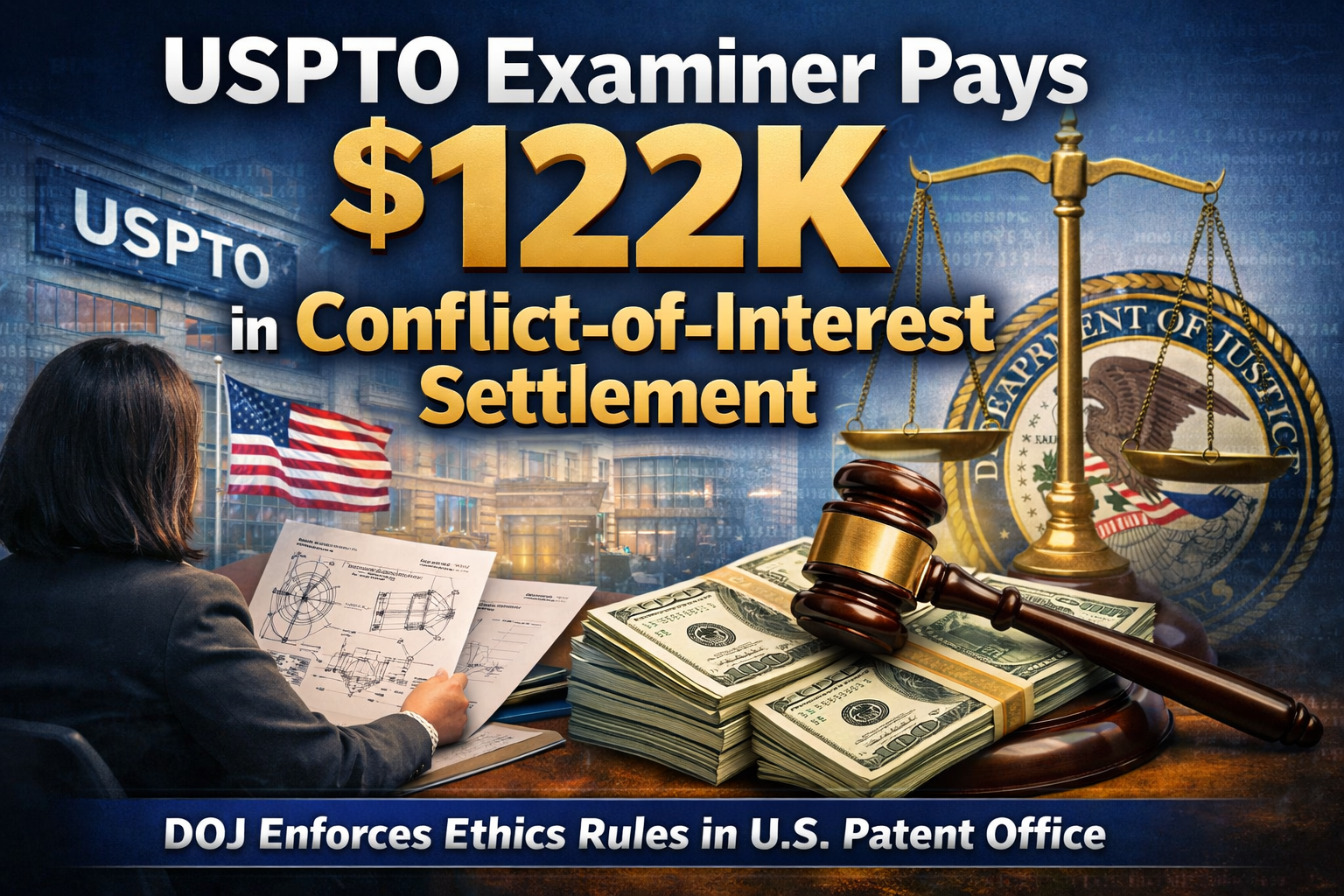
Graphic illustration showing a USPTO patent examiner reviewing documents with a gavel, cash, and scales of justice symbolizing the $122,480 conflict-of-interest settlement announced by the U.S. Department of Justice.

A former employee of the United States Patent and Trademark Office (USPTO) has agreed to pay $122,480 to resolve allegations that she violated federal conflict-of-interest rules while examining patent applications. The settlement, announced by the U.S. Department of Justice, highlights growing scrutiny of ethical compliance within the U.S. patent examination system.

The case centers on allegations that the former patent examiner participated in official matters that could directly affect her personal financial interests. Federal law strictly prohibits government employees from making decisions that influence companies in which they hold stock or other financial stakes. Investigators say the examiner crossed that line during her tenure at the USPTO.

Settlement Resolves Ethics Concerns

According to the DOJ announcement, the former examiner, Christine Tu, agreed to pay $122,480 as part of a civil settlement. The payment resolves allegations that she participated in patent examination activities involving companies connected to her personal investments.

The government alleged that Tu owned significant stock holdings in a technology company while simultaneously examining patent applications related to that company and its competitors. Such actions create a direct conflict between personal financial interests and official government duties.

Under U.S. ethics laws, federal employees must avoid participating in matters that could affect their financial holdings. When such conflicts arise, employees must recuse themselves immediately. Authorities claim Tu failed to do so.

The settlement resolves the government’s claims without a formal admission of wrongdoing. However, the case sends a clear message about the importance of ethical compliance within federal agencies.

Alleged Conduct Spanned Multiple Years

Investigators say the alleged conflict occurred between October 2019 and November 2022, when Tu worked as a patent examiner at the USPTO.

During that period, authorities allege she examined:

  • At least one patent application filed by a company in which she held stock, and
  • More than 20 patent applications filed by a competing company whose business interests could also affect the value of her investment.

According to the government, Tu owned more than $125,000 worth of shares in the company involved. That level of financial interest triggered clear conflict-of-interest restrictions under federal ethics rules.

Patent examiners play a crucial role in the innovation economy. They review patent applications and determine whether inventions meet legal requirements such as novelty, usefulness, and non-obviousness. Their decisions can shape entire markets and determine which companies gain exclusive rights to valuable technologies.

Because of that power, strict ethical safeguards govern examiner conduct.

Federal Ethics Laws Set Clear Boundaries

The case revolves around federal conflict-of-interest statutes designed to prevent government employees from using their positions for personal financial gain.

These laws require employees to disclose financial holdings and recuse themselves from matters that could affect those investments. The rule applies broadly across federal agencies, including the USPTO.

In practice, the requirement is straightforward. If an examiner owns stock in a company, that examiner cannot participate in reviewing patent applications from that company or its direct competitors when financial interests may be affected.

Violations can lead to civil penalties, disciplinary actions, or even criminal prosecution in severe cases.

Authorities say enforcing these rules helps maintain the integrity of the federal workforce and ensures fair treatment for businesses seeking government decisions.

Oversight and Investigation

The investigation involved multiple federal oversight bodies. The case was pursued by the Civil Division of the U.S. Department of Justice in coordination with the U.S. Department of Commerce Office of Inspector General.

The Office of Inspector General investigates fraud, waste, abuse, and ethical violations within agencies under the Department of Commerce, including the USPTO.

Officials say such investigations are essential for maintaining trust in federal decision-making processes.

Assistant Attorney General officials emphasized that government employees must remain impartial when performing their duties. When financial conflicts arise, employees must step aside to protect the fairness of government actions.

Why Patent Examiners Face High Ethical Standards

Patent examiners operate at the center of the global innovation economy. Their decisions determine whether companies receive exclusive rights to new technologies.

A single patent can generate millions of dollars in revenue. It can also block competitors from entering a market. Because of these high stakes, even the appearance of bias can damage confidence in the patent system.

The USPTO reviews hundreds of thousands of patent applications every year. Technology companies, research institutions, and startups all depend on fair and impartial examination.

If an examiner reviews applications involving companies tied to personal investments, it raises concerns about whether decisions could be influenced—intentionally or unintentionally—by financial gain.

Ethics rules exist to prevent exactly that situation.

A Growing Focus on Ethics Enforcement

This settlement reflects a broader trend. Federal authorities have increasingly emphasized ethics enforcement across agencies responsible for economic regulation.

In recent years, investigators have examined conflicts involving government employees in areas such as securities regulation, procurement decisions, and intellectual property administration.

Within the patent system specifically, financial conflicts are particularly sensitive because patent rights can shape entire technology sectors.

Legal experts say even small conflicts can undermine trust in the system. Companies must believe that patent decisions are based purely on law and evidence—not on an examiner’s personal financial interests.

Comparing Ethical Compliance in Patent Systems

The United States maintains one of the most structured ethics frameworks for patent examiners. Financial disclosure rules, training programs, and internal monitoring systems aim to identify conflicts before they influence decision-making.

Compared with many countries, the U.S. system requires more detailed disclosure of employee investments. Agencies also provide ethics counseling and automated screening tools to help employees avoid prohibited matters.

However, enforcement actions such as this case demonstrate that violations still occur.

Experts note that the complexity of modern technology industries can create challenges. Examiners may hold diversified investment portfolios that include technology stocks. If not carefully monitored, those investments can overlap with the industries they review.

That is why federal ethics programs emphasize continuous monitoring and disclosure updates.

Maintaining Public Trust

Government officials say enforcement actions like this are necessary to protect public confidence in federal institutions.

When employees follow strict ethical standards, businesses and inventors can trust that decisions are made fairly. When conflicts arise, swift investigation and resolution reinforce accountability.

The settlement with the former examiner sends a strong signal that financial conflicts will not be ignored.

For innovators seeking patents, trust in the examination process is essential. Startups, research labs, and multinational companies all rely on the integrity of the patent system to protect their inventions.

Maintaining that integrity requires strict enforcement of ethics rules and transparency in government operations.

Key Takeaway

The settlement between the former USPTO examiner and the federal government underscores a fundamental principle of public service: government decisions must remain free from personal financial influence.

By agreeing to pay $122,480, the former employee resolved allegations that she examined patent applications tied to companies connected to her investments. While the settlement does not include an admission of liability, it highlights the serious consequences of violating federal conflict-of-interest rules.

For the USPTO and the broader innovation ecosystem, the message is clear. Ethical conduct is not optional. It is essential to preserving fairness, credibility, and public trust in the patent system.

Weight-Loss Drugs Could Cost Just $3 a Month to Make After Patent Expiry, Study Finds

Semaglutide weight-loss injection pen representing cheaper generic obesity drugs after patent expiry

A new global analysis has sparked debate across the pharmaceutical industry. Researchers say the blockbuster weight-loss drug semaglutide—the active ingredient behind popular treatments for obesity and diabetes—could cost as little as $3 per month to manufacture once patent protections expire.

The finding highlights the dramatic gap between current market prices and estimated production costs. Today, patients in many countries pay hundreds of dollars every month for these medicines. But as patent barriers begin to fall in several regions, experts believe generic manufacturers could soon reshape the market.

The development could transform treatment access for millions of people struggling with obesity and type-2 diabetes worldwide.

The Blockbuster Drug Behind the Debate

Semaglutide belongs to a class of medicines known as GLP-1 receptor agonists. These drugs mimic a natural hormone that regulates blood sugar levels and appetite.

Doctors prescribe semaglutide for two major purposes:

  • Type-2 diabetes management
  • Medical weight loss

Two well-known brands dominate the global market today:

  • Ozempic – primarily used to treat diabetes
  • Wegovy – approved for chronic weight management

Both drugs have generated enormous demand. Social media hype, celebrity endorsements, and clinical success have turned them into some of the most talked-about medicines in recent years.

However, their price remains a major barrier.

In the United States and several other markets, monthly treatment costs can exceed $200 to $1,000, depending on insurance coverage and dosage.

This makes semaglutide inaccessible to many patients—especially in developing countries.

Researchers Reveal Stunning Manufacturing Cost

A group of public health researchers recently analyzed the chemical composition, raw materials, and production processes used to manufacture semaglutide.

Their conclusion surprised many industry observers.

According to the study, large-scale generic production could reduce the manufacturing cost to around $3 per month per patient.

Even after adding distribution costs, regulatory expenses, and modest profit margins, the final retail price could remain dramatically lower than current branded versions.

Researchers estimate:

  • Injectable semaglutide could cost roughly $3 to $5 per month to produce.
  • Oral semaglutide pills may cost around $16 per month due to additional formulation complexity.

The numbers highlight one of the biggest price gaps in modern medicine.

Patent Protection Keeps Prices High

The main reason behind the high cost today is patent protection.

Pharmaceutical companies invest billions of dollars in drug discovery, clinical trials, and regulatory approvals. Patent laws grant them temporary market exclusivity so they can recover those investments.

During the patent period, competitors cannot legally manufacture or sell the same drug.

This allows companies to set higher prices.

However, once patents expire, generic manufacturers can enter the market. Competition typically drives prices down dramatically.

History shows that many medicines become 80–95% cheaper after generic versions appear.

Semaglutide may soon follow the same path.

Patent Expirations Are Approaching

Patent timelines differ across countries. Some nations granted earlier patents, while others issued weaker protection or none at all.

According to researchers, semaglutide patents are already nearing expiration in several markets, including:

  • India
  • Brazil
  • China
  • South Africa
  • Mexico
  • Turkey
  • Canada

In some jurisdictions, key patents are expected to expire around 2026.

Once these protections end, generic pharmaceutical companies could begin producing cheaper alternatives.

India, known as the “pharmacy of the world,” may play a major role in this transition.

Indian manufacturers already dominate the global market for affordable generic medicines.

Many Countries Never Had Patents

The study also found something even more striking.

Semaglutide was never patented in many parts of the world.

Researchers identified roughly 150 countries where the drug has no active patent protection.

This means generic versions could theoretically be manufactured and sold in those regions immediately—assuming regulatory approvals are obtained.

These countries include many lower- and middle-income economies where obesity and diabetes are rising rapidly.

In fact, the analysis shows that nations without semaglutide patents contain:

  • Nearly 70% of people living with type-2 diabetes worldwide
  • More than 80% of individuals affected by clinical obesity

Affordable generics could therefore reach a huge population that currently lacks access to these treatments.

Global Health Impact Could Be Massive

Obesity and diabetes represent two of the most serious public health challenges today.

According to international health data:

  • More than 1 billion people worldwide live with obesity.
  • Hundreds of millions suffer from type-2 diabetes.
  • Obesity contributes to millions of deaths every year through heart disease, stroke, and metabolic disorders.

Modern weight-loss medicines like semaglutide have shown remarkable clinical results.

Patients using the drug often lose 10–15% of their body weight, a level previously achievable mainly through surgery.

For people with diabetes, the medicine also improves blood sugar control and reduces complications.

However, high prices have limited global adoption.

Cheap generics could dramatically expand treatment access.

The Coming Wave of Generic Competition

Industry analysts expect intense competition once patents expire.

Several pharmaceutical companies are already preparing to enter the GLP-1 drug market with alternative or generic products.

Generic manufacturers could replicate semaglutide using established peptide synthesis techniques. Large-scale production facilities already exist in countries such as India and China.

Competition would likely push prices downward rapidly.

Experts say the transformation could mirror the dramatic price drops seen with HIV and hepatitis medicines over the past two decades.

In those cases, generic manufacturing reduced treatment costs by more than 90%, enabling large-scale public health programs in developing countries.

Semaglutide could follow a similar trajectory.

Pharmaceutical Companies Still Hold Key Advantages

Despite the potential for generics, original drug developers still retain several advantages.

They control:

  • Brand recognition
  • Advanced formulations
  • Improved delivery systems
  • Next-generation drug versions

Pharmaceutical giants are already developing newer GLP-1 drugs with even stronger weight-loss effects.

Some experimental medicines promise 20–25% body-weight reduction, far exceeding earlier treatments.

These innovations could maintain premium pricing for cutting-edge therapies, even if older versions become cheap generics.

A Turning Point for Obesity Treatment

Experts say the potential price collapse marks a critical turning point.

For decades, effective obesity medicines remained rare and expensive. Many treatments delivered limited results or carried serious side effects.

Semaglutide changed that narrative.

Now, the next phase may focus on accessibility rather than discovery.

If generic manufacturers enter the market and prices fall to a few dollars per month, millions more patients could benefit from these therapies.

Governments, insurers, and public health systems may also integrate them into large-scale treatment programs.

The Bigger Lesson About Drug Pricing

The semaglutide case highlights a broader truth about pharmaceutical economics.

Drug prices often reflect patent protection and market exclusivity rather than pure manufacturing costs.

Once those protections expire, the market can shift rapidly.

For semaglutide, the difference is stark: a drug that sells for hundreds of dollars per month today could theoretically cost less than the price of a cup of coffee to produce.

If that transition occurs, the global fight against obesity and diabetes may enter a new era—one defined by affordability, competition, and wider access to life-changing medicines.

Artificial Intelligence Investments Drive Worldwide Patent Growth, Says UN Agency

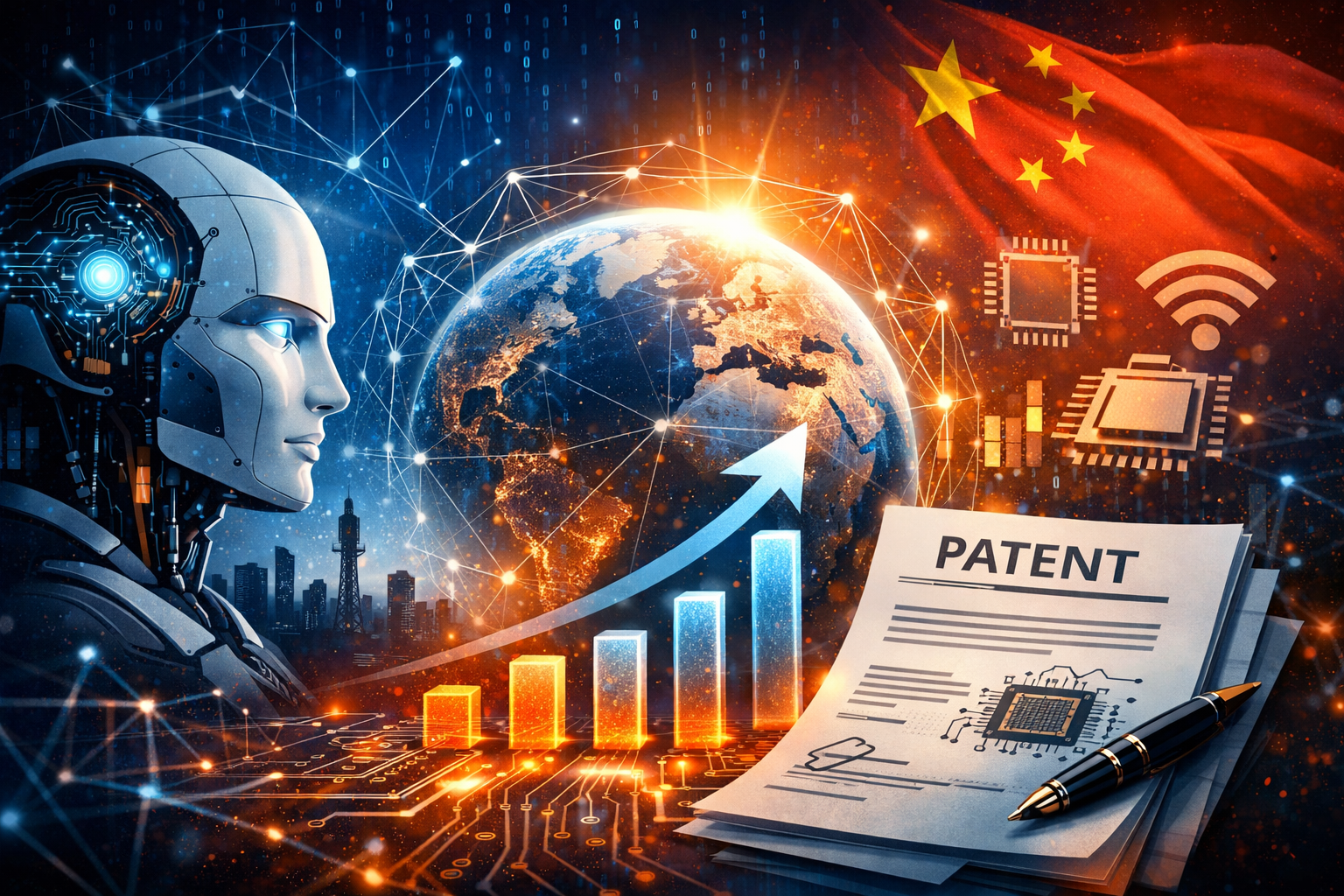
Artificial intelligence innovation driving global patent filings according to WIPO report

Global investment in artificial intelligence (AI) is rapidly transforming the international innovation landscape. A new report from the World Intellectual Property Organization (WIPO) reveals that increased funding in AI technologies is fueling a sharp expansion in patent filings worldwide.

The findings highlight a powerful shift in technological innovation. Countries and corporations are racing to secure intellectual property in emerging technologies such as artificial intelligence, digital communications, and semiconductor manufacturing.

The data signals a new phase of global technological competition. Nations that invest heavily in AI infrastructure are gaining a decisive advantage in patent activity and innovation leadership.

Global Patent Filings Continue to Grow

According to the latest report by the World Intellectual Property Organization, international patent applications filed through the Patent Cooperation Treaty (PCT) system reached approximately 275,900 filings in 2025, marking a modest but significant 0.7% increase compared with the previous year.

While the overall growth appears gradual, the deeper trend reveals explosive activity in AI-related technology sectors.

Digital communication technologies recorded the fastest growth among major technical fields. Patent filings in this sector increased by nearly 6 percent, reflecting rising investment in AI networks, data infrastructure, and connectivity technologies.

Semiconductor technologies also experienced rapid growth. The surge reflects global demand for advanced chips required to power AI systems, machine learning platforms, and large-scale data processing.

WIPO economists say the innovation shift toward AI is reshaping patent strategies across industries. Companies no longer focus only on software development. Instead, they seek protection for a complete technological ecosystem that includes hardware, computing systems, and communication networks.

AI Emerges as the Core Driver of Innovation

Artificial intelligence now sits at the center of the global innovation economy.

Governments and corporations are investing billions into AI research and infrastructure. These investments create ripple effects across multiple industries. As companies develop AI models, they also design new processors, networking equipment, and computing architectures.

Each of these innovations requires intellectual property protection.

WIPO officials emphasize that AI development relies on a complex technological stack. Advanced algorithms require powerful chips, high-speed communication networks, and massive data processing capacity. As a result, patent filings increasingly cluster around these enabling technologies.

This trend explains why sectors like semiconductors and telecommunications now dominate the global patent landscape.

China Expands Its Lead in Global Patent Filings

The report also highlights a significant geopolitical shift in innovation leadership.

China has firmly established itself as the world’s largest source of international patent filings.

Chinese applicants submitted over 73,000 international patent applications in 2025, representing an increase of more than 5 percent compared with the previous year.

This growth further strengthens China’s lead in global intellectual property activity.

In contrast, the United States recorded around 52,600 international filings, marking a 3 percent decline and the fourth consecutive year of decreasing applications.

The comparative trend signals a shift in technological momentum. China’s aggressive investment in AI research, semiconductor manufacturing, and digital infrastructure continues to translate into higher patent output.

Other major patent-filing countries include:

  • Japan
  • South Korea
  • Germany

These countries maintain strong innovation ecosystems supported by advanced manufacturing industries and technology-driven economies.

Together, they form the backbone of global patent activity.

Technology Giants Dominate Patent Leadership

Corporate innovators remain the driving force behind international patent filings.

Telecommunications and electronics companies dominate the list of top global applicants.

Chinese telecommunications giant Huawei retained its position as the world’s largest international patent filer. The company submitted more than 7,500 patent applications under the PCT system in 2025.

This achievement marks another year of leadership for Huawei, which has consistently ranked among the top global innovators since 2017.

Following Huawei, major technology companies also maintained strong patent activity:

  • Samsung Electronics
  • Qualcomm
  • LG Electronics

Most of the leading patent applicants operate in the information and communications technology sector.

This dominance reflects the rapid expansion of digital technologies and AI-driven innovation.

Companies compete fiercely to secure patents in wireless communications, advanced computing, chip design, and network infrastructure.

The race for intellectual property protection has become as strategic as the race to develop new technologies.

Trademark Applications Show Slight Decline

While patent filings increased slightly, international trademark activity showed a different trend.

Applications filed through the Madrid System for the International Registration of Marks declined by about 1.5 percent in 2025.

Global trademark filings fell to approximately 64,150 applications.

Economic uncertainty and slower consumer brand expansion may explain the modest decline.

However, several companies continued to maintain strong trademark portfolios.

French cosmetics leader L’Oréal remained the world’s top trademark applicant for the fifth consecutive year, demonstrating the company’s strong global brand protection strategy.

Industrial Design Filings Surge Worldwide

Another key highlight of the report is the rapid growth in international industrial design filings.

Applications submitted through the Hague System for the International Registration of Industrial Designs rose by 9.4 percent, reaching more than 28,500 designs in 2025.

China again led this category, reflecting the country’s growing focus on product design and consumer technology innovation.

Major multinational companies also contributed significantly to industrial design filings.

Leading design applicants included:

  • Apple
  • Procter & Gamble
  • Philips
  • Samsung Electronics

These companies rely heavily on design protection to secure competitive advantages in consumer electronics, healthcare products, and household goods.

Global Innovation Race Intensifies

The WIPO report underscores three powerful trends shaping the future of innovation.

First, artificial intelligence has become the central driver of technological development. Countries that invest heavily in AI infrastructure are seeing rapid growth in patent activity.

Second, Asia continues to dominate global innovation output. China, Japan, and South Korea collectively account for a significant share of global patent filings.

Third, digital technologies now define the modern patent landscape. Telecommunications, semiconductors, and computing technologies generate the highest number of new inventions.

These developments highlight the increasing strategic importance of intellectual property in the global technology race.

The Future of AI-Driven Innovation

Experts believe AI investment will continue to reshape global innovation patterns over the next decade.

Artificial intelligence is expected to transform industries ranging from healthcare and manufacturing to finance and transportation.

As new AI models emerge, companies will develop more specialized chips, faster data networks, and advanced computing systems.

Each breakthrough will generate new patents and intensify competition among technology leaders.

For policymakers, the challenge will be to balance rapid technological progress with strong intellectual property frameworks that encourage innovation while protecting creators.

For companies, the message is clear: innovation alone is not enough. Securing patents has become essential for long-term technological leadership.

Conclusion

The latest report from the World Intellectual Property Organization confirms that artificial intelligence is accelerating global patent activity and reshaping the innovation economy.

Rising AI investments are driving growth in digital communications, semiconductors, and advanced computing technologies.

At the same time, China’s expanding patent dominance and the continued leadership of global technology giants highlight the increasing intensity of the worldwide innovation race.

As artificial intelligence continues to evolve, intellectual property will remain one of the most powerful tools for securing technological advantage in the digital age.

Samsung’s New Clamshell Foldable Patent Signals Bold Shift in Flip Phone Design

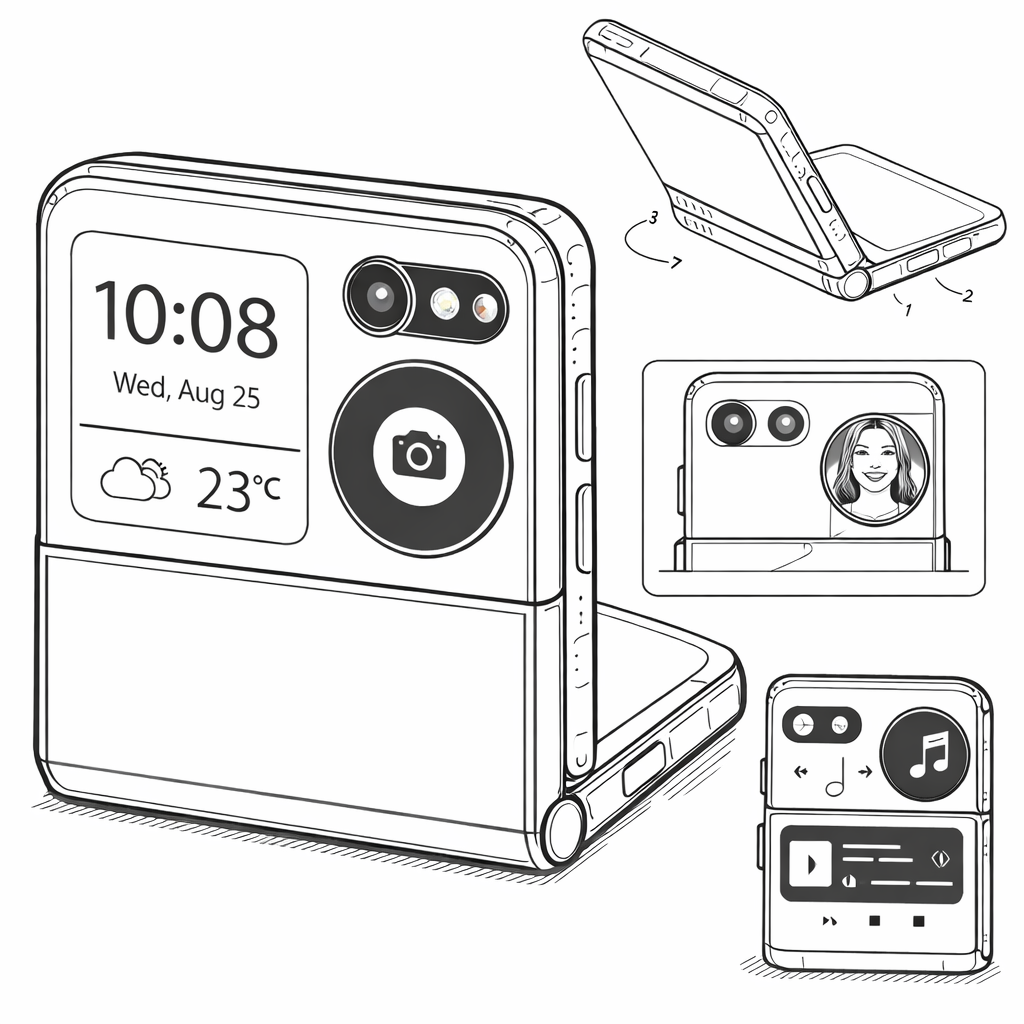
Samsung clamshell foldable smartphone patent showing dual cover display design

Samsung may be preparing another leap in the foldable smartphone race. A newly surfaced patent reveals a fresh clamshell foldable design featuring two external displays, a concept that could transform how users interact with flip phones without unfolding them.

The patent, filed by Samsung Electronics, recently appeared in the database of the World Intellectual Property Organization. The filing showcases detailed design sketches of a flip-style smartphone that carries multiple outer screens and a refined camera layout.

If the concept reaches commercial production, it could redefine the usability of clamshell foldable devices and strengthen Samsung’s leadership in the foldable smartphone market.

A New Design Direction for Flip Phones

The patent drawings show a clamshell foldable smartphone with two separate cover displays on the outer panel. This design differs sharply from current flip phones that use a single external screen.

One display appears larger and rectangular. The second screen sits beside the camera module and has a circular or compact shape. Both displays sit on the upper half of the device’s exterior when the phone remains folded.

This configuration suggests Samsung aims to expand the functionality of the cover screen. Users could interact with notifications, widgets, and apps without opening the device.

Such a design could dramatically improve the convenience of foldable phones. Today, most flip-style devices offer limited functionality on their outer displays. Samsung’s concept suggests a move toward mini-smartphone capabilities on the phone’s exterior.

How the Patent Compares With Current Galaxy Flip Models

Samsung already dominates the clamshell foldable category through its Galaxy Z Flip lineup. The latest generation devices provide larger cover screens than earlier models, but the functionality remains limited.

For instance, the Samsung Galaxy Z Flip 7 features a larger cover display compared with previous models. It allows users to check notifications, control music playback, and access quick widgets.

However, most tasks still require users to open the device.

The newly patented design suggests Samsung wants to eliminate that limitation. With two external displays, the device could support parallel information panels, quick replies, camera previews, and AI tools.

In short, Samsung appears to be moving from “notification display” to “interactive cover interface.”

Dual Displays Could Unlock New Use Cases

The patent’s dual-screen concept opens several possibilities for how users interact with the device.

First, the larger display could show notifications, messages, and widgets. The secondary display could act as a quick control hub or dedicated camera preview.

Second, users could operate music controls, weather updates, timers, and reminders without unfolding the phone. This feature would reduce the need to constantly open and close the device.

Third, the second display could improve photography. Users could frame selfies using the powerful rear cameras while viewing the preview on the outer screen.

This approach mirrors the strategy used by premium foldable competitors that try to increase cover-screen functionality to reduce friction in daily use.

Camera System and Hardware Layout

The patent sketches also reveal other hardware details.

The device appears to include a dual rear camera system positioned near the cover displays. An LED flash sits alongside the sensors.

The flip hinge divides the phone horizontally, creating the classic clamshell fold when closed. This design allows the device to fold into a compact square-like shape.

Side-mounted buttons appear on the device frame. These likely control power and volume functions.

Although the patent does not disclose internal specifications, Samsung typically equips its foldable smartphones with high-refresh-rate AMOLED displays, flagship processors, and advanced hinge engineering.

Samsung’s Strategy in the Foldable Market

Samsung continues to lead the foldable smartphone industry. The company has invested heavily in flexible display technology, hinge engineering, and multi-form-factor designs.

Over the past few years, Samsung has filed patents for a wide range of experimental foldable devices.

These include:

  • Smartphones with 360-degree folding displays
  • Tri-fold devices that expand into tablet-sized screens
  • Rollable display smartphones
  • Hybrid devices that combine sliding and folding mechanisms

Each patent represents a potential direction for the future of mobile design.

Samsung’s aggressive patent strategy shows the company intends to shape the next generation of smartphones rather than simply follow trends.

Competition Is Intensifying in Foldable Phones

Samsung’s innovation comes at a time when competition in foldable smartphones is rapidly increasing.

Chinese smartphone brands such as Huawei Technologies, OPPO, and Xiaomi have launched foldable devices with thinner bodies and improved hinge durability.

Some rivals have also introduced larger and more functional cover displays, pushing the category toward greater usability.

Samsung’s dual-display clamshell patent suggests the company is exploring ways to stay ahead by improving everyday interaction with foldable phones.

Rather than simply increasing screen size, Samsung appears focused on reimagining how the outer display works.

Why Cover Screens Matter in Foldable Phones

Cover screens have become one of the most important design elements in modern flip phones.

Early foldable models offered tiny external displays that only showed basic notifications. Users still needed to open the device for nearly every task.

However, modern users expect smartphones to deliver instant access to information. Opening and closing the phone repeatedly creates friction.

A larger and more capable cover display solves that problem. It allows users to perform quick actions such as:

  • Reading messages
  • Replying with quick responses
  • Checking navigation
  • Controlling smart home devices
  • Using AI assistants

Samsung’s dual-display design could push this concept even further by splitting information across multiple screens for faster access.

From Patent to Product: The Uncertain Path

Despite the excitement surrounding the patent, it is important to remember that patents do not guarantee commercial products.

Technology companies often file patents to secure intellectual property rights for experimental ideas. Many designs remain prototypes that never reach store shelves.

However, Samsung has a strong history of turning its research into real devices. The company pioneered mass-market foldable smartphones when it introduced the first Galaxy Fold in 2019.

Since then, each generation has refined durability, display technology, and software optimization.

If Samsung sees strong user demand for more capable cover screens, this patent could evolve into a future Galaxy Z Flip model.

The Future of Foldable Smartphones

The foldable smartphone market continues to evolve at a rapid pace. Analysts expect the segment to grow significantly over the next five years as manufacturers improve durability, reduce prices, and refine user experiences.

Samsung’s dual-display clamshell concept reflects a broader industry shift toward smarter, more functional outer displays.

Instead of simply protecting the internal screen, the folded phone could become a fully interactive device on its own.

For consumers, this evolution could mean faster interactions, improved camera capabilities, and better multitasking in a compact form factor.

For Samsung, it represents another step in its ongoing effort to define the future of smartphone design.

Trump Organisation Seeks Airport Naming Trademarks, Triggers National Debate

Donald Trump and Trump Organization logo as airport trademark filing sparks naming rights debate in the US
Image

The family business of former US President Donald Trump has filed trademark applications that could reshape how public infrastructure carries a political name. The move is bold. It is strategic. And it has sparked sharp national debate.

The Trump Organization, now led by Eric Trump and Donald Trump Jr., has applied to the United States Patent and Trademark Office (USPTO) to secure exclusive rights to use Trump’s name in connection with airports and related services.

The filings cover names such as “President Donald J. Trump International Airport,” “Donald J. Trump International Airport,” and even the initials “DJT” for aviation-linked services and merchandise.

The company insists the move is defensive. Critics call it unprecedented. Supporters frame it as smart brand protection. The truth sits at the intersection of politics, commerce, and power.

A Defensive Shield — Or a Strategic Play?

According to representatives of the Trump Organization, the filings aim to block misuse of the Trump name by what they describe as “bad actors.” The company says it does not plan to collect licensing fees or royalties if a public airport chooses to adopt the Trump name.

That claim forms the core of its defense.

The company argues that without a trademark, third parties could exploit the name for profit. They could sell airport-branded goods. They could create misleading services. They could dilute the brand. The filings, the company says, close that door.

But critics question the timing and scope.

They note that trademark rights extend beyond signage. A registered mark can cover merchandise, promotional services, and commercial tie-ins. Even if the organization does not charge an airport for naming rights, the trademark could still allow control over branded goods connected to that airport.

In simple terms: it may not collect from the runway. But it could still benefit from the terminal gift shop.

The Florida Connection

The filings appear closely linked to discussions in Florida about renaming Palm Beach International Airport after Trump.

That proposal has divided local leaders.

Supporters argue that Trump remains a dominant political force with deep ties to Florida. His Mar-a-Lago estate sits just miles away. They believe naming the airport after him would honor a transformative presidency.

Opponents counter that airports serve everyone. They warn against attaching public infrastructure to a living political figure. They argue that such naming decisions should follow decades of historical reflection, not current political momentum.

This tension creates a powerful contrast.

On one side: a loyal base that sees recognition.
On the other: critics who see politicization of civic space.

The trademark filings intensify that clash.

Public Infrastructure vs. Private Branding

Airports are public assets. They symbolize connection, commerce, and community. They carry names like John F. Kennedy, Ronald Reagan, or George Bush — leaders whose legacies matured over time.

But those names typically followed historical distance. They came after presidencies ended and reputations settled.

The Trump case differs.

Here, a private company seeks proactive trademark control while the political figure remains central to national life. That shift marks a sharp departure from precedent.

Trademark law operates in the private sector. It protects brands, prevents consumer confusion, and secures intellectual property. Airports operate in the public domain. They answer to taxpayers and elected officials.

When these two worlds collide, questions follow.

Can a private business hold exclusive branding rights tied to a public airport name?
Could that blur the line between governance and commerce?
Does it strengthen brand control — or weaken public neutrality?

These are not abstract questions. They go to the heart of democratic symbolism.

The Legal Landscape

Trademark approval is not automatic.

The USPTO will examine whether the proposed marks meet legal standards. Officials will evaluate distinctiveness, potential conflicts, and public interest factors.

If approved, the trademarks would grant exclusive commercial rights in specified categories. That means the Trump Organization could control how the name appears on goods, services, and promotional materials related to aviation.

However, trademark rights do not automatically force airports to change their names. Naming authority rests with local and federal bodies. The filings do not rename any airport. They only secure branding rights if a naming decision occurs.

This distinction matters.

Political action changes signs.
Trademark registration protects symbols.

The two processes operate separately — but they can intersect powerfully.

Supporters See Strength

Backers of the Trump family’s move frame it as decisive and prudent.

They argue that the Trump name carries global recognition. They point to decades of real estate projects, hotels, and golf resorts built under the brand. In their view, protecting that name aligns with standard corporate practice.

They also stress that many airports worldwide carry the names of political leaders. They argue that Trump’s influence on US politics justifies consideration.

For them, the trademark filings signal discipline, not opportunism.

They say the company simply refuses to let others exploit a valuable name.

Critics See Conflict

Opponents, however, see a different picture.

They warn that trademark control could create subtle commercial advantages. Even without direct fees from an airport authority, exclusive branding rights could open pathways for merchandise, events, and partnerships tied to the airport’s identity.

They also raise ethical concerns.

When a political figure’s private company seeks intellectual property rights connected to public infrastructure, critics argue, lines blur. The risk, they say, is perception of influence.

They question whether such filings reinforce the merging of political identity and commercial enterprise.

This debate reflects a larger national conversation. In modern politics, personal branding drives campaigns, media strategy, and fundraising. The Trump presidency amplified that dynamic.

The airport trademark filings extend it into infrastructure.

A Broader Branding Strategy?

Observers note that the Trump Organization has consistently protected its trademarks across industries — from hospitality to apparel to digital ventures.

Securing aviation-related trademarks fits that pattern.

The filings could serve as insurance. They could also serve as leverage. If a city considers renaming an airport, trademark ownership ensures the family controls associated commercial usage.

In business terms, that is a powerful position.

In political terms, it is controversial.

What Comes Next?

The USPTO review process will unfold over months. Objections could arise. Competing claims could surface. Public interest groups may weigh in.

Meanwhile, the Florida naming debate continues. Local officials must decide whether to move forward with any renaming proposal.

If they do not, the trademarks may remain unused — legal protections without immediate application.

If they do, the intersection of public decision and private control will move from theory to reality.

The Larger Question

This episode forces a deeper reflection.

Should living political figures pursue intellectual property rights tied to public institutions?
Does defensive branding protect legacy — or commercialize civic space?
Where should the line stand between name recognition and public neutrality?

The Trump family’s filings do not provide those answers. But they compel the country to confront them.

The move is strategic. It is unprecedented in modern times. And it underscores how power, brand, and governance now overlap in ways few anticipated decades ago.

Lifecare Advances European Patent Strategy as Artificial Pancreas Technology Moves Closer to Approval

Conceptual illustration of implantable artificial pancreas and continuous glucose monitoring technology linked to Lifecare European patent development.

Lifecare ASA has taken a major step forward in strengthening its intellectual property portfolio after receiving a notification from the European Patent Office (EPO) indicating its intention to grant a key European patent application. The announcement signals growing momentum behind the company’s advanced glucose monitoring technology and highlights a broader strategy aimed at protecting next-generation medical sensing platforms.

The pending patent, often described as part of Lifecare’s “Artificial Pancreas” initiative, focuses on system-level innovations designed to improve long-term glucose monitoring and automated diabetes management solutions. While the patent is not formally issued yet, an “intention to grant” typically means the examination process has concluded successfully and only final administrative steps remain.

This development marks a significant milestone for the company, positioning it strategically within a rapidly evolving continuous glucose monitoring (CGM) industry where intellectual property strength often determines long-term competitive advantage.

A Strategic Step Toward Patent Protection

Patent notifications from the EPO carry strong strategic implications. They signal that an application has passed technical scrutiny and meets the required standards for novelty, inventive step, and industrial applicability.

In Lifecare’s case, the patent extends beyond individual sensor components. It addresses broader system architecture, integration methods, and functional control elements that enable advanced glucose monitoring platforms.

This approach differentiates Lifecare’s patent strategy from companies that focus solely on hardware. By protecting system-level technology, the company aims to secure a wider competitive moat.

Industry analysts often view system patents as particularly powerful because they can restrict competitors from implementing similar solutions even if individual components differ.

Understanding the Technology: Implantable Glucose Monitoring

Lifecare’s core innovation revolves around implantable continuous glucose monitoring devices that use osmotic pressure as the sensing principle. Traditional CGM devices typically rely on electrochemical sensors placed under the skin for limited durations.

The company’s technology attempts to address several known limitations:

  • Sensor degradation over time
  • Calibration challenges
  • Limited lifespan of traditional implants

By leveraging osmotic pressure sensing, Lifecare seeks to deliver longer-lasting implants capable of stable and reliable glucose measurement.

This design could represent a significant evolution in diabetes management. Implantable solutions aim to reduce patient intervention, improve comfort, and deliver continuous data without frequent replacements.

As global diabetes rates continue to rise, demand for minimally invasive monitoring solutions has increased sharply. Companies that achieve reliable long-term monitoring systems stand to benefit from strong clinical adoption and commercial success.

Comparing Lifecare’s Approach to Existing CGM Technologies

The current CGM market features several dominant players that rely on established electrochemical sensing methods. These devices have achieved widespread adoption but still face challenges related to wear duration and sensor stability.

Lifecare’s osmotic pressure technology introduces a different sensing principle. Instead of measuring glucose via chemical reactions at electrodes, the system evaluates changes in osmotic pressure caused by glucose concentration.

This shift could offer several theoretical advantages:

  • Improved stability over extended periods
  • Reduced sensor drift
  • Potentially lower maintenance requirements

However, as with any emerging technology, real-world performance and clinical validation remain key factors in determining long-term success.

Expanding the IP Portfolio Beyond Glucose

Alongside the patent notification, Lifecare emphasized its broader intellectual property strategy. The company is not only securing protection for its current products but also building a scalable platform for future applications.

According to company updates, ongoing research focuses on:

  • New chemical compositions for detecting additional biomarkers
  • Modular sensing architectures
  • Advanced materials and integration techniques

These developments suggest that Lifecare is positioning itself beyond diabetes monitoring alone. By creating a flexible sensing platform, the company may expand into other diagnostic or monitoring areas.

This forward-looking strategy reflects a broader trend in medtech, where companies seek to transform single-purpose devices into multi-parameter health monitoring platforms.

Collaborative Research and Advanced Sensor Development

Lifecare’s innovation roadmap includes partnerships with research institutions, including collaboration related to advanced sensor technologies such as Surface Acoustic Wave (SAW) systems and Nano Tunneling Resistor (NTR) approaches.

These technologies could enable:

  • Miniaturized devices with higher sensitivity
  • Improved signal accuracy
  • Enhanced integration with digital health systems

Collaborative research allows smaller technology companies to accelerate innovation while sharing development risks. It also supports diversification into new sensing modalities that could complement existing products.

Why Intellectual Property Matters in MedTech

In the medical technology industry, patents serve as both defensive and offensive tools. They protect investments in research and development while creating barriers that prevent competitors from replicating proprietary solutions.

Strong IP portfolios often influence:

  • Investor confidence
  • Licensing opportunities
  • Strategic partnerships
  • Market valuation

By securing patents that cover system architecture rather than isolated components, companies can potentially extend exclusivity across entire product ecosystems.

Lifecare’s layered IP strategy includes:

  • Core foundational patents
  • Continuous filing tied to research milestones
  • Collaborative IP generated through partnerships
  • Proprietary know-how maintained through operational practices

This multi-layered approach aims to create long-term protection across technological and commercial dimensions.

Market Context: The Growing Demand for Continuous Monitoring

The global CGM market continues to expand rapidly as healthcare systems shift toward preventive and personalized medicine. Continuous monitoring technologies allow patients and clinicians to track real-time data, enabling faster treatment adjustments and improved outcomes.

Key drivers of market growth include:

  • Increasing diabetes prevalence worldwide
  • Advances in wearable and implantable medical devices
  • Integration of digital health platforms and artificial intelligence

Companies that introduce innovative sensing technologies or longer-lasting devices could disrupt existing market dynamics.

If Lifecare’s implantable solutions achieve clinical success, they may offer an alternative to traditional wearable sensors, particularly for patients seeking less frequent device maintenance.

Investor and Industry Implications

Receiving an intended grant notification strengthens Lifecare’s strategic positioning ahead of potential commercialization milestones.

For investors, patent progress often signals:

  • Reduced regulatory uncertainty
  • Strengthened competitive differentiation
  • Potential for licensing revenue streams

While patent grants do not guarantee commercial success, they provide a crucial foundation for scaling technology into global markets.

Industry observers will likely watch closely for further updates, including formal patent issuance, clinical development milestones, and potential partnerships.

Looking Ahead

The European patent notification represents more than a procedural step. It reflects Lifecare’s long-term vision to build an integrated sensing platform capable of supporting advanced healthcare solutions.

As the company expands its intellectual property and research collaborations, it aims to move closer to a future where implantable monitoring devices provide continuous, reliable insights into patient health.

With regulatory progress underway and technology development advancing, Lifecare’s next milestones could shape its role within the evolving landscape of digital health and next-generation medical monitoring.

Ericsson Sues Acer Over 4G and 5G Patent Licensing Dispute, Escalating Global Telecom Legal Battles

Illustration showing Ericsson and Acer logos representing a legal dispute over 4G and 5G wireless patent licensing and standard-essential patents in the telecom industry.

The global technology industry is witnessing another major legal confrontation as Swedish telecom giant Ericsson has filed a lawsuit against Taiwanese electronics manufacturer Acer over alleged disputes involving 4G and 5G wireless patent licensing. The case highlights rising tensions over standard-essential patents (SEPs) and underscores how licensing conflicts are reshaping the competitive landscape of next-generation connectivity.

The lawsuit, filed in a United States federal court, centers on claims that Acer failed to comply with industry-standard licensing obligations and pursued aggressive litigation strategies against telecom operators using Ericsson’s network equipment. The legal clash adds to a growing wave of high-stakes patent disputes that increasingly define relationships between infrastructure providers, device manufacturers, and telecom carriers worldwide.

A Strategic Legal Move by Ericsson

Ericsson’s legal action seeks clarity and protection against what the company describes as escalating threats from Acer’s patent enforcement tactics. According to court filings, Ericsson is requesting a judicial declaration confirming that it does not infringe Acer’s patents and that Acer violated obligations to negotiate licensing agreements under fair terms.

The Swedish telecom company argues that Acer pursued litigation against Ericsson’s customers rather than engaging constructively in licensing negotiations. Such actions, Ericsson claims, disrupt industry norms and undermine the cooperative framework designed to ensure interoperability across global telecom standards.

By filing the lawsuit, Ericsson aims to shift the legal battleground away from indirect disputes involving network operators and toward a direct resolution between patent holders.

The Role of Standard-Essential Patents

At the heart of the dispute lies the complex world of standard-essential patents. These patents cover technologies required to implement globally recognized wireless standards such as 4G LTE and 5G.

Companies that hold SEPs commit to licensing them under FRAND principles — fair, reasonable, and non-discriminatory terms. The FRAND framework exists to balance innovation incentives with industry accessibility. Without such rules, companies could block competitors from using critical technologies needed to maintain interoperable networks.

Ericsson claims Acer’s actions conflict with these obligations. The lawsuit alleges that Acer adopted strategies that pressure telecom operators and ecosystem partners instead of resolving licensing issues through direct negotiation.

Dispute Escalation: From Negotiations to Litigation

Industry observers note that patent licensing disagreements often begin with negotiations over royalty rates or usage rights. In this case, however, talks reportedly broke down, triggering a chain reaction of legal actions.

Acer allegedly filed infringement claims against major telecom operators, including U.S. carriers that deploy Ericsson equipment. Ericsson argues that targeting its customers indirectly places pressure on its business relationships and could disrupt ongoing network operations.

The lawsuit seeks to halt what Ericsson views as a strategy designed to extract licensing concessions by threatening key industry partners.

This escalation reflects a broader trend. Instead of pursuing bilateral licensing discussions, companies increasingly resort to multi-jurisdictional litigation to strengthen bargaining positions.

Comparative Landscape: Device Makers vs Infrastructure Providers

The Ericsson-Acer dispute illustrates the evolving dynamics between device manufacturers and telecom infrastructure vendors.

Traditionally, network equipment providers like Ericsson focused on supplying infrastructure to operators, while consumer device companies negotiated patent licenses separately. However, the boundaries between these roles have blurred as companies diversify portfolios and accumulate extensive patent holdings.

In recent years, technology firms have leveraged intellectual property as both defensive shields and offensive tools. Companies with significant patent portfolios can exert influence across multiple segments of the ecosystem, from handsets and laptops to network hardware and cloud platforms.

This shift has led to more frequent clashes between entities that previously operated in largely separate spheres.

Why FRAND Compliance Matters

FRAND licensing serves as a cornerstone of modern telecommunications. Without it, industry collaboration on shared standards would be nearly impossible.

Standards organizations require patent holders to commit to fair licensing practices to prevent monopolistic behavior. Yet disagreements often arise over what constitutes “fair” or “reasonable” compensation.

Legal disputes frequently hinge on:

  • Royalty calculation methods
  • Geographic licensing scope
  • Portfolio valuation
  • Negotiation conduct and timelines

Ericsson’s lawsuit emphasizes negotiation behavior rather than solely technical infringement claims. This strategic framing could influence how courts evaluate the balance between enforcement rights and industry cooperation.

Potential Industry Impact

The outcome of the lawsuit could shape future licensing negotiations across the telecom sector. If courts support Ericsson’s position, companies may face stricter expectations to negotiate directly and avoid targeting downstream customers as leverage.

Conversely, a ruling favorable to Acer could reinforce aggressive enforcement strategies by patent holders, encouraging similar litigation tactics across the industry.

The dispute also arrives at a critical moment for 5G deployment. Telecom operators continue investing heavily in infrastructure upgrades, and prolonged legal uncertainty could complicate procurement decisions and supply chain stability.

A Broader Pattern of Telecom Patent Battles

The Ericsson-Acer case is not isolated. Telecom companies frequently engage in complex patent disputes as the industry transitions toward advanced wireless technologies.

Over the past decade, similar legal confrontations have involved major players across Europe, Asia, and North America. Companies increasingly seek judicial clarification on FRAND obligations, jurisdictional authority, and cross-licensing frameworks.

Experts say these conflicts reflect the enormous financial stakes associated with 5G innovation. With billions invested in research and development, patent holders aggressively protect their intellectual property while implementers push for predictable licensing costs.

Market and Legal Implications

Beyond legal arguments, the lawsuit carries strategic implications for both companies.

For Ericsson, defending its relationships with telecom operators remains a priority. By seeking court intervention, the company aims to prevent disruptions that could affect customer confidence and network deployment timelines.

For Acer, asserting patent rights signals its intent to expand influence within the wireless technology ecosystem. As device manufacturers diversify into connected hardware and enterprise solutions, control over key patents becomes a powerful competitive advantage.

Investors and industry stakeholders will closely monitor the case for signals about licensing trends and legal risk exposure across the sector.

What Comes Next

The court proceedings will likely involve detailed technical analysis, economic modeling, and examination of negotiation history. Patent litigation often spans months or years, especially when multiple jurisdictions and complex licensing frameworks are involved.

Regardless of the outcome, the dispute reinforces a central reality of the modern telecom industry: innovation and litigation increasingly move hand in hand.

As companies race to define the future of connectivity through 5G and beyond, intellectual property battles will continue to shape alliances, market strategies, and the pace of technological adoption.

For now, Ericsson and Acer find themselves at the center of a high-profile legal contest that could redefine how patent licensing conflicts unfold in the era of global wireless standards.

Bedding Firm Backs Down on “Swift Home” Trademark After Taylor Swift Appeal

Taylor Swift trademark dispute illustration showing bedding products and branding conflict concept

A trademark dispute between a bedding company and global music icon Taylor Swift has ended decisively, with the home goods firm withdrawing its “Swift Home” trademark application after the singer challenged the filing. The development highlights the growing power of celebrity branding and the increasing importance of intellectual property enforcement in modern commerce.

The withdrawal represents a clear win for Swift’s legal strategy and reflects a broader shift in trademark law, where personal brands carry significant commercial weight and influence consumer perception across multiple industries.

How the Dispute Began

The conflict began when a bedding manufacturer sought to register the trademark “Swift Home” for use on products such as bed linens, pillows, and related home goods. The company aimed to position the brand within the lifestyle and home décor market, a sector that has seen rapid growth and intense competition.

However, Swift’s legal team quickly filed an opposition, arguing that the name and presentation of the proposed brand created a strong likelihood of confusion among consumers. According to the opposition, customers might assume that the bedding products were connected to or endorsed by the singer, whose name carries immense global recognition.

The dispute intensified when concerns emerged about the visual design of the brand, particularly a cursive style that allegedly resembled Swift’s signature aesthetic. Swift’s lawyers asserted that the similarity went beyond coincidence and risked misleading buyers.

Company Chooses Withdrawal Over Legal Battle

Facing a formal challenge from a high-profile rights holder, the bedding company ultimately chose to abandon the trademark application. Industry observers say such decisions often reflect pragmatic business considerations rather than admissions of wrongdoing.

Trademark litigation can be costly, time-consuming, and unpredictable. Even if a company believes it has a valid claim, defending against a globally recognized celebrity with extensive intellectual property rights may not align with business priorities.

By stepping back early, the company avoided a prolonged dispute that could have involved significant legal expenses and reputational risk.

The Power of Celebrity Branding

The outcome underscores the strength of celebrity-driven trademarks in today’s marketplace. Over the past decade, artists and entertainers have transformed their personal identities into powerful commercial brands. These brands extend far beyond music or film into fashion, merchandise, and lifestyle products.

Taylor Swift stands as one of the most prominent examples of this trend. Her business strategy includes carefully managing trademarks associated with her name, image, and creative works. Such proactive enforcement helps prevent unauthorized associations that could dilute brand value.

Legal experts note that celebrity trademarks often enjoy broader protection because of their widespread recognition. When a name is strongly linked to a specific individual, even unrelated product categories can raise confusion concerns if branding overlaps.

Understanding Likelihood of Confusion

At the heart of most trademark disputes lies the concept of “likelihood of confusion.” Authorities assess whether ordinary consumers might mistakenly believe that two brands share a common source or endorsement.

Several factors typically guide this analysis:

  • Similarity between the names or logos
  • Overlap in product categories or target audiences
  • Strength and fame of the existing trademark
  • Marketing channels and branding styles
  • Potential impact on consumer expectations

In the “Swift Home” case, Swift’s global fame likely amplified the risk of confusion. Even a seemingly generic word can become strongly associated with a particular individual when backed by decades of public recognition and commercial success.

A Comparative Look at Corporate vs. Personal Brands

Traditional trademark disputes often involve competing corporations with similar names. However, modern cases increasingly feature personal brands competing against commercial entities.

Corporate brands typically rely on industry-specific recognition. Celebrity brands, by contrast, benefit from cross-industry visibility. A musician’s name can instantly evoke trust, identity, and lifestyle associations, which may extend into product categories far removed from their original profession.

This dynamic changes how companies evaluate branding strategies. Businesses must now consider whether a proposed trademark could overlap with the personal brand of a widely known public figure, even if the product categories differ.

Lessons for Businesses and Entrepreneurs

The dispute offers several practical lessons for companies developing new brand identities:

  1. Conduct comprehensive trademark searches. A name that appears generic may still be strongly associated with a famous individual.
  2. Assess visual branding carefully. Fonts, stylization, and design choices can increase the risk of confusion.
  3. Understand the strength of celebrity trademarks. Well-known personalities often maintain broad protection across multiple product categories.
  4. Evaluate the cost-benefit balance. Early withdrawal may be a strategic decision if litigation risks outweigh potential brand value.

Companies entering lifestyle markets must be especially cautious, as celebrity-driven branding increasingly overlaps with everyday consumer products.

A Growing Trend in Trademark Enforcement

The resolution of this dispute reflects a broader trend toward aggressive trademark protection by public figures. As celebrities diversify into fashion, home goods, beauty products, and technology ventures, the boundaries between entertainment and commerce continue to blur.

Social media amplifies this phenomenon. Consumers frequently associate products with influencers or celebrities based on name recognition alone, making brand confusion more likely. This reality encourages celebrities to monitor trademark filings closely and challenge applications that could create misleading associations.

Legal analysts predict that similar disputes will become more common as personal brands expand into new commercial spaces.

What This Means for the Industry

For Taylor Swift, the outcome reinforces her reputation as a strategic and vigilant brand owner. Protecting intellectual property ensures that her name remains synonymous with authorized products and maintains long-term brand equity.

For the bedding company, the decision to withdraw highlights a practical business approach. Rather than engage in a lengthy legal battle, the firm chose to pivot away from a potentially contentious brand identity.

The case serves as a reminder that in today’s competitive marketplace, trademark selection requires more than creativity. It demands careful legal analysis, strategic foresight, and an understanding of how powerful personal brands shape consumer expectations.

As celebrity influence continues to expand beyond traditional entertainment industries, trademark disputes like this one will likely shape the evolving landscape of branding and intellectual property enforcement.

Meta Patents AI That Could Simulate Social Media Activity After Death, Raising Ethical and Digital Identity Questions

Futuristic illustration of a digital human avatar interacting with social media icons, representing Meta’s AI patent designed to simulate user activity after death.

Introduction: Technology and Mortality Collide

The line between life and digital existence continues to blur. In a development that has sparked debate across technology and ethics circles, Meta has secured a patent for an artificial intelligence system designed to simulate a person’s social media behaviour—even after their death.

The concept pushes the boundaries of how AI interacts with human identity. While Meta has clarified that it has no immediate plans to launch such a product, the patent reveals a future where digital personas could persist long after physical life ends. The proposal raises difficult questions about consent, privacy, emotional impact, and the future of online memory.

What the Patent Proposes

The patent describes an AI-driven system that could analyse a user’s historical social media data to recreate behavioural patterns. The technology would study posts, comments, reactions, messaging habits, and interaction styles. Using this data, the AI could generate automated responses and maintain ongoing activity on the user’s account.

Unlike simple memorial pages or archived profiles, this concept envisions active participation. The AI could like posts, respond to comments, initiate conversations, or publish content that resembles the original user’s tone and personality.

Such automation would rely on advanced machine learning models capable of replicating linguistic patterns, emotional cues, and behavioural timing. The system would not simply store memories; it would simulate presence.

Why Meta Is Exploring Digital Continuity

Technology companies often patent experimental ideas to protect intellectual property and explore future markets. In this case, the patent reflects broader industry trends focused on digital identity preservation and AI-driven personalization.

Meta has long invested in tools that enhance online connection and engagement. From virtual reality to generative AI, the company seeks ways to deepen user interaction. A system that maintains digital presence after death could theoretically keep social networks active and emotionally meaningful for surviving friends and family.

Supporters argue that such technology might help preserve memories or allow people to interact with digital representations of loved ones. The concept aligns with growing interest in “digital immortality,” where AI models preserve aspects of personality, voice, or conversation style.

Comparison With Existing Features

Social media platforms already offer limited post-death tools. Facebook, for example, allows accounts to be memorialized after a user passes away. Legacy contacts can manage certain profile elements, approve friend requests, or post tributes.

However, the proposed AI system represents a dramatic shift from passive remembrance to active simulation.

Traditional memorialization freezes the account in time. The AI concept would keep it evolving. Instead of serving as a digital archive, the profile could appear alive, continuously interacting with others.

This distinction forms the core of the debate. Supporters see innovation. Critics see potential emotional and ethical risk.

Ethical Concerns Take Center Stage

The possibility of AI-generated digital identities raises complex ethical issues.

One major concern involves consent. Would users explicitly approve AI simulations before death? How would families control or deactivate such systems? Without clear guidelines, digital replicas could operate in ways the original person never intended.

Another challenge involves grief and psychological impact. Experts warn that interacting with AI versions of deceased individuals might complicate mourning. Some believe simulated personalities could prevent emotional closure. Others argue they might provide comfort by preserving familiar communication styles.

Privacy also remains a critical issue. The technology would rely heavily on personal data. Critics question how securely such data would be stored and whether commercial incentives might influence how digital personas behave.

Commercial Implications and Platform Strategy

Beyond emotional considerations, industry observers see strategic motivations behind the patent.

Social media platforms depend on engagement. A system that maintains activity—even from inactive or deceased users—could sustain network interaction levels. More engagement often translates into more advertising opportunities and deeper user retention.

However, monetizing posthumous digital presence could generate backlash. Users may resist platforms that appear to profit from simulated identities. Balancing technological innovation with public trust will be essential.

Meta has emphasized that patents do not necessarily signal upcoming products. Companies frequently file patents to explore possibilities or prevent competitors from claiming similar technologies.

The Rise of Digital Afterlife Technologies

Meta is not alone in exploring AI-powered legacy systems. Several startups already offer services that create chatbots based on a person’s text messages, voice recordings, or social media history. These tools aim to preserve memories or allow conversations with AI representations of loved ones.

The difference lies in scale and integration. If a major platform like Meta implemented such technology, it could reach billions of users worldwide. That scale amplifies both potential benefits and risks.

The broader technology landscape shows increasing interest in blending human identity with AI systems. Voice cloning, deep learning avatars, and generative language models have rapidly advanced. As AI becomes more capable of mimicking human behaviour, questions about authenticity and identity grow more urgent.

Legal and Regulatory Challenges Ahead

Digital identity after death sits at the intersection of law, technology, and ethics. Regulations governing data rights and digital assets vary across jurisdictions. Some regions allow heirs to control online accounts, while others treat digital profiles as private data that cannot be transferred.

If AI-driven simulations become reality, lawmakers may need new frameworks. Key questions include:

  • Who owns a digital personality created by AI?
  • Can relatives request deletion or modification?
  • Should simulated activity be clearly labelled as AI-generated?

Without clear standards, disputes over digital identity could increase significantly.

Public Reaction and Cultural Debate

Public responses to the patent have been mixed. Some users express fascination with the idea of preserving personality and communication style beyond death. Others view it as unsettling or emotionally intrusive.

Cultural attitudes toward death and remembrance vary widely. In some communities, preserving digital memory aligns with traditions of storytelling and legacy. In others, continuing simulated interaction may feel unnatural or ethically troubling.

The debate reflects a broader societal shift. As more of life moves online, questions about what happens to digital identity after death become increasingly relevant.

The Future of Human Presence Online

The patent signals a possible future where the boundary between living and digital existence becomes increasingly porous. AI systems capable of replicating behaviour challenge traditional notions of identity and memory.

Whether such technology becomes reality remains uncertain. Meta’s statement that it has no immediate plans to deploy the system suggests the concept remains exploratory. Still, the patent highlights how rapidly artificial intelligence is reshaping conversations about life, legacy, and technology.

As AI evolves, society must decide how far it wants technology to go in recreating human presence. The choices made today will shape how future generations experience memory, mourning, and digital connection.

AI Brand War Begins: Court Blocks Urgent Ban on Anthropic in India

Belagavi commercial court order in Anthropic trademark dispute involving US AI company and Indian software firm

A commercial court in Belagavi has refused to grant an interim injunction against US-based artificial intelligence company Anthropic PBC in an ongoing trademark dispute. However, the court allowed the lawsuit to proceed and issued summons to the American firm, marking the beginning of what could become a significant legal battle over brand identity in India’s rapidly expanding AI market.

The case highlights the increasing friction between global technology companies expanding into India and domestic businesses asserting prior rights over similar brand names.

Background of the Dispute

The lawsuit was filed by Belagavi-based Anthropic Softwares Private Limited, an Indian company that claims rights over the “Anthropic” name in India. The plaintiff alleges trademark infringement, passing off, and potential consumer confusion arising from the use of an identical or deceptively similar brand name by Anthropic PBC.

Anthropic PBC is a US artificial intelligence company known for developing advanced AI systems and safety-focused technologies. Reports suggesting the company’s plans to establish an Indian presence, possibly including operations in Bengaluru, triggered concerns from the Indian firm and prompted the legal action.

The plaintiff sought urgent relief from the court, requesting an interim injunction to restrain the US company from using the “Anthropic” name within India.

Court Refuses Immediate Injunction

Despite the plaintiff’s request for urgent intervention, the commercial court declined to grant an ex parte interim injunction.

Ex parte injunctions allow courts to impose temporary restrictions without hearing the opposing party. Such relief is typically reserved for situations where immediate harm appears imminent and waiting for the defendant’s response could cause irreparable damage.

In this case, the court found that the threshold for urgent intervention had not been met.

The judge observed that the plaintiff relied largely on media reports and publicly available information indicating potential expansion plans by Anthropic PBC. The court concluded that these materials did not demonstrate concrete evidence of actual business operations or imminent trademark infringement within India.

Without clear proof of immediate harm or ongoing use of the mark in India, the court held that issuing an injunction without hearing the defendant would be premature.

Summons Issued: Case Moves Forward

While refusing interim relief, the court did not dismiss the claims. Instead, it issued summons to Anthropic PBC and directed the company to respond to the allegations.

This decision signals that the court considers the dispute substantial enough to require a full hearing on merits.

The next stage will involve detailed arguments from both sides. The plaintiff must establish prior rights, goodwill, and likelihood of confusion, while the defendant may argue independent adoption, global reputation, or lack of overlap in commercial activity.

Urgent Relief and Section 12A Commercial Courts Act

The case also raised procedural issues under the Commercial Courts Act.

Ordinarily, commercial disputes require pre-institution mediation under Section 12A before a lawsuit can proceed. However, the law provides an exception when urgent interim relief is sought.

The court accepted the plaintiff’s argument that urgent relief was claimed, allowing the suit to bypass mandatory mediation and proceed directly to judicial consideration.

This procedural step reflects a broader trend in commercial litigation, where plaintiffs seek immediate court intervention when alleging imminent infringement or business harm.

Parallel Proceedings Before Trademark Registry

The dispute is not limited to the civil court. The Indian company has also approached the Trade Marks Registry, challenging registrations associated with Anthropic PBC.

The plaintiff reportedly seeks rectification or cancellation of trademarks registered in technology-related classes, including software and artificial intelligence services.

These administrative proceedings could significantly influence the outcome of the court case. If the registry finds in favor of the Indian company, it may strengthen the plaintiff’s position. Conversely, valid registrations held by the US company could provide strong defenses against infringement claims.

Comparative Positions: Indian Firm vs Global AI Player

The dispute reflects contrasting legal positions commonly seen in trademark conflicts between local entities and multinational technology companies.

The Plaintiff’s Position

The Indian company is expected to argue:

  • Prior use or earlier adoption of the “Anthropic” name in India.
  • Established goodwill and business reputation.
  • Likelihood of confusion among consumers and clients.
  • Risk of brand dilution due to the global prominence of the US company.

Such arguments align with traditional Indian trademark law, which often emphasizes prior use and local market presence.

The Defendant’s Likely Defense

Anthropic PBC may raise several defenses, including:

  • Independent adoption of the brand name.
  • Global reputation and international use predating entry into India.
  • Absence of actual commercial operations in India at the time of filing.
  • Differences in market segments or consumer base.

Global tech companies frequently rely on cross-border reputation arguments, asserting that their brand enjoys recognition even in jurisdictions where physical operations have not yet commenced.

Growing Trend: AI Branding Disputes

The case arrives amid rising competition in the artificial intelligence sector, where startups and established companies increasingly face naming conflicts.

As AI innovation accelerates, many companies adopt abstract or conceptual brand names. This trend increases the likelihood of overlapping trademarks across jurisdictions.

India’s expanding digital economy makes it an attractive destination for international AI firms. However, entering the market often requires navigating complex trademark landscapes shaped by local registrations and prior users.

Recent legal disputes show courts carefully balancing innovation and brand protection. Judges aim to prevent consumer confusion while avoiding unnecessary restrictions on technological expansion.

Legal Significance of the Order

The Belagavi court’s decision underscores a key principle in Indian trademark jurisprudence: urgent injunctions require strong evidence of imminent harm.

Courts typically avoid granting ex parte injunctions based solely on speculative future activity. Instead, they prefer hearing both sides before imposing restrictive orders, especially when dealing with international defendants.

At the same time, issuing summons demonstrates that the court recognizes the dispute as legally viable. The plaintiff retains the opportunity to prove infringement or passing off through evidence presented during the proceedings.

What Comes Next

As the case progresses, several questions will shape the outcome:

  • Does the Indian company hold enforceable trademark rights or prior use?
  • Has Anthropic PBC engaged in sufficient commercial activity in India to constitute infringement?
  • Can cross-border reputation influence trademark protection in this scenario?

The answers will likely emerge through detailed filings, trademark registry decisions, and arguments presented in upcoming hearings.

Broader Industry Implications

The outcome could influence how foreign AI companies approach brand strategy in India. Global firms may need to conduct deeper trademark clearance searches before announcing expansion plans or launching services locally.

For Indian startups, the case highlights the importance of securing trademark registrations early and building documented evidence of market presence.

As artificial intelligence continues reshaping industries worldwide, legal battles over identity and branding are becoming an inevitable part of technological growth.

The Belagavi trademark dispute illustrates how courts balance innovation, competition, and consumer protection — a delicate equilibrium that will increasingly define the legal landscape of the AI era.