US Court Sanctions Lawyers for Filing AI-Generated Fake Case Laws in Patent Litigation, Sends Strong Warning to Legal Profession

Conceptual illustration of a courtroom with artificial intelligence graphics representing legal sanctions related to AI-generated fake case law in patent litigation.

In a landmark moment reflecting the growing intersection between artificial intelligence and legal ethics, a United States court has sanctioned attorneys after discovering that legal filings in a patent dispute contained fabricated case laws generated by artificial intelligence tools. The ruling marks one of the strongest judicial responses yet to the misuse of generative AI in litigation and highlights the increasing scrutiny courts are placing on lawyers who rely on automated systems without proper verification.

The decision underscores a central principle: while AI may assist legal professionals, responsibility for accuracy remains firmly with the lawyers themselves.

A Patent Case Turns into an AI Ethics Debate

The controversy emerged during patent litigation proceedings where legal briefs submitted to the court included citations to case laws that did not exist. Upon closer examination, the court found that the cited authorities were either entirely fabricated or misrepresented.

The attorneys later acknowledged that generative AI tools played a role in producing the content. However, the court emphasized that technological assistance does not absolve lawyers from their professional duties. Courts rely heavily on accurate legal citations, and any breach threatens the integrity of judicial decision-making.

Rather than treating the incident as a simple mistake, the court framed it as a serious failure of diligence.

The Court’s Core Message: Technology Does Not Replace Responsibility

In its ruling, the court drew a clear distinction between using AI responsibly and misusing it without oversight. Judges acknowledged that AI tools are becoming common in legal practice. Many lawyers now use AI for research, drafting, summarizing cases, or preparing arguments.

However, the court stressed that lawyers must independently verify all AI-generated content before submitting it to the judiciary.

The judge noted that fabricated case laws waste judicial resources, mislead opposing parties, and undermine trust in the legal system. As a result, sanctions became necessary not only to address the immediate misconduct but also to deter similar behavior in the future.

This reasoning aligns with a growing trend in courts worldwide, where judges increasingly demand transparency and accountability when AI tools influence legal filings.

The Rise of AI in Legal Practice

Over the past two years, generative AI has transformed the legal landscape. Law firms use AI-driven platforms to accelerate research, draft contracts, and analyze complex legal issues. Proponents argue that AI improves efficiency and reduces costs.

Yet this case reveals the risks accompanying rapid adoption.

Unlike traditional legal databases, generative AI models can sometimes produce “hallucinations.” These outputs appear authoritative but contain fabricated or inaccurate information. Without careful review, such errors can enter official court documents.

The sanctioned lawyers became a high-profile example of how reliance on AI without proper safeguards can backfire.

Comparing Traditional Legal Research with AI Assistance

Traditional legal research involves verifying sources through established databases, reviewing precedents manually, and cross-checking citations. This process demands time and expertise but offers a higher degree of reliability.

AI tools, by contrast, generate responses quickly and present information in polished language. This speed creates a powerful temptation to rely on AI-generated text without deeper scrutiny.

The court’s ruling highlights a critical distinction: AI may accelerate drafting, but it cannot replace legal judgment.

Legal professionals must treat AI outputs as preliminary drafts rather than authoritative sources. Verification remains a non-negotiable step.

Ethical Duties in the Age of Artificial Intelligence

Legal ethics rules across jurisdictions impose clear obligations on lawyers. These include duties of competence, candor toward the court, and responsibility to ensure filings are accurate.

The sanctions reinforce that these obligations remain unchanged despite technological advancements.

Courts expect lawyers to understand both the strengths and limitations of AI tools. Blind reliance on technology may amount to professional negligence. The decision also signals that judges are willing to impose penalties when attorneys fail to meet these standards.

By framing the issue as one of ethical accountability rather than technological failure, the court sent a powerful message to the legal community.

A Growing Pattern of Judicial Responses

This case is not an isolated incident. Courts in several jurisdictions have recently addressed similar situations involving AI-generated content. Some judges have required lawyers to certify that AI tools were used responsibly. Others have issued formal warnings about the risks of relying on automated systems.

The sanctions in this patent case represent an escalation. Instead of merely cautioning lawyers, the court imposed tangible consequences.

Legal analysts believe this signals a shift toward stricter enforcement as AI becomes more deeply integrated into professional workflows.

Implications for Patent Litigation

Patent litigation often involves complex technical details and extensive citation of prior cases. Precision is critical. Even minor inaccuracies can alter the interpretation of legal arguments or influence judicial reasoning.

The use of fabricated case laws in a patent dispute raises particular concerns because judges rely heavily on precedent when interpreting intellectual property issues.

The ruling suggests that courts may apply heightened scrutiny when AI tools influence filings in technically demanding areas such as patent law.

Lawyers working in intellectual property fields may need to adopt stricter internal protocols to ensure accuracy.

Balancing Innovation with Professional Standards

The broader debate surrounding AI in law centers on balancing innovation with ethical safeguards. Supporters argue that AI democratizes legal services and enhances productivity. Critics warn that overreliance on automated systems risks degrading professional standards.

This case highlights the need for balance.

The court did not condemn AI itself. Instead, it emphasized responsible usage. Technology can assist but cannot replace human expertise.

Legal institutions are now grappling with how to integrate AI while maintaining trust in the judicial process.

Lessons for the Legal Profession

The ruling offers several clear lessons:

First, lawyers must treat AI-generated content as a starting point rather than a finished product. Every citation and quotation must undergo independent verification.

Second, firms may need to implement internal policies governing AI usage. Training programs, quality control procedures, and supervisory review could become standard practice.

Third, transparency may become increasingly important. Courts may expect lawyers to disclose when AI tools assist in drafting.

Finally, legal education itself may evolve. Law schools and professional training programs are already incorporating discussions about AI ethics and technological competence.

A Defining Moment for AI Accountability

The sanctions imposed in this patent litigation case mark a defining moment in the evolving relationship between artificial intelligence and the legal profession. As AI tools become more powerful and widespread, courts appear determined to ensure that technological convenience does not compromise legal integrity.

The message is clear: innovation must coexist with responsibility.

Lawyers who embrace AI without understanding its limitations risk serious consequences. Those who use it wisely, however, may gain significant advantages while maintaining professional standards.

As the legal industry navigates this transformation, one principle remains unchanged. The duty to provide accurate, truthful, and reliable legal submissions rests with human practitioners — not with algorithms.

Sony’s Bold Move: Touchscreen PlayStation Controller Patent Signals a New Era in Gaming Design

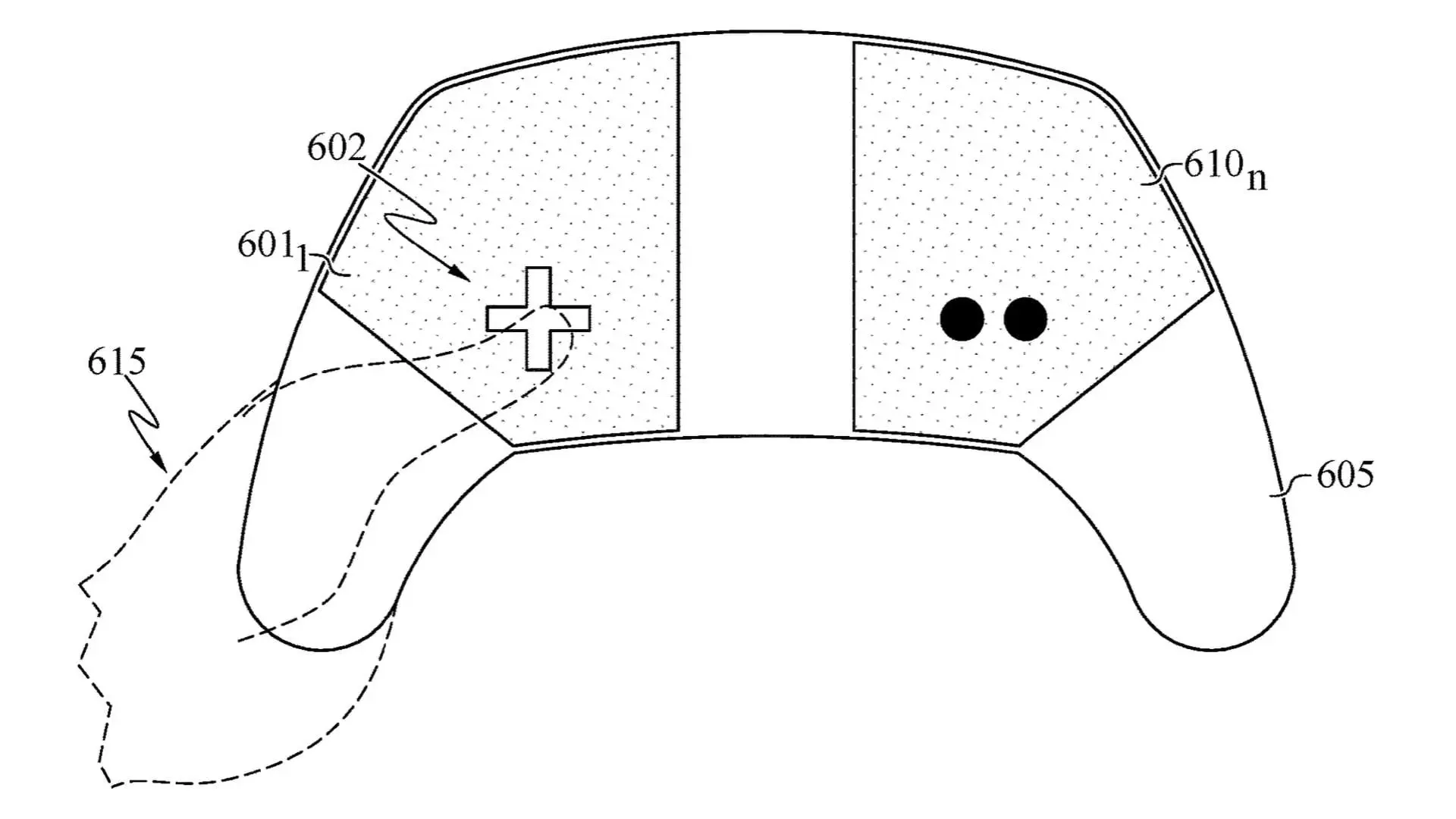
Futuristic touchscreen PlayStation controller concept with customizable virtual buttons displayed on a sleek digital interface

Sony Interactive Entertainment has revealed a striking new vision for the future of gaming hardware. A recently published patent shows a PlayStation controller built around a large touchscreen interface, allowing players to decide where buttons appear and how they function. The concept challenges decades of fixed controller design and signals Sony’s willingness to rethink how gamers interact with consoles.

At a time when gaming hardware innovation often focuses on incremental upgrades, Sony’s touchscreen controller patent stands out as a fundamental redesign. It pits the traditional, rigid button layout against a flexible, player-driven interface that could redefine accessibility, comfort, and customization.


Breaking Away from Fixed Controller Layouts

For years, PlayStation controllers have followed a familiar formula. Physical buttons, analog sticks, triggers, and directional pads occupy fixed positions. This approach delivers reliability and tactile precision, but it assumes that all players have similar hands, abilities, and preferences.

Sony’s patented design challenges that assumption. Instead of permanent buttons, the controller features a touch-sensitive surface covering most of its face. On this screen, players can create, move, resize, or remove virtual buttons based on their needs. The controller becomes a dynamic interface rather than a static tool.

This shift introduces a powerful idea: one controller, infinite layouts. A racing game could display oversized acceleration and braking controls. A role-playing game could prioritize menus and shortcuts. A minimalist game could use only one or two large inputs. The controller adapts to the game—and to the player.


Customization as a Core Feature

Sony’s patent emphasizes personalization. According to the design, players are no longer locked into default layouts defined by hardware engineers. Instead, they gain full control over how inputs appear and behave.

This approach marks a sharp contrast to existing controllers, where customization typically means remapping buttons, not redefining their physical or visual presence. With a touchscreen surface, layouts can change instantly between games or even within the same game.

Such flexibility could reduce hand strain, improve reaction times, and enhance comfort during long play sessions. It also opens the door to game-specific interfaces that feel purpose-built rather than adapted from a universal template.


A Strong Push for Accessibility

Accessibility appears to be a driving force behind Sony’s concept. Fixed button layouts often pose challenges for players with limited mobility, smaller hands, or physical disabilities. A fully customizable touchscreen controller could help bridge that gap.

Players could enlarge frequently used inputs, reduce the number of required buttons, or cluster controls within easy reach. This level of adaptability could make complex games more playable for a wider audience.

Compared to traditional accessibility solutions, which often rely on external devices or specialized controllers, Sony’s concept integrates accessibility directly into mainstream hardware design. That approach could normalize inclusive gaming rather than treating it as a niche feature.


Technology Behind the Touch

Touchscreen controllers are not without challenges. One of the biggest concerns is accuracy. Physical buttons provide immediate tactile feedback, while touch surfaces risk accidental presses when fingers rest on the screen.

Sony addresses this issue in the patent by describing pressure and heat-sensing technology. These sensors aim to distinguish between intentional inputs and passive contact. By combining multiple detection methods, the controller could reduce false inputs and improve reliability.

The design suggests Sony is aware of past failures in touch-based controllers and is actively working to avoid repeating them. While questions remain about real-world performance, the patent shows a thoughtful approach to solving known limitations.


Touch vs Tactile: A Key Debate

Despite its promise, the concept raises an important question: can a touchscreen truly replace physical buttons? Competitive gamers often rely on muscle memory and tactile feedback. For fast-paced shooters or fighting games, even slight input uncertainty can be frustrating.

Sony’s design does not necessarily eliminate physical controls entirely. The patent leaves room for hybrid approaches, combining touch surfaces with traditional triggers or sticks. This suggests the touchscreen could serve as an enhancement rather than a total replacement.

If implemented carefully, the controller could offer the best of both worlds—precision where it matters and flexibility where it helps most.


What This Means for PlayStation’s Future

It is important to note that patents do not guarantee products. Companies often file patents to protect ideas, even if they never reach consumers. However, patents do reveal strategic intent.

This touchscreen controller concept shows that Sony is actively exploring ways to move beyond conventional hardware design. Even if this exact controller never launches, its ideas could influence future PlayStation accessories, accessibility features, or next-generation consoles.

Compared to recent innovations like adaptive triggers and advanced haptics, this patent represents a larger conceptual leap. Those features enhanced existing designs. This one questions the design itself.


Industry Impact and Competitive Landscape

Other gaming companies have experimented with touch input, but rarely as the primary control surface. Sony’s approach goes further by turning the controller into a configurable digital canvas.

If Sony moves forward with this concept, it could pressure competitors to rethink their own controller strategies. Customizable touch-based interfaces could become a new battleground for differentiation, especially as gaming audiences become more diverse.

The idea also aligns with broader trends in technology, where personalization and adaptability increasingly define user experiences.


A Glimpse Into What Comes Next

Sony’s touchscreen PlayStation controller patent offers a compelling glimpse into the future of gaming interfaces. It prioritizes player choice, inclusivity, and adaptability over tradition. While challenges remain, the concept reflects bold thinking at a time when hardware innovation often plays it safe.

Whether this design becomes a consumer product or simply influences future developments, it sends a clear message. Sony is willing to challenge long-standing assumptions about how games should be played.

The controller of tomorrow may no longer dictate how players interact with games. Instead, it may adapt—silently and seamlessly—to the player’s hands, abilities, and imagination.

Meta Faces Massive Patent Lawsuit Over Smart Glasses Technology

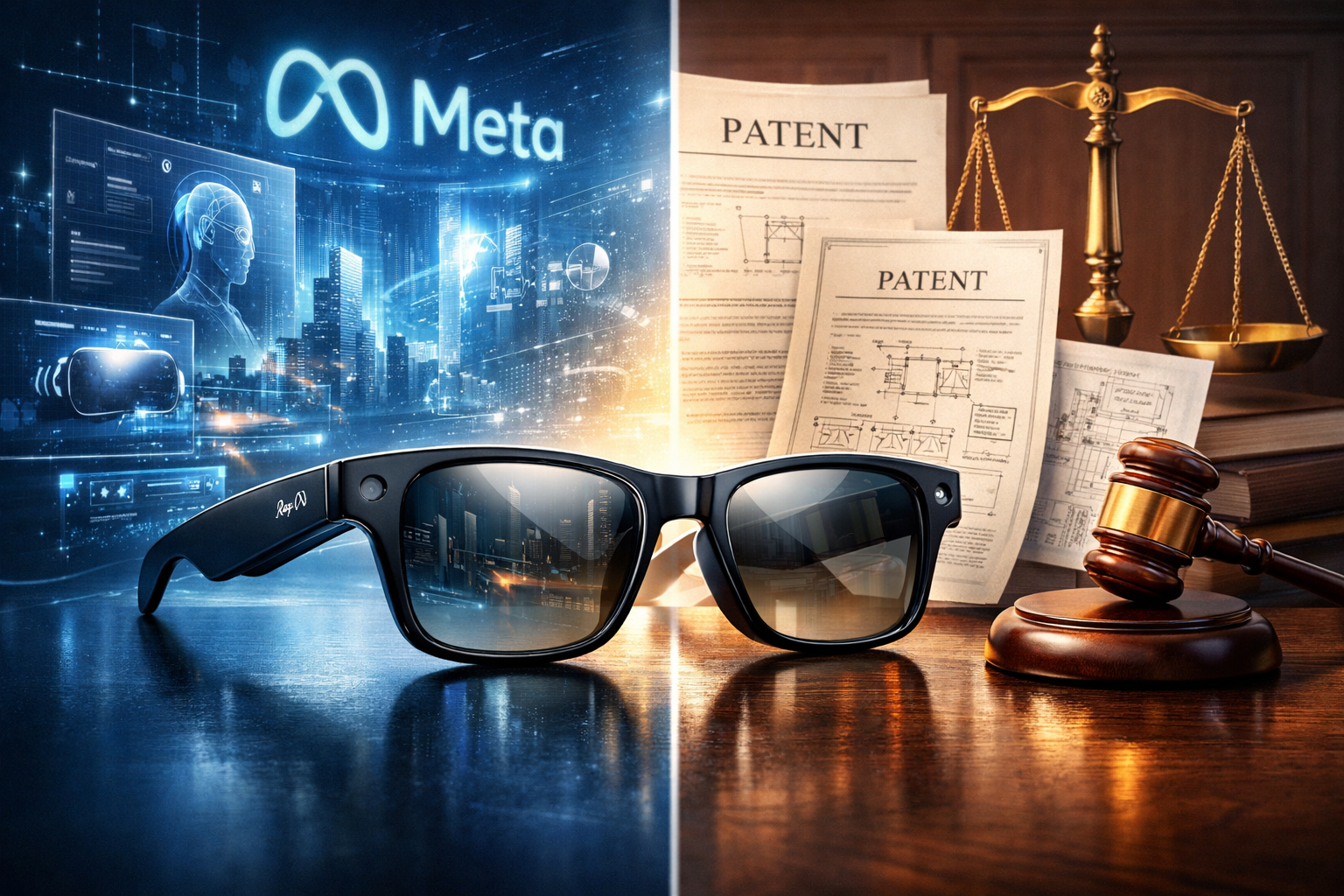
Illustration of smart glasses surrounded by patent documents and legal symbols highlighting Meta’s smart glasses patent dispute.

Meta Platforms Inc. is facing a high-stakes legal challenge that could disrupt its ambitious push into smart glasses and augmented reality. A smaller but highly specialised rival has accused the tech giant of infringing core patents that underpin modern smart eyewear.

The lawsuit, filed in a US federal court in Massachusetts, comes from Solos Technology Ltd., a Cambridge-based wearable technology company. Solos alleges that Meta and its eyewear partner EssilorLuxottica, owner of brands such as Ray-Ban and Oakley, unlawfully used patented technologies in Meta’s Ray-Ban smart glasses.

The complaint seeks billions of dollars in damages and demands an injunction that could block further sales of the accused products in the United States.

A Clash of Scale and Innovation

The dispute places two very different players head-to-head.

Solos is a focused innovator. It has spent more than a decade developing smart-glasses technology and holds patents covering essential systems such as advanced audio beamforming, multimodal sensors, real-time data processing, and sensor fusion. These features allow smart glasses to hear clearly, respond instantly, and interact intelligently with users.

Meta operates at a completely different scale. The company dominates social media and has invested heavily in hardware through its Reality Labs division. Smart glasses play a central role in Meta’s long-term vision of immersive computing, artificial intelligence, and hands-free digital interaction.

This lawsuit challenges whether Meta built its smart glasses independently or borrowed foundational ideas from a smaller rival.

What Solos Is Claiming

According to the lawsuit, Meta’s Ray-Ban smart glasses infringe multiple US patents owned by Solos. These patents cover technologies that are not optional add-ons but essential to how smart glasses function in real-world environments.

Solos argues that Meta and its partners were aware of its technology years before launching competing products. The complaint alleges that Solos showcased its inventions at industry events and private demonstrations, where executives and engineers from major eyewear brands gained first-hand exposure.

The lawsuit also claims that individuals with knowledge of Solos’ proprietary systems later joined Meta, giving the company access to confidential technical insights. Based on these allegations, Solos is accusing Meta of willful infringement, a charge that could significantly increase potential damages if proven in court.

Meta’s Smart Glasses Strategy

Meta entered the smart-glasses market through a partnership with EssilorLuxottica, blending consumer electronics with established fashion eyewear brands. The Ray-Ban Meta glasses combine cameras, microphones, open-ear speakers, and AI-powered features into frames that resemble traditional sunglasses.

The products have gained strong consumer traction and are widely viewed as one of the most successful smart-glasses launches to date. Meta has positioned them as a stepping stone toward fully featured augmented-reality glasses, a market the company believes will define the next computing platform.

Solos, by contrast, has focused on modular, upgrade-friendly designs and enterprise-grade functionality. Its products emphasise adaptability and long-term usability rather than mass-market scale.

The lawsuit highlights the tension between rapid commercialisation and deep-tech originality.

Why This Case Matters

Patent disputes are common in technology. What makes this case unusual is its focus on core operational technologies rather than surface-level features or design elements.

If the court finds that Meta infringed patents covering fundamental smart-glasses functions, the implications could be far-reaching. Meta may be forced to redesign hardware, negotiate costly licensing deals, or temporarily halt sales of existing products.

For EssilorLuxottica, the case introduces unexpected legal risk into a partnership that has otherwise been commercially successful. Investors are already watching closely for signs of financial or strategic fallout.

A Test for Big Tech

The lawsuit underscores a growing trend in the technology sector. Smaller innovators are increasingly willing to challenge large platforms in court, especially when patents protect foundational systems rather than incremental improvements.

Meta’s vast resources give it legal firepower, but its visibility also makes it a prime target. Solos, while smaller, holds a tightly focused intellectual property portfolio that could prove difficult to bypass if the patents hold up under scrutiny.

The case also sends a message to the broader AR and wearable-tech industry. As smart glasses move from novelty to mainstream product, intellectual property battles are likely to intensify.

What Comes Next

The legal process is expected to be lengthy. Early stages will focus on patent validity, infringement analysis, and whether Solos can secure any interim relief. Both sides may also explore settlement or licensing discussions to avoid prolonged uncertainty.

Meta and EssilorLuxottica have not yet issued detailed public responses to the allegations.

Regardless of the outcome, the lawsuit marks a critical moment for the smart-glasses market. It tests how innovation is protected, how partnerships are structured, and how aggressively large technology companies can scale new hardware categories without stepping on existing intellectual property.

A Defining Moment for Smart Glasses

Smart glasses are no longer experimental gadgets. They are emerging as powerful computing tools with direct implications for communication, work, and daily life.

This legal battle will help define who controls the technologies that make them possible.

For Meta, the case threatens momentum in one of its most important future bets. For Solos, it is a fight to defend years of research and engineering.

For the industry, it is a reminder that in the race to shape the next platform, innovation and ownership still matter.

Cube Labs’ Lipovexa Wins U.S. Patent for Metabolic Disease Platform

Lipovexa secures U.S. patent for metabolic disorder treatment platform

Cube Labs S.p.A.’s biotech unit Lipovexa has reached a decisive milestone in metabolic disease research. The U.S. Patent and Trademark Office has granted Lipovexa a new U.S. patent for an advanced therapeutic platform designed to treat metabolic disorders. The development strengthens the company’s scientific credibility and elevates its position in one of the most competitive segments of global healthcare.

The patent protects a novel class of synthetic compounds derived from oleoyl-lysophosphatidylinositol. These molecules are engineered to influence critical metabolic pathways rather than merely suppress symptoms. This strategic shift places Lipovexa in a different category from many existing treatments that focus on downstream effects.

A Fundamental Change in How Metabolic Diseases Are Targeted

Most current therapies for metabolic disorders concentrate on managing outcomes such as high blood sugar or excess weight. Lipovexa’s platform takes a different path. It directly targets the GPR119 receptor, a key metabolic regulator located primarily in the intestine and pancreas.

By activating this receptor, the platform aims to restore glucose balance and metabolic signaling at a foundational level. This approach contrasts sharply with traditional therapies that rely on insulin stimulation or appetite suppression. Lipovexa’s strategy seeks to correct the underlying biochemical imbalance rather than compensate for it.

Early research suggests that GPR119 activation can improve insulin sensitivity and support healthier metabolic responses. This positions Lipovexa’s compounds as potential long-term solutions rather than short-term controls.

What the U.S. Patent Protects

The newly granted patent covers both the composition and therapeutic use of Lipovexa’s synthetic derivatives. It secures exclusive rights to develop and commercialize these molecules for a wide range of metabolic conditions, including:

  • Type 2 diabetes
  • Obesity
  • Metabolic dysfunction-associated liver diseases, including steatohepatitis

The breadth of protection is significant. It allows Lipovexa to explore multiple indications using the same core technology, creating scalability across disease areas.

Securing patent protection in the United States is particularly strategic. The U.S. remains the world’s most influential biotech market. Strong intellectual property rights provide commercial leverage, protect innovation, and attract long-term partners and investors.

Competitive Landscape: A Different Route Than GLP-1 Drugs

The metabolic treatment market is currently dominated by GLP-1-based therapies, which have transformed obesity and diabetes care. These drugs focus on appetite control, insulin secretion, and delayed gastric emptying. While effective, they often bring gastrointestinal side effects and are not suitable for all patients.

Lipovexa’s platform operates through a distinct biological mechanism. By targeting GPR119, it addresses metabolic regulation upstream. This difference could allow Lipovexa’s compounds to complement existing therapies or serve as alternatives for patients who cannot tolerate current options.

The comparison highlights a growing trend in biotech innovation. Instead of improving existing drug classes, companies like Lipovexa are opening new biological pathways that were previously underexplored.

Small Molecules vs. Cell-Based Approaches

Another emerging frontier in metabolic disease treatment involves regenerative and cell-based therapies. These approaches aim to repair or replace dysfunctional metabolic tissue. While promising, they often require complex manufacturing processes, longer development timelines, and stricter regulatory scrutiny.

Lipovexa’s platform relies on small synthetic molecules, which typically offer clearer development pathways and easier scalability. This gives Lipovexa a potential time-to-market advantage. Small-molecule therapies are also easier to distribute globally, especially in cost-sensitive healthcare systems.

The contrast underscores Lipovexa’s pragmatic innovation strategy. It balances scientific ambition with commercial feasibility.

Lipovexa’s Origins and Cube Labs’ Incubation Model

Lipovexa was established as a spin-off within the Cube Labs ecosystem, a life sciences venture builder known for transforming academic research into market-ready companies. Cube Labs retains a majority stake, ensuring strategic oversight and long-term commitment.

This incubation model allows early-stage biotech ventures to access capital, regulatory expertise, and industrial networks. It reduces early-stage risk while accelerating development timelines.

Cube Labs has previously launched multiple ventures across regenerative medicine, inflammation, and advanced therapeutics. Lipovexa now emerges as one of its most strategically positioned assets.

Commercial and Clinical Path Ahead

The U.S. patent marks the beginning of a new phase. Lipovexa must now translate intellectual property into clinical proof. The next steps are expected to include early-phase clinical trials to evaluate safety, dosing, and initial efficacy in humans.

Success at this stage would dramatically increase the platform’s valuation. It would also open doors to strategic partnerships with large pharmaceutical companies seeking novel metabolic assets.

Investors remain highly focused on metabolic disorders. Rising global prevalence, combined with long-term treatment needs, has made the sector one of the most attractive in biotech. A differentiated mechanism like GPR119 activation fits well into this investment narrative.

Strategic Value of U.S. Patent Protection

Beyond science, the patent strengthens Lipovexa’s negotiating power. It creates clear barriers to entry for competitors and enhances licensing opportunities. Pharmaceutical companies increasingly seek externally developed platforms to replenish pipelines. Lipovexa’s protected technology could become a valuable collaboration target.

Patent protection also supports long-term development planning. It allows the company to invest confidently in clinical trials, knowing its core innovation remains shielded.

Global Health Context

Metabolic disorders represent one of the largest unmet medical needs worldwide. Diabetes and obesity rates continue to rise across developed and emerging economies. Liver diseases linked to metabolic dysfunction are becoming more common and more severe.

Healthcare systems face mounting pressure to deliver treatments that are both effective and sustainable. Innovations that address root causes rather than symptoms could reshape long-term care strategies.

Lipovexa’s platform enters this environment with a clear ambition: change how metabolic diseases are treated at their core.

A Turning Point for Lipovexa

The U.S. patent is more than a legal achievement. It is a signal. It confirms that Lipovexa’s science meets global standards of novelty and utility. It validates Cube Labs’ incubation strategy. And it places Lipovexa firmly on the map of next-generation metabolic therapy developers.

If clinical results align with early promise, Lipovexa could emerge as a meaningful disruptor in a crowded market. The journey ahead is complex, but the foundation is now firmly protected.

Lady Gaga Scores Major Court Victory in Explosive ‘Mayhem’ Trademark Dispute

Lady Gaga celebrates courtroom victory after judge rules in her favor in the Mayhem trademark dispute.

Global pop icon Lady Gaga has secured a powerful legal win in a closely watched trademark dispute over the use of the word Mayhem. A federal judge has ruled in her favor, allowing the superstar to continue selling Mayhem-branded merchandise while the lawsuit moves ahead.

The decision delivers a decisive early victory for Gaga and reinforces strong legal protections for artistic expression. It also sends a clear message to brand owners and creators navigating the crowded world of trademarks and creative identity.

The Dispute That Sparked the Legal Storm

The case began in early 2025 when Lost International, a California-based surfboard and lifestyle company, sued Lady Gaga in federal court. The company claimed it has used the Mayhem name for decades on surfboards, clothing, and accessories.

Lost argued that Gaga’s use of Mayhem for her album, tour, and merchandise violated its trademark rights. According to the lawsuit, the pop star’s branding could confuse consumers and dilute the surf brand’s identity.

The company sought aggressive remedies. It asked the court to immediately block Gaga from selling Mayhem merchandise. It also demanded damages reportedly reaching $100 million.

Gaga Pushes Back With a Strong Defense

Lady Gaga’s legal team moved quickly and forcefully. They argued that “Mayhem” is a common word used across industries and cannot be monopolized by a single company.

More importantly, they stressed that Mayhem is the title of Gaga’s album and a central theme of her artistic era. The branding, they said, represents creative expression, not an attempt to compete with or imitate a surf brand.

Her lawyers also emphasized consumer reality. Fans buying merchandise at concerts or from official Gaga channels are not looking for surfboards. There is no reasonable risk, they argued, that fans would assume a connection between Gaga and a niche surf company.

Judge Delivers a Clear Ruling

U.S. District Judge Fernando M. Olguin agreed with Gaga’s arguments.

In a sharply worded order, the judge denied Lost International’s request for a preliminary injunction. He ruled that Gaga’s use of Mayhem is artistically relevant and not explicitly misleading.

The judge explained that trademark law does not apply in cases where creative expression outweighs commercial confusion. Because Gaga’s branding is directly tied to her music and tour, and not to surf products, the claim failed at this early stage.

The court concluded that Lost International had not shown a likelihood of success under trademark law. As a result, Gaga remains free to continue her merchandise sales.

Why the Ruling Matters

This decision carries weight far beyond this single dispute.

Courts have long struggled to balance trademark protection with freedom of expression. This ruling reinforces the idea that artists are allowed to name and brand their work, even if the same word exists elsewhere in commerce.

Legal experts say the case highlights an important standard: context matters. A word used in music, performance, or storytelling receives broader protection than the same word used purely as a commercial brand.

The ruling also confirms that famous artists are not automatically liable for trademark infringement simply because their reach is massive.

Immediate Impact for Lady Gaga

The ruling delivers an immediate commercial boost for Gaga.

She can continue selling Mayhem merchandise across her global tour, online store, and promotional channels. That includes apparel, accessories, and collectibles tied to her album and live performances.

The timing is critical. The Mayhem Ball Tour has generated massive demand, with merchandise sales playing a major role in tour revenue. A court-ordered halt could have caused serious disruption.

Instead, Gaga moves forward without restrictions.

Lost International’s Position

While the ruling favors Gaga, the lawsuit itself remains active.

Lost International acknowledged the court’s decision but made clear it is not backing down. The company maintains that its trademark rights remain valid and says it will continue to defend its brand.

Legal observers note that Lost still faces a steep uphill battle. The judge’s reasoning suggests that proving consumer confusion will be difficult, especially given the vastly different markets involved.

A Broader Message to Creative Industries

The case highlights a growing legal trend.

As artists, influencers, and brands fight for attention, clashes over names and slogans are becoming more common. Common words now appear across music, fashion, sports, and tech.

This ruling sends a strong signal. Courts will not automatically side with earlier trademark holders when creative expression is at stake. They will examine how the word is used, who the audience is, and whether confusion is real or theoretical.

For musicians and entertainers, the decision is reassuring. It confirms that branding tied to art and performance enjoys meaningful legal protection.

What Comes Next

The legal battle is not finished.

Lost International may pursue additional motions, gather more evidence, or attempt to push the case toward trial. Gaga’s team may seek to dismiss the lawsuit entirely.

For now, however, the balance of power clearly favors the pop star.

Lady Gaga has cleared a major legal hurdle. Her Mayhem era continues at full force. And the ruling stands as a powerful reminder that creativity still carries weight in the courtroom.

Tesla’s Secret Weapon: The Invisible Starlink Shield


Tesla is rewriting the rules of connectivity. A bombshell patent filing reveals a future where dead zones vanish. Elon Musk is merging his two greatest empires: Tesla and SpaceX. The goal is simple. Total global dominance through satellite-integrated vehicles.
For years, drivers faced a digital wall. Metal car roofs act like cages. They block signals. They kill high-speed data. Tesla’s new patent, published on December 4, 2025, shatters that wall. It introduces a revolutionary “Radio Frequency Transparent” roof. This is not just a sunroof. It is a gateway to the stars.
The Death of the Dead Zone
Connectivity is the lifeblood of the modern electric vehicle. Tesla relies on data. It needs data for Autopilot. It needs data for over-the-air updates. It needs data for the massive screens inside the cabin. Today, that data comes from cellular towers.
But towers have limits. They fail in mountains. They disappear in deserts. They collapse during natural disasters. This is a fatal flaw for a self-driving future. A Robotaxi cannot lose its mind in a tunnel or a rural valley. It must stay awake. It must stay connected.
Tesla’s solution is the Starlink antenna. By burying these receivers directly into the car’s roof, Tesla creates a permanent link to the SpaceX constellation. This is “always-on” internet. It works in the middle of a hurricane. It works in the heart of the Sahara.
The Engineering Miracle: Hidden in Plain Sight
Traditional satellite dishes are ugly. They are bulky. They ruin aerodynamics. Tesla refuses to sacrifice style. The new patent describes a multi-layered sandwich of high-tech polymers.
Engineers are using Polycarbonate (PC) and Acrylonitrile Styrene Acrylate (ASA). These are not standard plastics. These materials offer the strength of steel. They offer the clarity of glass. Crucially, they allow radio waves to pass through like ghosts.
The antenna sits beneath this skin. It is invisible to the eye. It is perfectly aerodynamic. It adds zero drag. This engineering feat allows Tesla to maintain its sleek, futuristic silhouette while housing the most powerful communication tool on Earth.
Powering the Robotaxi Revolution
Why does this matter now? The answer is autonomy. Tesla is betting everything on the Robotaxi. These autonomous fleets require massive bandwidth. They need real-time HD maps. They need constant communication with a central command.
A cellular glitch could paralyze an autonomous fleet. Starlink removes that risk. It provides a redundant, high-speed backbone. If the 5G network fails, the car switches to space. This seamless handoff ensures safety. It ensures reliability. It makes Tesla the only car company capable of operating truly anywhere.
An Entertainment Powerhouse
The benefits aren’t just for the computers. They are for the humans inside. As cars become mobile lounges, passengers want more. They want 4K streaming. They want lag-free gaming. They want high-fidelity video calls.
Current LTE and 5G connections often throttle during peak hours. Starlink does not. With a direct-to-satellite link, every Tesla becomes a rolling high-speed office. It becomes a theater on wheels. This transforms the commute. It turns a boring drive into a productive or entertaining experience. This is a massive competitive edge. Other manufacturers are tethered to the ground. Tesla is tethered to the heavens.
The Musk Synergy: A Vertical Empire
No other automaker can do this. Ford cannot build its own satellite network. Toyota cannot launch rockets. Elon Musk owns the infrastructure of the future.
SpaceX has already launched thousands of Starlink satellites. They are already testing “Direct-to-Cell” technology. The “STARLINK MOBILE” trademark is already active. This patent is the final piece of the puzzle. It creates a closed-loop ecosystem.
Tesla builds the car. SpaceX provides the internet. The customer gets an unparalleled experience. The revenue stays within the Musk empire. It is a masterstroke of vertical integration. It creates a barrier to entry that legacy carmakers cannot overcome.
Breaking the Regulatory Chains
Tesla currently faces intense scrutiny. Regulators in California are questioning “Full Self-Driving” claims. Market competition is fierce. Sales have fluctuated. Tesla needs a “wow” factor.
This satellite integration is that factor. It moves the goalposts. It shifts the conversation from battery range to digital capability. In the 20th century, horsepower was king. In the 21st century, data is the crown. Tesla is hoarding that data.
The Global Impact
This technology has massive implications for global safety. Imagine a Tesla in a remote area during a wildfire. The driver needs evacuation routes. The cell towers are burned out. The Tesla remains online. It receives emergency broadcasts. It guides the family to safety via satellite.
Imagine a scientist in the Arctic. Imagine a doctor in a developing nation. This technology brings the world closer. It democratizes information. It proves that the car is no longer just a mode of transport. It is a tool for survival and connection.
The Competition is Scrambling
Rivian and Lucid are watching. They are trying to catch up on battery tech. But they are lightyears behind on connectivity. While they negotiate with telecom giants, Tesla is building its own sky.
The industry is at a crossroads. Some companies will remain “dumb” cars with big batteries. Tesla is becoming a “smart” node in a global mesh network. The gap is widening. The “Invisible Starlink Shield” is more than a patent. It is a declaration of war against the status quo.
Looking Ahead: 2026 and Beyond
Production of the RF-transparent roof could begin soon. Reports suggest the Cybertruck or the upcoming “Model 2” might be the first to feature this tech. If successful, it will become standard across the fleet.
The world is changing. The sky is no longer the limit; it is the source. Tesla’s patent is a bold step into the unknown. It promises a world where you are never lost. A world where you are never offline. A world where your car is your most powerful connection to the rest of humanity.
Elon Musk promised the future. With this patent, he is delivering it—one satellite beam at a time. The era of the truly connected car has arrived.

Godavari Biorefineries Secures US Patent for Cancer-Fighting Compounds; Stock Soars

Godavari Biorefineries Limited (GBL) has achieved a major scientific and strategic breakthrough. The company has secured a United States patent for a new class of cancer-fighting compounds designed to inhibit unregulated cell growth. These compounds show strong potential against cancer stem cells, a highly resistant category of cancer-driving cells.

The announcement sparked immediate excitement in the market. GBL’s stock surged nearly 17–18% in early trade as investors responded to what could become a transformative development for the company and for cancer research in India. The rally underscores growing investor confidence in the company’s expanding biotechnology capabilities.


A closer look at the patented science

The patented invention, titled “Compounds for the Inhibition of Unregulated Cell Growth,” gives GBL exclusive rights in the United States to produce, license, and commercialize the molecules.

According to the patent filing, the compounds demonstrate targeted action against cancer stem cells (CSCs). This is a small but powerful subset of tumour cells that fuel the growth, recurrence, and spread of cancer. CSCs are often responsible for treatment resistance, which is why many cancers return even after chemotherapy or radiation.

The patent includes compounds listed across multiple novel chemical formulae. Laboratory studies indicate promising results against breast and prostate cancer cell lines. These two cancer types remain among the most prevalent globally, making the discovery especially significant.

What makes the patented approach compelling is its precision. Traditional anti-cancer treatments target rapidly dividing cells, but they often miss slow-dividing or dormant CSCs. By attacking the core drivers of tumour regeneration, these molecules could one day lead to therapies that significantly reduce relapse rates.


A growing global footprint in cancer innovation

The US patent builds on GBL’s accelerating global presence in advanced cancer research. Earlier this year, the company secured a European patent for a similar anti-cancer molecule. The validation extended across Spain, the United Kingdom, and several European Union member nations, boosting the company’s intellectual-property coverage across major regulatory regions.

The company also received a Chinese patent earlier this year for another breakthrough anti-cancer compound known for inhibiting cancer cell proliferation and targeting CSCs. Preclinical research highlighted its strong activity against breast and prostate cancer lines, adding another high-value asset to its growing research portfolio.

To support its expansion, GBL has also established a dedicated subsidiary in the United States. This move positions the company to engage directly with the world’s largest pharmaceutical market and collaborate with global research institutions and biotech partners.


Why this matters: opportunities on the horizon

A breakthrough for Indian bioresearch

Securing a US patent in the oncology domain is a rare achievement for an Indian company. It signals that GBL is not just a leader in the biorefinery and biofuel sectors but is evolving into a serious contender in medical biotechnology.

Promising pathway toward targeted therapies

If future research validates the patented molecules, they could form the foundation for next-generation cancer drugs that destroy tumour-regenerating cells. Targeting CSCs represents one of the most ambitious goals in cancer science. Successful therapies in this space could dramatically reshape cancer treatment outcomes.

Attractive for global collaborations

The company’s expanding patent portfolio across three major regions — the US, Europe, and China — places it in a powerful position. Pharmaceutical giants often seek partnerships with early-stage innovators who hold strong patents. GBL could attract licensing deals, co-development agreements, or investment partnerships as its molecules advance.

Market confidence and investor traction

The sharp rise in the stock price reflects more than short-term excitement. Investors see growing scientific depth, diversified business potential, and long-term value creation opportunities driven by high-impact IP.


The challenges ahead: long journey to the clinic

Despite the breakthrough, the patented molecules are still in early-stage development. A patent protects the innovation, but it does not guarantee clinical success.

To become approved cancer therapies, the compounds must pass through multiple stages:

  • Preclinical safety testing
  • Toxicology assessments
  • Pharmacokinetics and pharmacodynamics studies
  • Phase I, II, and III human trials
  • Regulatory approvals in each market

Oncology drug development is expensive and time-intensive. Success rates are low, and many promising compounds fail due to toxicity or lack of efficacy. GBL may require strategic partnerships, research collaborations, or significant investment to advance the molecules through clinical trials.


A milestone moment — and the beginning of a new chapter

Godavari Biorefineries’ US patent win marks a bold moment for Indian innovation. The company is rapidly expanding beyond its traditional identity as a biorefinery pioneer. With patents across the world’s largest markets, GBL is positioning itself as a future player in global oncology research.

If the science progresses well, this breakthrough could transform not only the company’s trajectory but also contribute to a new generation of targeted cancer therapies. The recognition, the rising investor confidence, and the global IP strategy together point to a powerful new chapter in India’s biotech evolution.

American Clean Energy Faces Growing Patent Pressure from Foreign Rivals

The United States clean energy industry is feeling the heat from foreign patent competition, as global innovation accelerates in solar, wind, and battery technologies. A new report by OilPrice.com warns that foreign firms, particularly from China, are reshaping the intellectual property (IP) landscape and squeezing U.S. players out of key technology domains.


Growth Slows Across Renewable Sectors

U.S. clean energy capacity is projected to grow only 7 percent in 2025 — the weakest rate in over a decade. Wind power is expected to expand just 1.8 percent, its slowest growth since 2010. Analysts attribute this slowdown to a mix of policy delays, permitting hurdles, and competitive patent claims that make domestic expansion more complex.

Offshore wind projects have faced funding cuts and regulatory freezes, further eroding investor confidence in American renewables.


Foreign Patents Redefining Innovation Boundaries

The article highlights a surge in patent filings by non-U.S. firms. Chinese, European, and Canadian companies now dominate patent registries in core clean energy technologies such as solar cells, energy storage, and grid efficiency systems.

This trend complicates efforts by U.S. companies to secure exclusive rights or defend against infringement suits. Many of the latest clean energy innovations are born outside the United States, where U.S. patent examiners struggle to verify prior art or challenge overlapping claims.


Ongoing Legal Battles Intensify

Recent court cases illustrate the deepening patent conflict.

  • Tigo Energy and SMA Solar Technology reached a settlement over rapid shutdown systems for solar installations.
  • Maxeon Solar Technologies has sued Canadian Solar and other firms for allegedly infringing its TOPCon solar cell patents.

Such disputes underscore the rising legal costs and strategic risks facing American renewable energy manufacturers.


China’s Lead in Clean Energy Technology

China’s rapid clean energy growth adds pressure on U.S. companies. The country has not only scaled up solar and wind manufacturing but also unveiled the world’s first operational thorium reactor — a symbol of its advanced energy ambitions.

Chinese firms enjoy state subsidies, integrated supply chains, and broad patent portfolios that strengthen their global influence. Industry experts warn that this combination could limit U.S. access to critical technologies and components.


Patent System Under Strain

The U.S. Patent and Trademark Office (USPTO) faces increasing difficulty handling foreign-dominated innovation landscapes. Examiners often lack access to non-U.S. databases and prior art in languages like Chinese or Korean.

Legal experts suggest American firms must adapt by narrowing patent claims, improving defensive IP strategies, and pursuing international licensing or joint ventures.


Outlook: Balancing Innovation and Protection

As the U.S. races to meet its climate and energy goals, intellectual property strategy could become a key battleground. Strengthening domestic R&D, improving patent transparency, and streamlining approval processes are now critical to keeping pace with foreign competitors.

Analysts believe that without decisive action, the United States risks losing not only technological leadership but also control over the future of global clean energy.

Apple Explores Gesture Recognition with Antenna-Based Object Detection in New Patent Application

The United States Patent and Trademark Office (USPTO) published a new patent application from Apple Inc. that unveils a potential leap in gesture recognition and object interaction technology for future electronic devices. The patent, titled “Electronic Devices with Antennas and VSWR Sensors for Object Detection,” outlines a system that utilizes wireless circuitry, multiple antennas, and Voltage Standing Wave Ratio (VSWR) sensors to detect the position and movement of external objects such as a user’s finger or an Apple Pencil.

The technology, according to the patent documentation, could enable Apple devices to sense the angular location and distance of objects in their vicinity, paving the way for advanced gesture control, adaptive signal direction, and more responsive device interactions — all without requiring traditional cameras or touchscreens.

The Role of VSWR Sensors in Object Detection

VSWR is a measurement typically used in antenna systems to determine impedance mismatches. In Apple’s proposed design, however, VSWR readings are repurposed for spatial sensing. The system measures how signals reflect off nearby objects, with changes in the reflected wave patterns offering clues about the object’s distance and angle relative to the device’s antennas.

By deploying multiple antennas at strategic locations on a device, each equipped with VSWR sensors, the device’s onboard processors can triangulate the position of external elements. For instance, if a user’s finger approaches the side of a tablet or an Apple Pencil hovers above a display, the system can detect this and respond appropriately.

Enhanced Communication and Gesture Recognition

One of the key innovations described in the patent is the device’s ability to adapt its wireless communication dynamically based on the location of nearby objects. If a user’s hand is found to be obstructing the optimal path for signal transmission, the device can automatically adjust beamforming directions or signal power to maintain performance.

More notably, the system opens new possibilities for gesture-based controls. Without relying on cameras or external sensors, a device could recognize finger movements or stylus gestures in the air, offering new ways to navigate interfaces, trigger shortcuts, or interact with content.

Apple suggests that this technology could be integrated into a range of future products, including smartphones, tablets, wearables, and even smart glasses or other head-mounted displays.

Potential Use Cases

The application hints at a number of forward-looking applications for the technology, including:

  • Air-based gestures: Users could control volume, scroll through documents, or launch applications with mid-air swipes or circular motions near the device.
  • Smart Pencil tracking: Apple Pencil movements could be detected even when not in contact with a screen, improving handwriting and drawing precision or enabling 3D input.
  • Adaptive signal optimization: Devices could identify hand positions during use and redirect antennas for better network or accessory connections.

Future Implications

This patent aligns with Apple’s growing interest in spatial computing and non-contact interaction technologies. With products like the Vision Pro and advancements in LiDAR and ultra-wideband (UWB) sensors, Apple continues to push the envelope in how users interact with digital content and hardware.

While not all patents lead directly to commercial products, this filing reinforces Apple’s direction toward intuitive, touch-free user interfaces. It could ultimately influence the next generation of iPads, iPhones, and wearables, further blurring the line between the physical and digital worlds.

As with many of Apple’s patent applications, the timing and implementation of this technology remain uncertain. However, its publication offers a clear glimpse into the company’s ambitions for smarter, more context-aware devices that respond seamlessly to their users’ presence and intent.

Nobel Prize Winners Convince Court to Revive CRISPR Patent Dispute

In a significant legal development with profound implications for the future of genetic engineering, a U.S. federal appeals court has agreed to revisit a high-stakes patent battle over CRISPR-Cas9 gene-editing technology. This decision follows a petition spearheaded by Nobel Prize-winning scientists Jennifer Doudna and Emmanuelle Charpentier, who are seeking to reclaim intellectual property rights over one of the most groundbreaking discoveries in modern biology.

The CRISPR Breakthrough

CRISPR-Cas9, a revolutionary tool that enables precise editing of DNA, has transformed the field of genetics since its development in the early 2010s. The technology allows scientists to alter genes with unprecedented ease and accuracy, offering promise in treating genetic diseases, improving crops, and even combating climate change. In 2020, Doudna and Charpentier were awarded the Nobel Prize in Chemistry for their pioneering work on CRISPR.

A Complex Legal Landscape

The CRISPR patent battle has pitted the University of California, Berkeley—where Doudna conducted much of her research—against the Broad Institute of MIT and Harvard. In 2022, the U.S. Patent and Trademark Office (USPTO) ruled in favor of the Broad Institute, recognizing its claim over the use of CRISPR in eukaryotic cells, including human cells.

UC Berkeley had earlier filed for the foundational CRISPR patent, but the Broad Institute’s expedited filing and specific focus on eukaryotic applications earned it a separate, and so far, legally upheld claim. The dispute centers on whether the Broad’s innovations were obvious extensions of the original CRISPR work or merited independent patent protection.

The Revival of the Case

In a rare move, the U.S. Court of Appeals for the Federal Circuit has agreed to review the previous ruling, citing newly presented arguments and scientific evidence by the UC Berkeley team and their legal representatives. Doudna and her colleagues argue that the Broad Institute’s patents should be invalidated on the grounds that the underlying concept of CRISPR in eukaryotic cells was an “obvious” step from their foundational research.

“The decision to revisit the case acknowledges the evolving understanding of CRISPR’s development and the need to fairly assign credit for its invention,” said a UC Berkeley spokesperson.

Legal analysts believe that the court’s decision could reshape the landscape of biotechnology patents. “This is not just about who owns CRISPR,” said Lisa Morgan, a biotech patent attorney in Washington. “It’s about how intellectual property is awarded in rapidly advancing scientific fields.”

Scientific and Commercial Stakes

The implications of the patent dispute are enormous. CRISPR-based therapies are currently in clinical trials for conditions such as sickle cell anemia, cancer, and blindness. With billions of dollars in potential revenue at stake, the ownership of key CRISPR patents determines who can license the technology and at what cost.

The legal battle has also sparked concern within the scientific community over how intellectual property law intersects with collaborative research and open science. Many researchers argue that patent disputes could stifle innovation and slow the development of life-saving treatments.

What’s Next?

The appeals court is expected to hear oral arguments later this year, with a decision anticipated in early 2026. Until then, the scientific community, biotech firms, and investors will be closely watching the proceedings.

As the legal saga unfolds, the core of the dispute remains a fundamental question about innovation in science: Who truly owns a discovery when multiple researchers contribute to a single transformative breakthrough?