Vizag Researcher Patents Eco-Friendly Bioplastic from Dairy Waste

A researcher from GITAM (Deemed to be) University, Visakhapatnam, has received a patent for developing an eco-friendly bioplastic made from dairy industry waste. The innovation promises a sustainable alternative to single-use plastic.

Dr. Rasheeda Khanam, a faculty member at the university, used ghee residue to create the new material. The residue, often discarded as waste, became the main raw material in her experiment. She combined it with natural additives like glycerol, beeswax, chitin, and zein protein to strengthen the product and improve water resistance.

The resulting bioplastic is biodegradable, non-toxic, and safe for food contact. It dissolves in water within 24 hours and decomposes in soil in just 20 to 30 days. Unlike conventional plastics, it leaves no harmful traces in the environment.

The product also resembles hydroxypropyl methylcellulose in structure. Once discarded, it can be converted into compost and used as fertilizer. The absence of synthetic chemicals makes it safer for both consumers and the environment. Interestingly, it contains phenolic compounds that act as natural preservatives for food items.

Dr. Rasheeda is currently testing the bioplastic for packaging dry foods like grains. She also plans to expand its applications to seafood and other commercial goods. Scaling up production is the next step to bring the innovation into the market.

Experts say the development marks a significant step in India’s fight against plastic pollution. By converting dairy waste into useful material, the project also supports waste management and circular economy initiatives.

The patent adds to India’s growing list of eco-friendly packaging solutions. Other research groups in the country have explored cow dung, agricultural waste, fungi, and seafood waste to produce biodegradable plastics. The Vizag project adds dairy waste to this list, offering yet another path toward sustainability.

With large-scale adoption, such innovations could reduce the dependency on petroleum-based plastics and pave the way for greener alternatives.


Modi Urges India to Lead Semiconductor Patents and Global Chip Market

Prime Minister Narendra Modi has called on India to dominate the semiconductor industry through innovation and strong patent portfolios. He spoke at Semicon India 2025 in New Delhi, where he unveiled the country’s first indigenous 32-bit chip.

Modi described semiconductors as the “digital diamonds of the 21st century”. He stressed that India should not only design chips but also secure patents to strengthen its global position. He said, “We must aim for chips designed and patented in India, trusted by the world.”

Chips to Enter Market by 2025 End

The Prime Minister reaffirmed his Independence Day announcement that Made-in-India semiconductor chips will be available in the market by the end of 2025. This marks a key step towards India’s goal of becoming a full-stack semiconductor hub.

Global Market Opportunity

Modi noted that the global semiconductor market is projected to touch $1 trillion in the coming years. He asserted that India is positioned to command a major share of this market by combining design strength, manufacturing capacity, and patent protection.

Semicon 2.0 Vision

Under the Semicon 2.0 program, India is targeting at least 5% of global semiconductor production by 2030. Multiple chip fabrication and assembly units are under development with strong government incentives. Industry projects worth billions of dollars are already under evaluation.

Partnerships and Innovation

India is also forging partnerships with global technology leaders, including IBM, AMD, Micron, and Lam Research. These collaborations focus on research, design, and training. Academic institutions like IITs and IISc are playing a key role in nurturing talent for this sector.

The Road Ahead

The launch of the indigenous Vikram 32-bit processor signals the start of a new era in India’s technology journey. Modi’s call to “patent chips, not just produce them” highlights a strategy that combines intellectual property leadership with manufacturing strength.

Experts believe this approach can help India reduce import dependence, attract foreign investment, and build trust as a global semiconductor hub.

First Solar Accuses Waaree of Infringing TOPCon Patents

The solar industry faces another patent clash. U.S. solar giant First Solar has accused Waaree Energies, India’s biggest module exporter, of infringing patents linked to TOPCon technology.

The American firm issued a warning letter to Waaree. It claims that Waaree’s TOPCon (Tunnel Oxide Passivated Contact) solar cells violate two of its U.S. patents. First Solar asked Waaree to stop production or obtain a license. If not, it may file a lawsuit in the United States.

Why TOPCon is Critical

TOPCon is the fastest-growing solar cell technology. It reduces power loss and increases panel efficiency. Many manufacturers, including LONGi, JinkoSolar, and Trina, are scaling production.

First Solar entered the high-efficiency segment in 2013 after acquiring TetraSun. That deal gave it a strong patent base. The company is now using those rights to challenge rivals.

Waaree’s Stakes

Waaree has export orders worth about ₹30,000 crore. A majority of these shipments are headed for the U.S. Any restriction could hurt deliveries and margins.

The company also faces a separate case. In February 2025, JinkoSolar filed a lawsuit in Texas. The case alleges Waaree copied its n-type TOPCon design, protected under U.S. Patent No. 11,824,136 B2.

Industry-Wide Disputes

Patent fights around TOPCon are spreading fast. First Solar has already sued JinkoSolar in Delaware over a different patent.

Other players, such as Canadian Solar and LONGi, have also been drawn into disputes. Analysts say the trend shows how critical intellectual property has become for solar growth.

What’s Next

Waaree has not issued an official response to First Solar’s claims. Industry watchers expect talks on licensing before a court battle begins.

The outcome could reshape how Indian firms compete in the U.S. solar market. It may also decide how patents influence the next wave of renewable energy expansion.

Intel Files Patent for “Software Defined Supercore” to Boost CPU Performance

Intel has filed a new patent that outlines a Software Defined Supercore (SDC), a concept designed to improve CPU performance without increasing frequency or voltage. The idea focuses on enhancing single-threaded workloads, an area still critical for many applications.

How the Technology Works

The patent describes a method to fuse two or more CPU cores into a virtual supercore. Instead of running a program on one core, the processor can break a single thread into smaller instruction blocks. Each block is then executed in parallel across adjacent cores.

To ensure accuracy, instructions are retired in the original program order. This design keeps the output consistent while boosting instructions per clock (IPC). You can read the full details of the filing on Justia Patents.

Benefits of the Approach

The Software Defined Supercore offers several advantages:

  • Higher single-thread performance without pushing clock speeds.
  • Better performance per watt, since it avoids power-hungry boosts.
  • Dynamic adaptability, allowing CPUs to switch between standard and fused modes based on workload.

This approach could help Intel compete in workloads where raw single-thread power is still crucial, such as gaming, engineering tools, and some AI tasks.

Challenges and Overhead

The method is not without trade-offs. The patent notes that some instructions, especially memory operations, must be replicated across cores. This replication creates an overhead of about 25–40%, reducing the net efficiency gains. However, Intel suggests that the parallel boost can outweigh this cost in most cases.

Broader Context

This patent aligns with Intel’s recent push toward software-defined silicon (SDSi). In its Xeon lineup, Intel has already introduced features that allow customers to unlock additional capabilities through software licensing. More on SDSi can be found on Phoronix.

The move also follows Intel’s trend of integrating on-demand accelerators into processors for AI and networking. By combining traditional cores in a software-defined way, Intel expands this strategy into general-purpose computing.

Why It Matters

The Software Defined Supercore represents a major step in CPU design philosophy. Instead of relying solely on hardware improvements, Intel aims to use software orchestration to maximize existing silicon.

If successful, this approach could redefine how processors handle demanding workloads and improve efficiency for industries that still depend on strong single-thread performance.

Next-Gen Watch Band Patent Promises Precision Fit and Enhanced Wearable Comfort

Apple

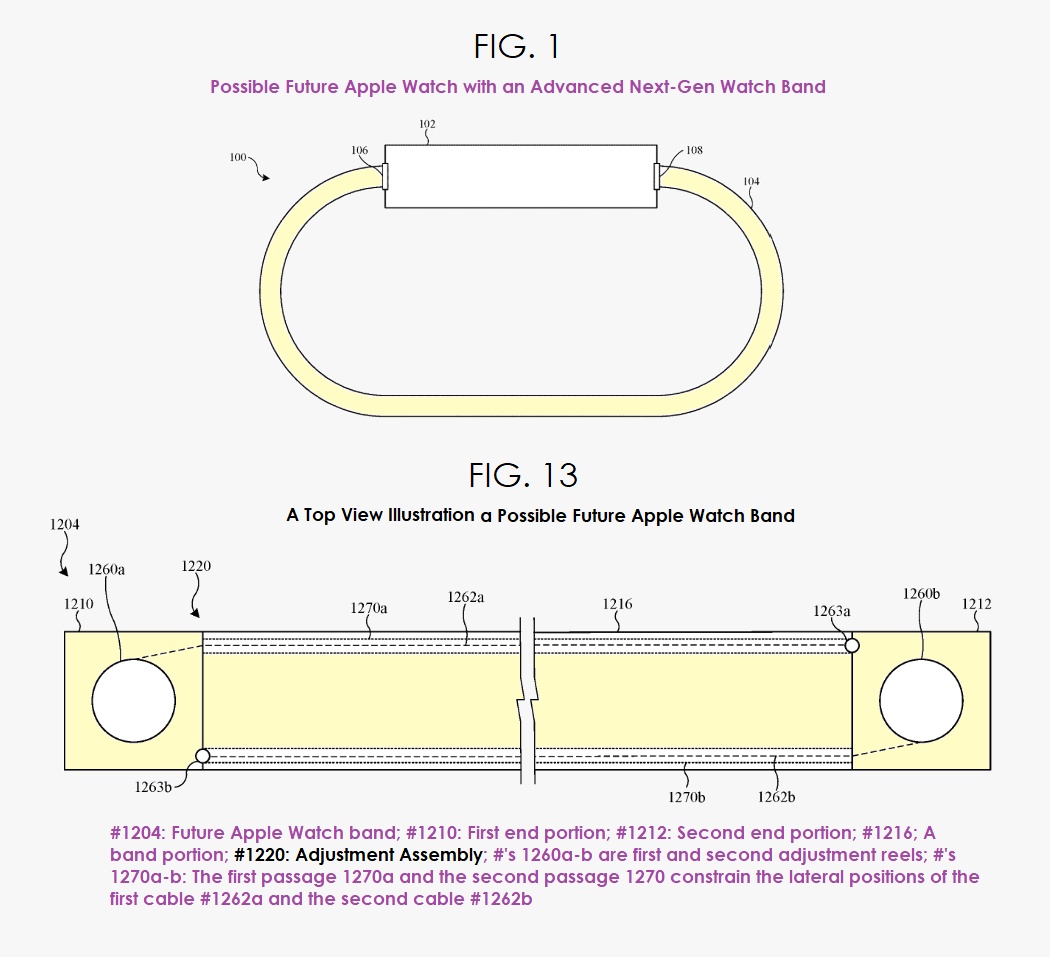
Apple has taken a significant step toward improving the Apple Watch experience with a newly published patent revealing a next-generation watch band designed to deliver a precision fit. This innovation targets better comfort, improved sensor accuracy, and enhanced user experience, particularly for active users.

Dynamic Fit Adjustment Technology

The patent, titled *“Dynamic Fit Adjustment for Wearable Electronic Devices,”* describes a watch band capable of automatically adjusting its size in response to the wearer’s wrist movements and changing conditions. Unlike traditional bands that rely on fixed holes or manual tightening, this design incorporates internal components that adapt in real time.

This means the band can tighten or loosen itself subtly to maintain an optimal fit throughout the day, whether the wearer is exercising, resting, or performing daily activities. The system may use miniaturized motors, shape-memory materials, or mechanical adjustments to achieve this dynamic fitting.

Why a Precision Fit Matters

A snug and consistent fit is critical for the Apple Watch’s health monitoring features. Sensors such as heart rate monitors, ECG, and blood oxygen meters require good skin contact to collect accurate data. Loose or ill-fitting bands can cause erratic readings, frustrating users who rely on these metrics for fitness tracking or health monitoring.

Apple’s invention aims to solve this by preventing band slippage and ensuring the sensors maintain continuous, firm contact with the skin. This could significantly improve the reliability of biometric data, especially during vigorous workouts or outdoor activities.

Comfort and Wearability

Comfort is another key focus of the new band design. Apple recognizes that many users experience discomfort or skin irritation from watch bands that don’t adjust throughout the day. The patent suggests that the dynamic adjustment mechanism will also help reduce pressure points and allow for better airflow, making the watch more pleasant to wear for long periods.

Potential Materials and Mechanisms

While the patent doesn’t disclose specific materials, it hints at the use of advanced flexible materials, shape-memory alloys, or smart textiles that can respond to electrical or thermal stimuli. These materials could enable smooth and silent size changes without bulky motors.

Apple may also incorporate sensors within the band itself to monitor fit and trigger adjustments automatically, creating a seamless user experience.

Future Implications for Wearable Technology

This innovation aligns with Apple’s broader vision of creating smart wearables that are not only technologically advanced but also highly user-friendly. A watch band that adjusts itself dynamically could set a new industry standard for wearables, pushing competitors to explore similar adaptive designs.

It may also open doors for additional features, such as biometric data collection directly from the band or advanced haptic feedback systems.

What’s Next?

While this patent is still in the conceptual phase, Apple’s track record suggests it could become a reality in the near future. The next iterations of the Apple Watch, possibly the Series 10 or beyond, may debut this technology.

Consumers eager for better comfort and more accurate health tracking should keep an eye on upcoming Apple Watch announcements.

Samsung Patent Reveals Plans to Store S Pen in Foldable Hinge

samsung
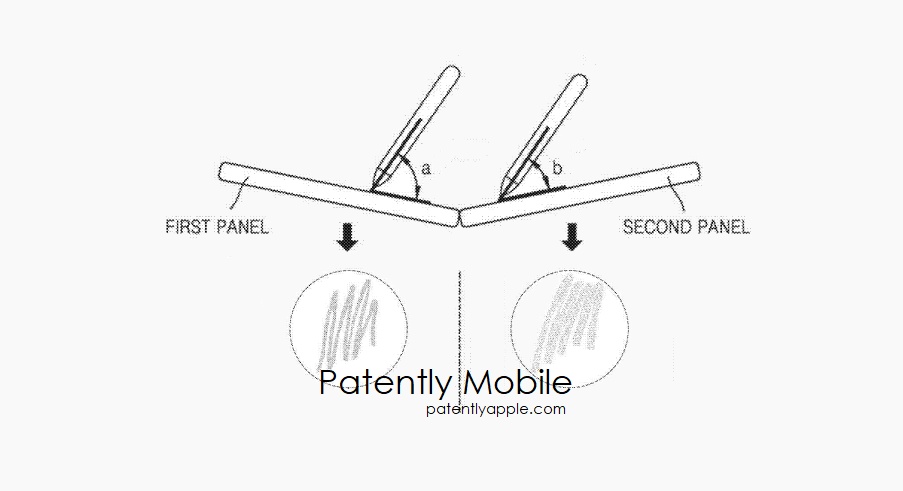
Samsung has filed a new patent that shows an innovative way to store the S Pen inside the hinge of a future foldable smartphone. The concept could solve a key challenge the company faces in integrating stylus support into its Z Fold series.

Hinge-Based Stylus Housing

The patent details a hinge mechanism that includes a slot to securely house the S Pen. The stylus would sit within the central fold of the device, possibly allowing it to be stored and charged discreetly.

According to the filing, the design aims to balance convenience and durability. The hinge not only supports the device’s foldable action but also protects the S Pen from external damage when not in use.

This idea marks a shift from Samsung’s previous designs, where the S Pen was either not included or had to be carried separately.

Z Fold 7 Dropped S Pen Support

At its July 2025 Galaxy Unpacked event, Samsung launched the Galaxy Z Fold 7. While the device introduced a slimmer, lighter profile, it dropped S Pen support altogether.

Samsung cited design limitations for the decision. The company said the new ultra-thin build couldn’t accommodate the necessary digitizer layer or a stylus slot.

“We’re prioritizing design and portability,” said Samsung Mobile President TM Roh during the event.

Could the S Pen Return?

Despite the Fold 7’s omission, Samsung executives have hinted that S Pen support may return in future models.

A spokesperson stated that the company is “re-evaluating S Pen inclusion” for upcoming devices and is working on slimmer stylus technology.

This new patent suggests one direction that effort could take. By integrating the S Pen into the hinge, Samsung may bypass the need to thicken the display or chassis.

Competitive Pressure Rising

Samsung faces growing competition in the foldable space. Brands like Honor, Huawei, and Motorola have launched foldables with sleeker designs and new features.

Some of these models include stylus support, increasing pressure on Samsung to deliver both design and functionality.

Meanwhile, rumors continue to circulate about a tri-fold Galaxy device that might debut in 2026. That form factor could provide extra internal space for components like the S Pen.

What’s Next?

The hinge-based S Pen slot is still a concept on paper. It may never make it to production. However, the patent underscores Samsung’s continued interest in enhancing its foldables with stylus features.

Consumers and tech watchers will be looking to the Galaxy Z Fold 8, expected in mid-2026, for any signs of the S Pen’s return.

Until then, Samsung’s foldable strategy appears to favor thinness and portability—though stylus fans are still holding out hope.

Intel Patents “Software-Defined Super Cores” to Boost Single-Thread Performance

Intel has filed a new patent that reveals a bold approach to CPU performance. The company proposes “Software-Defined Super Cores”, a technology that lets multiple smaller cores fuse into one powerful virtual core.

How It Works

The system divides a single-threaded task into multiple segments. Each segment runs on a separate core. The instructions then retire in the correct order, so the operating system reads them as if they came from a single core. This process can deliver higher instructions per clock (IPC) without raising voltage or frequency.

According to the published patent, the design uses advanced techniques like shadow store buffers, shared registers, and precise memory ordering. These mechanisms ensure that fused cores maintain accurate execution and avoid errors during parallel processing.

Why It Matters

Modern CPUs already combine performance cores (P-cores) and efficient cores (E-cores) to balance power and speed. But scaling up single cores further is costly and less energy-efficient. Intel’s new method offers a way to boost performance dynamically, without redesigning physical cores.

This flexibility could help Intel deliver faster chips for tasks that rely heavily on single-thread performance, such as gaming, creative workloads, and certain AI applications.

Patent Details

  • Filing date: December 30, 2023
  • Publication date: July 3, 2025
  • Inventors: Jayesh Gaur, Sumeet Bandishte, and team
  • Patent number: US20250165255A1

What’s Next

The concept remains experimental. It is unclear when Intel will bring “Super Cores” into commercial products. However, the filing signals the company’s continued push to innovate in CPU design and challenge rivals like AMD in the race for performance leadership.

For more on Intel’s latest technologies, you can read coverage from TweakTown and VideoCardz.

Graphic Era Researchers Earn Radar-Cloaking Patent for Aircraft Coating

Researchers at Graphic Era Deemed University have secured a patent from the Government of India for a breakthrough in stealth technology. The achievement comes from the university’s Department of Electronics and Communication Engineering.

Scientists Wariz Panwar and Vikas Rathi developed a thin Electromagnetic Interference (EMI) shielding film. The film absorbs radar signals in the 12–18 GHz (Ku-band) range. Once applied to aircraft, it prevents radar waves from reflecting back, making them nearly invisible to radar detection.

The invention emerged from the university’s Sensors and Actuators Laboratory. After extensive experiments, the team confirmed that the film absorbs radar waves instead of bouncing them back.

The coating can be applied like ordinary paint, which makes it practical for use. Potential applications include defence aircraft, guided missiles, electronic warfare, satellite communications (DTH, VSAT, mobile links), avionics systems such as in-flight internet, and next-generation electronics like 5G networks and microwave imaging.

Dr (Prof) Kamal Ghanshala, Chairman of Graphic Era Group of Institutions, described the discovery as a “remarkable gift” to the nation. He praised the researchers for contributing to India’s technological strength and highlighted the university’s legacy of patents across healthcare, renewable energy, and artificial intelligence.

The newly granted patent, valid for 20 years, strengthens India’s capabilities in advanced stealth technology and showcases Uttarakhand as a hub for high-impact innovation.

Yamaha Prepares Road-Legal R1 Revival with Active Aero Patent

Yamaha is preparing to bring the legendary R1 back to public roads. A recent patent leak reveals a new active aerodynamic system that could help the superbike meet strict emission rules while boosting performance.
Read more

The documents show movable shutters in the fairing’s cooling outlets. These shutters use stepper motors and belts for actuation. An ECU decides their position based on coolant temperature, catalyst temperature, ambient air, throttle input, and speed. This keeps the system lightweight and cost-efficient.
Full details

At higher speeds, the shutters close. This reduces drag and allows the bike to hold top speed with less power. The smoother airflow also adds to stability.
More info

The design also improves emissions. The shutters help the catalytic converter heat up faster, which ensures compliance with Euro 5+ standards.
Learn more

Two versions appear in the diagrams: one with a single large outlet on each side, and another with twin smaller outlets. This provides flexibility in balancing cooling and aerodynamics.
Patent breakdown

The ECU can open or close the vents depending on riding conditions. During slow riding or high ambient heat, vents stay open to cool the engine. At high speed, they close to improve aerodynamics. Under hard acceleration, they may briefly stay shut to maximize airflow efficiency before reopening for cooling.
Analysis

Yamaha had stopped selling the road-legal R1 in Europe due to Euro 5+ restrictions. Only track-spec versions have been available since.
Background

Reintroducing a compliant road model could also give Yamaha a boost in racing. World Superbike rules allow active aero only if the feature appears on the road-going homologated bike.
WSBK context

Industry reports suggest Yamaha may unveil the road-legal R1 with this system at EICMA 2025 in Milan.
Event coverage


Why It Matters

  • The system balances speed, efficiency, and emissions.
  • It showcases a shift toward intelligent aerodynamics in motorcycles.
  • It could mark the R1’s strong return to both road and track.

Sonos Wins Court Ruling to Revive U.S. Patent Case Against Google

The legal battle between Sonos and Google has taken a new turn. The U.S. Court of Appeals for the Federal Circuit ruled on August 28, 2025, that one of Sonos’ patents is valid. This decision revives the company’s long-running lawsuit against Google. Source: Reuters

Appeals Court Reverses Earlier Decision

The Federal Circuit overturned a 2023 ruling by U.S. District Judge William Alsup. The judge had previously invalidated the patent due to Sonos’ 13-year delay in filing. He ruled that the delay made the patent unenforceable. The appeals court disagreed. It found that Google did not suffer harm because of the delay.

A Case That Started in 2020

Sonos first sued Google in 2020. The company alleged that Google copied its wireless audio technology in products such as Google Home speakers and Chromecast Audio. In May 2023, a jury awarded Sonos $32.5 million in damages. That verdict was later overturned when Judge Alsup ruled the patents invalid.

Sonos Welcomes the Decision

A Sonos spokesperson praised the latest ruling. The company expressed hope that Google will now enter fair licensing negotiations. Sonos has argued that Google’s products rely heavily on its patented audio technology.

Google’s Position

Google has denied the allegations. The company has also redesigned its devices in recent years to avoid infringement. In April 2024, the Federal Circuit allowed the import of those redesigned products, stating they did not violate Sonos’ patents. Read more here.

What the Ruling Means

The latest decision gives Sonos another chance to fight for compensation and enforce its patents. The case will now return to the San Francisco federal court for further proceedings. Legal experts believe the ruling could strengthen Sonos’ hand in future licensing talks and shape the wider smart speaker market.