
Ericsson Sues Acer Over 4G and 5G Patent Licensing Dispute, Escalating Global Telecom Legal Battles

Illustration showing Ericsson and Acer logos representing a legal dispute over 4G and 5G wireless patent licensing and standard-essential patents in the telecom industry.

The global technology industry is witnessing another major legal confrontation as Swedish telecom giant Ericsson has filed a lawsuit against Taiwanese electronics manufacturer Acer over alleged disputes involving 4G and 5G wireless patent licensing. The case highlights rising tensions over standard-essential patents (SEPs) and underscores how licensing conflicts are reshaping the competitive landscape of next-generation connectivity.

The lawsuit, filed in a United States federal court, centers on claims that Acer failed to comply with industry-standard licensing obligations and pursued aggressive litigation strategies against telecom operators using Ericsson’s network equipment. The legal clash adds to a growing wave of high-stakes patent disputes that increasingly define relationships between infrastructure providers, device manufacturers, and telecom carriers worldwide.

A Strategic Legal Move by Ericsson

Ericsson’s legal action seeks clarity and protection against what the company describes as escalating threats from Acer’s patent enforcement tactics. According to court filings, Ericsson is requesting a judicial declaration confirming that it does not infringe Acer’s patents and that Acer violated obligations to negotiate licensing agreements under fair terms.

The Swedish telecom company argues that Acer pursued litigation against Ericsson’s customers rather than engaging constructively in licensing negotiations. Such actions, Ericsson claims, disrupt industry norms and undermine the cooperative framework designed to ensure interoperability across global telecom standards.

By filing the lawsuit, Ericsson aims to shift the legal battleground away from indirect disputes involving network operators and toward a direct resolution between patent holders.

The Role of Standard-Essential Patents

At the heart of the dispute lies the complex world of standard-essential patents. These patents cover technologies required to implement globally recognized wireless standards such as 4G LTE and 5G.

Companies that hold SEPs commit to licensing them under FRAND principles — fair, reasonable, and non-discriminatory terms. The FRAND framework exists to balance innovation incentives with industry accessibility. Without such rules, companies could block competitors from using critical technologies needed to maintain interoperable networks.

Ericsson claims Acer’s actions conflict with these obligations. The lawsuit alleges that Acer adopted strategies that pressure telecom operators and ecosystem partners instead of resolving licensing issues through direct negotiation.

Dispute Escalation: From Negotiations to Litigation

Industry observers note that patent licensing disagreements often begin with negotiations over royalty rates or usage rights. In this case, however, talks reportedly broke down, triggering a chain reaction of legal actions.

Acer allegedly filed infringement claims against major telecom operators, including U.S. carriers that deploy Ericsson equipment. Ericsson argues that targeting its customers indirectly places pressure on its business relationships and could disrupt ongoing network operations.

The lawsuit seeks to halt what Ericsson views as a strategy designed to extract licensing concessions by threatening key industry partners.

This escalation reflects a broader trend. Instead of pursuing bilateral licensing discussions, companies increasingly resort to multi-jurisdictional litigation to strengthen bargaining positions.

Comparative Landscape: Device Makers vs Infrastructure Providers

The Ericsson-Acer dispute illustrates the evolving dynamics between device manufacturers and telecom infrastructure vendors.

Traditionally, network equipment providers like Ericsson focused on supplying infrastructure to operators, while consumer device companies negotiated patent licenses separately. However, the boundaries between these roles have blurred as companies diversify portfolios and accumulate extensive patent holdings.

In recent years, technology firms have leveraged intellectual property as both defensive shields and offensive tools. Companies with significant patent portfolios can exert influence across multiple segments of the ecosystem, from handsets and laptops to network hardware and cloud platforms.

This shift has led to more frequent clashes between entities that previously operated in largely separate spheres.

Why FRAND Compliance Matters

FRAND licensing serves as a cornerstone of modern telecommunications. Without it, industry collaboration on shared standards would be nearly impossible.

Standards organizations require patent holders to commit to fair licensing practices to prevent monopolistic behavior. Yet disagreements often arise over what constitutes “fair” or “reasonable” compensation.

Legal disputes frequently hinge on:

  • Royalty calculation methods
  • Geographic licensing scope
  • Portfolio valuation
  • Negotiation conduct and timelines

Ericsson’s lawsuit emphasizes negotiation behavior rather than solely technical infringement claims. This strategic framing could influence how courts evaluate the balance between enforcement rights and industry cooperation.

Potential Industry Impact

The outcome of the lawsuit could shape future licensing negotiations across the telecom sector. If courts support Ericsson’s position, companies may face stricter expectations to negotiate directly and avoid targeting downstream customers as leverage.

Conversely, a ruling favorable to Acer could reinforce aggressive enforcement strategies by patent holders, encouraging similar litigation tactics across the industry.

The dispute also arrives at a critical moment for 5G deployment. Telecom operators continue investing heavily in infrastructure upgrades, and prolonged legal uncertainty could complicate procurement decisions and supply chain stability.

A Broader Pattern of Telecom Patent Battles

The Ericsson-Acer case is not isolated. Telecom companies frequently engage in complex patent disputes as the industry transitions toward advanced wireless technologies.

Over the past decade, similar legal confrontations have involved major players across Europe, Asia, and North America. Companies increasingly seek judicial clarification on FRAND obligations, jurisdictional authority, and cross-licensing frameworks.

Experts say these conflicts reflect the enormous financial stakes associated with 5G innovation. With billions invested in research and development, patent holders aggressively protect their intellectual property while implementers push for predictable licensing costs.

Market and Legal Implications

Beyond legal arguments, the lawsuit carries strategic implications for both companies.

For Ericsson, defending its relationships with telecom operators remains a priority. By seeking court intervention, the company aims to prevent disruptions that could affect customer confidence and network deployment timelines.

For Acer, asserting patent rights signals its intent to expand influence within the wireless technology ecosystem. As device manufacturers diversify into connected hardware and enterprise solutions, control over key patents becomes a powerful competitive advantage.

Investors and industry stakeholders will closely monitor the case for signals about licensing trends and legal risk exposure across the sector.

What Comes Next

The court proceedings will likely involve detailed technical analysis, economic modeling, and examination of negotiation history. Patent litigation often spans months or years, especially when multiple jurisdictions and complex licensing frameworks are involved.

Regardless of the outcome, the dispute reinforces a central reality of the modern telecom industry: innovation and litigation increasingly move hand in hand.

As companies race to define the future of connectivity through 5G and beyond, intellectual property battles will continue to shape alliances, market strategies, and the pace of technological adoption.

For now, Ericsson and Acer find themselves at the center of a high-profile legal contest that could redefine how patent licensing conflicts unfold in the era of global wireless standards.
Bedding Firm Backs Down on “Swift Home” Trademark After Taylor Swift Appeal

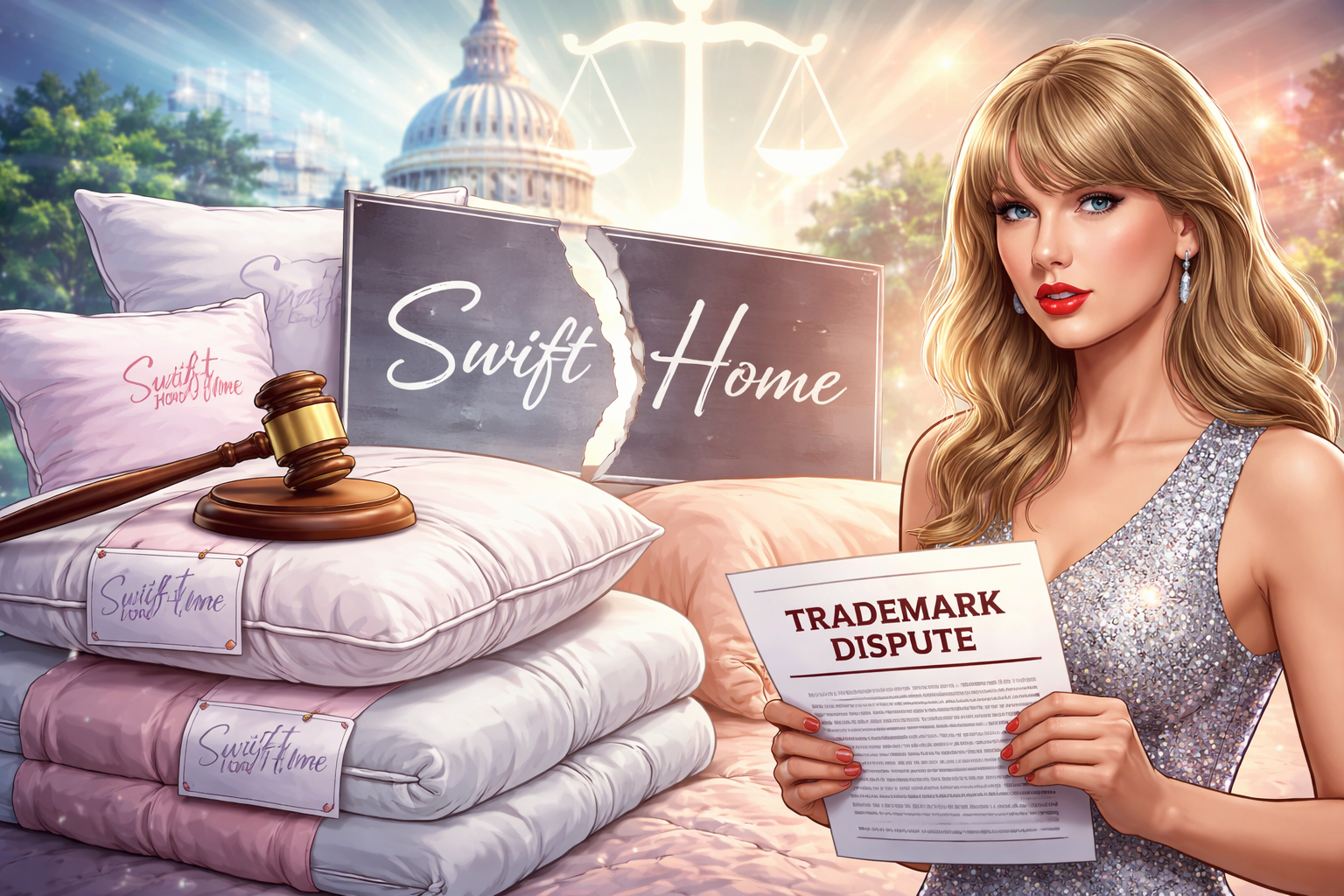
Taylor Swift trademark dispute illustration showing bedding products and branding conflict concept

A trademark dispute between a bedding company and global music icon Taylor Swift has ended decisively, with the home goods firm withdrawing its “Swift Home” trademark application after the singer challenged the filing. The development highlights the growing power of celebrity branding and the increasing importance of intellectual property enforcement in modern commerce.

The withdrawal represents a clear win for Swift’s legal strategy and reflects a broader shift in trademark law, where personal brands carry significant commercial weight and influence consumer perception across multiple industries.

How the Dispute Began

The conflict began when a bedding manufacturer sought to register the trademark “Swift Home” for use on products such as bed linens, pillows, and related home goods. The company aimed to position the brand within the lifestyle and home décor market, a sector that has seen rapid growth and intense competition.

However, Swift’s legal team quickly filed an opposition, arguing that the name and presentation of the proposed brand created a strong likelihood of confusion among consumers. According to the opposition, customers might assume that the bedding products were connected to or endorsed by the singer, whose name carries immense global recognition.

The dispute intensified when concerns emerged about the visual design of the brand, particularly a cursive style that allegedly resembled Swift’s signature aesthetic. Swift’s lawyers asserted that the similarity went beyond coincidence and risked misleading buyers.

Company Chooses Withdrawal Over Legal Battle

Facing a formal challenge from a high-profile rights holder, the bedding company ultimately chose to abandon the trademark application. Industry observers say such decisions often reflect pragmatic business considerations rather than admissions of wrongdoing.

Trademark litigation can be costly, time-consuming, and unpredictable. Even if a company believes it has a valid claim, defending against a globally recognized celebrity with extensive intellectual property rights may not align with business priorities.

By stepping back early, the company avoided a prolonged dispute that could have involved significant legal expenses and reputational risk.

The Power of Celebrity Branding

The outcome underscores the strength of celebrity-driven trademarks in today’s marketplace. Over the past decade, artists and entertainers have transformed their personal identities into powerful commercial brands. These brands extend far beyond music or film into fashion, merchandise, and lifestyle products.

Taylor Swift stands as one of the most prominent examples of this trend. Her business strategy includes carefully managing trademarks associated with her name, image, and creative works. Such proactive enforcement helps prevent unauthorized associations that could dilute brand value.

Legal experts note that celebrity trademarks often enjoy broader protection because of their widespread recognition. When a name is strongly linked to a specific individual, even unrelated product categories can raise confusion concerns if branding overlaps.

Understanding Likelihood of Confusion

At the heart of most trademark disputes lies the concept of “likelihood of confusion.” Authorities assess whether ordinary consumers might mistakenly believe that two brands share a common source or endorsement.

Several factors typically guide this analysis:

  • Similarity between the names or logos
  • Overlap in product categories or target audiences
  • Strength and fame of the existing trademark
  • Marketing channels and branding styles
  • Potential impact on consumer expectations

In the “Swift Home” case, Swift’s global fame likely amplified the risk of confusion. Even a seemingly generic word can become strongly associated with a particular individual when backed by decades of public recognition and commercial success.

A Comparative Look at Corporate vs. Personal Brands

Traditional trademark disputes often involve competing corporations with similar names. However, modern cases increasingly feature personal brands competing against commercial entities.

Corporate brands typically rely on industry-specific recognition. Celebrity brands, by contrast, benefit from cross-industry visibility. A musician’s name can instantly evoke trust, identity, and lifestyle associations, which may extend into product categories far removed from their original profession.

This dynamic changes how companies evaluate branding strategies. Businesses must now consider whether a proposed trademark could overlap with the personal brand of a widely known public figure, even if the product categories differ.

Lessons for Businesses and Entrepreneurs

The dispute offers several practical lessons for companies developing new brand identities:

  1. Conduct comprehensive trademark searches. A name that appears generic may still be strongly associated with a famous individual.
  2. Assess visual branding carefully. Fonts, stylization, and design choices can increase the risk of confusion.
  3. Understand the strength of celebrity trademarks. Well-known personalities often maintain broad protection across multiple product categories.
  4. Evaluate the cost-benefit balance. Early withdrawal may be a strategic decision if litigation risks outweigh potential brand value.

Companies entering lifestyle markets must be especially cautious, as celebrity-driven branding increasingly overlaps with everyday consumer products.

A Growing Trend in Trademark Enforcement

The resolution of this dispute reflects a broader trend toward aggressive trademark protection by public figures. As celebrities diversify into fashion, home goods, beauty products, and technology ventures, the boundaries between entertainment and commerce continue to blur.

Social media amplifies this phenomenon. Consumers frequently associate products with influencers or celebrities based on name recognition alone, making brand confusion more likely. This reality encourages celebrities to monitor trademark filings closely and challenge applications that could create misleading associations.

Legal analysts predict that similar disputes will become more common as personal brands expand into new commercial spaces.

What This Means for the Industry

For Taylor Swift, the outcome reinforces her reputation as a strategic and vigilant brand owner. Protecting intellectual property ensures that her name remains synonymous with authorized products and maintains long-term brand equity.

For the bedding company, the decision to withdraw highlights a practical business approach. Rather than engage in a lengthy legal battle, the firm chose to pivot away from a potentially contentious brand identity.

The case serves as a reminder that in today’s competitive marketplace, trademark selection requires more than creativity. It demands careful legal analysis, strategic foresight, and an understanding of how powerful personal brands shape consumer expectations.

As celebrity influence continues to expand beyond traditional entertainment industries, trademark disputes like this one will likely shape the evolving landscape of branding and intellectual property enforcement.

Shocking for Tech Industry as Nokia Forces PC Sales Ban in Germany Over Video Codec Patents

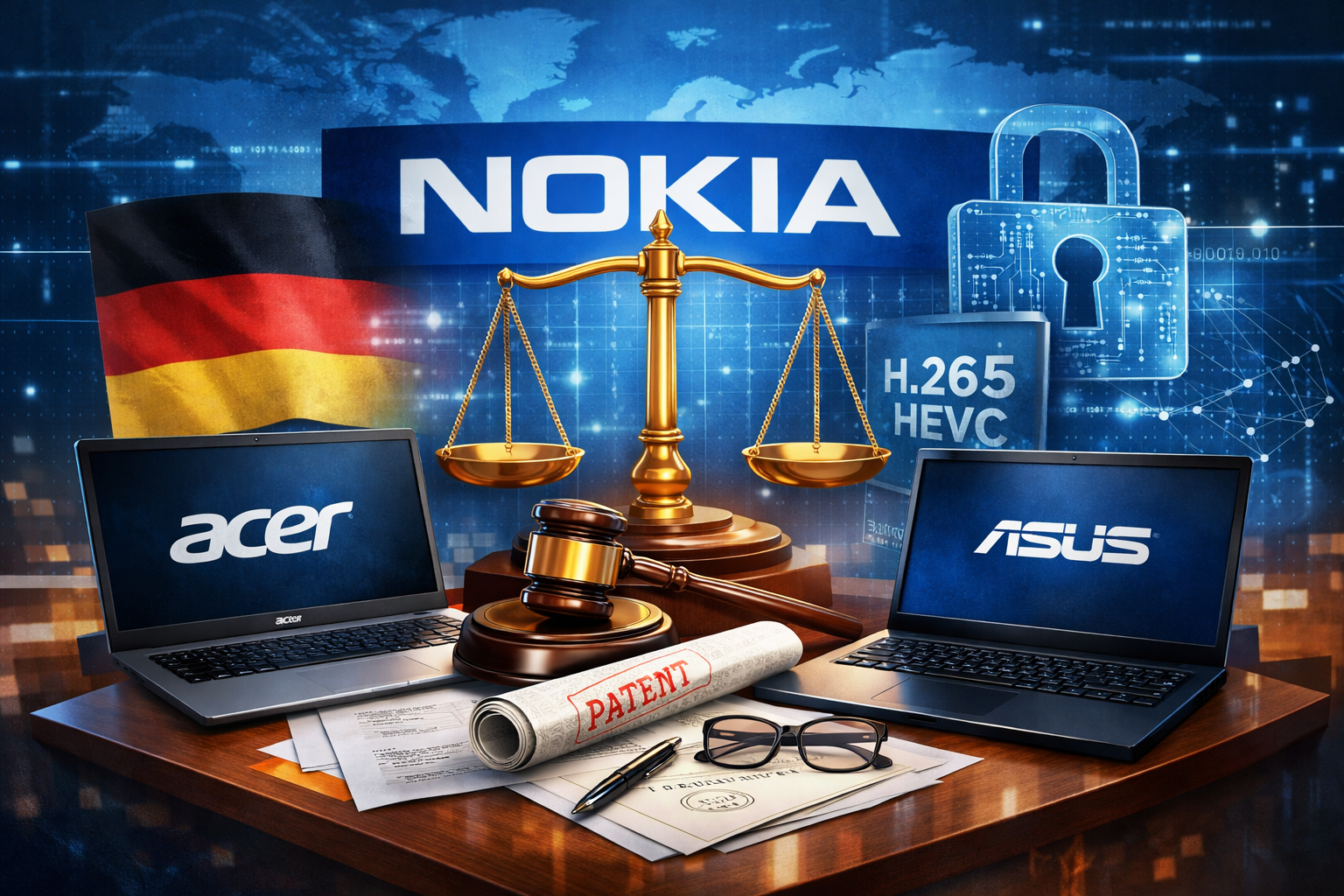
Nokia HEVC patent ruling Germany Acer ASUS PC sales ban tech industry legal dispute illustration

A fresh patent ruling in Germany has sent shockwaves through the global PC industry. Finnish telecom giant Nokia secured a decisive legal victory against PC manufacturers Acer and ASUS, resulting in a court-ordered ban on certain computer sales within one of Europe’s largest technology markets.

The judgment highlights the growing power of standard-essential patents (SEPs) in shaping competition and licensing practices across the technology sector. It also reinforces Germany’s position as a strategic battleground for global patent enforcement.

A Landmark Court Decision With Immediate Consequences

The ruling came from the Munich I Regional Court, a venue known for its swift handling of intellectual property disputes. The court sided with Nokia in a long-running conflict centered on High Efficiency Video Coding (HEVC), also known as H.265.

HEVC is a modern video compression standard used across devices for high-resolution video playback and streaming. Because the technology is widely adopted, it relies on standard-essential patents. Companies implementing such standards must obtain licenses from patent holders under Fair, Reasonable, and Non-Discriminatory (FRAND) terms.

According to the court, Acer and ASUS failed to demonstrate that they were “willing licensees.” That determination proved critical. Under European SEP jurisprudence, companies can avoid injunctions if they show genuine willingness to negotiate licensing agreements. The court concluded that this threshold was not met.

As a result, the decision grants Nokia the right to enforce an injunction against the sale, marketing, and import of certain PCs in Germany that use the contested technology.

Understanding the HEVC Patent Dispute

The core of the case revolves around HEVC video compression technology. HEVC enables efficient playback of high-definition and ultra-high-definition video while reducing bandwidth requirements. It plays a central role in streaming platforms, multimedia editing, and modern computing environments.

Nokia owns a portfolio of patents considered essential to implementing the HEVC standard. These patents give the company leverage to demand licensing fees from manufacturers whose devices support HEVC decoding or encoding.

Acer and ASUS reportedly disputed the licensing terms offered by Nokia. Negotiations stalled, prompting litigation. Nokia argued that the companies continued selling devices without securing valid licenses, thereby infringing its patents.

The court’s ruling validates Nokia’s claim and underscores the importance of licensing compliance in industries built around shared technical standards.

Germany: Europe’s Patent Enforcement Powerhouse

Germany has emerged as a preferred jurisdiction for patent holders seeking fast and effective enforcement. Courts in cities like Munich, Düsseldorf, and Mannheim have built reputations for granting injunctions swiftly when infringement is established.

This legal environment creates significant pressure on technology companies. Even a temporary sales ban can disrupt supply chains, damage brand presence, and trigger financial losses in key markets.

In comparison with some other European jurisdictions, German courts place heavy emphasis on procedural efficiency and technical analysis. Patent holders often choose Germany because injunctions are easier to obtain once infringement is confirmed.

For multinational manufacturers like Acer and ASUS, a German injunction carries symbolic and strategic weight. Germany is not only Europe’s largest economy but also a major gateway to EU distribution networks.

The Role of FRAND Obligations

The dispute highlights the delicate balance between patent enforcement and fair competition. Standard-essential patents require licensing under FRAND commitments. These rules aim to prevent patent holders from abusing their position while ensuring inventors receive compensation.

Courts typically evaluate whether both sides acted in good faith during negotiations. A patent owner must offer reasonable licensing terms. At the same time, implementers must engage constructively and avoid delaying tactics.

In this case, the Munich court determined that Nokia fulfilled its obligations, while Acer and ASUS did not sufficiently demonstrate willingness to conclude a license. This finding tipped the scales toward granting the injunction.

The outcome contrasts with cases where defendants successfully avoid bans by proving active participation in licensing discussions.

Comparative Industry Reactions and Precedents

Patent disputes over video standards and wireless technologies have become increasingly common. Technology standards often rely on dozens or hundreds of patent holders, creating complex licensing ecosystems.

Major companies such as smartphone manufacturers and semiconductor firms have faced similar battles over 5G, video codecs, and connectivity technologies. Some disputes end in settlements shortly before enforcement actions begin.

Comparatively, companies that agree to licensing deals early often avoid market disruptions. Reports indicate that other manufacturers have settled with Nokia regarding HEVC licensing, allowing them to continue selling products without interruption.

The contrast illustrates a broader industry trend. Companies that resist licensing agreements risk injunctions in patent-friendly jurisdictions. Those that settle typically gain operational stability but must absorb additional costs.

Market Impact and Business Implications

The ban could reshape the competitive landscape in Germany’s PC market, at least temporarily. Retailers may face shortages of certain Acer and ASUS models if enforcement continues. Competitors could gain market share during the disruption.

For consumers, the ruling might limit product availability or affect pricing dynamics. Supply constraints often lead to higher prices or reduced promotional activity.

From a corporate perspective, the decision increases pressure on Acer and ASUS to negotiate a settlement. Patent injunctions are rarely permanent in SEP cases. Instead, they function as leverage to accelerate licensing agreements.

Industry analysts expect renewed negotiations between the parties. A settlement could lift the ban relatively quickly if both sides reach mutually acceptable terms.

Strategic Lessons for the Tech Sector

The case sends a powerful message across the technology industry. Companies relying on standardized technologies must manage patent licensing proactively. Ignoring or delaying negotiations can lead to significant legal and commercial risks.

It also reinforces the growing importance of patent portfolios as strategic assets. Companies like Nokia, which invested heavily in research and development, increasingly monetize their intellectual property through licensing.

The ruling may encourage other patent holders to pursue enforcement actions, particularly in jurisdictions where injunctions are attainable. This trend could intensify the already complex web of licensing negotiations across the technology landscape.

What Comes Next

Acer and ASUS may appeal the decision or continue negotiations with Nokia. Appeals could delay final outcomes but may not immediately suspend enforcement unless specific legal conditions are met.

Meanwhile, retailers and distributors in Germany must monitor developments closely. The enforcement timeline and scope of affected products will determine the real-world impact on availability.

For Nokia, the victory strengthens its reputation as an assertive defender of its intellectual property. For manufacturers, the ruling serves as a cautionary tale about the risks of underestimating SEP enforcement.

Conclusion

The German court’s decision marks another chapter in the evolving battle over standard-essential patents. By granting Nokia an injunction against Acer and ASUS, the ruling underscores the legal and commercial power of patent licensing in modern technology markets.

Beyond the immediate ban, the case highlights broader industry dynamics. Strong patent portfolios can shape market access. Germany remains a strategic enforcement hub. And companies implementing global standards must balance innovation with rigorous compliance.

As negotiations continue, the outcome will likely influence how technology firms approach patent licensing disputes in the future — not only in Europe but worldwide.

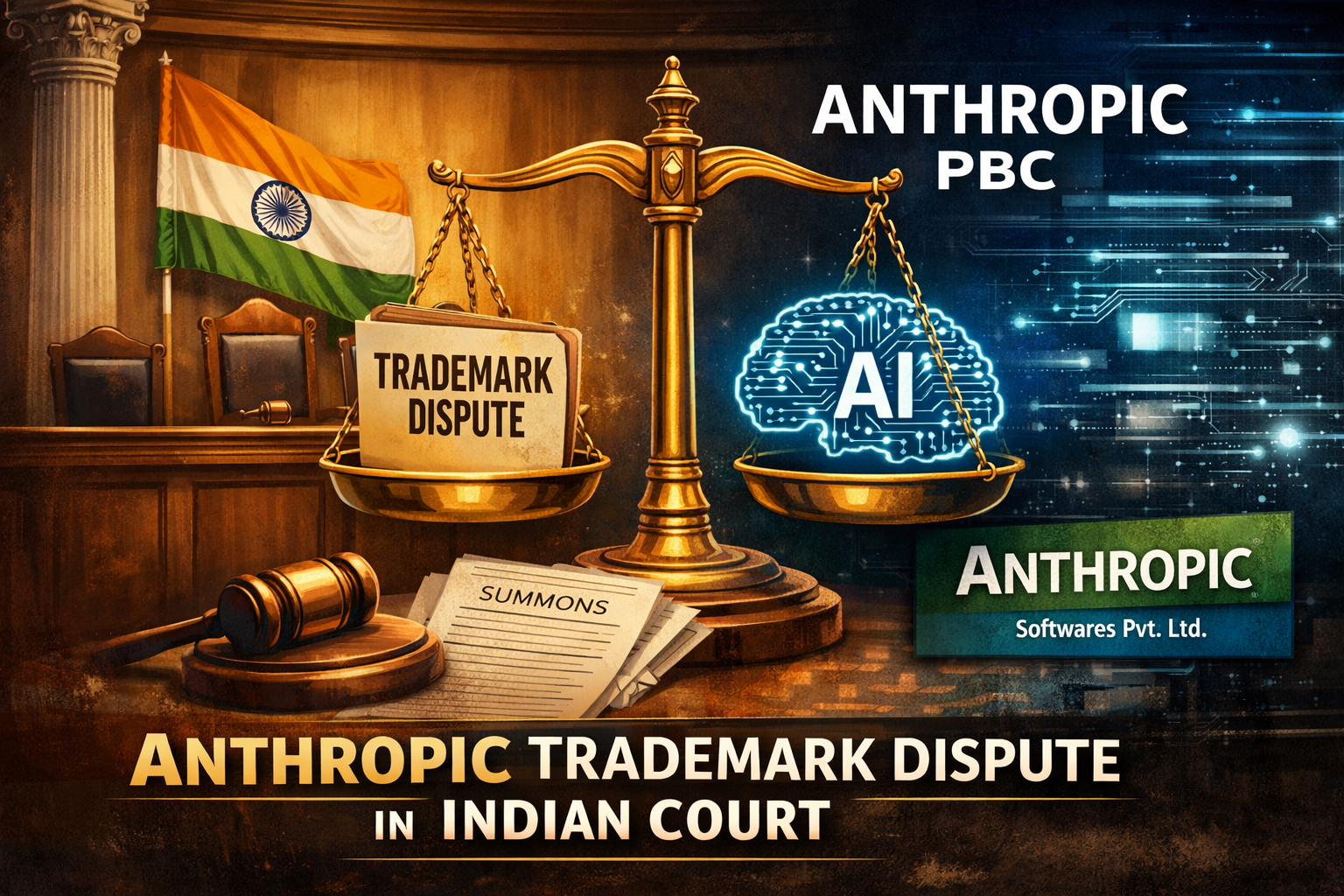
AI Brand War Begins: Court Blocks Urgent Ban on Anthropic in India

Belagavi commercial court order in Anthropic trademark dispute involving US AI company and Indian software firm

A commercial court in Belagavi has refused to grant an interim injunction against US-based artificial intelligence company Anthropic PBC in an ongoing trademark dispute. However, the court allowed the lawsuit to proceed and issued summons to the American firm, marking the beginning of what could become a significant legal battle over brand identity in India’s rapidly expanding AI market.

The case highlights the increasing friction between global technology companies expanding into India and domestic businesses asserting prior rights over similar brand names.

Background of the Dispute

The lawsuit was filed by Belagavi-based Anthropic Softwares Private Limited, an Indian company that claims rights over the “Anthropic” name in India. The plaintiff alleges trademark infringement, passing off, and potential consumer confusion arising from the use of an identical or deceptively similar brand name by Anthropic PBC.

Anthropic PBC is a US artificial intelligence company known for developing advanced AI systems and safety-focused technologies. Reports suggesting the company’s plans to establish an Indian presence, possibly including operations in Bengaluru, triggered concerns from the Indian firm and prompted the legal action.

The plaintiff sought urgent relief from the court, requesting an interim injunction to restrain the US company from using the “Anthropic” name within India.

Court Refuses Immediate Injunction

Despite the plaintiff’s request for urgent intervention, the commercial court declined to grant an ex parte interim injunction.

Ex parte injunctions allow courts to impose temporary restrictions without hearing the opposing party. Such relief is typically reserved for situations where immediate harm appears imminent and waiting for the defendant’s response could cause irreparable damage.

In this case, the court found that the threshold for urgent intervention had not been met.

The judge observed that the plaintiff relied largely on media reports and publicly available information indicating potential expansion plans by Anthropic PBC. The court concluded that these materials did not demonstrate concrete evidence of actual business operations or imminent trademark infringement within India.

Without clear proof of immediate harm or ongoing use of the mark in India, the court held that issuing an injunction without hearing the defendant would be premature.

Summons Issued: Case Moves Forward

While refusing interim relief, the court did not dismiss the claims. Instead, it issued summons to Anthropic PBC and directed the company to respond to the allegations.

This decision signals that the court considers the dispute substantial enough to require a full hearing on merits.

The next stage will involve detailed arguments from both sides. The plaintiff must establish prior rights, goodwill, and likelihood of confusion, while the defendant may argue independent adoption, global reputation, or lack of overlap in commercial activity.

Urgent Relief and Section 12A Commercial Courts Act

The case also raised procedural issues under the Commercial Courts Act.

Ordinarily, commercial disputes require pre-institution mediation under Section 12A before a lawsuit can proceed. However, the law provides an exception when urgent interim relief is sought.

The court accepted the plaintiff’s argument that urgent relief was claimed, allowing the suit to bypass mandatory mediation and proceed directly to judicial consideration.

This procedural step reflects a broader trend in commercial litigation, where plaintiffs seek immediate court intervention when alleging imminent infringement or business harm.

Parallel Proceedings Before Trademark Registry

The dispute is not limited to the civil court. The Indian company has also approached the Trade Marks Registry, challenging registrations associated with Anthropic PBC.

The plaintiff reportedly seeks rectification or cancellation of trademarks registered in technology-related classes, including software and artificial intelligence services.

These administrative proceedings could significantly influence the outcome of the court case. If the registry finds in favor of the Indian company, it may strengthen the plaintiff’s position. Conversely, valid registrations held by the US company could provide strong defenses against infringement claims.

Comparative Positions: Indian Firm vs Global AI Player

The dispute reflects contrasting legal positions commonly seen in trademark conflicts between local entities and multinational technology companies.

The Plaintiff’s Position

The Indian company is expected to argue:

  • Prior use or earlier adoption of the “Anthropic” name in India.
  • Established goodwill and business reputation.
  • Likelihood of confusion among consumers and clients.
  • Risk of brand dilution due to the global prominence of the US company.

Such arguments align with traditional Indian trademark law, which often emphasizes prior use and local market presence.

The Defendant’s Likely Defense

Anthropic PBC may raise several defenses, including:

  • Independent adoption of the brand name.
  • Global reputation and international use predating entry into India.
  • Absence of actual commercial operations in India at the time of filing.
  • Differences in market segments or consumer base.

Global tech companies frequently rely on cross-border reputation arguments, asserting that their brand enjoys recognition even in jurisdictions where physical operations have not yet commenced.

Growing Trend: AI Branding Disputes

The case arrives amid rising competition in the artificial intelligence sector, where startups and established companies increasingly face naming conflicts.

As AI innovation accelerates, many companies adopt abstract or conceptual brand names. This trend increases the likelihood of overlapping trademarks across jurisdictions.

India’s expanding digital economy makes it an attractive destination for international AI firms. However, entering the market often requires navigating complex trademark landscapes shaped by local registrations and prior users.

Recent legal disputes show courts carefully balancing innovation and brand protection. Judges aim to prevent consumer confusion while avoiding unnecessary restrictions on technological expansion.

Legal Significance of the Order

The Belagavi court’s decision underscores a key principle in Indian trademark jurisprudence: urgent injunctions require strong evidence of imminent harm.

Courts typically avoid granting ex parte injunctions based solely on speculative future activity. Instead, they prefer hearing both sides before imposing restrictive orders, especially when dealing with international defendants.

At the same time, issuing summons demonstrates that the court recognizes the dispute as legally viable. The plaintiff retains the opportunity to prove infringement or passing off through evidence presented during the proceedings.

What Comes Next

As the case progresses, several questions will shape the outcome:

  • Does the Indian company hold enforceable trademark rights or prior use?
  • Has Anthropic PBC engaged in sufficient commercial activity in India to constitute infringement?
  • Can cross-border reputation influence trademark protection in this scenario?

The answers will likely emerge through detailed filings, trademark registry decisions, and arguments presented in upcoming hearings.

Broader Industry Implications

The outcome could influence how foreign AI companies approach brand strategy in India. Global firms may need to conduct deeper trademark clearance searches before announcing expansion plans or launching services locally.

For Indian startups, the case highlights the importance of securing trademark registrations early and building documented evidence of market presence.

As artificial intelligence continues reshaping industries worldwide, legal battles over identity and branding are becoming an inevitable part of technological growth.

The Belagavi trademark dispute illustrates how courts balance innovation, competition, and consumer protection — a delicate equilibrium that will increasingly define the legal landscape of the AI era.

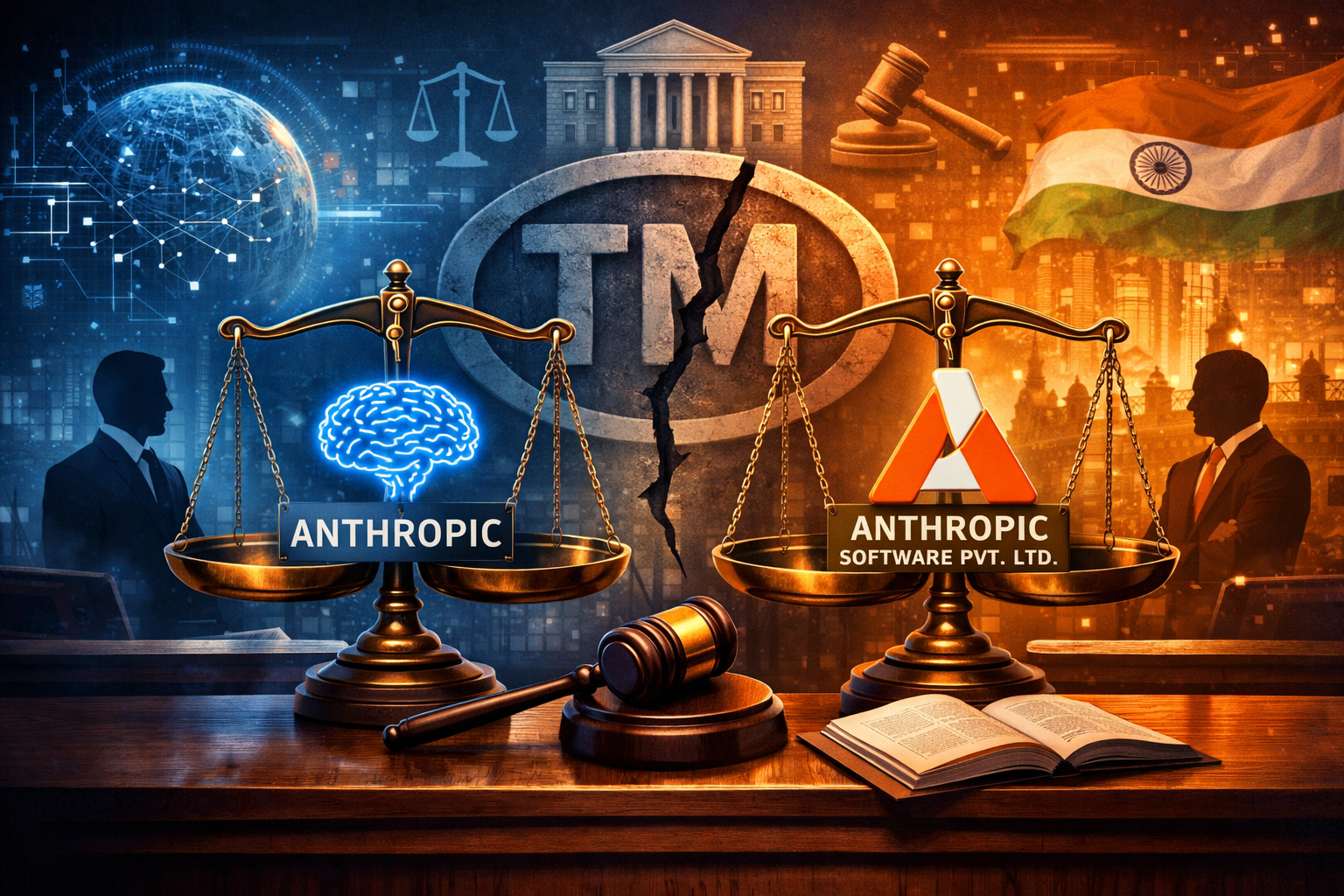
AI Startup Anthropic Hit With Trademark Lawsuit in India, Sparks High-Stakes Brand Battle

Illustration showing legal scales with AI symbols representing trademark dispute between global AI company Anthropic and Indian software firm.

The rapid rise of artificial intelligence companies has triggered a new kind of legal battlefield — one where brand identity collides with global expansion. US-based AI company Anthropic, known for its Claude AI models and safety-focused research, now finds itself at the center of a trademark dispute in India after a local software firm filed a legal challenge over the use of the “Anthropic” name.

The case highlights a growing tension between emerging global tech giants and regional companies that claim earlier rights to similar brand identities. As India becomes a key market for AI innovation, this legal fight could shape how international technology firms approach trademark strategy when entering new jurisdictions.

Local Company Claims Prior Rights

The dispute began when Anthropic Software Pvt Ltd, an Indian company based in Karnataka, filed a lawsuit alleging trademark infringement and passing off. The Indian firm claims it has used the “Anthropic” name since 2017, well before the US AI company established its presence in the Indian market.

According to the complaint, the entry of the US-based Anthropic into India has created significant confusion among clients, partners, and online audiences. The local company argues that search engine results, media coverage, and market conversations increasingly associate the name with the global AI company, reducing visibility for the Indian business.

The plaintiff alleges that such confusion damages its brand identity and undermines goodwill built over years of operations. It has sought legal recognition of prior use rights and requested damages reportedly valued at approximately ₹1 crore.

Global AI Giant Expands into India

Anthropic has emerged as one of the most prominent AI startups globally. Founded by former OpenAI researchers, the company focuses on building advanced large language models designed with strong safety and alignment principles. Its Claude AI system competes with leading generative AI platforms and has attracted significant investor interest.

India represents a strategic growth market for global AI firms. The country offers a vast developer ecosystem, strong enterprise demand, and a rapidly growing digital economy. As part of its expansion strategy, Anthropic has reportedly begun building partnerships and exploring opportunities to scale operations within India.

However, rapid expansion often exposes companies to complex intellectual property risks. While a brand name may be globally recognized, local trademark laws operate independently in each jurisdiction. This creates potential conflicts when earlier users already exist within a specific market.

Legal Claims: Trademark Infringement vs Prior Use

The core of the dispute centers on competing claims over brand ownership and market recognition.

The Indian company argues that it holds prior use rights under Indian trademark law. Unlike some jurisdictions that prioritize registration alone, Indian law recognizes prior commercial use as a powerful basis for enforcement. Businesses that can demonstrate earlier and continuous use of a mark may succeed even against larger or internationally known brands.

The lawsuit alleges several legal violations, including:

  • Trademark infringement through use of an identical or confusingly similar name.
  • Passing off, where one business allegedly benefits from another’s established reputation.
  • Brand dilution caused by market dominance of the global company.

From the perspective of the US-based Anthropic, the company may argue that its global reputation, distinct industry positioning, and different business scope reduce the likelihood of confusion. Courts often assess factors such as industry overlap, target customers, branding presentation, and overall market context when evaluating trademark disputes.

Court Proceedings and Early Developments

A commercial court in Karnataka has reportedly issued notice to the US company and initiated legal proceedings. However, the court did not grant an immediate interim injunction against Anthropic’s operations. This means the AI firm can continue using its name in India while the case proceeds.

The absence of an interim ban signals that the court may require deeper examination before imposing restrictions. Judges typically consider whether immediate harm exists and whether granting interim relief would cause disproportionate disruption.

Legal observers note that early stages of trademark disputes often focus on establishing evidence of prior use, consumer confusion, and market presence. Both parties are expected to present detailed documentation supporting their claims.

Comparative Challenges: Local Identity vs Global Branding

The dispute illustrates a broader trend facing international technology companies entering emerging markets.

Global AI firms often build strong brand recognition internationally. Yet regional businesses may already hold similar names, particularly in rapidly evolving sectors such as software and technology. This creates legal friction when global expansion intersects with local intellectual property frameworks.

For local companies, enforcing prior rights becomes essential to protect brand equity. Without legal action, smaller firms risk losing visibility and competitive differentiation.

For multinational startups, trademark conflicts pose strategic risks. Litigation can slow expansion, increase legal costs, and potentially force rebranding efforts in specific markets. In extreme cases, companies may need to adopt different brand identities regionally — a challenge that can disrupt marketing consistency.

Implications for India’s AI Ecosystem

India has emerged as a critical arena for artificial intelligence development. Government initiatives promoting digital transformation, combined with a large pool of engineering talent, have turned the country into a priority destination for global AI investment.

As more companies enter the market, trademark disputes may become increasingly common. Many AI startups adopt abstract or conceptual brand names, which raises the probability of overlap with existing entities.

The outcome of this case could influence how international companies approach trademark searches, registration strategies, and legal risk assessment before launching in India. It may also encourage local businesses to strengthen intellectual property protections early to avoid conflicts with future entrants.

Possible Outcomes and Industry Impact

Several potential scenarios could emerge as the case progresses.

The court could recognize the Indian company’s prior use rights and impose restrictions on the global AI firm’s branding within India. Alternatively, the court might find that the companies operate in sufficiently distinct markets to allow coexistence.

Settlement remains another likely possibility. Trademark disputes often conclude through negotiated agreements, including coexistence arrangements or licensing deals designed to minimize confusion.

Regardless of the final outcome, the case underscores a key lesson for the technology industry: brand strategy must align with local legal realities. Even fast-growing global innovators cannot assume automatic rights to their names across all jurisdictions.

A Defining Moment for AI Branding

The legal clash between two companies sharing the same name reflects the evolving complexities of the AI era. As artificial intelligence reshapes industries worldwide, brand identity has become a critical asset — and a potential source of conflict.

For Anthropic, the dispute represents a test of its international expansion strategy. For the Indian firm, it is a fight to preserve brand ownership and market recognition.

More broadly, the case highlights how intellectual property law continues to play a decisive role in shaping the future of technology markets. As AI companies expand across borders, legal frameworks governing trademarks and prior use will remain central to determining who controls the names that define the next generation of innovation.

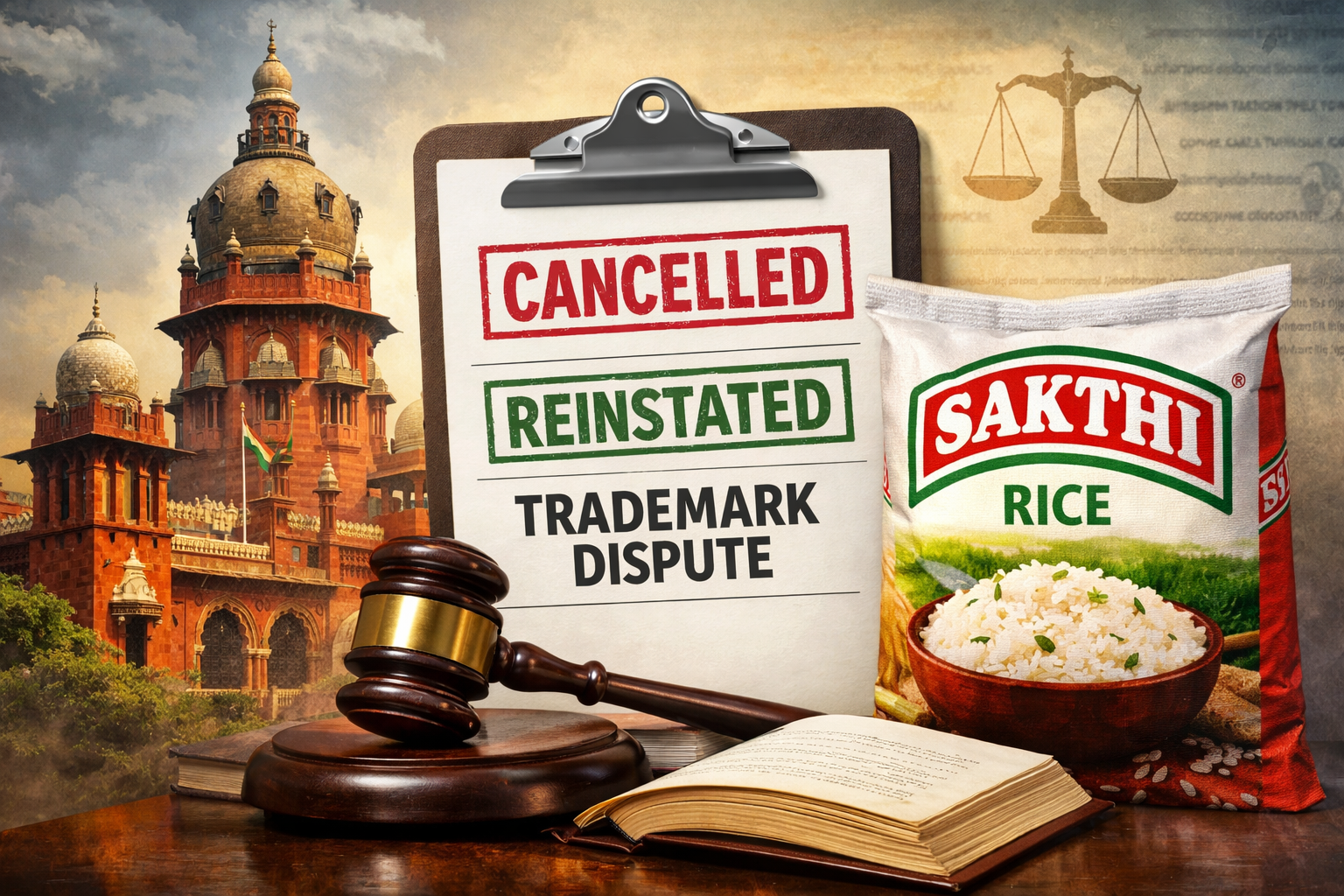
Madras High Court Restores SAKTHI Trademark After 20 Years

Madras High Court building with a gavel and documents symbolizing the reinstatement of the SAKTHI trademark after its cancellation by the Trade Marks Registry.

In a significant ruling strengthening procedural safeguards under India’s trademark regime, the Madras High Court has set aside the cancellation of the “SAKTHI” trademark, nearly two decades after it was granted. The court held that the Trade Marks Registry acted arbitrarily and in violation of principles of natural justice by cancelling a valid registration without issuing prior notice or granting an opportunity of hearing.

The judgment offers strong relief to long-standing trademark owners and sends a clear message to administrative authorities: once a trademark is registered, it cannot be undone through shortcuts or unilateral action.

A Trademark Built Over Decades

The dispute revolves around the trademark “SAKTHI”, used by a Tamil Nadu–based trading firm for rice and allied food products. The brand has been in commercial use since the late 1970s and was formally registered under the Trade Marks Act in the mid-2000s. The registration stood renewed and valid for years, forming the backbone of the company’s commercial identity.

After nearly 20 years of uninterrupted statutory protection, the proprietor was shocked to discover that the trademark had been listed as “abandoned” and subsequently cancelled by the Registry. The cancellation stemmed from internal administrative listings related to opposition proceedings, despite the fact that a registration certificate had already been issued long ago.

Crucially, the Registry took this drastic step without issuing any notice to the trademark owner.

Court Finds Cancellation Legally Unsustainable

The Madras High Court examined the record and found the Registry’s action fundamentally flawed.

The court ruled that once a trademark registration certificate is granted, the proprietor acquires a vested statutory right. Such a right cannot be taken away without strictly following the procedure prescribed under the Trade Marks Act. Any challenge to an existing registration must be raised only through rectification proceedings, and not by treating a granted mark as if it were still a pending or abandoned application.

The court was categorical that cancellation without notice is void in law. It observed that the failure to provide the trademark owner an opportunity to be heard amounted to a gross violation of natural justice. On this ground alone, the impugned cancellation order could not survive judicial scrutiny.

Registry’s Conduct Draws Sharp Criticism

The High Court also took note of the fact that the Trade Marks Registry had earlier given an undertaking before the Delhi High Court to withdraw controversial public notices relating to abandoned marks. Despite this assurance, the Registry proceeded to cancel the “SAKTHI” trademark.

The bench held that such conduct not only breached procedural law but also undermined the credibility of statutory authorities entrusted with protecting intellectual property rights.

In firm language, the court clarified that administrative convenience cannot override statutory protection granted to trademark owners.

Clear Contrast: Registered Rights vs Bureaucratic Action

The ruling draws a sharp contrast between two competing realities:

  • On one side, a trademark lawfully registered, renewed, and relied upon for decades in commerce.
  • On the other, an administrative action that ignored the existence of that registration and bypassed mandatory safeguards.

The court decisively sided with the former, reinforcing that registration is not a temporary privilege but a legally enforceable right.

Order of Reinstatement

Allowing the appeal, the Madras High Court quashed the cancellation order and directed the Trade Marks Registry to restore the “SAKTHI” trademark registration within four weeks.

This reinstatement restores the proprietor’s exclusive rights over the mark and protects it from potential misuse or infringement arising from the erroneous cancellation.

Wider Impact on Trademark Administration

Legal experts say the judgment has far-reaching implications for India’s trademark ecosystem. Over the past few years, brand owners have raised concerns over mass abandonment notices, system-driven cancellations, and lack of transparency in Registry procedures.

This ruling firmly establishes that:

  • Registered trademarks cannot be cancelled through administrative listings.
  • Due process is mandatory, regardless of how old the registration is.
  • The Registry must act strictly within statutory boundaries.

For businesses, especially small and medium enterprises, the judgment provides reassurance that long-standing brand equity will not be wiped out overnight due to procedural lapses.

Conclusion

The Madras High Court’s decision is a strong reaffirmation of rule of law in intellectual property administration. By restoring a two-decade-old trademark and calling out procedural violations, the court has reinforced trust in India’s trademark framework.

At a time when brand value and intellectual property drive business growth, the ruling stands as a reminder that legal certainty, fairness, and due process are non-negotiable — even for administrative authorities.

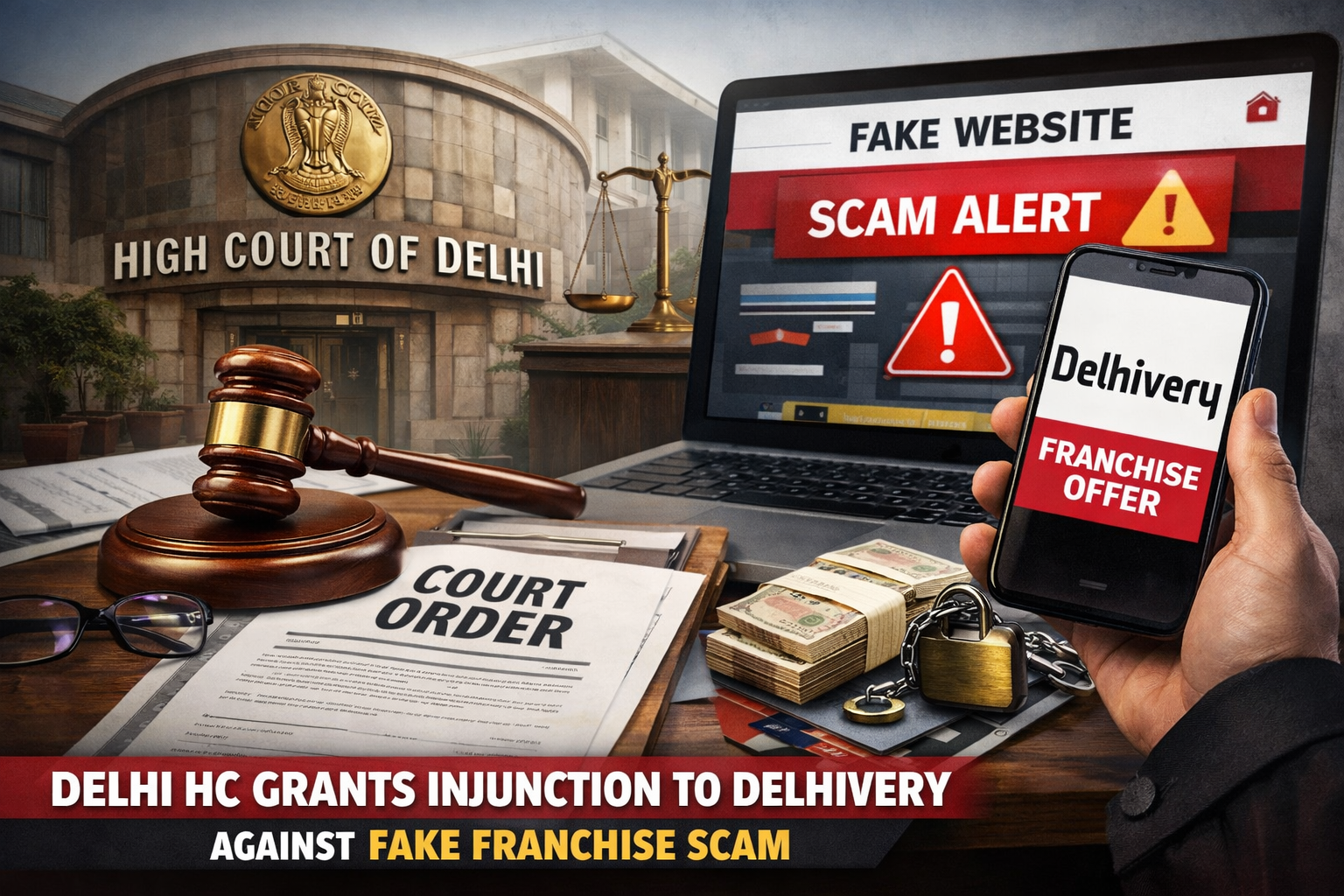
Delhi High Court Grants Injunction to Delhivery in Fake Franchise Scam

Delhi High Court grants injunction to Delhivery against fake franchise and trademark scam

In a strong message against online fraud and brand impersonation, the Delhi High Court has granted an ex-parte interim injunction in favour of logistics major Delhivery Limited, restraining unknown entities from misusing its trademark, brand identity and franchise name to run fraudulent schemes. The order targets a growing ecosystem of fake websites, emails and phone calls that allegedly duped the public by posing as authorised Delhivery representatives.

The ruling reflects the judiciary’s increasingly firm approach to digital trademark abuse, especially where brand misuse directly harms consumers.

A Case of Digital Deception

Delhivery approached the High Court after discovering that several individuals were falsely representing themselves as the company or its authorised agents. These impostors allegedly used deceptively similar domain names, copied branding elements and official-looking communications to offer fake franchise and distributorship opportunities.

According to the company, unsuspecting individuals were asked to deposit money for franchises, courier partnerships or delivery services that had no connection with Delhivery. By the time victims realised the truth, the money had already changed hands and the perpetrators had disappeared behind digital anonymity.

Delhivery argued that such activities not only caused financial loss to the public but also severely damaged its brand reputation, goodwill and consumer trust built over years.

Court Finds Strong Prima Facie Case

The matter was heard by Justice Jyoti Singh, who found that Delhivery had established a strong prima facie case of trademark infringement and passing off. The court observed that the defendants’ use of the Delhivery name and deceptively similar marks appeared calculated to mislead the public into believing there was a legitimate association with the company.

Given the urgency of the situation and the continuing harm to consumers, the court granted ex-parte relief — meaning the order was passed without first hearing the alleged infringers. Such relief is typically reserved for cases where delay could cause irreparable damage.

Sweeping Injunction and Enforcement Orders

The High Court passed a comprehensive interim order restraining the defendants from using the “Delhivery” mark or any deceptively similar name in any form. This includes usage in domain names, email addresses, websites, promotional material, franchise agreements or business communications.

Beyond a standard injunction, the court issued multiple enforcement-focused directions aimed at cutting off the fraud at its source. Domain name registrars were directed to suspend and lock websites that used infringing domain names. Telecom service providers were ordered to disclose subscriber details linked to phone numbers used in the scam. Banks holding accounts associated with the fraudulent activities were instructed to share KYC details and take steps to freeze or suspend those accounts.

These directions reflect a broader trend in Indian courts, which are increasingly adopting a multi-agency approach to tackle digital fraud rather than limiting relief to paper injunctions.

Why the Ruling Matters

The Delhivery order is significant for several reasons.

First, it highlights how trademark infringement has evolved from physical imitation to sophisticated digital impersonation. Fraudsters today rely on look-alike websites, cloned logos and professional-sounding emails rather than counterfeit goods or storefronts.

Second, the order places consumer protection at the centre of trademark enforcement. The court recognised that such scams primarily target ordinary citizens looking for business opportunities, employment or partnerships. By acting swiftly, the judiciary aims to prevent further financial harm.

Third, the case reinforces that well-known brands have a legal duty — and now judicial backing — to actively protect their trademarks in cyberspace. Failure to act quickly can allow scams to spread and damage brand credibility beyond repair.

Part of a Larger Judicial Pattern

The Delhivery injunction fits into a broader pattern of recent decisions where Indian courts have stepped in to curb fake franchises, recruitment scams and impersonation rackets. Over the past few years, courts have passed similar orders in cases involving food delivery platforms, quick-commerce startups and consumer brands whose names were misused online.

What sets this case apart is the scale of enforcement. By involving domain registrars, telecom companies and banks, the court has shown that online fraud cannot be addressed in silos. Digital scams operate across platforms, and legal remedies must do the same.

Ex-Parte Relief: A Powerful Tool

Ex-parte injunctions are often criticised for being drastic, but courts grant them sparingly. In this case, the court was persuaded that immediate action was necessary to prevent ongoing harm. If the defendants were given advance notice, the fraudulent operations could simply shift domains, phone numbers or bank accounts.

By freezing the infrastructure of the scam, the court ensured that the relief was practical, not merely symbolic.

Implications for Businesses and Consumers

For businesses, the ruling is a reminder to actively monitor brand misuse online and respond swiftly through legal channels. Courts are increasingly receptive to evidence of digital impersonation and willing to grant urgent relief when the facts justify it.

For consumers, the case serves as a cautionary tale. Franchise and partnership offers from well-known brands should always be verified through official websites and communication channels. Courts can intervene, but prevention remains the first line of defence.

What Lies Ahead

The matter has been listed for further hearing, where the court will examine additional evidence and consider whether the interim injunction should be confirmed, expanded or converted into a permanent order. The identification of the individuals behind the scam will also be a key focus as authorities act on the disclosures ordered by the court.

Legal experts believe the case could further strengthen jurisprudence on digital trademark enforcement and set benchmarks for coordinated action against online fraud.

Conclusion

The Delhi High Court’s order in favour of Delhivery sends a clear and timely message: digital impersonation and fake franchise scams will not be tolerated. By combining trademark law with robust enforcement mechanisms, the court has demonstrated how the legal system can adapt to modern forms of fraud.

As online commerce and digital branding continue to expand, such rulings are likely to play a crucial role in protecting both businesses and the public from increasingly sophisticated scams.

Perplexity AI Trademark Win Hits Legal Roadblock as Court Reopens Case

Perplexity AI trademark dispute as US federal court reviews cancellation order

A federal trademark battle involving fast-rising AI search company Perplexity AI Inc. has taken a dramatic turn. What first looked like a decisive courtroom victory has now slipped into legal uncertainty. A U.S. judge has withdrawn an order canceling a rival firm’s trademark and reopened a critical question: Did the court have the authority to cancel it at all?

The reversal underscores how procedural law can reshape high-stakes intellectual property disputes. It also highlights the growing pressure on courts as artificial intelligence companies clash with traditional trademark holders over names, brands, and market identity.

A Swift Win, Then a Sudden Stop

In January, Perplexity AI appeared to score a clear win against Perplexity Solved Solutions Inc., a Texas-based software company that held a federal trademark registration for the word “Perplexity.” The court ruled in favor of the AI company after the Texas firm failed to defend its claims once its lawyers withdrew from the case.

The judge found that the trademark registration could be canceled due to fraud and procedural default. For Perplexity AI, the ruling offered immediate relief. It removed a legal obstacle hanging over its rapidly expanding brand and sent a strong signal to competitors and critics alike.

But that victory did not last long.

Days later, the same judge vacated the order. She raised concerns about jurisdiction, questioning whether the court retained the power to cancel the trademark after dismissing the underlying claims. The court has now ordered Perplexity AI to explain why the cancellation should still stand under federal law.

The ruling transformed a clean win into a renewed legal test.

Understanding the Jurisdiction Question

At the heart of the dispute lies a technical but powerful legal issue. Federal courts can only issue rulings when they have clear jurisdiction. If a case is dismissed too early, courts may lose authority to grant additional remedies, including trademark cancellation.

In this case, the judge signaled concern that the court may have crossed that boundary. Even if the trademark was vulnerable, the court must first confirm it had the legal right to invalidate it.

Legal analysts say this move reflects judicial caution rather than doubt about the merits of Perplexity AI’s arguments. Courts are increasingly careful when issuing orders that affect federal trademark registers, especially when one party is absent.

How the Trademark Fight Began

The dispute began when Perplexity Solved Solutions sued Perplexity AI, accusing the startup of trademark infringement and unfair competition. The Texas company argued that Perplexity AI’s name, branding, and online presence caused confusion among customers and violated its registered rights.

Perplexity Solved Solutions, founded years before the AI startup, offers enterprise software tools and collaboration platforms. It secured its federal trademark registration in 2022, years before Perplexity AI became a global name in AI-powered search.

Perplexity AI responded aggressively. It denied confusion claims and countered with a strategy aimed at wiping the trademark off the books entirely. When the Texas firm stopped actively defending the case, the AI company pushed for default judgment.

That strategy initially worked.

Default Judgment vs. Due Process

Default judgments are legal shortcuts with serious consequences. Courts issue them when one party fails to participate in litigation. While efficient, they also raise due-process concerns, especially in cases involving permanent remedies like trademark cancellation.

By vacating the cancellation order, the judge signaled the need to balance speed with fairness. The court must ensure it follows proper legal steps, even when one side stops participating.

This moment illustrates how procedure can outweigh substance. Even a strong argument can collapse if the court lacks authority to act.

A Pattern of IP Pressure on AI Firms

The trademark fight is not an isolated challenge for Perplexity AI. The company has become a central figure in broader legal battles over how artificial intelligence systems use names, content, and data.

As AI platforms grow more visible, they increasingly collide with traditional intellectual property law. Publishers, software firms, and brand owners argue that AI tools blur lines of ownership and attribution. AI companies counter that innovation demands flexibility and transformation.

Perplexity AI sits squarely in that tension. Its business model depends on summarizing, referencing, and synthesizing information at speed. That model has drawn scrutiny not only from trademark holders but also from content publishers and media organizations.

Comparing the Stakes: AI Startups vs. Legacy Brands

The Perplexity dispute highlights a growing divide in the digital economy.

AI-driven startups move fast. They scale globally. Their brands become valuable almost overnight. They often challenge existing IP frameworks and push courts to adapt.

Legacy rights holders, by contrast, rely on formal registrations and established legal protections. They see trademarks as shields against confusion and dilution. For them, enforcement is survival.

This clash creates friction. Courts must now decide how to apply decades-old trademark principles to companies whose products and reach did not exist when those rules were written.

What Happens Next

Perplexity AI now faces a clear task. It must convince the court that it still has jurisdiction to cancel the trademark, even after dismissing the original claims. If the court agrees, the cancellation may be reinstated. If not, the trademark could survive, forcing a new phase of litigation or settlement talks.

The outcome will matter beyond this case. It could influence how courts handle trademark cancellations tied to default judgments. It could also shape how aggressively AI companies pursue brand protection through litigation.

Why This Case Matters

This dispute goes beyond one word or one company. It reflects a legal system struggling to keep pace with technological change. As AI firms reshape markets and language itself, trademark law faces new tests of relevance and reach.

For Perplexity AI, the stakes are immediate. The company must protect its identity while navigating a legal maze. For the courts, the challenge is broader: enforcing the law without stifling innovation.

For now, the name “Perplexity” remains legally unresolved. The court’s next decision will determine whether the AI company can fully claim it—or whether this battle is only just beginning.

“Tiger” Is Generic, Not Exclusive: Delhi High Court Draws a Clear Line in Trademark Law

Delhi High Court rules Tiger is a generic word in trademark dispute

The Delhi High Court has delivered a sharp and instructive ruling on trademark exclusivity. In a dispute over agricultural implements, the Court held that the word “Tiger” is a common and generic term. It ruled that no single business can claim monopoly rights over it. The judgment reinforces a long-standing principle of trademark law: common words belong to the market, not to one trader.

The decision sends a strong signal to brand owners who rely on popular words to assert exclusive rights. It also offers clarity to small businesses facing aggressive trademark litigation.

The Dispute at a Glance

The case arose from a conflict between two manufacturers of agricultural tools. The plaintiff marketed its products under the registered device mark “TIGER GOLD BRAND.” The defendant sold similar goods using the mark “TIGER PREMIUM BRAND.”

The plaintiff alleged trademark infringement and passing off. It argued that the defendant’s use of “Tiger” caused confusion among consumers. It claimed goodwill built over years of use. It sought an interim injunction to restrain the defendant from using the word.

The defendant pushed back hard. It argued that “Tiger” is a commonly used word in trade. It said the plaintiff had no exclusive right over it. It emphasized that both marks were visually and conceptually different.

The Delhi High Court had to decide whether a common English word, used widely across industries, could be fenced off by one trader.

The Court’s Central Finding: “Tiger” Is Generic

Justice Tejas Karia cut straight to the heart of the issue.

The Court ruled that “Tiger” is a generic and commonly used word. It lacks inherent distinctiveness. Businesses frequently use it to convey strength, power, and aggression. These are descriptive ideas, not indicators of a single commercial source.

The Court made it clear. Trademark law does not reward appropriation of common language. It protects distinctiveness, not popularity.

This finding proved fatal to the plaintiff’s case.

Device Mark vs Word Monopoly

The plaintiff relied heavily on its trademark registration. However, the Court drew an important distinction.

It held that registration of a device mark does not grant exclusivity over individual generic words contained within it. A trader may own the overall visual combination. It cannot isolate a common word and claim absolute control.

The Court emphasized that trademarks must be assessed as a whole, not dissected piece by piece to extract monopoly rights.

This reasoning aligns with settled law. Courts consistently reject attempts to monopolise generic or descriptive components of composite marks.

No Proof of Secondary Meaning

The plaintiff attempted to argue that “Tiger” had acquired distinctiveness through use. The Court was not convinced.

To claim exclusivity over a generic word, a party must prove secondary meaning. That means consumers must associate the word exclusively with one source. This requires strong and specific evidence.

The plaintiff failed to provide such proof.

There was no compelling data. No consumer surveys. No market studies. No material showing that buyers identified “Tiger” solely with the plaintiff’s goods.

Without this evidence, the claim collapsed.

Comparative Test: Are the Marks Similar?

The Court then compared the two marks side by side.

It examined their visual appearance, overall structure, and trade presentation. It looked at how an average consumer with imperfect recollection would perceive them.

The result was clear.

TIGER GOLD BRAND” and “TIGER PREMIUM BRAND” were not deceptively similar. Their designs, get-up, and overall impressions differed. The shared word “Tiger” alone could not create confusion.

The Court stressed a crucial rule. Trademark comparison is holistic. Courts do not focus on isolated elements. They consider the total commercial impression.

On this test, the plaintiff failed again.

Passing Off Claim Falls Flat

The plaintiff also alleged passing off. That required proof of three elements: goodwill, misrepresentation, and damage.

The Court found gaps at every level.

While the plaintiff claimed reputation, it did not demonstrate exclusivity over the word “Tiger.” Without exclusivity, misrepresentation could not be established. Without misrepresentation, the question of damage did not arise.

The passing off claim therefore lacked substance.

Interim Injunction Denied

Given these findings, the Court refused to grant an interim injunction.

It held that the plaintiff failed to establish a prima facie case. The balance of convenience did not favour restraint. Preventing the defendant from using a generic word would unfairly restrict trade.

The decision preserves competition. It prevents misuse of trademark law as a weapon against market rivals.

A Comparative Perspective: What the Judgment Reinforces

This ruling fits squarely within broader trademark jurisprudence.

Courts have repeatedly held that generic and descriptive words must remain free for all. Granting exclusivity over such terms would distort markets. It would allow brand owners to corner language itself.

In contrast, invented words, unique combinations, and distinctive logos enjoy strong protection. They perform the true function of a trademark. They identify source. They reduce consumer confusion.

The Delhi High Court’s judgment reinforces this balance.

Impact on Businesses and Brand Strategy

The ruling carries clear lessons for businesses.

First, choosing a popular word is not enough. Without distinctiveness, enforcement will be weak.

Second, companies must invest in unique branding elements. Logos, stylisation, colour schemes, and coined terms offer stronger legal shields.

Third, aggressive litigation based on generic words can backfire. Courts are increasingly alert to overreach.

For small businesses, the judgment offers reassurance. It protects them from being pushed out by larger players claiming ownership over everyday words.

Why This Decision Matters

This case goes beyond “Tiger.” It addresses a recurring problem in trademark disputes.

Many brand owners attempt to stretch trademark rights beyond their legal limits. They rely on registration without understanding its scope. They seek injunctions to block competitors from using common language.

The Delhi High Court has drawn a firm line.

Trademark law exists to prevent confusion, not to eliminate competition. It protects innovation, not imitation of language itself.

The Road Ahead

As Indian markets grow more crowded, trademark conflicts will increase. Courts will continue to face pressure to grant quick injunctions.

This judgment shows judicial restraint. It favours principle over power. It prioritises market fairness over brand aggression.

In doing so, it strengthens confidence in India’s intellectual property system.

Final Word

The Delhi High Court’s ruling delivers a powerful message. Generic words cannot be owned. Popularity does not equal exclusivity. Registration does not override common sense.

For trademark owners, the lesson is simple. Build brands, not monopolies. Create identity, not entitlement.

In the battle between common language and private control, the Court has chosen clarity.

Court Crushes Zydus Challenge – Helsinn Secures Akynzeo Patent Victory

Wooden judge's gavel resting on a sounding block, symbolizing a decisive court ruling in a legal battle over intellectual property.

The Delhi High Court slams the door on Zydus Healthcare’s bold challenge. Swiss innovator Helsinn Healthcare SA emerges victorious. Justice Tejas Karia dismisses Zydus’s writ petition outright on December 24, 2025. The court upholds a key patent for a breakthrough anti-nausea drug.

Zydus Lifesciences - Wikipedia

Helsinn triumphs. The patent protects Akynzeo, a powerful fixed-dose combination. It pairs netupitant (300 mg) with palonosetron (0.5 mg). This duo targets chemotherapy-induced nausea and vomiting (CINV). Cancer patients endure brutal side effects from treatment. Akynzeo attacks both acute and delayed phases. It blocks NK1 and 5-HT3 receptors simultaneously. Patients gain long-lasting relief in one capsule.

Zydus strikes first. The Indian generic giant files a pre-grant opposition in 2021. Helsinn submits voluntary amendments during prosecution. Zydus cries foul. It claims amendments expand claims illegally. It alleges violations of Section 59 of the Patents Act. The Mumbai Patent Office rejects these arguments. Controllers grant Indian Patent No. 426553 in March 2023.

Akynzeo: Package Insert / Prescribing Information / MOA

Zydus refuses to back down. It launches a writ petition in Delhi High Court. The company demands quashing the grant. It accuses the Patent Office of jurisdictional errors. It charges breaches of natural justice. Zydus insists it deserves a hearing on post-opposition amendments.

Justice Karia dismantles these claims. The court rules firmly: Delhi lacks territorial jurisdiction. The Mumbai Patent Office handled the grant. Challenges must target the appropriate High Court – Bombay. No jurisdictional error taints the process. Pre-grant opposition and examination run as separate tracks. Opponents hold no automatic right to hearings on amendments.

The judge stresses clarity. No separate order requires pre-First Examination Report amendments. Helsinn follows rules meticulously. The Patent Office issues proper notices. It provides fair opportunities. Zydus suffers no violation of natural justice.

This ruling fortifies originator protections. Helsinn shields its innovation fiercely. Akynzeo transforms cancer supportive care. Guidelines worldwide endorse this triple regimen with dexamethasone. It prevents nausea in highly emetogenic chemotherapy.

In India, Glenmark markets Akynzeo under license. Helsinn partners strategically. The drug reaches patients swiftly. Generic threats loom large. Zydus eyes early entry. Other firms like Hetero face similar battles. Helsinn secures interim injunctions elsewhere. It blocks infringing formulations aggressively.

Experts hail the decision. It curbs forum shopping. Patent challengers must file correctly. Courts intervene sparingly in administrative grants. Only glaring illegalities trigger writ relief.

Zydus explores options. The company may refile in Bombay High Court. Post-grant opposition remains open. Counterclaims arise in infringement suits. Helsinn stands ready to defend.

This clash spotlights India’s pharma battlefield. Originators safeguard rewards for risky R&D. Generics push affordable access aggressively. Combination therapies spark fierce disputes. Evergreening accusations fly often.

Patients win ultimately. Robust patents drive innovation. They deliver superior treatments like Akynzeo. Reliable relief empowers cancer fighters. They battle disease without debilitating nausea.

The industry watches closely. This precedent shapes future fights. Territorial rules tighten. Procedural challenges weaken. Innovators gain ground.

Helsinn celebrates quietly. The Swiss firm advances cancer care globally. Akynzeo leads its portfolio. Protection endures in key markets.

Zydus persists undeterred. The generic powerhouse expands relentlessly. It targets blockbuster opportunities.

India’s patent ecosystem evolves. Courts balance interests skillfully. Innovation thrives. Access improves gradually.

This victory resonates deeply. Helsinn protects a vital lifeline for millions. Cancer patients endure enough. Akynzeo eases their burden dramatically.