
Delhi High Court Rules in Favor of Bata in Power Flex Infringement Case

Bata POWER shoe logo vs Red Chief POWER FLEX footwear - Delhi High Court ruling

In a significant victory for established brands protecting their intellectual property, the Delhi High Court has dismissed appeals challenging a 2019 interim injunction that bars the use of the mark “POWER FLEX” in footwear products. The ruling reinforces Bata India Limited’s exclusive rights to its iconic “POWER” trademark, highlighting the risks of adopting similar marks even in slightly different product segments.

A Division Bench comprising Justices C. Hari Shankar and Om Prakash Shukla upheld the single-judge order from 2019, which had initially restrained Leayan Global Private Limited – the company behind the popular Red Chief footwear brand – from using “POWER FLEX” pending the outcome of the main trademark infringement suit.

The dispute dates back to 2019 when Bata, a household name in India’s footwear market, filed a suit alleging infringement, passing off, and unfair competition. Bata claimed that Leayan’s adoption of “POWER FLEX” for its leather shoes diluted the distinctiveness and goodwill associated with Bata’s “POWER” brand, primarily used for sports and canvas footwear since the 1970s.

Bata has multiple trademark registrations for “POWER,” both as a standalone word and in combination with devices or other terms. The company argued that “POWER” had acquired secondary meaning through decades of exclusive use, massive sales figures, and endorsements by sports personalities, making it strongly associated with Bata in consumers’ minds.

Leayan, on the other hand, contended that “POWER” is a common laudatory term meaning strength or durability, unsuitable for monopoly. They further argued that “POWER FLEX” was always used alongside their house mark “RED CHIEF,” targeted leather footwear rather than sports shoes, and posed no real confusion risk. Leayan also proposed undertakings to limit usage and avoid prominence to “POWER.”

The Division Bench rejected these defenses, finding a prima facie case of confusion. The court noted that “POWER” forms the dominant and essential part of “POWER FLEX,” potentially leading average consumers – who may not scrutinize differences in sub-categories like leather versus canvas – to believe the products originate from or are affiliated with Bata.

Importantly, the judges observed that even if “POWER FLEX” appears on packaging with “RED CHIEF,” its standalone use inside shoes could still mislead buyers. The court also dismissed arguments on delay or honest concurrent use, emphasizing Bata’s vigilance in opposing similar marks over the years.

However, the bench allowed Leayan to continue using the tagline “THE POWER OF REAL LEATHER,” viewing it as descriptive of material quality rather than a trademark, provided no undue emphasis is given to “POWER.”

This decision underscores the strength of well-established trademarks in India, even when they incorporate common words, if long-term use has built unique goodwill. Legal experts say it serves as a cautionary tale for competitors entering crowded markets: adding suffixes like “FLEX” to a dominant registered mark may not suffice to avoid infringement claims, particularly in related goods like footwear variants.

The underlying suit for permanent injunction, damages, and other reliefs remains pending before the single judge. Leayan may explore further appeals, but the upheld interim order maintains the status quo in Bata’s favor for now.

The ruling aligns with broader judicial trends protecting brand equity in India’s growing consumer market, where established players like Bata continue to dominate through rigorous IP enforcement.

Former Champion Jinder Mahal Challenges WWE “The Maharaja” Trademark

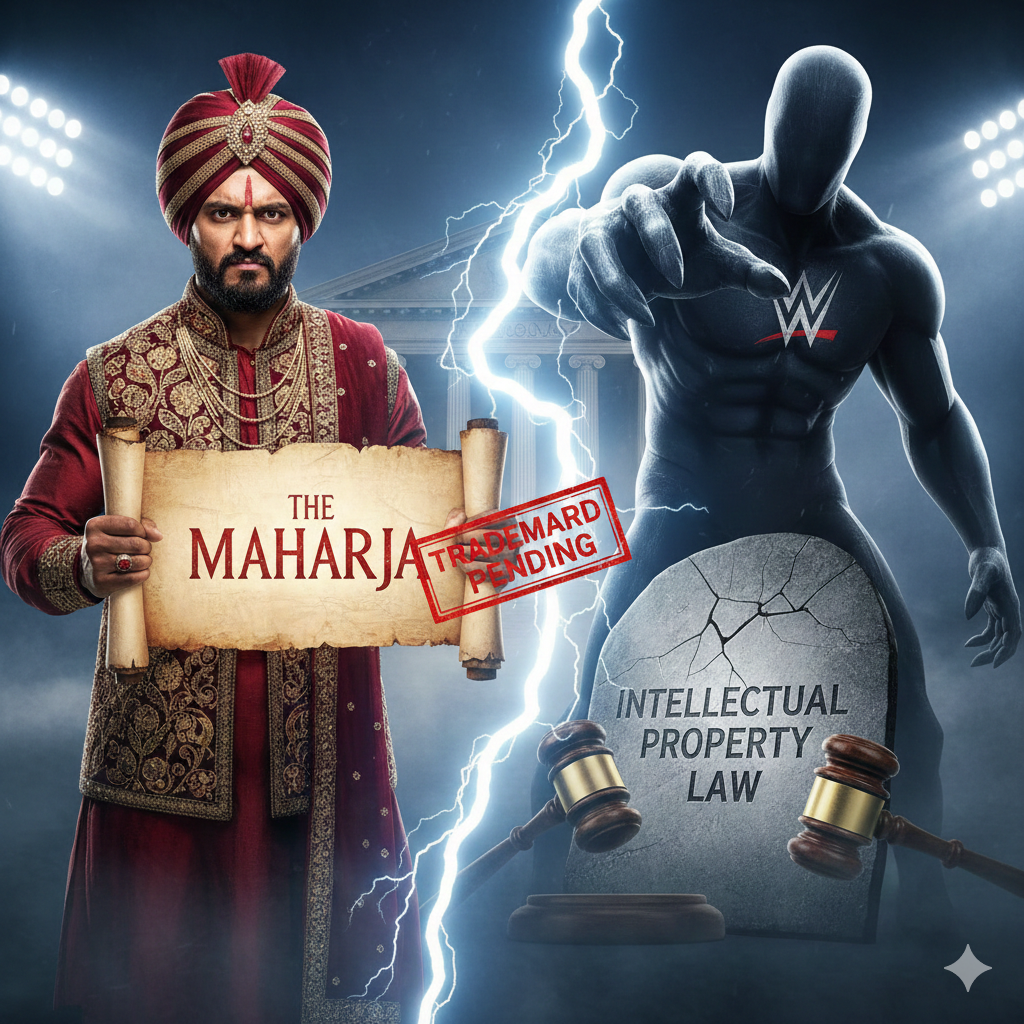
Digital illustration showing Jinder Mahal dressed as The Maharaja on the left, holding a scroll labeled 'The Maharaja Trademark Pending,' facing a shadowy, muscular figure representing WWE on the right. A lightning bolt separates them, and the WWE figure stands near a cracked tombstone labeled 'Intellectual Property Law,' with two judge's gavels on the ground.

The world of professional wrestling is buzzing. Former WWE Champion Jinder Mahal, whose real name is Raj Dhesi, has launched a major legal challenge against his former employer, World Wrestling Entertainment (WWE).

Dhesi is fighting for ownership of the in-ring persona, “The Maharaja.”


The Heart of the Battle

This dispute reveals a critical industry-wide conflict. Who truly owns a wrestler’s identity? Is it the performer who brings the character to life? Or is it the multi-million dollar corporation that employs and markets them?

WWE holds the trademark for “The Maharajah.” They secured this ownership in 2017.

Raj Dhesi contests this claim. He asserts he developed and used the “Maharaja” name as early as 2015. This was before the company made its official trademark claim. Dhesi argues the character belongs to him. He insists the persona is his creation, not a product of WWE’s creative team.


Legal Action Escalates

Dhesi first tried to register his own trademark. The U.S. Patent and Trademark Office (USPTO) rejected his attempts. They cited a “likelihood of confusion” with WWE’s existing ownership.

Dhesi refused to back down. He changed tactics. On December 4, 2025, Dhesi submitted a formal petition. This filing asks the USPTO to cancel WWE’s trademark entirely. Dhesi accuses the company of obtaining the trademark by “wrongful means.”

WWE must now prepare a defense. The wrestling giant has until February 3, 2026, to respond to Dhesi’s petition.


Industry Consequences Loom

The outcome of this case holds massive implications. It threatens to overturn decades of established wrestling business practices.

For years, WWE has kept tight control. They rarely allow talent to use their character names outside the company. If Dhesi wins, this legal precedent could have widespread effects.

  • Talent Empowerment: A victory could encourage other former wrestlers. They might sue to reclaim names and personas they helped develop.
  • IP Redefinition: The challenge forces WWE and the entire industry to rethink character ownership. It may redefine the line between talent creative rights and corporate intellectual property (IP).

Since his WWE release in April 2024, Dhesi has continued to use the name. He performs as “The Maharaja” on the independent circuit. This ongoing usage strengthens his claim. He aims to prove that the identity remains his own, separate from the corporation.

The industry watches closely. The final ruling will impact how wrestling companies manage their most valuable assets: their performers and their characters.

Delhi High Court Restores Trademark Infringement Suit

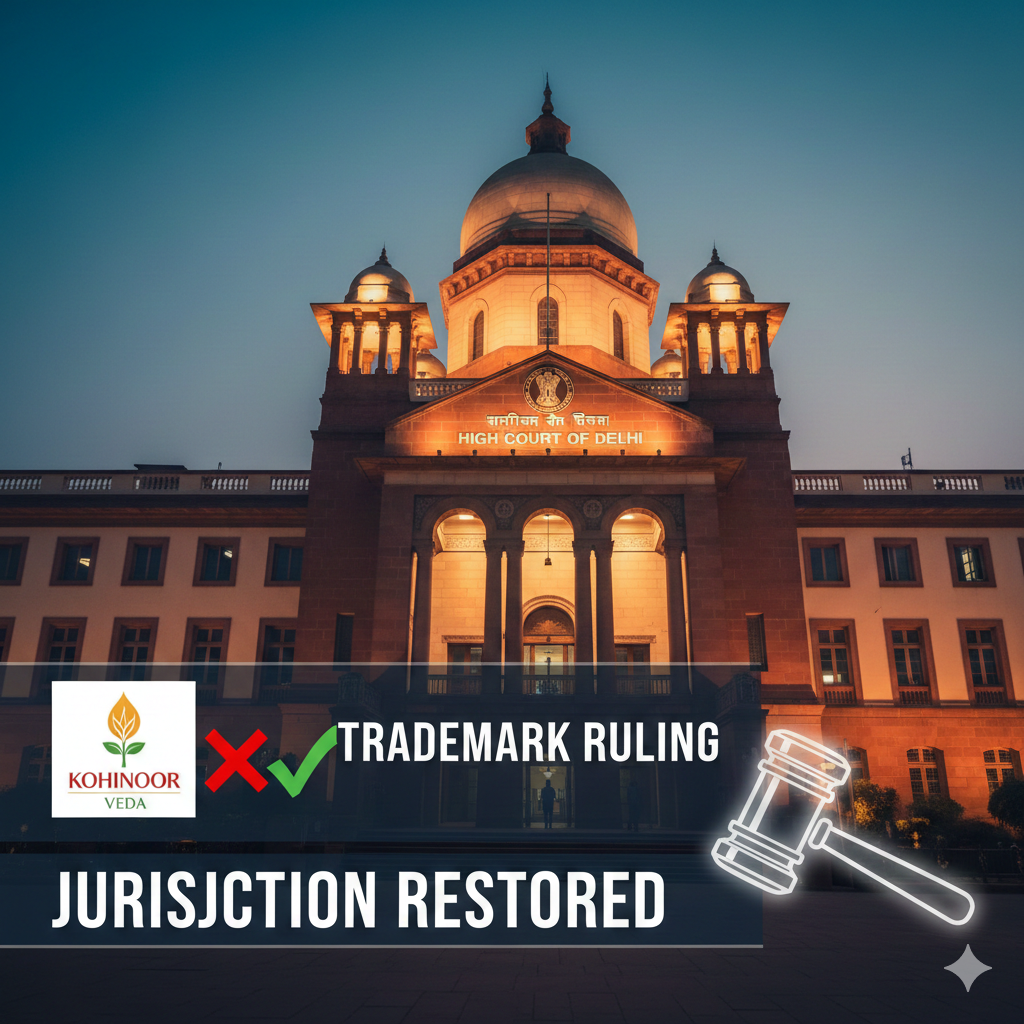
Delhi High Court building at dusk with overlaid text: "Trademark Ruling" and "Jurisdiction Restored," symbolizing the Kohinoor Seed vs Veda Seed case.

The Delhi High Court’s Division Bench restored the trademark infringement suit filed by Kohinoor Seed Fields India Pvt. Ltd. against Veda Seed Sciences Pvt. Ltd., setting aside an earlier order by a Single Judge that had returned the plaint due to a lack of territorial jurisdiction.

The Court held that a substantial part of the cause of action arose within Delhi’s jurisdiction, thereby allowing the suit to proceed on its merits.


Key Grounds for Restoring Jurisdiction

The Division Bench identified two primary factors that conferred territorial jurisdiction on the Delhi High Court:

  1. Registration of Trademarks in Delhi:
    • Kohinoor Seed’s registered trademarks, “TADAAKHA” and “SADANAND”, were registered in Delhi.
    • The Court held that the mere fact that the asserted marks were registered within the jurisdiction of the High Court was a factor that, by itself, entitled the appellant to institute the suit in Delhi.
  2. Execution of Marketing Agreement in Delhi:
    • The non-exclusive co-marketing agreement, which was at the heart of the dispute, was executed in New Delhi. This agreement allowed Veda Seed to market Kohinoor’s seeds under the marks (including the unregistered mark “BASANT”) until it expired in 2022.
    • The Court ruled that since the agreement formed an integral part of the cause of action—as the alleged infringement occurred after the agreement’s termination and involved marks initially licensed—the Court within whose jurisdiction the agreement was executed has jurisdiction to adjudicate the dispute.

Details of the Dispute

  • Kohinoor’s Marks: Registered trademarks “TADAAKHA” and “SADANAND”, and unregistered mark “BASANT”, all used for cotton hybrid seeds.
  • Veda Seed’s Allegedly Infringing Marks: “VEDA TADAAKHA GOLD BG II,” “VEDA SADANAND GOLD BG II,” and “VEDA BASANT GOLD BG II.”
  • Background: The parties had a co-marketing agreement from 2014 to 2022. Post-termination, Kohinoor alleged that Veda Seed began selling its own seeds using deceptively similar marks.
  • Single Judge’s View (Set Aside): The Single Judge had accepted Veda Seed’s argument that its operations were limited to Andhra Pradesh and Telangana, and that online listings (on IndiaMart/Kalgudi) were insufficient to establish jurisdiction.
  • Division Bench’s View on Online Listings: The Division Bench observed that the question of Veda Seed’s direct or indirect involvement in the online listings of the allegedly infringing goods was a matter that required a full trial and could not be dismissed at the preliminary stage.

The Division Bench, therefore, allowed the appeal, setting aside the previous order, and restored the trademark infringement suit to be heard on its merits.

The Patent Paradox: Why India’s Startup Filing Surge is 83% Failure and All About Optics

Fragile gold patent scroll on a precarious foundation, with the number 83% failure rate overlaid, symbolizing the optical illusion of India's startup patent filing surge.

A deep dive into the intellectual property (IP) landscape of India’s booming startup sector reveals a critical gap between ambition and execution, suggesting that the much-lauded surge in patent filings is predominantly a tactical exercise in investor signalling rather than a genuine marker of technological innovation. The core issue, critics argue, is a “crisis of intent” where patents function as “decorative rather than functional” assets.   

While global bodies like the World Intellectual Property Organization (WIPO) have celebrated India’s rapid ascent—the WIPO 2024 report noted a phenomenal 15.7% growth in patent applications in 2023, positioning the country 6th globally with 64,480 filings —the internal data paints a sobering picture of weak follow-through.   

The Data Gap: 83% of Startup Patents Fail to Secure a Grant

Analysis of the startup patent pipeline from 2021 through 2025 reveals a profound drop-off rate, demonstrating that the vast majority of filings are not carried through to completion.   

During this five-year period, Indian startups filed a robust 13,089 patent applications. Yet, only 2,174 of these successfully navigated the examination process to achieve the grant stage. This results in a grant success rate of barely 16.6%, meaning approximately one out of every six startup filings becomes an enforceable, proprietary asset.   

The failure rate is compounded by active abandonment. Nearly 500 startup patent applications were explicitly withdrawn or abandoned early, often due to the filers failing to complete detailed specifications or respond to subsequent office actions required by the Patent Office.   

This pattern extends beyond patents. Startups filed 44,517 trademark applications during the same period, with over 1,300 subsequently abandoned. Analysts suggest this widespread non-prosecution across IP types confirms that the primary function of the filing is “brand optics” rather than a rigorous, long-term IP strategy. The high volume of dropped applications confirms that for many, the intent was temporary and instrumental: the patent filing was merely a transaction used to secure funding, not an investment in an enduring intellectual asset.   

Investor Mandate: Patents as Pitch Deck Tools

The distortion in filing behaviour is traced back to the venture capital (VC) ecosystem’s preference for strong valuation narratives. In competitive fundraising rounds, a pending patent application, particularly a cheap and fast provisional filing, serves as a high-visibility proxy for technological differentiation and market moat potential.   

A provisional patent application, which secures an immediate priority date, is leveraged as a “fast, affordable way to strengthen a fundraising narrative” and “create the appearance of a breakthrough innovation”. This mechanism enables a “Capital first, commitment later” ethos.   

The systemic issue is rooted in the fact that investors often prioritize the inclusion of an IP slide over demanding proof of prosecution commitment or demonstrated R&D investment. As the analysis notes, “Once the funding round closes, priorities may shift,” leading to a predictable loss of enthusiasm for the labour-intensive and expensive work required to turn provisional filings into complete specifications. This rational response by founders—underinvesting in expensive, long-term R&D in favour of cheap, high-volume filing tactics—systematically shifts resources away from core innovation.   

Structural Deficiency: India’s R&D Investment Stagnation

The crisis of intent at the startup level is underpinned by a deep, structural R&D deficit at the national level. The commitment to deep, foundational research necessary to generate truly novel and patentable inventions remains structurally low in India.   

Official data from the Department of Science & Technology (DST) confirms that India’s Gross Expenditure on Research and Development (GERD) as a percentage of GDP stood at 0.64% during the fiscal year 2020–21, having remained stagnant between 0.6% and 0.7% in the preceding years (0.66% in 2018–19 and 2019–20).   

This figure is significantly “below global average and lower than countries like China, South Korea and US”. This structural weakness is compounded by low private sector contribution, which accounted for only 36.4% of the total GERD in 2020–21, in sharp contrast to innovation-leading nations where private industry drives over 70% of R&D expenditure.   

This macro-level underinvestment directly correlates with the micro-level deficiencies, as most startups lack “dedicated research teams, technical drafting expertise, prior-art assessment systems, and time for iterative processes” necessary for rigorous patent prosecution.   

Policy Flaw: Incentives Reward Filing, Not Granting

Current government policies designed to stimulate IP activity, while successful in boosting filing volume, have inadvertently intensified the focus on volume over quality. The government successfully implemented significant fee concessions, including an 80% reduction in patent filing fees for startups, MSMEs, and educational institutions.   

However, the design flaw is that these incentives are tied to the input stage (filing) rather than the output stage (grant or commercialization). By heavily subsidizing the initial filing, the state inadvertently subsidizes the creation of the fundraising narrative for VCs. Once the provisional application is lodged, the startup has secured its priority date and the narrative benefit, but the subsequent costly work of prosecution remains unassisted, cementing the low-commitment behaviour.   

Blueprint for Genuine Innovation: Shifting from Decoration to Depth

To foster genuine innovation and correct the systemic inefficiencies, experts advocate for a strategic overhaul of incentives and infrastructure.   

  • Realign Incentives: Government benefits, including subsidies and fast-track examination provisions, must be decoupled from the act of filing and strategically tied to demonstrable outcomes, such as patent grants, successful long-term renewal, or demonstrable commercial utilization.   
  • Enhance Capacity: Urgent investment in the Patent Office is mandatory, including expansion of examiner capacity and specialized domain expertise. There is a pronounced need for more technically specialized patent officers, particularly in cutting-edge technological areas like AI, biotech, semiconductors, climate-tech, and advanced manufacturing.   
  • Strengthen R&D Culture: The government should offer targeted, co-funded grants and innovation-linked incentives for startups that demonstrate a commitment to establishing and maintaining dedicated R&D teams or formalized collaboration with research institutions.   
  • Promote Co-patenting: Actively promoting policy frameworks that encourage joint patent filings (co-patenting) between startups and premier academic/research institutions, such as the IITs and national labs, would guarantee a higher technical standard for the filings and create structured pathways for knowledge transfer.   

The conclusion remains clear: for India to genuinely transition from an IP volume leader to a global innovation power, the focus must shift from decorative filings to functional intellectual assets. Only then can “depth replace decoration” and solidify India’s reputation as a serious, quality-driven innovation hub.   

Bill Belichick, Jordon Hudson File “Gold Digger” Trademark

Former NFL coach Bill Belichick and his partner Jordon Hudson have filed for a trademark on the phrase “Gold Digger”, aiming to launch a jewelry and keychain line. The move, made through Hudson’s company Trouble Cub Enterprises, has raised eyebrows for its cheeky play on public perception.

A Pattern of Bold Trademarks

This is not Hudson’s first attempt at creative branding. Earlier, she applied for phrases tied to Belichick’s coaching career, adding the suffix “(Bill’s Version)” to slogans such as “Do Your Job” and “No Days Off”. The approach mirrors singer Taylor Swift’s re-recording strategy, but trademark experts note that many of these filings may face opposition from the New England Patriots, who already own rights to those phrases.

The “Gold Digger” filing, however, takes a different route. It leans less on sports legacy and more on irony, aiming to turn a controversial label into a profitable business identity.

Similar Trademark Gambits in India

India has witnessed several unconventional and controversial trademark filings, where personal branding, cultural sensitivity, and commercial ambition collided:

  • Reliance’s “Operation Sindoor”: Reliance Jio Studios filed a trademark referencing India’s military strikes. The move was met with backlash for commercializing a sensitive event, forcing the company to withdraw the application.
  • Dhoni’s “Captain Cool”: Former cricket captain MS Dhoni reportedly filed for his nickname as a trademark, sparking buzz and jokes about potential merchandise.
  • Odisha’s Jagannath Temple Terms: The Odisha government sought to trademark phrases linked to the Jagannath Temple in Puri, to prevent misuse of religious and cultural heritage.
  • “Chutiyaram” Rejection: A provocative slang-based application was revoked by the Trademark Office for obscenity.

The Bigger Picture

These cases, in the U.S. and India alike, reveal how trademarks are no longer just about products. They have become tools of personal identity, pop culture, and public relations. From Dhoni protecting his cricketing aura to Hudson reclaiming a controversial label, each filing pushes the boundaries of what can be owned and monetized.

Trademark experts caution that while such applications grab attention, they often face legal hurdles and public backlash. Yet, they highlight a clear trend: branding today is as much about narrative as it is about law.

Operation Sindoor’ Trademark Bids Rejected Amid Public Backlash and Legal Concerns


In a significant move, the Indian government has rejected multiple trademark applications filed for the term “Operation Sindoor”. These applications, submitted shortly after India’s cross-border military action in May 2025, sparked widespread public outrage and legal scrutiny.


🔺 Background: What Is Operation Sindoor?

Operation Sindoor refers to a military operation launched by India on May 7, 2025, targeting terror camps in Pakistan and Pakistan-occupied Kashmir. The action came after the deadly Pahalgam terror attack, which killed 26 people, including security personnel and civilians.

The codename quickly became a symbol of national pride and military valor. However, its use in trademark filings triggered criticism for trying to commercialize a sensitive national event.

Learn more about India’s military operations.


📝 Trademark Race Begins

On the same day as the operation, at least four trademark applications for “Operation Sindoor” were filed with the Indian Trademark Registry under Class 41. This class includes services such as film production, education, and entertainment.

The applicants included:

  • Reliance Industries (Jio Studios)
  • A retired Air Force officer
  • A Mumbai-based lawyer
  • An individual from the entertainment industry

Class 41 under Indian Trademark Law


🛑 Reliance Withdraws Application

Facing public outrage, Reliance Industries swiftly withdrew its application. On May 8, 2025, the company clarified that the filing was inadvertent and made by a junior employee without authorization.

“Reliance has no intention to use or commercialize a term that reflects the courage and sacrifice of our armed forces,” the company said in a public statement.

Read the full Reliance withdrawal statement here.


⚖️ Government Rejects All Applications

On August 1, 2025, the Commerce and Industry Ministry confirmed in the Rajya Sabha that all applications related to “Operation Sindoor” were formally rejected.

This decision was based on:

  • Section 9(2)(b) of the Trade Marks Act, 1999, which bars marks that offend public sentiment
  • The Emblems and Names (Prevention of Improper Use) Act, 1950, which prohibits using military names for private gains

View the Trade Marks Act, 1999
View the Emblems and Names Act, 1950


🔊 Public and Legal Reactions

The trademark filings led to a strong backlash from civil society, legal experts, and political leaders.

  • Many labeled the act as “moment trademarking”—a trend where individuals or companies rush to claim terms from national events.
  • Legal experts warned this could set a dangerous precedent and harm the dignity of national operations.
  • A Public Interest Litigation (PIL) has been filed in the Supreme Court, demanding that such terms be barred from commercial registration permanently.

Read more on India’s trademark ethics debate.


📌 What the Law Says

Indian Trademark Law prevents:

  • Use of marks that hurt public order or morality
  • Misleading names that imply government endorsement
  • Registration of military or national symbols

Global Perspective:

Other countries like the US and UK also have provisions barring the trademarking of government or military-related terms.

Explore India’s IPR regime
Compare with US Trademark Law (USPTO)


🔍 What’s Next?

  • All “Operation Sindoor” trademark applications have been officially canceled.
  • The Supreme Court may decide on broader legal safeguards to prevent future misuse of national phrases.
  • Industry experts call for clearer IP policy reforms to address ethical concerns in trademark registration.

📈 SEO Summary

Keywords: Operation Sindoor, Trademark Rejected, Reliance Industries, India Military Operation, Trademark Law India, Public Interest Litigation, Trade Marks Act 1999, National Symbol Trademark

Conclusion:
The rejection of the “Operation Sindoor” trademark filings sends a clear message: national identity is not for sale. As India navigates the complex balance between intellectual property rights and public sentiment, this case may well shape future IP policy.


Nutella Recognized as a Well-Known Trademark by Delhi High Court, Strengthening Ferrero’s Brand Rights in India

In a significant win for global confectionery company Ferrero SpA, the Delhi High Court has officially granted Nutella the status of a well-known trademark under Indian trademark law. This legal recognition provides Nutella with stronger protection against unauthorized use and counterfeit products in India.


⚖️ Court Ruling: A Landmark in Trademark Protection

The case was heard in the matter of Ferrero SpA v. MB Enterprises by Justice Saurabh Banerjee, who concluded that Nutella had built substantial brand equity in India and deserved the enhanced legal safeguards that come with being classified as a well-known trademark.

The Court issued a permanent injunction against MB Enterprises, a firm found producing and distributing counterfeit Nutella jars. In addition to the injunction, the company was directed to pay ₹30 lakh in damages and ₹2 lakh in legal costs to Ferrero.


🧃 Nutella’s Growth in India: A Strong Market Presence

Although Nutella was launched internationally in 1964, it officially entered the Indian market around 2009. Since then, Ferrero has significantly expanded Nutella’s visibility and market penetration across India.

Evidence submitted in court showed that Ferrero invested heavily in brand promotion, with advertising budgets ranging between ₹3 crore and ₹16 crore annually. The company also reported substantial sales, including ₹233 crore in revenue during the 2020–21 financial year, followed by ₹145 crore in 2021–22 and ₹106 crore in 2022–23 (Source – Economic Times).


🚨 Counterfeiting Crisis: Serious Risks for Consumers

The case originated after a Maharashtra FDA raid in October 2021 revealed a large-scale counterfeit operation. Authorities discovered over 950,000 fake Nutella jars and hundreds of thousands of packaging materials mimicking Ferrero’s original branding. The products were being sold across Indian markets under deceptive names.

The court observed that counterfeit edible goods pose serious public health risks, particularly when they target children and families, who are the primary consumers of Nutella.


📜 Legal Implication: Why “Well-Known” Trademark Status Matters

A “well-known” status under Indian trademark law provides extraordinary legal protection, even beyond related categories. It prevents other entities from using similar branding or packaging—even on unrelated goods—if it causes confusion or dilutes the reputation of the original brand.

The ruling is in alignment with international recognition of Nutella’s trademark by global bodies like the World Intellectual Property Organization (WIPO) and the International Trademark Association (INTA).


🌍 Global Brands and Indian Courts: A Growing Trend

Nutella joins a growing list of global names, including Red Bull, Burger King, DHL, and New Balance, that have been granted “well-known” status by Indian courts. These decisions reflect a broader trend in Indian jurisprudence that values trans-border reputation and protects international trademarks from local misuse (Reference – APAA).


✅ Conclusion

With this judgment, Ferrero has secured stronger trademark enforcement in India, protecting its iconic Nutella brand from unauthorized use and market dilution. The decision strengthens consumer trust, promotes brand authenticity, and reinforces the judiciary’s commitment to intellectual property rights.


🔗 External Links:

Delhi High Court Awards ₹8 Lakh to Puma in Trademark Infringement Suit Over Counterfeit Goods

The Delhi High Court has awarded ₹8 lakh in damages to global sportswear giant PUMA SE in a trademark infringement case against a seller of counterfeit products. The court also issued a permanent injunction restraining the defendant from using Puma’s registered trademarks.

⚖️ Court Decision

Justice Saurabh Banerjee, presiding over the case, held that the defendant had willfully violated Puma’s trademark rights by selling fake products bearing identical marks. The court observed that the imitation was not accidental but a deliberate attempt to deceive consumers.

The court noted:

“The products being sold by the defendant are counterfeit, carrying the same logos, marks, and branding, which clearly shows the intent to ride upon the reputation of the plaintiff.”

Since the defendant failed to appear or submit any response despite several notices—especially after February 2024—the case proceeded ex parte.

🔗 Read full judgment coverage on LiveLaw

🛑 Counterfeiting and Consumer Deception

The court emphasized that Puma’s trademarks are well-known globally and have established significant goodwill and consumer trust in India. The defendant, by selling goods with identical marks in the same trade channels, violated the Trade Marks Act, 1999, and engaged in unfair competition.

This judgment aims to set a precedent for stricter action against counterfeiters who infringe on the rights of established brands and mislead Indian consumers.

“This is not a mere case of passing off; it is a case of outright counterfeiting,” the court held.

💰 Damages and Penalty

The High Court awarded Puma ₹8 lakh as compensation, citing the following reasons:

  • The damage to the brand’s reputation.
  • The loss of genuine sales and business.
  • The need to deter such unlawful conduct.

The court rejected symbolic damages and instead granted substantial monetary relief, reinforcing the seriousness of trademark violations.

🧾 Background of the Case

Puma filed the lawsuit after discovering the unauthorized sale of counterfeit Puma products by a local trader. The company sought:

  • A permanent injunction.
  • Damages for trademark infringement.
  • Disclosure of profits earned from fake goods.

Despite several summonses and notices, the defendant remained absent, prompting the court to decide based on the material available.

🔍 Legal Significance

This case highlights India’s growing judicial commitment to protecting IP rights, especially for well-known trademarks. Courts are increasingly awarding higher damages to deter counterfeiting, sending a clear signal to violators.

A similar ruling by the Delhi High Court in March 2025 also awarded ₹11 lakh in damages to Puma in a separate counterfeit case, showing judicial consistency in protecting brand owners.

Court Rules in Favor of WEE POWER Trademark Over Ferrari

In a significant legal decision, the Kuala Lumpur High Court has ruled in favor of Sunrise-Mark Sdn Bhd, a Malaysian company that produces the energy drink WEE POWER, in a trademark dispute brought by luxury Italian carmaker Ferrari SpA.

Ferrari alleged that the WEE POWER logo, which features two rearing horses on either side of a prominent “W”, bore too close a resemblance to Ferrari’s iconic single rearing horse emblem, potentially misleading consumers and damaging Ferrari’s brand identity. However, the court dismissed these claims, stating that the trademarks are distinct in design, context, and usage.


Case Overview

The dispute arose when Sunrise-Mark applied to register the WEE POWER trademark in Malaysia. Ferrari objected, arguing that the drink’s branding, particularly the horse imagery, could cause brand confusion and infringe upon Ferrari’s intellectual property.

The court, however, found the argument to be without sufficient basis. Presiding judge Justice Wong Kian Kheong highlighted that while both logos contain horse figures, their visual representation and overall branding are clearly distinguishable.


Court’s Findings

In the detailed judgment, the court noted several key differences:

Logo Structure: Ferrari’s emblem is a solitary horse standing on its hind legs, a symbol tightly associated with its automotive legacy. In contrast, WEE POWER’s mark features two horses, each facing inward with a stylized “W” at the center and the words “WEE POWER” below.

Sector Disparity: Ferrari is a luxury automobile brand, while Sunrise-Mark produces consumer beverages. The judge stated that it is unlikely any reasonable consumer would associate an energy drink with a supercar manufacturer.

Meaning of “WEE”: The name “WEE” was accepted by the court as being derived from the name of the company’s founder, Wee Juan Chien, rather than an attempt to imitate or draw attention through the use of the English word.

Due to these factors, the court ruled there was no risk of public confusion nor evidence of any intention by Sunrise-Mark to exploit Ferrari’s brand image.


Sunrise-Mark Can Proceed with Trademark

As a result of the decision, Sunrise-Mark is now legally permitted to register and use the WEE POWER logo in Malaysia. The court also ordered Ferrari to bear the legal costs of the proceedings, solidifying the judgment in favor of the Malaysian company.


Company Reactions

Sunrise-Mark issued a statement celebrating the decision as a win for local entrepreneurs and fair competition. The company emphasized that its branding was designed independently and intended to reflect its identity, not to mimic or capitalize on any global trademarks.

Ferrari has not yet released an official statement regarding the ruling or whether it plans to appeal.


Implications of the Ruling

This case highlights the boundaries of trademark protection, especially when large international brands attempt to challenge local firms in unrelated sectors. The decision reinforces that context, industry, and branding clarity are critical in determining trademark conflicts.

This article is for informational purposes only and is based on publicly available reports as of June 2025. It does not offer legal advice. All brand names and logos mentioned are the property of their respective owners.

Yamaha Wins Trademark Case: Importance of Acquired Distinctiveness

The Delhi High Court has ruled in favor of Yamaha Motor Co., directing the Registrar of Trade Marks to restore a cancelled mark based on a rarely used proviso in Section 201. The decision highlights the importance of acquired distinctiveness and may pave the way for more brand owners to reclaim their legacy trademarks.
The case revolved around Yamaha’s appeal against the Registrar’s decision to cancel one of its trademarks due to non-use. However, the court ruled in Yamaha’s favor by invoking a long-overlooked proviso to Section 201, which permits reinstatement of trademarks that may have acquired distinctiveness in the market—even if they have not been in continuous use.

Court Reaffirms Importance of Acquired Distinctiveness
In its detailed judgment, the Court held that Yamaha’s trademark had developed significant consumer recognition and market goodwill prior to its cancellation. Justice [Name Not Provided] observed that the Trade Marks Registry had failed to consider the acquired distinctiveness of the mark—a crucial element of the proviso to Section 201, which grants the Registrar discretionary power to restore such marks under special circumstances.

“Statutory discretion must be exercised in a holistic manner. Ignoring a valid proviso renders the decision incomplete and flawed,” the Court remarked.

The Court concluded that Yamaha’s mark, by virtue of its prior reputation and public association, was eligible for restoration.

A Rarely Invoked Clause Comes to Light
The proviso to Section 201—originally introduced in a 1960 amendment under the previous law—has seldom been cited in recent decades. It allows the Registrar of Trade Marks to restore a cancelled registration if it can be shown that the mark had acquired a secondary meaning or public recognition, thereby distinguishing itself from common or descriptive terms.

Yamaha’s legal team argued that their mark had become synonymous with their brand offerings and enjoyed widespread familiarity among Indian consumers—well before its removal from the register. The court agreed.

Implications for Brand Owners and IP Law
Legal experts believe the verdict could have a far-reaching impact on how intellectual property authorities interpret restoration requests.

“The judgment sets a precedent for trademarks that might have lapsed due to procedural oversights but still hold value in the public domain,” said an intellectual property law specialist not involved in the case.

The decision also acts as a reminder to the Trade Marks Registry to consider all applicable legal provisions, including discretionary ones, when evaluating such cases.

Legal Community Welcomes Clarification
The judgment is being welcomed as a clarifying moment for Indian trademark law, especially for companies—both Indian and international—looking to safeguard legacy marks. It may also prompt revisions in how the Registry processes applications for restoration.

Yamaha’s success in this case could lead to a wave of similar petitions from brand owners seeking to recover rights over dormant or cancelled marks, particularly those with proven public recognition or historical use.

Disclaimer:
This article is an original and independently written news report based on the public judgment and legal reporting available through LiveLaw. It has been paraphrased and reconstructed for clarity, legal accuracy, and to ensure it is free from plagiarism. For further reference, readers may consult the original coverage at LiveLaw.