
China Steps Up Patent Commercialization Drive to Power Innovation-Led Growth

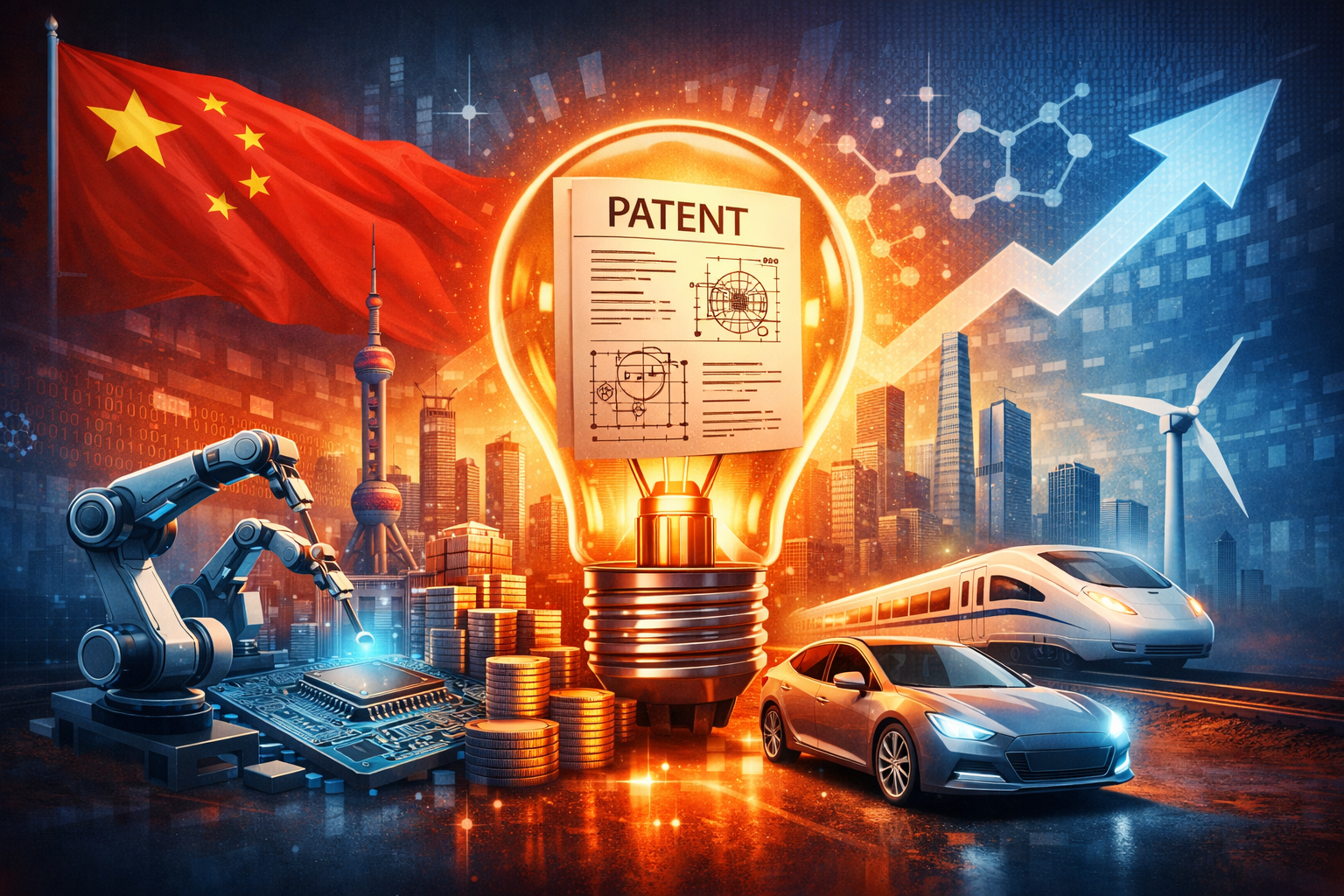
Illustration representing China’s strategy to commercialize patents and transform innovation into economic growth.

China is accelerating efforts to transform patents into real economic power. Policymakers now want intellectual property to move beyond legal protection and become a direct engine of industrial growth. The shift reflects a broader strategy: convert scientific breakthroughs into marketable technologies that strengthen China’s global competitiveness.

Officials increasingly emphasize that patents must generate tangible economic results. Research achievements alone no longer satisfy policymakers. Instead, China is pushing for an innovation ecosystem where patents move quickly from laboratories to factories, startups, and global markets.

This policy transition marks a major shift in China’s intellectual-property strategy. For years, the country focused on building one of the world’s largest patent portfolios. Today, the emphasis has moved toward commercialization, quality, and economic impact.

From Patent Quantity to Real Economic Value

China dominates global patent filings. The country holds millions of valid invention patents and continues to lead international patent application trends. For more than a decade, the government encouraged aggressive patent filings through policy incentives, research funding, and industrial strategies.

This approach helped China rapidly build a massive intellectual-property base. Universities, state-owned enterprises, and private companies all contributed to the surge in patent activity.

However, the rapid expansion in patent numbers also triggered debate among policymakers and analysts. Critics argued that high filing volumes alone do not guarantee innovation strength. A patent becomes valuable only when it leads to real technology, products, or services.

Chinese authorities have increasingly acknowledged this challenge. The next phase of innovation policy now focuses on converting intellectual property into economic productivity.

Recent data shows that the industrialization rate of enterprise invention patents has steadily increased. More than half of corporate patents are now used in real industrial applications, ranging from advanced manufacturing processes to digital technologies.

The shift reflects a deliberate move from a patent-quantity model toward a quality-driven innovation system.

Government Push to Strengthen Commercialization

To accelerate patent commercialization, Chinese regulators are strengthening the link between intellectual property and market forces.

Authorities are promoting policies that encourage companies, universities, and research institutions to cooperate more closely. These initiatives aim to solve a long-standing issue in China’s innovation system: strong research output but limited technology transfer.

Several measures support this effort.

The government is expanding national patent-operation platforms that allow companies to buy, license, or share intellectual property more easily. Technology-transfer services are also being strengthened to help innovators connect with potential investors and industrial partners.

Another key initiative involves patent pools. These mechanisms allow multiple patent owners to license technologies collectively. By reducing licensing barriers, patent pools encourage faster adoption of new technologies and support industry-wide innovation.

Policymakers are also improving incentives for research institutions. Universities and scientists now receive stronger financial rewards when their patents reach the market. This change encourages researchers to focus not only on discovery but also on commercialization.

The policy direction is clear. Innovation must produce real economic value.

Universities Move Closer to Industry

Universities and research institutes hold a significant share of valuable patents in China. Historically, however, many of these patents remained unused or underutilized.

To address this gap, authorities are promoting stronger collaboration between academic institutions and private companies.

Several regions have launched experimental programs that allow unused university patents to be transferred to small and medium-sized enterprises. These programs enable businesses to adopt advanced technologies while giving universities new opportunities to monetize research.

This approach benefits both sides. Companies gain access to cutting-edge technology, while academic institutions receive financial returns and practical impact from their research.

Officials hope such initiatives will unlock thousands of dormant patents and create new business opportunities across China’s economy.

Enterprises Become the Core Innovation Engine

China’s innovation ecosystem is increasingly driven by companies rather than government laboratories.

Enterprises now hold the majority of invention patents and account for most commercialization activities. Businesses are closer to markets and consumer needs, which allows them to convert research breakthroughs into profitable products more efficiently.

High-tech companies play a particularly important role. These firms invest heavily in research and development and actively integrate patents into production and product design.

The commercialization rate of patents within high-tech enterprises has grown significantly in recent years. This trend highlights the strong connection between corporate research investment and technological output.

However, smaller firms still face challenges in transforming patents into marketable products. Limited funding, insufficient commercialization expertise, and regulatory complexity can slow the process.

Chinese authorities are expanding support programs to help small and medium-sized companies overcome these barriers.

Strategic Industries Drive Patent Transformation

China’s patent commercialization strategy focuses heavily on emerging technologies.

High-value patents are increasingly concentrated in strategic sectors such as artificial intelligence, green energy, biotechnology, advanced manufacturing, and digital communications.

These industries form the backbone of China’s innovation-driven development strategy. Companies in these sectors invest heavily in research while building large patent portfolios to secure technological leadership.

Artificial intelligence and new energy technologies stand out as particularly dynamic areas of innovation. Chinese companies in these sectors continue to file large numbers of patents while developing new products for global markets.

The government views these technologies as critical to long-term economic competitiveness. By strengthening commercialization in these sectors, China hopes to accelerate industrial upgrading and reduce dependence on foreign technologies.

Patent-Intensive Industries Fuel Economic Growth

The growing commercialization of patents is already contributing significantly to China’s economy.

Industries that rely heavily on intellectual property generate enormous economic value. These patent-intensive sectors include high-tech manufacturing, information technology, pharmaceuticals, and telecommunications.

Together, they contribute a large share of the country’s gross domestic product and provide employment for millions of workers.

The expansion of these industries demonstrates how intellectual property increasingly drives economic activity, industrial transformation, and job creation.

As commercialization improves, patents are expected to play an even larger role in shaping China’s economic future.

Global Competition Shapes China’s Strategy

China’s commercialization push also reflects intensifying global competition in technology.

Countries around the world are racing to dominate emerging technologies such as artificial intelligence, semiconductors, robotics, and clean energy.

China’s rapid growth in patent filings has already reshaped the global innovation landscape. The country now ranks among the world’s leading sources of technological innovation.

Yet policymakers understand that patents alone do not guarantee technological leadership.

True innovation leadership requires strong commercialization capabilities. Technologies must move from patents to production lines and ultimately to global markets.

This realization drives China’s latest policy focus.

Challenges Ahead

Despite strong progress, several obstacles remain.

First, patent quality still varies widely. Some patents represent incremental improvements rather than groundbreaking innovations.

Second, commercialization capabilities remain uneven across regions. Major innovation hubs such as Beijing, Shenzhen, and Shanghai lead the transformation, while other regions lag behind.

Third, coordination between universities, research institutions, and companies still needs improvement.

Chinese policymakers are working to address these challenges through regulatory reforms, financial incentives, and stronger intellectual-property infrastructure.

The Next Phase of China’s Innovation Strategy

China’s push for patent commercialization marks a decisive shift in its innovation policy.

The country is no longer satisfied with simply leading the world in patent filings. Instead, it seeks to transform intellectual property into real economic strength.

If successful, this strategy could reshape global technology competition.

By converting patents into products, industries, and export capabilities, China aims to build a powerful innovation-driven economy—one where intellectual property fuels long-term growth, industrial strength, and technological leadership.

Artificial Intelligence Investments Drive Worldwide Patent Growth, Says UN Agency

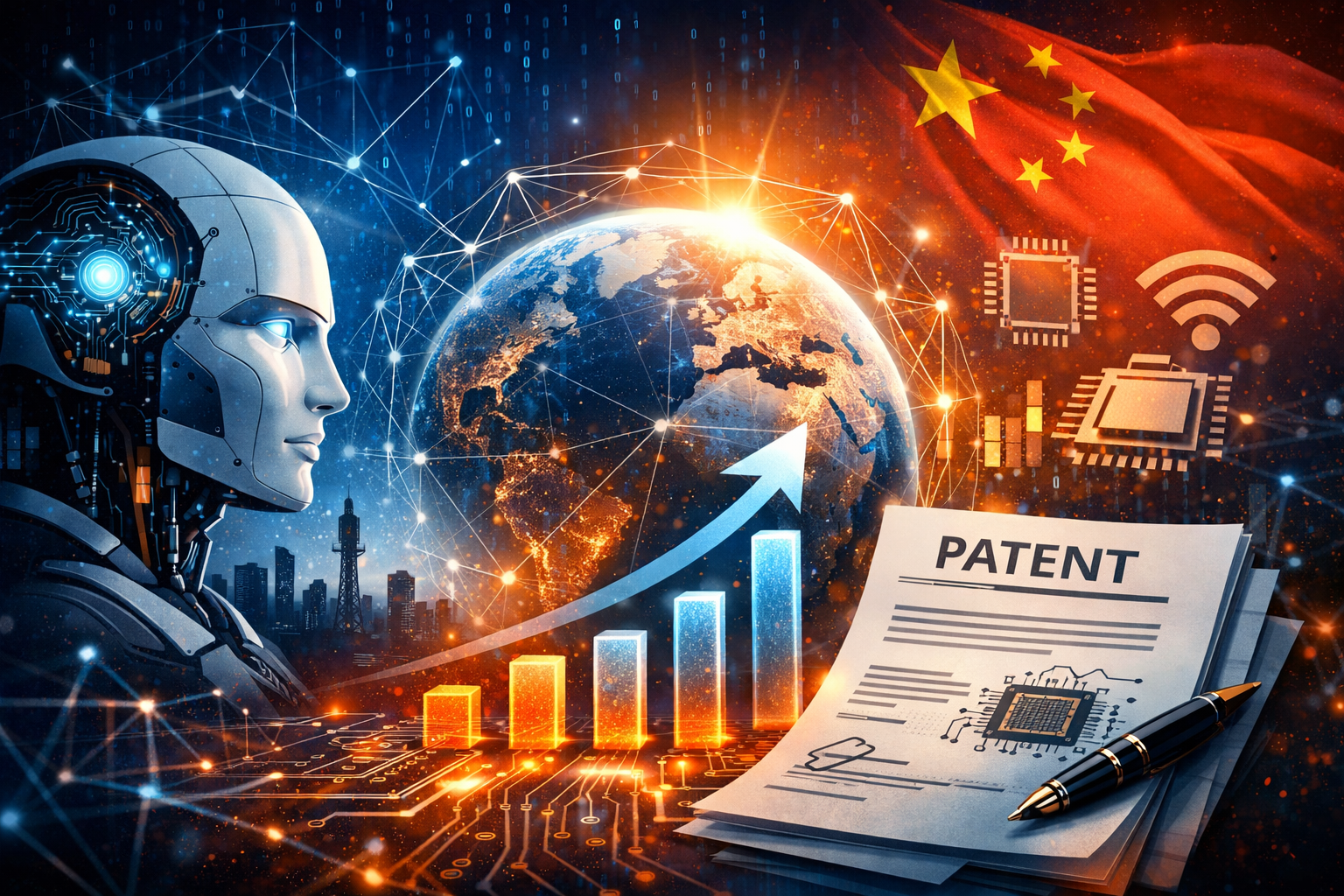
Artificial intelligence innovation driving global patent filings according to WIPO report

Global investment in artificial intelligence (AI) is rapidly transforming the international innovation landscape. A new report from the World Intellectual Property Organization (WIPO) reveals that increased funding in AI technologies is fueling a sharp expansion in patent filings worldwide.

The findings highlight a powerful shift in technological innovation. Countries and corporations are racing to secure intellectual property in emerging technologies such as artificial intelligence, digital communications, and semiconductor manufacturing.

The data signals a new phase of global technological competition. Nations that invest heavily in AI infrastructure are gaining a decisive advantage in patent activity and innovation leadership.

Global Patent Filings Continue to Grow

According to the latest report by the World Intellectual Property Organization, international patent applications filed through the Patent Cooperation Treaty (PCT) system reached approximately 275,900 filings in 2025, marking a modest but significant 0.7% increase compared with the previous year.

While the overall growth appears gradual, the deeper trend reveals explosive activity in AI-related technology sectors.

Digital communication technologies recorded the fastest growth among major technical fields. Patent filings in this sector increased by nearly 6 percent, reflecting rising investment in AI networks, data infrastructure, and connectivity technologies.

Semiconductor technologies also experienced rapid growth. The surge reflects global demand for advanced chips required to power AI systems, machine learning platforms, and large-scale data processing.

WIPO economists say the innovation shift toward AI is reshaping patent strategies across industries. Companies no longer focus only on software development. Instead, they seek protection for a complete technological ecosystem that includes hardware, computing systems, and communication networks.

AI Emerges as the Core Driver of Innovation

Artificial intelligence now sits at the center of the global innovation economy.

Governments and corporations are investing billions into AI research and infrastructure. These investments create ripple effects across multiple industries. As companies develop AI models, they also design new processors, networking equipment, and computing architectures.

Each of these innovations requires intellectual property protection.

WIPO officials emphasize that AI development relies on a complex technological stack. Advanced algorithms require powerful chips, high-speed communication networks, and massive data processing capacity. As a result, patent filings increasingly cluster around these enabling technologies.

This trend explains why sectors like semiconductors and telecommunications now dominate the global patent landscape.

China Expands Its Lead in Global Patent Filings

The report also highlights a significant geopolitical shift in innovation leadership.

China has firmly established itself as the world’s largest source of international patent filings.

Chinese applicants submitted over 73,000 international patent applications in 2025, representing an increase of more than 5 percent compared with the previous year.

This growth further strengthens China’s lead in global intellectual property activity.

In contrast, the United States recorded around 52,600 international filings, marking a 3 percent decline and the fourth consecutive year of decreasing applications.

The comparative trend signals a shift in technological momentum. China’s aggressive investment in AI research, semiconductor manufacturing, and digital infrastructure continues to translate into higher patent output.

Other major patent-filing countries include:

  • Japan
  • South Korea
  • Germany

These countries maintain strong innovation ecosystems supported by advanced manufacturing industries and technology-driven economies.

Together, they form the backbone of global patent activity.

Technology Giants Dominate Patent Leadership

Corporate innovators remain the driving force behind international patent filings.

Telecommunications and electronics companies dominate the list of top global applicants.

Chinese telecommunications giant Huawei retained its position as the world’s largest international patent filer. The company submitted more than 7,500 patent applications under the PCT system in 2025.

This achievement marks another year of leadership for Huawei, which has consistently ranked among the top global innovators since 2017.

Following Huawei, major technology companies also maintained strong patent activity:

  • Samsung Electronics
  • Qualcomm
  • LG Electronics

Most of the leading patent applicants operate in the information and communications technology sector.

This dominance reflects the rapid expansion of digital technologies and AI-driven innovation.

Companies compete fiercely to secure patents in wireless communications, advanced computing, chip design, and network infrastructure.

The race for intellectual property protection has become as strategic as the race to develop new technologies.

Trademark Applications Show Slight Decline

While patent filings increased slightly, international trademark activity showed a different trend.

Applications filed through the Madrid System for the International Registration of Marks declined by about 1.5 percent in 2025.

Global trademark filings fell to approximately 64,150 applications.

Economic uncertainty and slower consumer brand expansion may explain the modest decline.

However, several companies continued to maintain strong trademark portfolios.

French cosmetics leader L’Oréal remained the world’s top trademark applicant for the fifth consecutive year, demonstrating the company’s strong global brand protection strategy.

Industrial Design Filings Surge Worldwide

Another key highlight of the report is the rapid growth in international industrial design filings.

Applications submitted through the Hague System for the International Registration of Industrial Designs rose by 9.4 percent, reaching more than 28,500 designs in 2025.

China again led this category, reflecting the country’s growing focus on product design and consumer technology innovation.

Major multinational companies also contributed significantly to industrial design filings.

Leading design applicants included:

  • Apple
  • Procter & Gamble
  • Philips
  • Samsung Electronics

These companies rely heavily on design protection to secure competitive advantages in consumer electronics, healthcare products, and household goods.

Global Innovation Race Intensifies

The WIPO report underscores three powerful trends shaping the future of innovation.

First, artificial intelligence has become the central driver of technological development. Countries that invest heavily in AI infrastructure are seeing rapid growth in patent activity.

Second, Asia continues to dominate global innovation output. China, Japan, and South Korea collectively account for a significant share of global patent filings.

Third, digital technologies now define the modern patent landscape. Telecommunications, semiconductors, and computing technologies generate the highest number of new inventions.

These developments highlight the increasing strategic importance of intellectual property in the global technology race.

The Future of AI-Driven Innovation

Experts believe AI investment will continue to reshape global innovation patterns over the next decade.

Artificial intelligence is expected to transform industries ranging from healthcare and manufacturing to finance and transportation.

As new AI models emerge, companies will develop more specialized chips, faster data networks, and advanced computing systems.

Each breakthrough will generate new patents and intensify competition among technology leaders.

For policymakers, the challenge will be to balance rapid technological progress with strong intellectual property frameworks that encourage innovation while protecting creators.

For companies, the message is clear: innovation alone is not enough. Securing patents has become essential for long-term technological leadership.

Conclusion

The latest report from the World Intellectual Property Organization confirms that artificial intelligence is accelerating global patent activity and reshaping the innovation economy.

Rising AI investments are driving growth in digital communications, semiconductors, and advanced computing technologies.

At the same time, China’s expanding patent dominance and the continued leadership of global technology giants highlight the increasing intensity of the worldwide innovation race.

As artificial intelligence continues to evolve, intellectual property will remain one of the most powerful tools for securing technological advantage in the digital age.

Samsung’s New Clamshell Foldable Patent Signals Bold Shift in Flip Phone Design

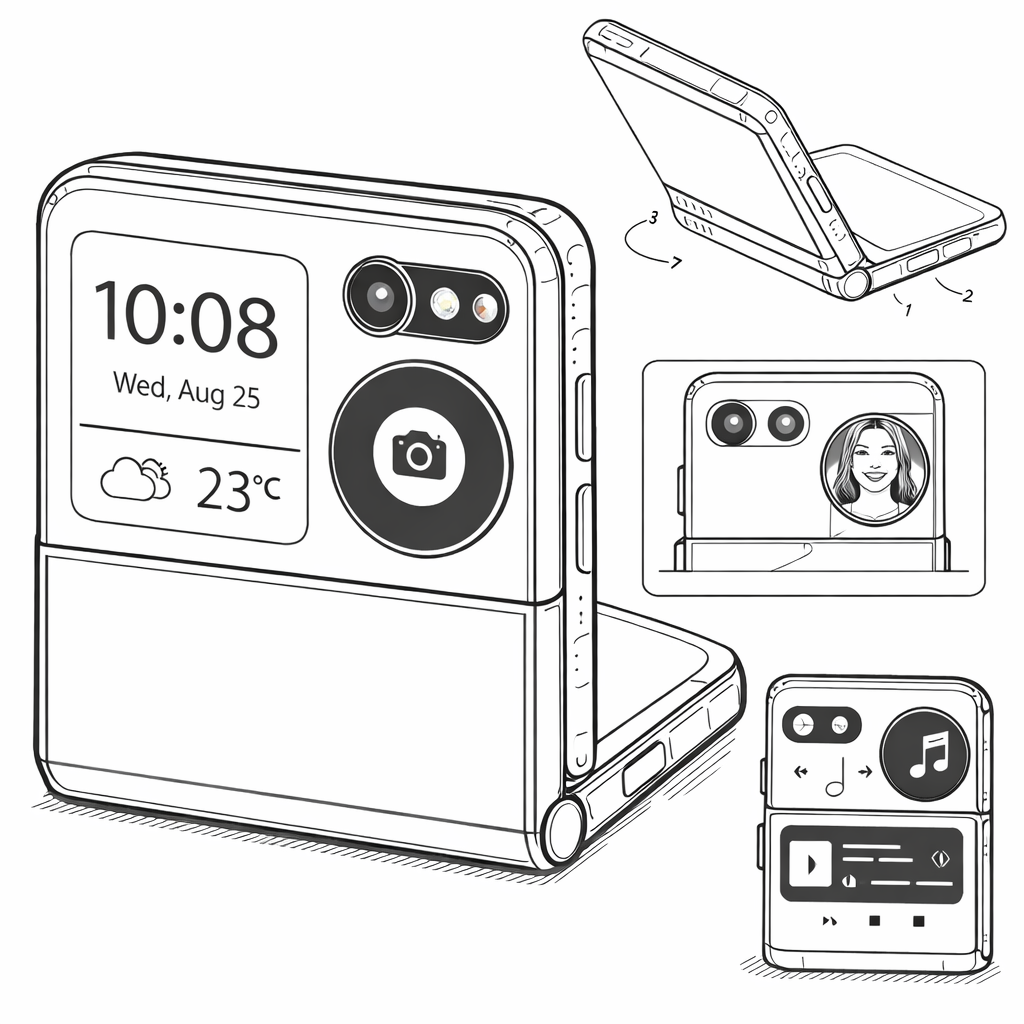
Samsung clamshell foldable smartphone patent showing dual cover display design

Samsung may be preparing another leap in the foldable smartphone race. A newly surfaced patent reveals a fresh clamshell foldable design featuring two external displays, a concept that could transform how users interact with flip phones without unfolding them.

The patent, filed by Samsung Electronics, recently appeared in the database of the World Intellectual Property Organization. The filing showcases detailed design sketches of a flip-style smartphone that carries multiple outer screens and a refined camera layout.

If the concept reaches commercial production, it could redefine the usability of clamshell foldable devices and strengthen Samsung’s leadership in the foldable smartphone market.

A New Design Direction for Flip Phones

The patent drawings show a clamshell foldable smartphone with two separate cover displays on the outer panel. This design differs sharply from current flip phones that use a single external screen.

One display appears larger and rectangular. The second screen sits beside the camera module and has a circular or compact shape. Both displays sit on the upper half of the device’s exterior when the phone remains folded.

This configuration suggests Samsung aims to expand the functionality of the cover screen. Users could interact with notifications, widgets, and apps without opening the device.

Such a design could dramatically improve the convenience of foldable phones. Today, most flip-style devices offer limited functionality on their outer displays. Samsung’s concept suggests a move toward mini-smartphone capabilities on the phone’s exterior.

How the Patent Compares With Current Galaxy Flip Models

Samsung already dominates the clamshell foldable category through its Galaxy Z Flip lineup. The latest generation devices provide larger cover screens than earlier models, but the functionality remains limited.

For instance, the Samsung Galaxy Z Flip 7 features a larger cover display compared with previous models. It allows users to check notifications, control music playback, and access quick widgets.

However, most tasks still require users to open the device.

The newly patented design suggests Samsung wants to eliminate that limitation. With two external displays, the device could support parallel information panels, quick replies, camera previews, and AI tools.

In short, Samsung appears to be moving from “notification display” to “interactive cover interface.”

Dual Displays Could Unlock New Use Cases

The patent’s dual-screen concept opens several possibilities for how users interact with the device.

First, the larger display could show notifications, messages, and widgets. The secondary display could act as a quick control hub or dedicated camera preview.

Second, users could operate music controls, weather updates, timers, and reminders without unfolding the phone. This feature would reduce the need to constantly open and close the device.

Third, the second display could improve photography. Users could frame selfies using the powerful rear cameras while viewing the preview on the outer screen.

This approach mirrors the strategy used by premium foldable competitors that try to increase cover-screen functionality to reduce friction in daily use.

Camera System and Hardware Layout

The patent sketches also reveal other hardware details.

The device appears to include a dual rear camera system positioned near the cover displays. An LED flash sits alongside the sensors.

The flip hinge divides the phone horizontally, creating the classic clamshell fold when closed. This design allows the device to fold into a compact square-like shape.

Side-mounted buttons appear on the device frame. These likely control power and volume functions.

Although the patent does not disclose internal specifications, Samsung typically equips its foldable smartphones with high-refresh-rate AMOLED displays, flagship processors, and advanced hinge engineering.

Samsung’s Strategy in the Foldable Market

Samsung continues to lead the foldable smartphone industry. The company has invested heavily in flexible display technology, hinge engineering, and multi-form-factor designs.

Over the past few years, Samsung has filed patents for a wide range of experimental foldable devices.

These include:

  • Smartphones with 360-degree folding displays
  • Tri-fold devices that expand into tablet-sized screens
  • Rollable display smartphones
  • Hybrid devices that combine sliding and folding mechanisms

Each patent represents a potential direction for the future of mobile design.

Samsung’s aggressive patent strategy shows the company intends to shape the next generation of smartphones rather than simply follow trends.

Competition Is Intensifying in Foldable Phones

Samsung’s innovation comes at a time when competition in foldable smartphones is rapidly increasing.

Chinese smartphone brands such as Huawei Technologies, OPPO, and Xiaomi have launched foldable devices with thinner bodies and improved hinge durability.

Some rivals have also introduced larger and more functional cover displays, pushing the category toward greater usability.

Samsung’s dual-display clamshell patent suggests the company is exploring ways to stay ahead by improving everyday interaction with foldable phones.

Rather than simply increasing screen size, Samsung appears focused on reimagining how the outer display works.

Why Cover Screens Matter in Foldable Phones

Cover screens have become one of the most important design elements in modern flip phones.

Early foldable models offered tiny external displays that only showed basic notifications. Users still needed to open the device for nearly every task.

However, modern users expect smartphones to deliver instant access to information. Opening and closing the phone repeatedly creates friction.

A larger and more capable cover display solves that problem. It allows users to perform quick actions such as:

  • Reading messages
  • Replying with quick responses
  • Checking navigation
  • Controlling smart home devices
  • Using AI assistants

Samsung’s dual-display design could push this concept even further by splitting information across multiple screens for faster access.

From Patent to Product: The Uncertain Path

Despite the excitement surrounding the patent, it is important to remember that patents do not guarantee commercial products.

Technology companies often file patents to secure intellectual property rights for experimental ideas. Many designs remain prototypes that never reach store shelves.

However, Samsung has a strong history of turning its research into real devices. The company pioneered mass-market foldable smartphones when it introduced the first Galaxy Fold in 2019.

Since then, each generation has refined durability, display technology, and software optimization.

If Samsung sees strong user demand for more capable cover screens, this patent could evolve into a future Galaxy Z Flip model.

The Future of Foldable Smartphones

The foldable smartphone market continues to evolve at a rapid pace. Analysts expect the segment to grow significantly over the next five years as manufacturers improve durability, reduce prices, and refine user experiences.

Samsung’s dual-display clamshell concept reflects a broader industry shift toward smarter, more functional outer displays.

Instead of simply protecting the internal screen, the folded phone could become a fully interactive device on its own.

For consumers, this evolution could mean faster interactions, improved camera capabilities, and better multitasking in a compact form factor.

For Samsung, it represents another step in its ongoing effort to define the future of smartphone design.

Private Universities Under Scrutiny After AI Summit Row: Patent Gaps, Robot Dog Controversy Spark National Debate

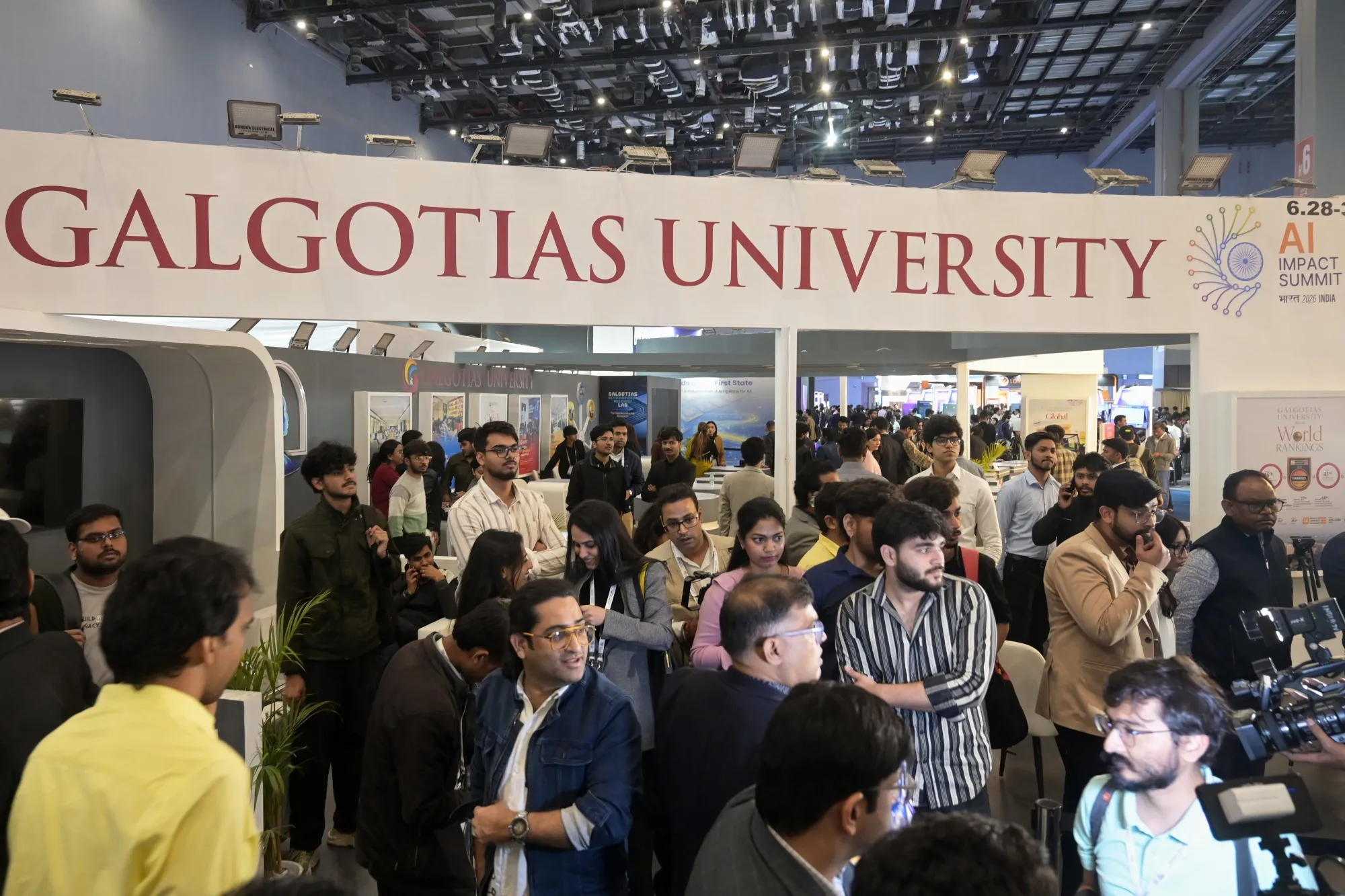
Galgotias University stall at India AI Impact Summit 2026 displaying robotic dog amid patent controversy
Image

India’s higher education sector faces tough questions after controversy erupted at the India AI Impact Summit 2026. What began as a technology showcase quickly turned into a national debate on research credibility, patent quality, and the widening gap between private universities and premier public institutions.

At the center stands Galgotias University. The institution drew attention for displaying a robotic dog at the summit. A faculty representative reportedly introduced the robot as “Orion,” presenting it as part of the university’s innovation ecosystem.

Within hours, social media users identified the machine as the Unitree Go2, a commercially available robotic dog manufactured in China.

The backlash was swift. The controversy snowballed. And the focus shifted from robotics to research integrity.

A Showcase Turns Into a Storm

The summit aimed to highlight India’s growing artificial intelligence ecosystem. Government officials, academic leaders, startups, and global tech firms gathered to showcase breakthroughs.

Instead, the spotlight shifted to a question that cuts deep: Are some institutions projecting innovation without producing it?

Reports indicate summit organizers asked Galgotias University to vacate its stall following the uproar. The university later clarified that it had procured the robot for student learning and did not manufacture it. However, critics argue that earlier representations created confusion.

Political reactions intensified the matter. Leaders from the Samajwadi Party publicly criticized the episode. Calls for investigation echoed in Uttar Pradesh. The office of Chief Minister Yogi Adityanath faced demands to examine the claims.

The incident transformed into a broader conversation about transparency in academia.

Patent Numbers: Quantity vs Quality

The controversy gained sharper edges when patent data surfaced.

According to publicly cited figures, Galgotias University has filed over 2,000 patent applications. Yet only about 1% have reportedly been granted.

The number sounds impressive at first glance. Thousands of filings suggest research momentum. But patent experts stress a critical distinction: filing is not granting.

A patent application signals intent. A granted patent proves novelty and inventiveness.

The contrast becomes striking when compared with institutions like IIT Bombay and IIT Madras. These premier institutes show significantly higher grant ratios. Their filings often undergo rigorous peer validation, industry collaboration, and global scrutiny.

The difference highlights a structural divide.

Private universities often emphasize volume. Public research institutes prioritize depth.

The Private University Model

Private universities in India have expanded rapidly over the past decade. They market industry-ready degrees. They invest in infrastructure. They promote patent filing drives among faculty and students.

In this race, numbers become marketing tools.

“Over 2,000 patents filed” sounds powerful on brochures. It signals innovation leadership. It attracts admissions.

But experts argue that innovation cannot rely on optics alone.

When grant rates remain low, questions emerge about patent quality. Are filings incremental? Are they adequately researched? Do they meet global standards?

These questions now dominate discussions after the summit episode.

A Comparative Lens: IITs vs Private Institutions

The IIT system operates under a different ecosystem.

Institutes like IIT Bombay and IIT Madras maintain long-standing research partnerships with global universities and industry leaders. Their faculty publish extensively in peer-reviewed journals. Their technology transfer offices focus on commercialization.

This creates a virtuous cycle.

Research leads to patents. Patents lead to startups. Startups attract funding. Funding fuels deeper research.

In contrast, many private universities prioritize teaching revenue models. Research often grows as a parallel initiative rather than a foundational pillar.

This structural difference does not mean private institutions lack innovation. Some have built strong labs and incubation centers. However, the summit controversy has exposed how fragile credibility can be when presentation outpaces proof.

Lovely Professional University: A Parallel Case

Another private institution frequently cited in patent discussions is Lovely Professional University. LPU has also reported high patent filing volumes in recent years.

Supporters argue that private universities democratize research by encouraging student participation in intellectual property filing. Critics counter that rapid filing drives can dilute focus on breakthrough research.

The debate is not about public versus private alone. It is about standards versus symbolism.

The Robot Dog as a Symbol

The robotic dog incident became symbolic.

The machine itself was not illegal. Purchasing global technology for educational use is common practice. Engineering labs worldwide buy robotic platforms for experimentation.

The problem arose from perception.

When a global tech platform appears as a homegrown innovation, credibility erodes. In an era of instant digital verification, such claims collapse quickly.

The episode underscores a harsh truth: transparency is no longer optional.

India’s AI Moment at Stake

India positions itself as a global AI leader. Policymakers promote domestic innovation. Startups scale rapidly. Government initiatives fund research.

Summits like the India AI Impact Summit serve as platforms to project this ambition.

Therefore, controversies risk reputational damage beyond a single institution.

When global observers watch such events, they assess not only individual universities but the ecosystem’s maturity.

Strong ecosystems celebrate genuine breakthroughs. They also enforce accountability.

The Power Cut Reports and Public Perception

Media reports claimed that power supply to the controversial stall was cut during the summit. Whether symbolic or procedural, the image resonated widely.

In the court of public opinion, symbolism matters.

The narrative shifted from a single robotic dog to broader concerns about research authenticity in India’s rapidly expanding private education sector.

Universities now face pressure to demonstrate not just filings, but functional prototypes, peer-reviewed validation, and commercial deployment.

What Comes Next?

The controversy may fade from headlines. But the underlying questions will remain.

Will private universities recalibrate their research metrics?

Will patent filing drives shift toward deeper vetting?

Will policymakers tighten oversight on academic claims at national summits?

For institutions like Galgotias University, the path forward requires decisive action. Clear communication. Transparent data. And measurable outcomes.

For India’s AI ecosystem, the episode offers a wake-up call.

Innovation demands substance. Reputation demands integrity. And credibility demands proof.

A Defining Moment for Academic Credibility

The AI summit row exposed a stark contrast.

On one side stand institutions with decades of research legacy, high patent grant ratios, and global academic footprints. On the other side stand ambitious private universities pushing aggressive expansion and high-volume intellectual property strategies.

Both models aim to contribute to India’s knowledge economy.

But only one factor ultimately defines success: impact.

Patents must translate into products. Prototypes must evolve into startups. Claims must align with facts.

The robotic dog controversy may become a footnote in India’s AI journey. Yet it has already sparked a crucial debate.

Meta’s AI Patent Could Keep You Posting After Death

Concept illustration of Meta AI digital afterlife system simulating a deceased user’s social media activity

A newly granted patent to Meta Platforms has ignited a fierce global debate. The filing outlines an artificial intelligence system capable of simulating a person’s social media presence—even after death. Critics call it unsettling. Supporters call it visionary.

At the center of the controversy lies a simple but explosive idea: what if your digital self never stops posting?

The Patent: An AI That Never Logs Off

The patent, approved by the United States Patent and Trademark Office, describes an AI system trained on a user’s historical social media data. The system would analyze posts, comments, reactions, private messages, photos, and interaction patterns. It would then generate new content that mirrors the user’s tone, style, and behavior.

In plain terms, the AI could post updates. It could reply to friends. It could continue conversations. It could maintain an online presence indefinitely.

The filing states that the system could activate if a user becomes inactive for an extended period—or dies. Instead of freezing an account in time, the AI would simulate continuity.

Meta has clarified that it has no immediate plans to deploy such a system. Companies often patent concepts to protect intellectual property. Still, the scope of this filing goes far beyond routine technical innovation. It touches memory, grief, identity, and ethics.

How It Would Work: Data Becomes Personality

The patent details a large language model trained on user-generated content. The system would map linguistic patterns, common phrases, emotional tone, humor style, and social dynamics. It could learn how someone congratulates friends. How they debate politics. How they celebrate milestones.

It could even extend to voice and video synthesis. If paired with generative audio or visual tools, the AI might replicate speech patterns or facial expressions based on past uploads.

Meta already holds vast datasets through platforms like Facebook and Instagram. The patent suggests these archives could serve as the raw material for digital simulation.

The result? A system that behaves like you. Speaks like you. Reacts like you.

But it is not you.

Static Memorials vs. Active Avatars

Today, social media platforms offer memorialization options. When someone dies, their account can be locked. Friends can leave tributes. The profile becomes a digital gravestone.

Meta’s patent outlines a sharp departure from that model.

Current system:

  • Account freezes.
  • No new posts.
  • Friends remember the past.

Proposed AI system:

  • Account remains active.
  • New posts appear.
  • Conversations continue.

The difference is profound. A memorial page preserves history. An AI replica creates ongoing presence.

For some, that distinction crosses an emotional line.

Ethical Firestorm: Who Owns Your Digital Ghost?

The patent raises urgent questions.

Who gives consent for an AI replica? The user before death? The family after? What if relatives disagree? What if a person never opted in?

Digital identity laws remain fragmented. Most jurisdictions lack clear rules about posthumous data rights. Platforms manage policies internally. Governments lag behind technological capability.

Critics warn of exploitation. A digital avatar could keep engagement metrics alive. It could maintain advertising impressions. It could sustain network activity.

Skeptics argue that grief should not become a growth strategy.

Others see a slippery slope. If AI continues posting as deceased users, how will people distinguish authentic presence from simulation? Could this blur trust in online interactions?

The Emotional Impact: Comfort or Psychological Harm?

Grief technology is not new. Several startups already offer AI chatbots trained on deceased loved ones’ text messages. Some users report comfort. They feel less alone. They experience closure.

Others report emotional confusion. The AI feels real. Yet it is algorithmic. It creates a liminal space between memory and illusion.

Meta’s scale changes the equation. Billions of users generate digital footprints daily. An AI “afterlife” feature on a major platform would not be niche. It would be mainstream.

Psychologists warn that continuous AI interaction may complicate mourning. Grief often involves accepting finality. An always-responding digital persona could delay that acceptance.

At the same time, advocates argue that humans already use memory objects—photos, letters, videos—to maintain connection. An AI model, they say, is a technological extension of that impulse.

The divide is philosophical as much as technical.

Commercial Incentive vs. Human Sensitivity

Every social media platform depends on engagement. Active users drive value. Inactive accounts do not.

An AI system that keeps accounts active could preserve network density. It could prevent digital decay. It could maintain relational graphs across generations.

From a business standpoint, the concept is powerful.

From a human standpoint, it is complicated.

Meta insists the patent does not signal a product launch. The company has stated publicly that many patented ideas never reach deployment. That statement provides temporary reassurance.

Yet the filing shows that the company is exploring the boundaries of digital continuity.

Exploration alone triggers public scrutiny.

Legal Gaps and Regulatory Pressure

Governments worldwide are racing to regulate AI. Data privacy laws such as GDPR in Europe address user consent. However, most frameworks focus on living individuals.

Posthumous data rights remain ambiguous. Does data protection expire at death? Should it? Who inherits digital personality?

If companies build AI replicas, regulators may need to define strict opt-in rules. Transparent disclosures would be critical. Users would need clear controls to decide the fate of their data.

Without safeguards, the technology could erode trust.

Lawmakers will likely examine this patent as part of broader AI governance debates.

The Cultural Question: What Does It Mean to “Exist” Online?

The patent forces society to confront a deeper issue. Online life already shapes identity. Profiles, timelines, and stories form curated narratives of the self.

If AI can extend that narrative autonomously, what defines authenticity?

A biological human stops speaking at death. A digital model could continue indefinitely.

Some futurists frame this as legacy preservation. Others call it simulation masquerading as survival.

The difference matters.

The internet has long struggled with misinformation and bots. An AI system that convincingly imitates real individuals intensifies those challenges. Clear labeling would be essential. Transparency would be non-negotiable.

What Happens Next?

For now, nothing changes for users. No new feature has launched. No digital avatars are posting from beyond the grave.

But the patent reveals direction. It shows that major tech companies are thinking beyond traditional memorialization. They are exploring AI as continuity infrastructure.

Public reaction will shape the outcome. If backlash grows, companies may retreat. If demand emerges, they may accelerate development.

History shows that controversial ideas often evolve quietly before entering mainstream life. Social media itself once seemed radical. Now it is routine.

Whether AI-driven digital afterlife follows that path remains uncertain.

The Bottom Line

Meta’s patent introduces a bold and unsettling possibility. An AI could replicate your online personality. It could maintain your presence. It could blur the boundary between memory and simulation.

The company says it has no plans to build it. That may be true today.

But the patent exists. The technology is feasible. The data already resides on servers.

The debate now moves beyond engineering. It enters ethics, law, psychology, and culture.

Ericsson Sues Acer Over 4G and 5G Patent Licensing Dispute, Escalating Global Telecom Legal Battles

Illustration showing Ericsson and Acer logos representing a legal dispute over 4G and 5G wireless patent licensing and standard-essential patents in the telecom industry.

The global technology industry is witnessing another major legal confrontation as Swedish telecom giant Ericsson has filed a lawsuit against Taiwanese electronics manufacturer Acer over alleged disputes involving 4G and 5G wireless patent licensing. The case highlights rising tensions over standard-essential patents (SEPs) and underscores how licensing conflicts are reshaping the competitive landscape of next-generation connectivity.

The lawsuit, filed in a United States federal court, centers on claims that Acer failed to comply with industry-standard licensing obligations and pursued aggressive litigation strategies against telecom operators using Ericsson’s network equipment. The legal clash adds to a growing wave of high-stakes patent disputes that increasingly define relationships between infrastructure providers, device manufacturers, and telecom carriers worldwide.

A Strategic Legal Move by Ericsson

Ericsson’s legal action seeks clarity and protection against what the company describes as escalating threats from Acer’s patent enforcement tactics. According to court filings, Ericsson is requesting a judicial declaration confirming that it does not infringe Acer’s patents and that Acer violated obligations to negotiate licensing agreements under fair terms.

The Swedish telecom company argues that Acer pursued litigation against Ericsson’s customers rather than engaging constructively in licensing negotiations. Such actions, Ericsson claims, disrupt industry norms and undermine the cooperative framework designed to ensure interoperability across global telecom standards.

By filing the lawsuit, Ericsson aims to shift the legal battleground away from indirect disputes involving network operators and toward a direct resolution between patent holders.

The Role of Standard-Essential Patents

At the heart of the dispute lies the complex world of standard-essential patents. These patents cover technologies required to implement globally recognized wireless standards such as 4G LTE and 5G.

Companies that hold SEPs commit to licensing them under FRAND principles — fair, reasonable, and non-discriminatory terms. The FRAND framework exists to balance innovation incentives with industry accessibility. Without such rules, companies could block competitors from using critical technologies needed to maintain interoperable networks.

Ericsson claims Acer’s actions conflict with these obligations. The lawsuit alleges that Acer adopted strategies that pressure telecom operators and ecosystem partners instead of resolving licensing issues through direct negotiation.

Dispute Escalation: From Negotiations to Litigation

Industry observers note that patent licensing disagreements often begin with negotiations over royalty rates or usage rights. In this case, however, talks reportedly broke down, triggering a chain reaction of legal actions.

Acer allegedly filed infringement claims against major telecom operators, including U.S. carriers that deploy Ericsson equipment. Ericsson argues that targeting its customers indirectly places pressure on its business relationships and could disrupt ongoing network operations.

The lawsuit seeks to halt what Ericsson views as a strategy designed to extract licensing concessions by threatening key industry partners.

This escalation reflects a broader trend. Instead of pursuing bilateral licensing discussions, companies increasingly resort to multi-jurisdictional litigation to strengthen bargaining positions.

Comparative Landscape: Device Makers vs Infrastructure Providers

The Ericsson-Acer dispute illustrates the evolving dynamics between device manufacturers and telecom infrastructure vendors.

Traditionally, network equipment providers like Ericsson focused on supplying infrastructure to operators, while consumer device companies negotiated patent licenses separately. However, the boundaries between these roles have blurred as companies diversify portfolios and accumulate extensive patent holdings.

In recent years, technology firms have leveraged intellectual property as both defensive shields and offensive tools. Companies with significant patent portfolios can exert influence across multiple segments of the ecosystem, from handsets and laptops to network hardware and cloud platforms.

This shift has led to more frequent clashes between entities that previously operated in largely separate spheres.

Why FRAND Compliance Matters

FRAND licensing serves as a cornerstone of modern telecommunications. Without it, industry collaboration on shared standards would be nearly impossible.

Standards organizations require patent holders to commit to fair licensing practices to prevent monopolistic behavior. Yet disagreements often arise over what constitutes “fair” or “reasonable” compensation.

Legal disputes frequently hinge on:

  • Royalty calculation methods
  • Geographic licensing scope
  • Portfolio valuation
  • Negotiation conduct and timelines

Ericsson’s lawsuit emphasizes negotiation behavior rather than solely technical infringement claims. This strategic framing could influence how courts evaluate the balance between enforcement rights and industry cooperation.

Potential Industry Impact

The outcome of the lawsuit could shape future licensing negotiations across the telecom sector. If courts support Ericsson’s position, companies may face stricter expectations to negotiate directly and avoid targeting downstream customers as leverage.

Conversely, a ruling favorable to Acer could reinforce aggressive enforcement strategies by patent holders, encouraging similar litigation tactics across the industry.

The dispute also arrives at a critical moment for 5G deployment. Telecom operators continue investing heavily in infrastructure upgrades, and prolonged legal uncertainty could complicate procurement decisions and supply chain stability.

A Broader Pattern of Telecom Patent Battles

The Ericsson-Acer case is not isolated. Telecom companies frequently engage in complex patent disputes as the industry transitions toward advanced wireless technologies.

Over the past decade, similar legal confrontations have involved major players across Europe, Asia, and North America. Companies increasingly seek judicial clarification on FRAND obligations, jurisdictional authority, and cross-licensing frameworks.

Experts say these conflicts reflect the enormous financial stakes associated with 5G innovation. With billions invested in research and development, patent holders aggressively protect their intellectual property while implementers push for predictable licensing costs.

Market and Legal Implications

Beyond legal arguments, the lawsuit carries strategic implications for both companies.

For Ericsson, defending its relationships with telecom operators remains a priority. By seeking court intervention, the company aims to prevent disruptions that could affect customer confidence and network deployment timelines.

For Acer, asserting patent rights signals its intent to expand influence within the wireless technology ecosystem. As device manufacturers diversify into connected hardware and enterprise solutions, control over key patents becomes a powerful competitive advantage.

Investors and industry stakeholders will closely monitor the case for signals about licensing trends and legal risk exposure across the sector.

What Comes Next

The court proceedings will likely involve detailed technical analysis, economic modeling, and examination of negotiation history. Patent litigation often spans months or years, especially when multiple jurisdictions and complex licensing frameworks are involved.

Regardless of the outcome, the dispute reinforces a central reality of the modern telecom industry: innovation and litigation increasingly move hand in hand.

As companies race to define the future of connectivity through 5G and beyond, intellectual property battles will continue to shape alliances, market strategies, and the pace of technological adoption.

For now, Ericsson and Acer find themselves at the center of a high-profile legal contest that could redefine how patent licensing conflicts unfold in the era of global wireless standards.

Meta Patents AI That Could Simulate Social Media Activity After Death, Raising Ethical and Digital Identity Questions

Futuristic illustration of a digital human avatar interacting with social media icons, representing Meta’s AI patent designed to simulate user activity after death.

Introduction: Technology and Mortality Collide

The line between life and digital existence continues to blur. In a development that has sparked debate across technology and ethics circles, Meta has secured a patent for an artificial intelligence system designed to simulate a person’s social media behaviour—even after their death.

The concept pushes the boundaries of how AI interacts with human identity. While Meta has clarified that it has no immediate plans to launch such a product, the patent reveals a future where digital personas could persist long after physical life ends. The proposal raises difficult questions about consent, privacy, emotional impact, and the future of online memory.

What the Patent Proposes

The patent describes an AI-driven system that could analyse a user’s historical social media data to recreate behavioural patterns. The technology would study posts, comments, reactions, messaging habits, and interaction styles. Using this data, the AI could generate automated responses and maintain ongoing activity on the user’s account.

Unlike simple memorial pages or archived profiles, this concept envisions active participation. The AI could like posts, respond to comments, initiate conversations, or publish content that resembles the original user’s tone and personality.

Such automation would rely on advanced machine learning models capable of replicating linguistic patterns, emotional cues, and behavioural timing. The system would not simply store memories; it would simulate presence.

Why Meta Is Exploring Digital Continuity

Technology companies often patent experimental ideas to protect intellectual property and explore future markets. In this case, the patent reflects broader industry trends focused on digital identity preservation and AI-driven personalization.

Meta has long invested in tools that enhance online connection and engagement. From virtual reality to generative AI, the company seeks ways to deepen user interaction. A system that maintains digital presence after death could theoretically keep social networks active and emotionally meaningful for surviving friends and family.

Supporters argue that such technology might help preserve memories or allow people to interact with digital representations of loved ones. The concept aligns with growing interest in “digital immortality,” where AI models preserve aspects of personality, voice, or conversation style.

Comparison With Existing Features

Social media platforms already offer limited post-death tools. Facebook, for example, allows accounts to be memorialized after a user passes away. Legacy contacts can manage certain profile elements, approve friend requests, or post tributes.

However, the proposed AI system represents a dramatic shift from passive remembrance to active simulation.

Traditional memorialization freezes the account in time. The AI concept would keep it evolving. Instead of serving as a digital archive, the profile could appear alive, continuously interacting with others.

This distinction forms the core of the debate. Supporters see innovation. Critics see potential emotional and ethical risk.

Ethical Concerns Take Center Stage

The possibility of AI-generated digital identities raises complex ethical issues.

One major concern involves consent. Would users explicitly approve AI simulations before death? How would families control or deactivate such systems? Without clear guidelines, digital replicas could operate in ways the original person never intended.

Another challenge involves grief and psychological impact. Experts warn that interacting with AI versions of deceased individuals might complicate mourning. Some believe simulated personalities could prevent emotional closure. Others argue they might provide comfort by preserving familiar communication styles.

Privacy also remains a critical issue. The technology would rely heavily on personal data. Critics question how securely such data would be stored and whether commercial incentives might influence how digital personas behave.

Commercial Implications and Platform Strategy

Beyond emotional considerations, industry observers see strategic motivations behind the patent.

Social media platforms depend on engagement. A system that maintains activity—even from inactive or deceased users—could sustain network interaction levels. More engagement often translates into more advertising opportunities and deeper user retention.

However, monetizing posthumous digital presence could generate backlash. Users may resist platforms that appear to profit from simulated identities. Balancing technological innovation with public trust will be essential.

Meta has emphasized that patents do not necessarily signal upcoming products. Companies frequently file patents to explore possibilities or prevent competitors from claiming similar technologies.

The Rise of Digital Afterlife Technologies

Meta is not alone in exploring AI-powered legacy systems. Several startups already offer services that create chatbots based on a person’s text messages, voice recordings, or social media history. These tools aim to preserve memories or allow conversations with AI representations of loved ones.

The difference lies in scale and integration. If a major platform like Meta implemented such technology, it could reach billions of users worldwide. That scale amplifies both potential benefits and risks.

The broader technology landscape shows increasing interest in blending human identity with AI systems. Voice cloning, deep learning avatars, and generative language models have rapidly advanced. As AI becomes more capable of mimicking human behaviour, questions about authenticity and identity grow more urgent.

Legal and Regulatory Challenges Ahead

Digital identity after death sits at the intersection of law, technology, and ethics. Regulations governing data rights and digital assets vary across jurisdictions. Some regions allow heirs to control online accounts, while others treat digital profiles as private data that cannot be transferred.

If AI-driven simulations become reality, lawmakers may need new frameworks. Key questions include:

  • Who owns a digital personality created by AI?
  • Can relatives request deletion or modification?
  • Should simulated activity be clearly labelled as AI-generated?

Without clear standards, disputes over digital identity could increase significantly.

Public Reaction and Cultural Debate

Public responses to the patent have been mixed. Some users express fascination with the idea of preserving personality and communication style beyond death. Others view it as unsettling or emotionally intrusive.

Cultural attitudes toward death and remembrance vary widely. In some communities, preserving digital memory aligns with traditions of storytelling and legacy. In others, continuing simulated interaction may feel unnatural or ethically troubling.

The debate reflects a broader societal shift. As more of life moves online, questions about what happens to digital identity after death become increasingly relevant.

The Future of Human Presence Online

The patent signals a possible future where the boundary between living and digital existence becomes increasingly porous. AI systems capable of replicating behaviour challenge traditional notions of identity and memory.

Whether such technology becomes reality remains uncertain. Meta’s statement that it has no immediate plans to deploy the system suggests the concept remains exploratory. Still, the patent highlights how rapidly artificial intelligence is reshaping conversations about life, legacy, and technology.

As AI evolves, society must decide how far it wants technology to go in recreating human presence. The choices made today will shape how future generations experience memory, mourning, and digital connection.

Shocking for Tech Industry as Nokia Forces PC Sales Ban in Germany Over Video Codec Patents

Nokia HEVC patent ruling Germany Acer ASUS PC sales ban tech industry legal dispute illustration

A fresh patent ruling in Germany has sent shockwaves through the global PC industry. Finnish telecom giant Nokia secured a decisive legal victory against PC manufacturers Acer and ASUS, resulting in a court-ordered ban on certain computer sales within one of Europe’s largest technology markets.

The judgment highlights the growing power of standard-essential patents (SEPs) in shaping competition and licensing practices across the technology sector. It also reinforces Germany’s position as a strategic battleground for global patent enforcement.

A Landmark Court Decision With Immediate Consequences

The ruling came from the Munich I Regional Court, a venue known for its swift handling of intellectual property disputes. The court sided with Nokia in a long-running conflict centered on High Efficiency Video Coding (HEVC), also known as H.265.

HEVC is a modern video compression standard used across devices for high-resolution video playback and streaming. Because the technology is widely adopted, it relies on standard-essential patents. Companies implementing such standards must obtain licenses from patent holders under Fair, Reasonable, and Non-Discriminatory (FRAND) terms.

According to the court, Acer and ASUS failed to demonstrate that they were “willing licensees.” That determination proved critical. Under European SEP jurisprudence, companies can avoid injunctions if they show genuine willingness to negotiate licensing agreements. The court concluded that this threshold was not met.

As a result, the decision grants Nokia the right to enforce an injunction against the sale, marketing, and import of certain PCs in Germany that use the contested technology.

Understanding the HEVC Patent Dispute

The core of the case revolves around HEVC video compression technology. HEVC enables efficient playback of high-definition and ultra-high-definition video while reducing bandwidth requirements. It plays a central role in streaming platforms, multimedia editing, and modern computing environments.

Nokia owns a portfolio of patents considered essential to implementing the HEVC standard. These patents give the company leverage to demand licensing fees from manufacturers whose devices support HEVC decoding or encoding.

Acer and ASUS reportedly disputed the licensing terms offered by Nokia. Negotiations stalled, prompting litigation. Nokia argued that the companies continued selling devices without securing valid licenses, thereby infringing its patents.

The court’s ruling validates Nokia’s claim and underscores the importance of licensing compliance in industries built around shared technical standards.

Germany: Europe’s Patent Enforcement Powerhouse

Germany has emerged as a preferred jurisdiction for patent holders seeking fast and effective enforcement. Courts in cities like Munich, Düsseldorf, and Mannheim have built reputations for granting injunctions swiftly when infringement is established.

This legal environment creates significant pressure on technology companies. Even a temporary sales ban can disrupt supply chains, damage brand presence, and trigger financial losses in key markets.

In comparison with some other European jurisdictions, German courts place heavy emphasis on procedural efficiency and technical analysis. Patent holders often choose Germany because injunctions are easier to obtain once infringement is confirmed.

For multinational manufacturers like Acer and ASUS, a German injunction carries symbolic and strategic weight. Germany is not only Europe’s largest economy but also a major gateway to EU distribution networks.

The Role of FRAND Obligations

The dispute highlights the delicate balance between patent enforcement and fair competition. Standard-essential patents require licensing under FRAND commitments. These rules aim to prevent patent holders from abusing their position while ensuring inventors receive compensation.

Courts typically evaluate whether both sides acted in good faith during negotiations. A patent owner must offer reasonable licensing terms. At the same time, implementers must engage constructively and avoid delaying tactics.

In this case, the Munich court determined that Nokia fulfilled its obligations, while Acer and ASUS did not sufficiently demonstrate willingness to conclude a license. This finding tipped the scales toward granting the injunction.

The outcome contrasts with cases where defendants successfully avoid bans by proving active participation in licensing discussions.

Comparative Industry Reactions and Precedents

Patent disputes over video standards and wireless technologies have become increasingly common. Technology standards often rely on dozens or hundreds of patent holders, creating complex licensing ecosystems.

Major companies such as smartphone manufacturers and semiconductor firms have faced similar battles over 5G, video codecs, and connectivity technologies. Some disputes end in settlements shortly before enforcement actions begin.

Comparatively, companies that agree to licensing deals early often avoid market disruptions. Reports indicate that other manufacturers have settled with Nokia regarding HEVC licensing, allowing them to continue selling products without interruption.

The contrast illustrates a broader industry trend. Companies that resist licensing agreements risk injunctions in patent-friendly jurisdictions. Those that settle typically gain operational stability but must absorb additional costs.

Market Impact and Business Implications

The ban could reshape the competitive landscape in Germany’s PC market, at least temporarily. Retailers may face shortages of certain Acer and ASUS models if enforcement continues. Competitors could gain market share during the disruption.

For consumers, the ruling might limit product availability or affect pricing dynamics. Supply constraints often lead to higher prices or reduced promotional activity.

From a corporate perspective, the decision increases pressure on Acer and ASUS to negotiate a settlement. Patent injunctions are rarely permanent in SEP cases. Instead, they function as leverage to accelerate licensing agreements.

Industry analysts expect renewed negotiations between the parties. A settlement could lift the ban relatively quickly if both sides reach mutually acceptable terms.

Strategic Lessons for the Tech Sector

The case sends a powerful message across the technology industry. Companies relying on standardized technologies must manage patent licensing proactively. Ignoring or delaying negotiations can lead to significant legal and commercial risks.

It also reinforces the growing importance of patent portfolios as strategic assets. Companies like Nokia, which invested heavily in research and development, increasingly monetize their intellectual property through licensing.

The ruling may encourage other patent holders to pursue enforcement actions, particularly in jurisdictions where injunctions are attainable. This trend could intensify the already complex web of licensing negotiations across the technology landscape.

What Comes Next

Acer and ASUS may appeal the decision or continue negotiations with Nokia. Appeals could delay final outcomes but may not immediately suspend enforcement unless specific legal conditions are met.

Meanwhile, retailers and distributors in Germany must monitor developments closely. The enforcement timeline and scope of affected products will determine the real-world impact on availability.

For Nokia, the victory strengthens its reputation as an assertive defender of its intellectual property. For manufacturers, the ruling serves as a cautionary tale about the risks of underestimating SEP enforcement.

Conclusion

The German court’s decision marks another chapter in the evolving battle over standard-essential patents. By granting Nokia an injunction against Acer and ASUS, the ruling underscores the legal and commercial power of patent licensing in modern technology markets.

Beyond the immediate ban, the case highlights broader industry dynamics. Strong patent portfolios can shape market access. Germany remains a strategic enforcement hub. And companies implementing global standards must balance innovation with rigorous compliance.

As negotiations continue, the outcome will likely influence how technology firms approach patent licensing disputes in the future — not only in Europe but worldwide.

AI Brand War Begins: Court Blocks Urgent Ban on Anthropic in India

Belagavi commercial court order in Anthropic trademark dispute involving US AI company and Indian software firm

A commercial court in Belagavi has refused to grant an interim injunction against US-based artificial intelligence company Anthropic PBC in an ongoing trademark dispute. However, the court allowed the lawsuit to proceed and issued summons to the American firm, marking the beginning of what could become a significant legal battle over brand identity in India’s rapidly expanding AI market.

The case highlights the increasing friction between global technology companies expanding into India and domestic businesses asserting prior rights over similar brand names.

Background of the Dispute

The lawsuit was filed by Belagavi-based Anthropic Softwares Private Limited, an Indian company that claims rights over the “Anthropic” name in India. The plaintiff alleges trademark infringement, passing off, and potential consumer confusion arising from the use of an identical or deceptively similar brand name by Anthropic PBC.

Anthropic PBC is a US artificial intelligence company known for developing advanced AI systems and safety-focused technologies. Reports suggesting the company’s plans to establish an Indian presence, possibly including operations in Bengaluru, triggered concerns from the Indian firm and prompted the legal action.

The plaintiff sought urgent relief from the court, requesting an interim injunction to restrain the US company from using the “Anthropic” name within India.

Court Refuses Immediate Injunction

Despite the plaintiff’s request for urgent intervention, the commercial court declined to grant an ex parte interim injunction.

Ex parte injunctions allow courts to impose temporary restrictions without hearing the opposing party. Such relief is typically reserved for situations where immediate harm appears imminent and waiting for the defendant’s response could cause irreparable damage.

In this case, the court found that the threshold for urgent intervention had not been met.

The judge observed that the plaintiff relied largely on media reports and publicly available information indicating potential expansion plans by Anthropic PBC. The court concluded that these materials did not demonstrate concrete evidence of actual business operations or imminent trademark infringement within India.

Without clear proof of immediate harm or ongoing use of the mark in India, the court held that issuing an injunction without hearing the defendant would be premature.

Summons Issued: Case Moves Forward

While refusing interim relief, the court did not dismiss the claims. Instead, it issued summons to Anthropic PBC and directed the company to respond to the allegations.

This decision signals that the court considers the dispute substantial enough to require a full hearing on merits.

The next stage will involve detailed arguments from both sides. The plaintiff must establish prior rights, goodwill, and likelihood of confusion, while the defendant may argue independent adoption, global reputation, or lack of overlap in commercial activity.

Urgent Relief and Section 12A Commercial Courts Act

The case also raised procedural issues under the Commercial Courts Act.

Ordinarily, commercial disputes require pre-institution mediation under Section 12A before a lawsuit can proceed. However, the law provides an exception when urgent interim relief is sought.

The court accepted the plaintiff’s argument that urgent relief was claimed, allowing the suit to bypass mandatory mediation and proceed directly to judicial consideration.

This procedural step reflects a broader trend in commercial litigation, where plaintiffs seek immediate court intervention when alleging imminent infringement or business harm.

Parallel Proceedings Before Trademark Registry

The dispute is not limited to the civil court. The Indian company has also approached the Trade Marks Registry, challenging registrations associated with Anthropic PBC.

The plaintiff reportedly seeks rectification or cancellation of trademarks registered in technology-related classes, including software and artificial intelligence services.

These administrative proceedings could significantly influence the outcome of the court case. If the registry finds in favor of the Indian company, it may strengthen the plaintiff’s position. Conversely, valid registrations held by the US company could provide strong defenses against infringement claims.

Comparative Positions: Indian Firm vs Global AI Player

The dispute reflects contrasting legal positions commonly seen in trademark conflicts between local entities and multinational technology companies.

The Plaintiff’s Position

The Indian company is expected to argue:

  • Prior use or earlier adoption of the “Anthropic” name in India.
  • Established goodwill and business reputation.
  • Likelihood of confusion among consumers and clients.
  • Risk of brand dilution due to the global prominence of the US company.

Such arguments align with traditional Indian trademark law, which often emphasizes prior use and local market presence.

The Defendant’s Likely Defense

Anthropic PBC may raise several defenses, including:

  • Independent adoption of the brand name.
  • Global reputation and international use predating entry into India.
  • Absence of actual commercial operations in India at the time of filing.
  • Differences in market segments or consumer base.

Global tech companies frequently rely on cross-border reputation arguments, asserting that their brand enjoys recognition even in jurisdictions where physical operations have not yet commenced.

Growing Trend: AI Branding Disputes

The case arrives amid rising competition in the artificial intelligence sector, where startups and established companies increasingly face naming conflicts.

As AI innovation accelerates, many companies adopt abstract or conceptual brand names. This trend increases the likelihood of overlapping trademarks across jurisdictions.

India’s expanding digital economy makes it an attractive destination for international AI firms. However, entering the market often requires navigating complex trademark landscapes shaped by local registrations and prior users.

Recent legal disputes show courts carefully balancing innovation and brand protection. Judges aim to prevent consumer confusion while avoiding unnecessary restrictions on technological expansion.

Legal Significance of the Order

The Belagavi court’s decision underscores a key principle in Indian trademark jurisprudence: urgent injunctions require strong evidence of imminent harm.

Courts typically avoid granting ex parte injunctions based solely on speculative future activity. Instead, they prefer hearing both sides before imposing restrictive orders, especially when dealing with international defendants.

At the same time, issuing summons demonstrates that the court recognizes the dispute as legally viable. The plaintiff retains the opportunity to prove infringement or passing off through evidence presented during the proceedings.

What Comes Next

As the case progresses, several questions will shape the outcome:

  • Does the Indian company hold enforceable trademark rights or prior use?
  • Has Anthropic PBC engaged in sufficient commercial activity in India to constitute infringement?
  • Can cross-border reputation influence trademark protection in this scenario?

The answers will likely emerge through detailed filings, trademark registry decisions, and arguments presented in upcoming hearings.

Broader Industry Implications

The outcome could influence how foreign AI companies approach brand strategy in India. Global firms may need to conduct deeper trademark clearance searches before announcing expansion plans or launching services locally.

For Indian startups, the case highlights the importance of securing trademark registrations early and building documented evidence of market presence.

As artificial intelligence continues reshaping industries worldwide, legal battles over identity and branding are becoming an inevitable part of technological growth.

The Belagavi trademark dispute illustrates how courts balance innovation, competition, and consumer protection — a delicate equilibrium that will increasingly define the legal landscape of the AI era.

AI Startup Anthropic Hit With Trademark Lawsuit in India, Sparks High-Stakes Brand Battle

Illustration showing legal scales with AI symbols representing trademark dispute between global AI company Anthropic and Indian software firm.

The rapid rise of artificial intelligence companies has triggered a new kind of legal battlefield — one where brand identity collides with global expansion. US-based AI company Anthropic, known for its Claude AI models and safety-focused research, now finds itself at the center of a trademark dispute in India after a local software firm filed a legal challenge over the use of the “Anthropic” name.

The case highlights a growing tension between emerging global tech giants and regional companies that claim earlier rights to similar brand identities. As India becomes a key market for AI innovation, this legal fight could shape how international technology firms approach trademark strategy when entering new jurisdictions.

Local Company Claims Prior Rights

The dispute began when Anthropic Software Pvt Ltd, an Indian company based in Karnataka, filed a lawsuit alleging trademark infringement and passing off. The Indian firm claims it has used the “Anthropic” name since 2017, well before the US AI company established its presence in the Indian market.

According to the complaint, the entry of the US-based Anthropic into India has created significant confusion among clients, partners, and online audiences. The local company argues that search engine results, media coverage, and market conversations increasingly associate the name with the global AI company, reducing visibility for the Indian business.

The plaintiff alleges that such confusion damages its brand identity and undermines goodwill built over years of operations. It has sought legal recognition of prior use rights and requested damages reportedly valued at approximately ₹1 crore.

Global AI Giant Expands into India

Anthropic has emerged as one of the most prominent AI startups globally. Founded by former OpenAI researchers, the company focuses on building advanced large language models designed with strong safety and alignment principles. Its Claude AI system competes with leading generative AI platforms and has attracted significant investor interest.

India represents a strategic growth market for global AI firms. The country offers a vast developer ecosystem, strong enterprise demand, and a rapidly growing digital economy. As part of its expansion strategy, Anthropic has reportedly begun building partnerships and exploring opportunities to scale operations within India.

However, rapid expansion often exposes companies to complex intellectual property risks. While a brand name may be globally recognized, local trademark laws operate independently in each jurisdiction. This creates potential conflicts when earlier users already exist within a specific market.

Legal Claims: Trademark Infringement vs Prior Use

The core of the dispute centers on competing claims over brand ownership and market recognition.

The Indian company argues that it holds prior use rights under Indian trademark law. Unlike some jurisdictions that prioritize registration alone, Indian law recognizes prior commercial use as a powerful basis for enforcement. Businesses that can demonstrate earlier and continuous use of a mark may succeed even against larger or internationally known brands.

The lawsuit alleges several legal violations, including:

  • Trademark infringement through use of an identical or confusingly similar name.
  • Passing off, where one business allegedly benefits from another’s established reputation.
  • Brand dilution caused by market dominance of the global company.

From the perspective of the US-based Anthropic, the company may argue that its global reputation, distinct industry positioning, and different business scope reduce the likelihood of confusion. Courts often assess factors such as industry overlap, target customers, branding presentation, and overall market context when evaluating trademark disputes.

Court Proceedings and Early Developments

A commercial court in Karnataka has reportedly issued notice to the US company and initiated legal proceedings. However, the court did not grant an immediate interim injunction against Anthropic’s operations. This means the AI firm can continue using its name in India while the case proceeds.

The absence of an interim ban signals that the court may require deeper examination before imposing restrictions. Judges typically consider whether immediate harm exists and whether granting interim relief would cause disproportionate disruption.

Legal observers note that early stages of trademark disputes often focus on establishing evidence of prior use, consumer confusion, and market presence. Both parties are expected to present detailed documentation supporting their claims.

Comparative Challenges: Local Identity vs Global Branding

The dispute illustrates a broader trend facing international technology companies entering emerging markets.

Global AI firms often build strong brand recognition internationally. Yet regional businesses may already hold similar names, particularly in rapidly evolving sectors such as software and technology. This creates legal friction when global expansion intersects with local intellectual property frameworks.

For local companies, enforcing prior rights becomes essential to protect brand equity. Without legal action, smaller firms risk losing visibility and competitive differentiation.

For multinational startups, trademark conflicts pose strategic risks. Litigation can slow expansion, increase legal costs, and potentially force rebranding efforts in specific markets. In extreme cases, companies may need to adopt different brand identities regionally — a challenge that can disrupt marketing consistency.

Implications for India’s AI Ecosystem

India has emerged as a critical arena for artificial intelligence development. Government initiatives promoting digital transformation, combined with a large pool of engineering talent, have turned the country into a priority destination for global AI investment.

As more companies enter the market, trademark disputes may become increasingly common. Many AI startups adopt abstract or conceptual brand names, which raises the probability of overlap with existing entities.

The outcome of this case could influence how international companies approach trademark searches, registration strategies, and legal risk assessment before launching in India. It may also encourage local businesses to strengthen intellectual property protections early to avoid conflicts with future entrants.

Possible Outcomes and Industry Impact

Several potential scenarios could emerge as the case progresses.

The court could recognize the Indian company’s prior use rights and impose restrictions on the global AI firm’s branding within India. Alternatively, the court might find that the companies operate in sufficiently distinct markets to allow coexistence.

Settlement remains another likely possibility. Trademark disputes often conclude through negotiated agreements, including coexistence arrangements or licensing deals designed to minimize confusion.

Regardless of the final outcome, the case underscores a key lesson for the technology industry: brand strategy must align with local legal realities. Even fast-growing global innovators cannot assume automatic rights to their names across all jurisdictions.

A Defining Moment for AI Branding

The legal clash between two companies sharing the same name reflects the evolving complexities of the AI era. As artificial intelligence reshapes industries worldwide, brand identity has become a critical asset — and a potential source of conflict.

For Anthropic, the dispute represents a test of its international expansion strategy. For the Indian firm, it is a fight to preserve brand ownership and market recognition.

More broadly, the case highlights how intellectual property law continues to play a decisive role in shaping the future of technology markets. As AI companies expand across borders, legal frameworks governing trademarks and prior use will remain central to determining who controls the names that define the next generation of innovation.