
Uniswap Wins Patent Lawsuit Against Bancor: Court Rejects AMM Patent Claims in Major DeFi Legal Victory

Illustration of a blockchain-themed courtroom showing Uniswap winning a patent dispute against Bancor involving automated market maker technology.

In a significant legal victory for decentralized finance (DeFi), Uniswap has successfully defeated a patent infringement lawsuit filed by entities linked to Bancor. A U.S. federal court dismissed the case, ruling that the patent claims at the center of the dispute covered abstract ideas that are not eligible for patent protection. The decision marks a major turning point in the ongoing debate over intellectual property rights in blockchain innovation and could reshape how DeFi protocols approach technological ownership.

The ruling not only strengthens Uniswap’s position as a leading decentralized exchange but also raises critical questions about the limits of patent protection for algorithm-based financial mechanisms.

The Core of the Dispute: Automated Market Maker Technology

The lawsuit revolved around automated market maker (AMM) technology, the fundamental mechanism that powers decentralized exchanges. Unlike traditional financial platforms that rely on order books and market makers, AMMs use mathematical formulas to determine asset prices automatically.

Bancor claimed that it pioneered and patented certain aspects of AMM models, particularly those involving constant-product pricing formulas used to maintain liquidity pools. According to the plaintiffs, Uniswap’s protocol allegedly utilized similar methods without authorization, thereby infringing on their intellectual property.

Uniswap strongly rejected these allegations. The company argued that the concepts behind AMMs represent widely understood economic principles and mathematical formulas rather than proprietary inventions. Uniswap also emphasized the open-source nature of DeFi development, where innovation builds upon shared ideas and collaborative progress.

Court’s Decision: Abstract Ideas Cannot Be Patented

The federal court sided with Uniswap, concluding that the patents asserted by Bancor fell under the category of abstract ideas. Under U.S. patent law, abstract concepts—such as fundamental economic practices or mathematical calculations—are generally not eligible for patent protection unless they involve a specific technological improvement or inventive application.

The judge found that the patent claims primarily described methods of calculating prices and managing liquidity. While these methods were implemented using blockchain technology, the court determined that simply applying an abstract economic concept to a digital environment does not make it patentable.

The ruling also noted that the complaint failed to demonstrate sufficient evidence of infringement. As a result, the court dismissed the lawsuit, delivering a decisive win for Uniswap.

However, the dismissal reportedly came without prejudice, meaning Bancor may attempt to revise and refile its claims if it can address the legal deficiencies identified by the court.

Competing Philosophies: Patents vs Open-Source Innovation

Beyond the legal arguments, the case highlights a broader ideological clash within the crypto industry.

On one side, Bancor’s approach reflects a traditional intellectual property strategy. By securing patents, companies aim to protect innovations, encourage investment, and prevent competitors from copying core technologies without compensation.

On the other side, Uniswap represents the open-source ethos that has defined much of the blockchain ecosystem. Developers frequently share code publicly, allowing others to build upon existing protocols. Proponents argue that this model accelerates innovation and strengthens decentralization.

The court’s ruling appears to lean toward the open-source philosophy by signaling skepticism toward patents that claim ownership over fundamental economic mechanisms.

Comparing the Platforms: Bancor vs Uniswap

Both Bancor and Uniswap played pivotal roles in shaping the DeFi landscape, but they adopted different strategies and technological approaches.

Bancor emerged earlier, introducing automated liquidity concepts designed to eliminate the need for traditional buyers and sellers. Its model aimed to provide continuous liquidity through algorithmic pricing, enabling users to trade tokens without counterparties.

Uniswap later popularized a simplified version of the AMM model. Its constant-product formula gained widespread adoption because of its simplicity, transparency, and adaptability. Developers and entrepreneurs rapidly integrated similar mechanisms across various platforms, creating an ecosystem of interoperable DeFi applications.

While Bancor emphasized proprietary innovation and patent protection, Uniswap leaned heavily into open-source distribution. This difference in philosophy played a crucial role in shaping the narrative of the lawsuit.

Implications for Patent Law in Blockchain

The ruling may have far-reaching consequences for patent litigation in the crypto sector.

First, it reinforces the difficulty of obtaining and enforcing patents covering financial algorithms or economic methods. Courts have increasingly applied strict standards when evaluating patent eligibility, particularly after landmark U.S. Supreme Court decisions limiting patents on abstract ideas.

Second, the decision suggests that blockchain implementation alone may not transform an otherwise abstract concept into a patentable invention. Companies seeking patent protection may need to demonstrate clear technical innovations rather than merely applying existing ideas to decentralized systems.

Third, the ruling could discourage aggressive patent enforcement strategies within DeFi. Developers may feel more confident experimenting with similar mechanisms without fear of immediate litigation.

Industry Reaction and Market Outlook

The crypto community largely interpreted the outcome as a victory for open innovation. Many developers and advocates argue that foundational technologies should remain accessible to ensure rapid growth and experimentation.

At the same time, some industry observers warn that weakening patent protections could reduce incentives for early-stage innovation. Without intellectual property safeguards, startups may struggle to protect their inventions against larger competitors.

The case therefore raises an ongoing question: how can the industry balance open collaboration with fair recognition of technological pioneers?

For investors and market participants, the ruling removes a potential legal overhang that could have affected Uniswap’s development and ecosystem partnerships. The decision may also encourage greater institutional confidence in DeFi projects by clarifying legal boundaries around core technologies.

The Future of DeFi Legal Battles

Although the dismissal represents a major milestone, the legal story may not be over. Bancor retains the option to amend its claims and attempt another legal challenge. Additionally, as the crypto industry matures, more patent disputes are likely to emerge.

Regulators and courts will continue to shape the legal framework governing decentralized technologies. Each ruling contributes to defining whether blockchain innovation operates under traditional intellectual property norms or evolves toward a more open, collaborative model.

Conclusion

Uniswap’s victory in the patent lawsuit against Bancor marks a pivotal moment for decentralized finance. By ruling that the asserted patents covered abstract ideas rather than patentable inventions, the court signaled a cautious approach toward granting exclusive rights over fundamental financial mechanisms.

The decision strengthens the position of open-source development within the crypto ecosystem while highlighting the challenges of applying traditional patent law to rapidly evolving technologies. As DeFi continues to grow, the balance between innovation, ownership, and collaboration will remain a defining issue for the industry.

Whether this case becomes a lasting precedent or simply one chapter in a larger legal evolution, it underscores a key reality: the battle over intellectual property in decentralized finance is only beginning.

US Court Sanctions Lawyers for Filing AI-Generated Fake Case Laws in Patent Litigation, Sends Strong Warning to Legal Profession

Conceptual illustration of a courtroom with artificial intelligence graphics representing legal sanctions related to AI-generated fake case law in patent litigation.

In a landmark moment reflecting the growing intersection between artificial intelligence and legal ethics, a United States court has sanctioned attorneys after discovering that legal filings in a patent dispute contained fabricated case laws generated by artificial intelligence tools. The ruling marks one of the strongest judicial responses yet to the misuse of generative AI in litigation and highlights the increasing scrutiny courts are placing on lawyers who rely on automated systems without proper verification.

The decision underscores a central principle: while AI may assist legal professionals, responsibility for accuracy remains firmly with the lawyers themselves.

A Patent Case Turns into an AI Ethics Debate

The controversy emerged during patent litigation proceedings where legal briefs submitted to the court included citations to case laws that did not exist. Upon closer examination, the court found that the cited authorities were either entirely fabricated or misrepresented.

The attorneys later acknowledged that generative AI tools played a role in producing the content. However, the court emphasized that technological assistance does not absolve lawyers from their professional duties. Courts rely heavily on accurate legal citations, and any breach threatens the integrity of judicial decision-making.

Rather than treating the incident as a simple mistake, the court framed it as a serious failure of diligence.

The Court’s Core Message: Technology Does Not Replace Responsibility

In its ruling, the court drew a clear distinction between using AI responsibly and misusing it without oversight. Judges acknowledged that AI tools are becoming common in legal practice. Many lawyers now use AI for research, drafting, summarizing cases, or preparing arguments.

However, the court stressed that lawyers must independently verify all AI-generated content before submitting it to the judiciary.

The judge noted that fabricated case laws waste judicial resources, mislead opposing parties, and undermine trust in the legal system. As a result, sanctions became necessary not only to address the immediate misconduct but also to deter similar behavior in the future.

This reasoning aligns with a growing trend in courts worldwide, where judges increasingly demand transparency and accountability when AI tools influence legal filings.

The Rise of AI in Legal Practice

Over the past two years, generative AI has transformed the legal landscape. Law firms use AI-driven platforms to accelerate research, draft contracts, and analyze complex legal issues. Proponents argue that AI improves efficiency and reduces costs.

Yet this case reveals the risks accompanying rapid adoption.

Unlike traditional legal databases, generative AI models can sometimes produce “hallucinations.” These outputs appear authoritative but contain fabricated or inaccurate information. Without careful review, such errors can enter official court documents.

The sanctioned lawyers became a high-profile example of how reliance on AI without proper safeguards can backfire.

Comparing Traditional Legal Research with AI Assistance

Traditional legal research involves verifying sources through established databases, reviewing precedents manually, and cross-checking citations. This process demands time and expertise but offers a higher degree of reliability.

AI tools, by contrast, generate responses quickly and present information in polished language. This speed creates a powerful temptation to rely on AI-generated text without deeper scrutiny.

The court’s ruling highlights a critical distinction: AI may accelerate drafting, but it cannot replace legal judgment.

Legal professionals must treat AI outputs as preliminary drafts rather than authoritative sources. Verification remains a non-negotiable step.

Ethical Duties in the Age of Artificial Intelligence

Legal ethics rules across jurisdictions impose clear obligations on lawyers. These include duties of competence, candor toward the court, and responsibility to ensure filings are accurate.

The sanctions reinforce that these obligations remain unchanged despite technological advancements.

Courts expect lawyers to understand both the strengths and limitations of AI tools. Blind reliance on technology may amount to professional negligence. The decision also signals that judges are willing to impose penalties when attorneys fail to meet these standards.

By framing the issue as one of ethical accountability rather than technological failure, the court sent a powerful message to the legal community.

A Growing Pattern of Judicial Responses

This case is not an isolated incident. Courts in several jurisdictions have recently addressed similar situations involving AI-generated content. Some judges have required lawyers to certify that AI tools were used responsibly. Others have issued formal warnings about the risks of relying on automated systems.

The sanctions in this patent case represent an escalation. Instead of merely cautioning lawyers, the court imposed tangible consequences.

Legal analysts believe this signals a shift toward stricter enforcement as AI becomes more deeply integrated into professional workflows.

Implications for Patent Litigation

Patent litigation often involves complex technical details and extensive citation of prior cases. Precision is critical. Even minor inaccuracies can alter the interpretation of legal arguments or influence judicial reasoning.

The use of fabricated case laws in a patent dispute raises particular concerns because judges rely heavily on precedent when interpreting intellectual property issues.

The ruling suggests that courts may apply heightened scrutiny when AI tools influence filings in technically demanding areas such as patent law.

Lawyers working in intellectual property fields may need to adopt stricter internal protocols to ensure accuracy.

Balancing Innovation with Professional Standards

The broader debate surrounding AI in law centers on balancing innovation with ethical safeguards. Supporters argue that AI democratizes legal services and enhances productivity. Critics warn that overreliance on automated systems risks degrading professional standards.

This case highlights the need for balance.

The court did not condemn AI itself. Instead, it emphasized responsible usage. Technology can assist but cannot replace human expertise.

Legal institutions are now grappling with how to integrate AI while maintaining trust in the judicial process.

Lessons for the Legal Profession

The ruling offers several clear lessons:

First, lawyers must treat AI-generated content as a starting point rather than a finished product. Every citation and quotation must undergo independent verification.

Second, firms may need to implement internal policies governing AI usage. Training programs, quality control procedures, and supervisory review could become standard practice.

Third, transparency may become increasingly important. Courts may expect lawyers to disclose when AI tools assist in drafting.

Finally, legal education itself may evolve. Law schools and professional training programs are already incorporating discussions about AI ethics and technological competence.

A Defining Moment for AI Accountability

The sanctions imposed in this patent litigation case mark a defining moment in the evolving relationship between artificial intelligence and the legal profession. As AI tools become more powerful and widespread, courts appear determined to ensure that technological convenience does not compromise legal integrity.

The message is clear: innovation must coexist with responsibility.

Lawyers who embrace AI without understanding its limitations risk serious consequences. Those who use it wisely, however, may gain significant advantages while maintaining professional standards.

As the legal industry navigates this transformation, one principle remains unchanged. The duty to provide accurate, truthful, and reliable legal submissions rests with human practitioners — not with algorithms.

Sony’s Bold Move: Touchscreen PlayStation Controller Patent Signals a New Era in Gaming Design

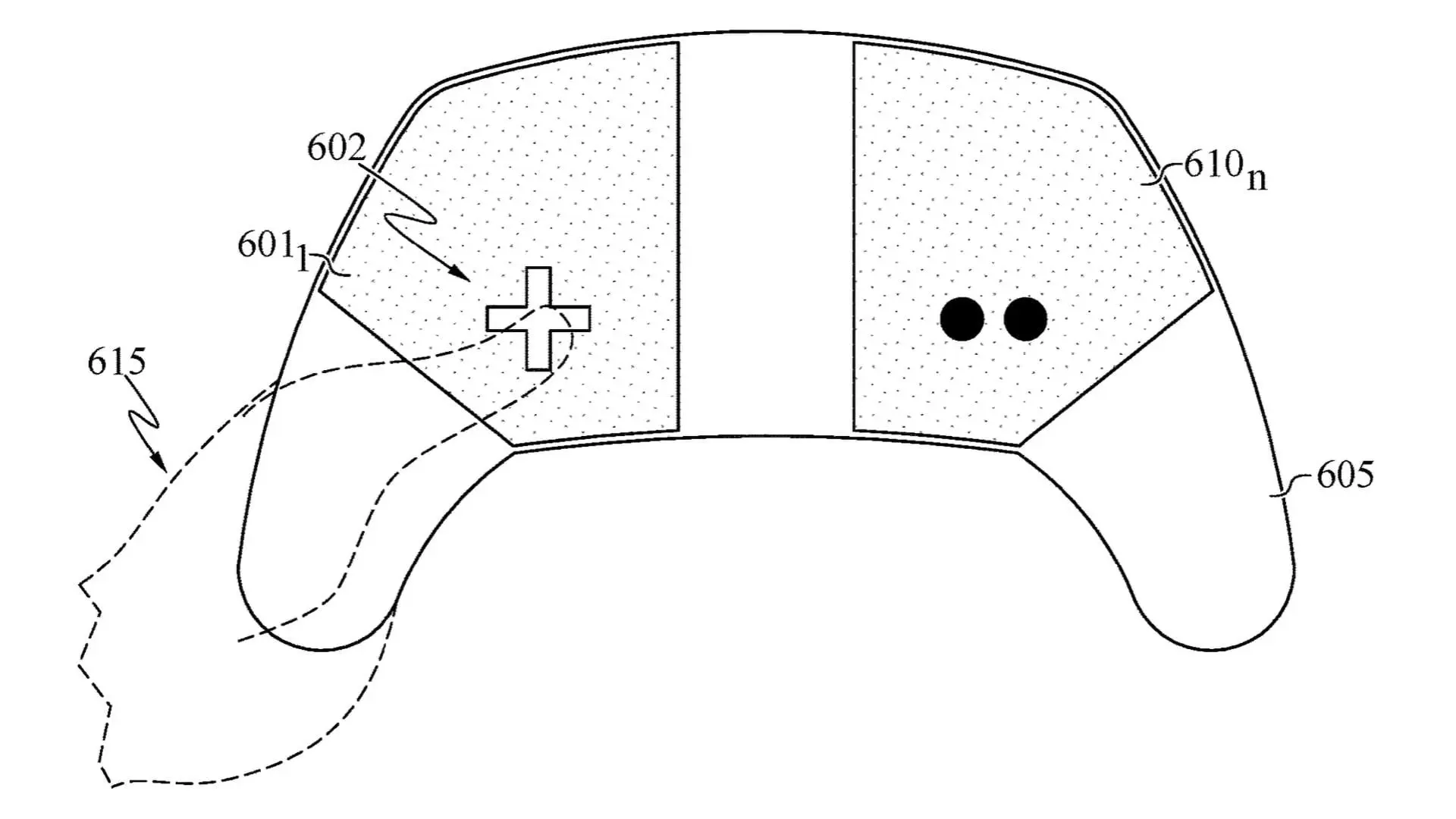
Futuristic touchscreen PlayStation controller concept with customizable virtual buttons displayed on a sleek digital interface

Sony Interactive Entertainment has revealed a striking new vision for the future of gaming hardware. A recently published patent shows a PlayStation controller built around a large touchscreen interface, allowing players to decide where buttons appear and how they function. The concept challenges decades of fixed controller design and signals Sony’s willingness to rethink how gamers interact with consoles.

At a time when gaming hardware innovation often focuses on incremental upgrades, Sony’s touchscreen controller patent stands out as a fundamental redesign. It pits the traditional, rigid button layout against a flexible, player-driven interface that could redefine accessibility, comfort, and customization.


Breaking Away from Fixed Controller Layouts

For years, PlayStation controllers have followed a familiar formula. Physical buttons, analog sticks, triggers, and directional pads occupy fixed positions. This approach delivers reliability and tactile precision, but it assumes that all players have similar hands, abilities, and preferences.

Sony’s patented design challenges that assumption. Instead of permanent buttons, the controller features a touch-sensitive surface covering most of its face. On this screen, players can create, move, resize, or remove virtual buttons based on their needs. The controller becomes a dynamic interface rather than a static tool.

This shift introduces a powerful idea: one controller, infinite layouts. A racing game could display oversized acceleration and braking controls. A role-playing game could prioritize menus and shortcuts. A minimalist game could use only one or two large inputs. The controller adapts to the game—and to the player.


Customization as a Core Feature

Sony’s patent emphasizes personalization. According to the design, players are no longer locked into default layouts defined by hardware engineers. Instead, they gain full control over how inputs appear and behave.

This approach marks a sharp contrast to existing controllers, where customization typically means remapping buttons, not redefining their physical or visual presence. With a touchscreen surface, layouts can change instantly between games or even within the same game.

Such flexibility could reduce hand strain, improve reaction times, and enhance comfort during long play sessions. It also opens the door to game-specific interfaces that feel purpose-built rather than adapted from a universal template.


A Strong Push for Accessibility

Accessibility appears to be a driving force behind Sony’s concept. Fixed button layouts often pose challenges for players with limited mobility, smaller hands, or physical disabilities. A fully customizable touchscreen controller could help bridge that gap.

Players could enlarge frequently used inputs, reduce the number of required buttons, or cluster controls within easy reach. This level of adaptability could make complex games more playable for a wider audience.

Compared to traditional accessibility solutions, which often rely on external devices or specialized controllers, Sony’s concept integrates accessibility directly into mainstream hardware design. That approach could normalize inclusive gaming rather than treating it as a niche feature.


Technology Behind the Touch

Touchscreen controllers are not without challenges. One of the biggest concerns is accuracy. Physical buttons provide immediate tactile feedback, while touch surfaces risk accidental presses when fingers rest on the screen.

Sony addresses this issue in the patent by describing pressure and heat-sensing technology. These sensors aim to distinguish between intentional inputs and passive contact. By combining multiple detection methods, the controller could reduce false inputs and improve reliability.

The design suggests Sony is aware of past failures in touch-based controllers and is actively working to avoid repeating them. While questions remain about real-world performance, the patent shows a thoughtful approach to solving known limitations.


Touch vs Tactile: A Key Debate

Despite its promise, the concept raises an important question: can a touchscreen truly replace physical buttons? Competitive gamers often rely on muscle memory and tactile feedback. For fast-paced shooters or fighting games, even slight input uncertainty can be frustrating.

Sony’s design does not necessarily eliminate physical controls entirely. The patent leaves room for hybrid approaches, combining touch surfaces with traditional triggers or sticks. This suggests the touchscreen could serve as an enhancement rather than a total replacement.

If implemented carefully, the controller could offer the best of both worlds—precision where it matters and flexibility where it helps most.


What This Means for PlayStation’s Future

It is important to note that patents do not guarantee products. Companies often file patents to protect ideas, even if they never reach consumers. However, patents do reveal strategic intent.

This touchscreen controller concept shows that Sony is actively exploring ways to move beyond conventional hardware design. Even if this exact controller never launches, its ideas could influence future PlayStation accessories, accessibility features, or next-generation consoles.

Compared to recent innovations like adaptive triggers and advanced haptics, this patent represents a larger conceptual leap. Those features enhanced existing designs. This one questions the design itself.


Industry Impact and Competitive Landscape

Other gaming companies have experimented with touch input, but rarely as the primary control surface. Sony’s approach goes further by turning the controller into a configurable digital canvas.

If Sony moves forward with this concept, it could pressure competitors to rethink their own controller strategies. Customizable touch-based interfaces could become a new battleground for differentiation, especially as gaming audiences become more diverse.

The idea also aligns with broader trends in technology, where personalization and adaptability increasingly define user experiences.


A Glimpse Into What Comes Next

Sony’s touchscreen PlayStation controller patent offers a compelling glimpse into the future of gaming interfaces. It prioritizes player choice, inclusivity, and adaptability over tradition. While challenges remain, the concept reflects bold thinking at a time when hardware innovation often plays it safe.

Whether this design becomes a consumer product or simply influences future developments, it sends a clear message. Sony is willing to challenge long-standing assumptions about how games should be played.

The controller of tomorrow may no longer dictate how players interact with games. Instead, it may adapt—silently and seamlessly—to the player’s hands, abilities, and imagination.

Sony Unleashes AI Ghostwriter: A New Era of Real-Time Game Censorship

Sony Interactive Entertainment has ignited a firestorm in the gaming world. A newly published patent reveals a future where video games change while you play. This technology uses Artificial Intelligence to edit, blur, or even rewrite digital content on the fly. It is called “Automatic Bespoke Edits of Video Content Using AI.” The implications are massive.
The Mechanics of Instant Modification
Sony’s vision sits between the game engine and your screen. It acts like a high-tech filter. The AI scans every frame of video and every second of audio. It looks for “sensitive” material. This includes gore, sexual themes, and profanity.
The system does not just block a game. It remodels it. If the AI detects a violent execution, it might blur the blood. If a character screams a curse word, the AI mutes the sound. Most shockingly, the patent describes using Deepfakes. The system could replace a severed limb with a harmless object. It could swap a frightening monster for a cartoon character. This happens in milliseconds.
Power to the Parents
Sony frames this as the ultimate safety tool. Traditional age ratings are rigid. A “Mature” rating blocks the entire game from a child. This AI allows for a “middle ground.” * Profiles: Parents can set custom rules for each family member.

  • Safety Toggles: Users can choose to hide specific triggers, like spiders or needles.
  • Seamless Flow: The game keeps running. There are no abrupt cuts or “black bars.”
    For many, this is a dream come true. It lets kids experience the mechanics of a hit game without the adult themes. It gives players control over their own comfort.
    The Death of Artistic Integrity?
    However, critics are sounding the alarm. They call it “digital sanitization.” Many games are works of art. Developers choose every pixel for a reason. In titles like The Last of Us, violence serves the story. It makes the world feel dangerous.
    If an AI scrubs away the grit, does the story lose its soul? Some fear that platform holders like Sony will gain too much power. They could dictate what is “acceptable” across all games. This moves the power from the creator to the algorithm.
    A Shadow Over Creativity
    The fear extends to the development phase. If studios know an AI will rewrite their work, they might stop taking risks. They might design games for the “lowest common denominator.” This could lead to a future of bland, corporate-approved content.
    Furthermore, the technology relies on “sentiment analysis.” AI often struggles with context. It might mistake a character’s grief for “negative content.” It might mute a powerful monologue because of a single intense word. This creates a disjointed and confusing experience for the player.
    The Road Ahead
    A patent is not a product. Sony files hundreds of ideas every year. Many never see the light of day. But this patent shows a clear direction. Sony wants the PlayStation ecosystem to be the most adaptable platform on Earth.
    The gaming community is watching closely. The industry stands at a crossroads. One path leads to unparalleled accessibility and safety. The other leads to a world where “The Player’s Experience” is curated by a machine, not a human. Whether this becomes a tool for protection or a weapon for censorship remains to be seen. For now, the line between a “custom experience” and “altered art” has never been thinner.

Safe Pro Group (SPAI) Files New AI Patent for Drone-Based Threat Detection

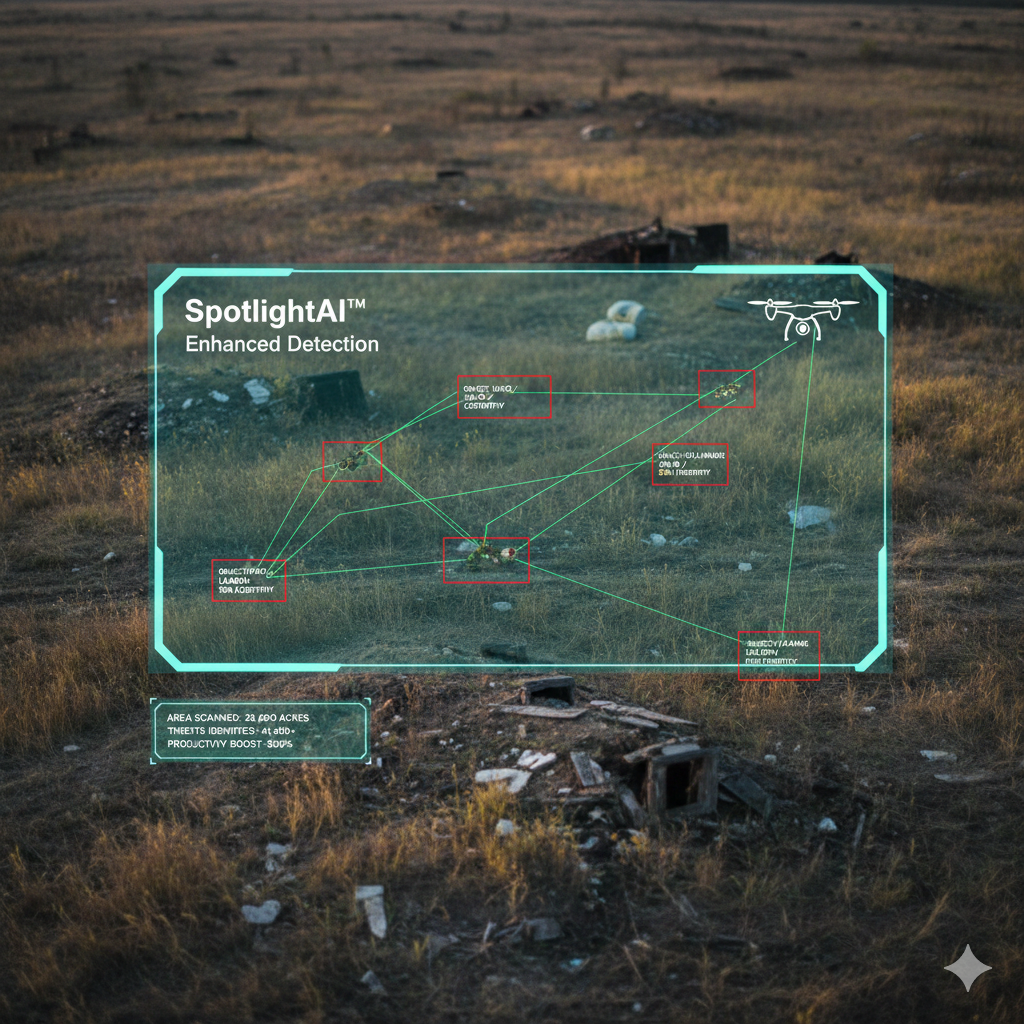
AI computer vision interface showing autonomous detection and labeling of explosive threats from a high-altitude drone perspective.

As the global reliance on Unmanned Aerial Systems (UAS) transitions from simple reconnaissance to complex, high-stakes decision-making, the bottleneck has remained the same: the human ability to process vast amounts of visual data accurately and in real-time. Addressing this critical gap, Safe Pro Group Inc. (NASDAQ: SPAI), a leader in AI-driven security and survival solutions, recently announced the filing of a groundbreaking patent application that promises to redefine the standards of computer vision in drone-based operations.

The new patent, titled “Object Detection Precision Enhancement Methods, Tools and Systems,” introduces a sophisticated algorithm specifically designed to enhance the detection of minute, high-risk objects within expansive datasets. This development marks a significant milestone for the company’s intellectual property (IP) portfolio and signals a paradigm shift for industries ranging from humanitarian demining to national defense.

The Challenge of the “Small Object” Problem

In the world of computer vision, “small object detection” is a notorious technical hurdle. When a drone flies at a high altitude to cover more ground, a landmine or an unexploded ordnance (UXO) may only occupy a few pixels on a 4K image. Standard AI models often struggle with these “needle in a haystack” scenarios, frequently resulting in false negatives (missed threats) or overwhelming false positives that paralyze operations.

Safe Pro’s new algorithm directly addresses this by utilizing a novel approach to image analysis. By refining how the AI interprets geospatial data and high-resolution imagery, the technology can maintain extreme precision even when processing massive datasets at high speeds. This capability is not merely a theoretical improvement; it is a necessity for “wide-area” operations where thousands of hectares must be cleared of threats to ensure human safety.

SpotlightAI™ and the Future of Demining

At the heart of Safe Pro’s technological ecosystem is SpotlightAI™, a platform that transforms standard drone imagery into actionable intelligence. The company’s newly filed patent acts as an “engine upgrade” for this platform.

The effectiveness of this technology has already been demonstrated in one of the world’s most challenging environments: Ukraine. Recent reports indicate that Safe Pro’s AI has delivered an 800% surge in productivity for demining surveys. By automating the identification of explosives, the system allows human demining teams to focus their efforts on confirmed danger zones, significantly reducing the time and risk involved in land clearance.

To date, Safe Pro’s unique datasets—which include over 2.2 million drone images and more than 41,400 identified threats across 28,000 acres—provide a “real-world” training ground that few competitors can match. This data-driven approach ensures that the algorithm is battle-tested and optimized for the chaotic visual environments of active conflict zones and post-war reconstruction sites.

Strategic Integration with the U.S. Military

The filing of this patent comes at a strategic time as Safe Pro deepens its relationship with the U.S. Department of Defense. The company has confirmed it will showcase these enhanced AI capabilities during several high-profile events with the U.S. Army throughout 2026.

Key demonstrations will include:

  • The Concept Focused Warfighter Experiment (CFWE): A venue for testing cutting-edge tech in simulated combat scenarios.
  • The Live Breach Event: Where the AI’s ability to detect obstacles and explosives in real-time will be put to the test.
  • CFWE Maneuver (CFWE-M): A demonstration focusing on how autonomous detection can support troop movement and battlefield awareness.

By securing the IP for these “Precision Enhancement” methods, Safe Pro is positioning itself as a vital contractor for modern “mosaic warfare,” where distributed drone networks provide the primary eyes for ground commanders.

A Growing Global IP Fortress

This latest filing is a continuation of Safe Pro’s aggressive strategy to protect its technological moat. The company already holds US Patent No. 12,146,729, which covers the autonomous detection, identification, and labeling of explosives in orthomosaic images. Valid until 2043, this foundational patent establishes Safe Pro as a primary gatekeeper of AI-driven explosive detection.

Furthermore, Safe Pro is expanding its reach far beyond U.S. borders. The company has entered the “national phase” of its international applications under the Patent Cooperation Treaty (PCT). This includes seeking protection in 47 jurisdictions, including the European Union, Canada, Australia, Japan, Israel, and Ukraine.

“Protecting our innovations through a robust international IP strategy is paramount,” the company noted in its disclosure. “Whether deployed on the ‘edge’ via SpotlightAI™ OnSite for real-time analysis or leveraging the cloud via Amazon Web Services (AWS), our technology is built to scale globally.”

Commercial and Humanitarian Implications

While defense applications often capture headlines, the commercial and humanitarian implications of this patent are equally profound. In the agricultural sector, the same “small object detection” precision can be used to identify specific crop pests or early signs of disease from the air, long before they are visible to the naked eye.

In humanitarian terms, the technology offers a path toward a “mine-free world.” By lowering the cost and increasing the speed of landmine detection, Safe Pro’s AI can help return agricultural land to farmers and safe paths to school children in post-conflict nations. The ability to distinguish between a rusted soda can and a lethal anti-personnel mine with high confidence is the “holy grail” of demining—and Safe Pro’s new patent suggests they are closer than ever to achieving it.

Market Outlook and Investor Sentiment

The market has taken notice of Safe Pro’s momentum. Despite the inherent volatility in the tech and defense sectors, the company’s steady accumulation of IP and its $14 million in recent funding from partners like Ondas Holdings Inc. suggest strong institutional confidence.

Investors are increasingly looking for “AI-plus” companies—those that don’t just develop software, but apply it to tangible, high-barrier-to-entry physical problems. Safe Pro Group fits this description perfectly, combining sophisticated machine learning with the rugged requirements of field security and explosive ordnance disposal (EOD).

Conclusion

The filing of the “Object Detection Precision Enhancement” patent is more than just a legal formality; it is a statement of intent. By solving the technical limitations of drone-based computer vision, Safe Pro Group is making the world safer, one pixel at a time.

As the company prepares for its 2026 demonstrations with the U.S. Army, the focus will remain on the transition from “seeing” to “understanding.” In the high-stakes environments where Safe Pro operates, the difference between a successful mission and a tragedy often comes down to the speed and accuracy of an algorithm. With this new patent, Safe Pro Group has ensured that its AI will remain at the forefront of that life-saving frontier.


About Safe Pro Group Inc.

Safe Pro Group Inc. is a US-based provider of safety and survival solutions for military, law enforcement, and humanitarian organizations. Their SpotlightAI™ platform represents the cutting edge of autonomous threat detection, leveraging massive geospatial datasets to identify risks in complex environments.

Exclusive: Google Dominates AI Patent Applications, Cementing Its Leadership in the Field

In a sweeping assertion of technological supremacy, Google has emerged as the frontrunner in artificial intelligence (AI) innovation, filing more AI-related patents than any other company globally. This development underscores the tech giant’s aggressive strategy to dominate the rapidly evolving AI sector, with implications that stretch across industries, from healthcare and finance to autonomous vehicles and language processing.

A Surge in AI Patent Filings

According to data obtained from the United States Patent and Trademark Office (USPTO) and international intellectual property databases, Google filed over 6,500 AI-related patents in 2024 alone, marking a 20% increase from the previous year. This figure places Google ahead of other major contenders such as IBM, Microsoft, and Samsung, who have also heavily invested in AI research and development.

Industry analysts attribute this surge to Google’s ongoing integration of AI into its core products—ranging from its search engine and Google Assistant to Google Cloud and the Android ecosystem. Google’s AI research subsidiary, DeepMind, has also significantly contributed to this patent dominance through cutting-edge work in reinforcement learning, generative AI, and neural networks.

Strategic Areas of Innovation

Google’s patent portfolio reveals its strategic focus on foundational AI models, including large language models (LLMs), computer vision, and machine learning infrastructure. A significant portion of these patents centers around techniques to optimize training efficiency, reduce energy consumption, and improve model alignment and interpretability—areas critical to the safe and scalable deployment of AI systems.

Particularly notable are patents involving Gemini, Google’s flagship AI model series designed to compete with OpenAI’s GPT line and Anthropic’s Claude. Gemini has been integrated into products like Google Workspace, Chrome, and Pixel devices, showcasing Google’s commitment to AI-first development across its ecosystem.

Global Implications and Competitive Edge

The acceleration in patent filings not only reflects Google’s technological edge but also serves as a strategic maneuver in the increasingly competitive global AI race. With nations like China, South Korea, and the European Union investing heavily in AI capabilities, intellectual property has become a key battleground.

“Patents are not just about legal protections—they’re about market positioning,” said Dr. Evelyn Ramos, an AI policy expert at Stanford University. “Google’s dominance in AI patents gives it leverage in licensing, partnerships, and even regulatory discussions.”

Concerns Over Monopoly and Regulation

While Google’s patent prowess is celebrated in the innovation arena, it has also raised concerns about monopolistic behavior. Critics argue that the tech giant’s expansive IP portfolio may stifle competition by creating barriers for smaller players and startups aiming to innovate in the same space.

In response to these concerns, Google has emphasized its commitment to open-source contributions and responsible AI development. The company has released several tools and models under open licenses, including TensorFlow and portions of the Gemma models, to foster collaboration and transparency in AI research.

Looking Ahead

As AI becomes the defining technology of the next decade, Google’s aggressive push for intellectual property leadership is poised to influence everything from global standards to everyday user experiences. With generative AI reshaping content creation, education, and decision-making processes, Google’s dominance in the patent landscape ensures that it will remain at the forefront of both innovation and debate.

In an era where data is the new oil and algorithms are the new engines, Google’s strategy underscores a broader truth: in the AI race, ownership of ideas may matter as much as their execution.


This article is based on proprietary data analysis and expert interviews.

India Breaks into Top Six Globally in 6G Patent Filings: MoS Telecom

India has achieved a significant milestone in the global race for next-generation wireless technology by ranking among the top six nations in 6G patent filings. This advancement underscores the country’s growing influence in shaping the future of telecommunications.

Strategic Push for 6G Leadership
Under the ‘Bharat 6G Vision,’ India aims to become a leader in the design, development, and deployment of 6G technology by 2030. The government is actively supporting this initiative through various programs, including funding research and development, establishing testbeds, and fostering collaborations between academia and industry. These efforts are expected to contribute to India’s goal of securing a 10% share of global 6G patents and one-sixth of contributions to global standards within the next three years .

Terahertz Frequency Bands: The Heart of 6G Innovation
6G technology is set to revolutionize wireless communication by operating in terahertz (THz) frequency bands, specifically between 95 GHz and 3 THz. This spectrum allows for data rates up to 1 terabit per second, marking a hundredfold increase over 5G speeds. Such capabilities will enable applications like immersive extended reality, digital twins, and seamless integration of terrestrial and non-terrestrial networks .

To facilitate research and development in these high-frequency bands, the Telecom Regulatory Authority of India (TRAI) has recommended setting up experimental authorizations for operations in the THz spectrum. This move is expected to position India as a global hub for 6G R&D .

Collaborative Efforts and Future Outlook
India’s ascent in 6G patent filings is attributed to a combination of government initiatives, private sector investments, and academic collaborations. Telecom giants like Reliance Jio, Bharti Airtel, and Tata Communications are investing heavily in 6G research, establishing research centers, and forming international partnerships to drive innovation .

Looking ahead, India is set to host the World Telecommunications Standardisation Assembly (WTSA) in Delhi from October 14 to 24, 2024.

Conclusion
India’s entry into the top six nations for 6G patent filings signifies a strategic leap towards becoming a global leader in next-generation wireless technology. With continued investment in research, infrastructure, and international collaboration, India is poised to play a pivotal role in defining the future of telecommunications.

Anthropic Faces Legal Scrutiny Over AI-Fabricated Citation in Copyright Lawsuit

Anthropic, the AI company known for its chatbot Claude, is under legal scrutiny after an expert witness allegedly cited a fabricated academic article in a copyright infringement case. The lawsuit, filed by music publishers including Universal Music Group, Concord, and ABKCO, accuses Anthropic of using copyrighted song lyrics without permission to train Claude.

The Alleged Fabrication
During a recent court hearing, Matt Oppenheim, representing the plaintiffs, claimed that Olivia Chen, an Anthropic data scientist, cited a non-existent academic paper to support arguments about how often Claude reproduces copyrighted lyrics. The article was allegedly generated by Anthropic’s AI and falsely attributed to a reputable journal. Judge mentioned the incident as a “serious issue” and demanded a prompt response from Anthropic. However, she denied an immediate deposition of Chen.

Anthropic’s Response
Anthropic acknowledged the citation error but suggested it might relate to a different, legitimate article. The company has not provided further details on how the AI-generated citation occurred or what measures are being taken to prevent such incidents in the future.

Broader Legal Implications
This development adds to the mounting legal challenges faced by Anthropic and other AI companies over the use of copyrighted materials in training data. In a separate lawsuit, authors Andrea Bartz, Charles Graeber, and Kirk Wallace Johnson allege that Anthropic used pirated books, including their own works, to train Claude. The authors claim that Anthropic’s AI model profits from “strip-mining the human expression and ingenuity” behind their works.
Computerworld

The legal landscape is evolving as courts grapple with the intersection of AI technology and intellectual property rights. While AI companies argue that training models on existing content falls under “fair use,” copyright holders contend that their works are being exploited without permission or compensation.

Conclusion
The alleged AI-generated citation in the copyright lawsuit against Anthropic underscores the complexities and challenges of integrating AI into legal and creative domains. As the case progresses, it may set important precedents for how AI companies handle copyrighted materials and the ethical considerations surrounding AI-generated content.

FEG Global Secures Patent for Innovative Emissions Scrubber, Eyes UK and European Expansion

An innovative engineering firm specializing in industrial equipment for the food manufacturing sector is set to expand its footprint across the UK and Europe after receiving full patent approval for its breakthrough emissions control product.

FEG Global, headquartered in Washington, UK, has developed the LGC Scrubber, a patented system designed to revolutionize odour and oil mist management in food production facilities. The technology is aimed at companies involved in high-temperature frying, cooking, coating, or seasoning—common in seafood, meat, poultry, ready meals, and snack food manufacturing.

The LGC Scrubber features a dual-function system that combines a particulate wet scrubber and a gas scrubber. This allows it to effectively capture and eliminate both oil mist and volatile odour compounds from industrial food processing operations. Its modular design makes it adaptable for integration into existing factory layouts, providing a practical and scalable solution for food manufacturers.

One of the standout benefits of the LGC Scrubber is its potential contribution to the circular economy. The system allows for the collection and possible repurposing of waste emissions—such as oil particles—as biofuel, opening up additional revenue streams for users.

Following the patent approval, FEG Global plans to ramp up sales and installations of the LGC Scrubber across European markets. The company already operates regional offices in the Midlands, Glasgow, and Belgium, positioning it strategically for cross-border growth.

Chris Williams, Managing Director of FEG Global, emphasized the broader impact of the innovation:

The LGC Scrubber is not just a technical achievement; it’s a practical, market-ready solution that addresses critical environmental and operational challenges for food manufacturers. As housing developments increasingly encroach on industrial zones, managing odours and emissions isn’t just good practice—it’s essential for regulatory compliance and community relations.”

The system has already been successfully implemented by Whitby Seafoods, one of the UK’s largest seafood processors known for its iconic Whitby Scampi. The company, which processes over 3,000 tonnes of scampi annually, required a reliable system to manage odours in its high-temperature production environment.

Chris Dickinson, Head of Engineering at Whitby Seafoods, praised the partnership:

“We needed a solution that met our environmental standards while integrating seamlessly into our operational setup. FEG Global delivered exactly that. The LGC Scrubber installation has allowed us to maintain high production volumes while ensuring we continue to meet our environmental responsibilities as a local employer and good neighbour.”

As regulatory pressures mount and community awareness grows around industrial emissions, FEG Global’s LGC Scrubber is poised to become a critical solution for food manufacturers seeking to future-proof their operations while maintaining environmental stewardship.

Unilin Technologies Secures European Patent for Groundbreaking Osiris Wood Recycling Technology

Unilin Technologies, the intellectual property division of Unilin, has been awarded European patent EP 4114629 for its pioneering Osiris recycling technology. This patent marks a significant milestone in the company’s mission to foster circular practices in the wood industry and reflects Unilin’s ongoing investment in sustainable innovation.

The patented Osiris system represents the first industrial-scale technology capable of recycling fiberboards—a long-standing challenge in the wood-based panel industry. Historically, the composite structure of fiberboards, which combines wood fibers with adhesives and resins, made them difficult to disassemble and therefore unfit for effective recycling. As a result, these boards typically ended up in landfills or were incinerated, contributing to environmental degradation.

With Osiris, Unilin has developed a scalable and practical solution to this issue. The technology enables the efficient separation of wood fibers from waste fiberboards, which can then be reintegrated with virgin wood to manufacture new fiberboards. This process not only reduces waste but also conserves natural resources by decreasing reliance on fresh wood material.

The Osiris technology is exclusively offered for licensing by Unilin Technologies in partnership with Dieffenbacher, a leading provider of wood-based panel production systems.

“We are proud to receive this patent, which underscores the innovation behind Osiris and the impact it can have on the sustainability of the fiberboard industry,” said a spokesperson from Unilin Technologies. “Our goal is to create real-world solutions that allow manufacturers to reduce their environmental footprint while maintaining high production standards.”

The granting of this European patent further strengthens Unilin’s intellectual property portfolio and opens the door for wider adoption of circular technologies across the board manufacturing sector. With global attention increasingly focused on sustainable production methods, Osiris offers a viable path forward for companies seeking to align with environmental targets without compromising efficiency or quality.