Next Biometrics Wins U.S. Patent for Full-Screen Smartphone Fingerprint Technology

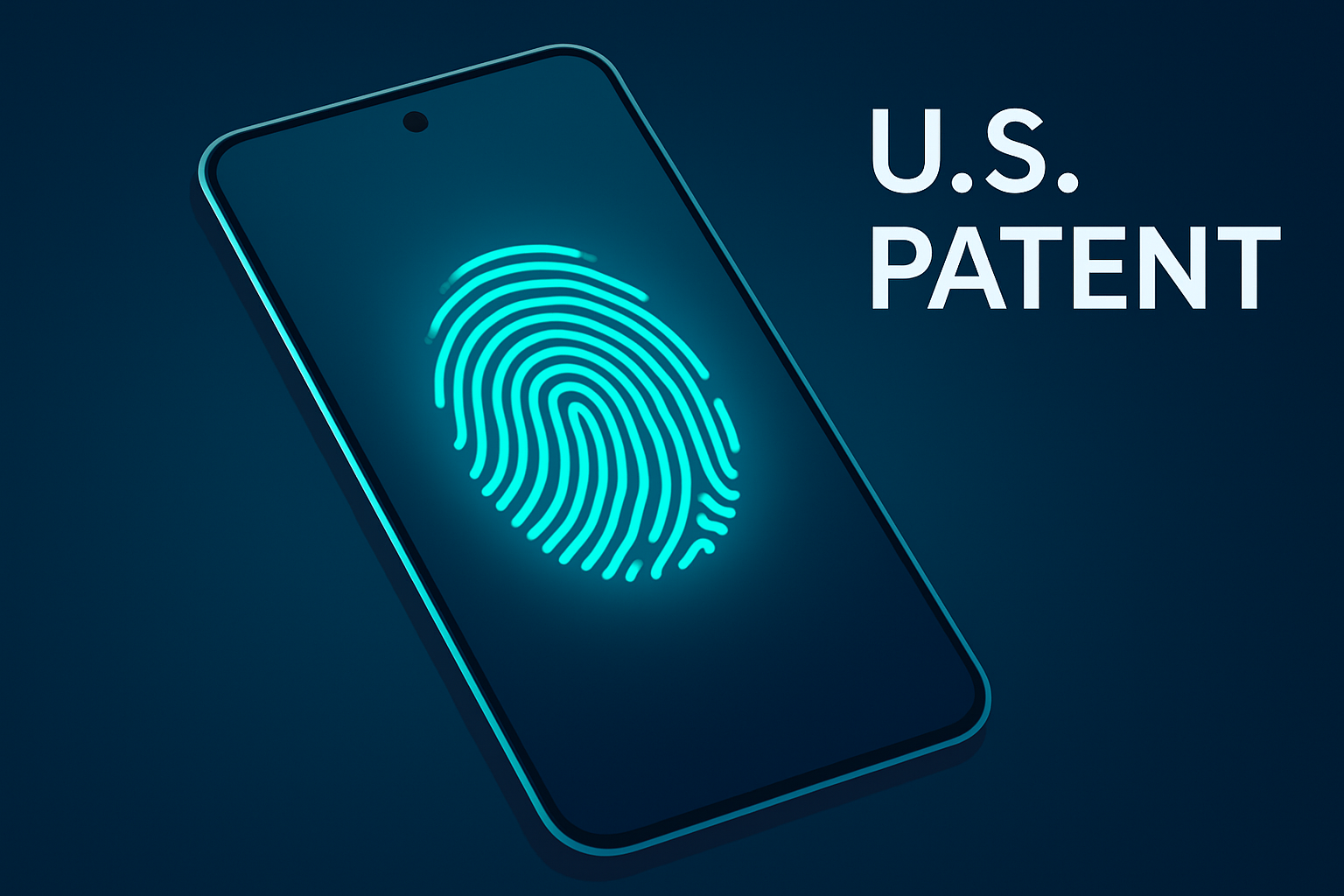
Full-screen fingerprint sensor concept showing biometric scan across entire smartphone display.

Next Biometrics has achieved a major milestone with the grant of a new U.S. patent that could redefine mobile security worldwide. The company received U.S. Patent No. 12,471,807 for an advanced full-screen fingerprint-on-display system designed for next-generation smartphones. The innovation, highlighted by Biometric Update, introduces a powerful method that enables biometric authentication across an entire screen rather than a limited sensor area.

The patented technology integrates a micro-heater and a micro-temperature sensor directly within or adjacent to display pixels. This design enables active-thermal fingerprint detection, a cutting-edge technique that reads the unique heat transfer patterns of a user’s fingerprint. Unlike traditional optical or capacitive sensors, this method relies on thermal behavior to create a detailed, high-contrast fingerprint map.

According to Next Biometrics, the system captures precise thermal signatures when a finger touches the screen. Ridges and valleys create different heat pathways, forming a unique thermal fingerprint pattern. The technology also supports 3D imaging, which enhances accuracy and strengthens spoof resistance. With this dual mechanism, devices can achieve improved liveness detection, reducing the risk of fake fingerprint attacks—one of the biggest challenges in biometric security.

The company notes that the new sensor can be applied in both in-cell and out-cell configurations. This flexibility means smartphone makers can integrate the technology into a wide range of display architectures. In practical terms, smartphone users could unlock their devices by touching any point on the screen, marking a dramatic shift from current fingerprint-on-display systems that work only in small, predefined zones.

In a statement published on the official Next Biometrics website, the company emphasized that the innovation delivers several benefits. First, it boosts speed and reliability. Active-thermal sensing operates consistently in various lighting environments, unlike optical sensors that struggle in bright or direct light. Second, it reduces power consumption, making it energy-efficient for mobile devices. Third, it enhances durability because the sensor relies on thermal detection rather than fragile optical components.

This patent also follows the company’s earlier collaborative efforts with a major smartphone manufacturer. In recent months, Next Biometrics signed a confidential agreement with what it described as a “leading global smartphone brand.” Although the company has not disclosed the partner, analysts believe that onboarding such a high-profile manufacturer could accelerate the technology’s adoption. The new patent strengthens that possibility by protecting the core intellectual property behind the system.

With this latest achievement, Next Biometrics expands its intellectual property portfolio to 22 patents, reinforcing its position as a global innovator in secure identity technologies. Over the past two decades, the company has shipped more than 10 million fingerprint sensors worldwide. Its products are already certified under major global identity frameworks, including Aadhaar, MOSIP, and FBI-PIV standards.

Security experts say the new patent arrives at a critical time for the smartphone industry. Users are increasingly demanding seamless authentication experiences, and manufacturers are seeking more secure and intuitive alternatives. Full-screen fingerprint authentication offers both. It eliminates the need for dedicated sensor areas and provides greater flexibility for phone design. With this innovation, manufacturers could create edge-to-edge displays without sacrificing biometric performance.

Industry analysts also highlight that Next Biometrics’ active-thermal solution addresses several weaknesses found in current under-display sensors. Optical sensors often fail with wet or oily fingers. Ultrasonic sensors, though more advanced, face limitations in speed and cost. A full-screen thermal sensor delivers faster recognition, improved moisture tolerance, and lower risk of spoofing—all while being easier to integrate into modern OLED and LCD panels.

Reports from Biometric Update suggest that full-screen fingerprint technology has been a long-standing ambition across the mobile industry. Several smartphone companies, including major Chinese manufacturers, previously explored similar ideas but struggled with cost, reliability, and mass-production challenges. Next Biometrics’ patented system promises a more practical and scalable solution.

Looking ahead, the company sees vast market potential. Beyond smartphones, full-screen fingerprint interfaces could be used in tablets, laptops, point-of-sale terminals, and secure enterprise devices. The technology can also support applications in national identity systems, border control devices, and secure access systems—areas where Next Biometrics already has an established presence.

However, questions remain. The industry will closely watch how quickly smartphone manufacturers begin adopting the technology. Partners will need to validate performance, integrate software protocols, and ensure compatibility with operating systems such as Android. Mass production scalability and cost optimization will also play crucial roles in determining market success.

Despite these challenges, the company’s leadership is confident. Executives described the patent as a “transformative breakthrough” and expressed optimism that it will “reshape the future of mobile authentication.” They reaffirmed their commitment to delivering secure, intuitive, and cost-effective biometric solutions for global markets.

As digital identity systems expand and mobile payments continue rising, the demand for powerful biometric technologies is increasing rapidly. Next Biometrics’ new thermal-based, full-screen fingerprint system could emerge as a defining innovation in that landscape. With a robust patent in place, industry partnerships forming, and strong commercial momentum, the company appears well-positioned to lead the next wave of biometric evolution.

JA Solar and Chint New Energy Strike Landmark Patent Settlement Amid China’s Solar Market Collapse

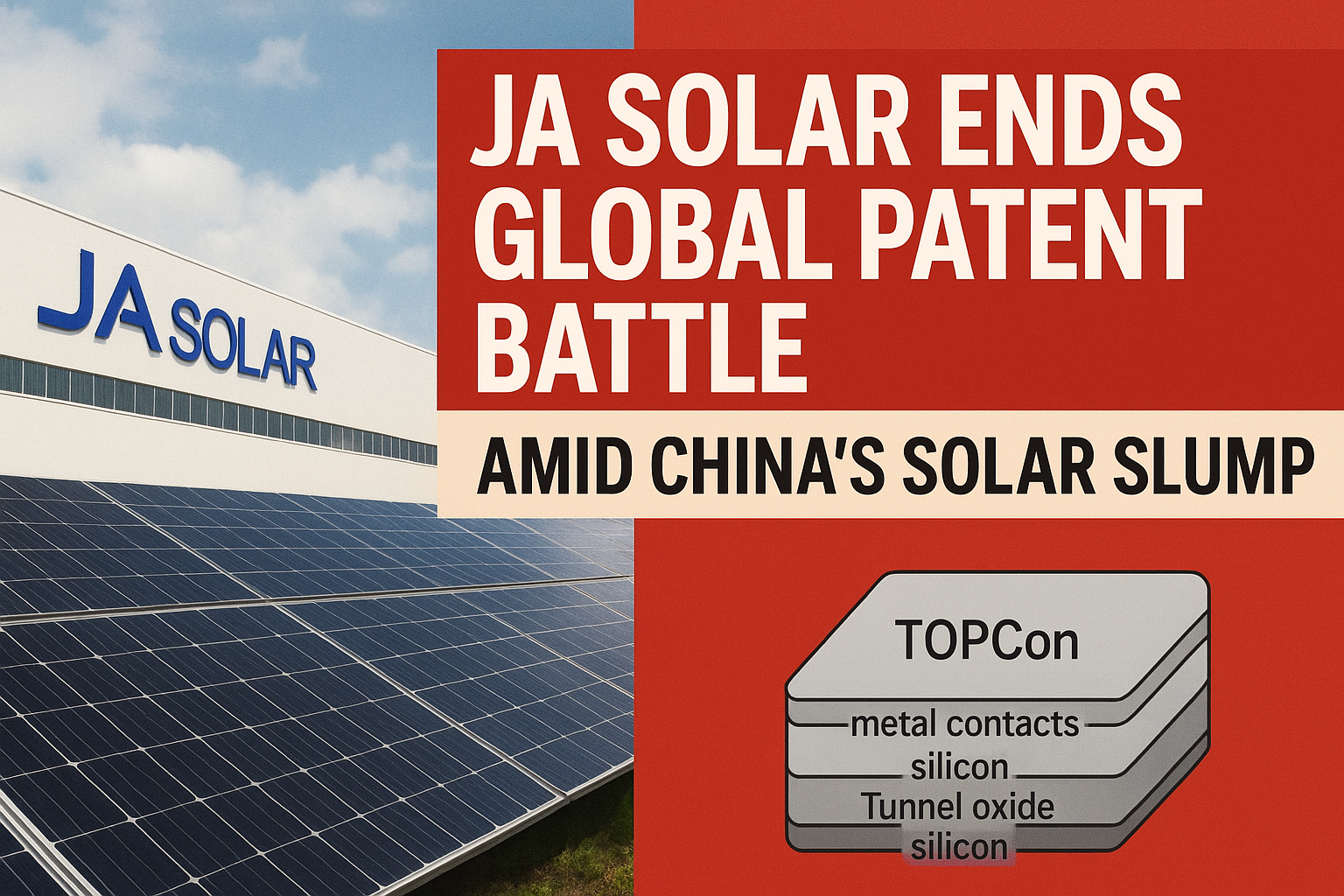
JA Solar and Chint New Energy settle global patent dispute as China’s solar panel market faces oversupply and falling prices

On 29 November 2025, JA Solar announced that it has reached a global settlement with rival Chint New Energy to end all ongoing litigation over proprietary solar-cell technology. The agreement ends lawsuits worldwide and establishes a cross-licensing pact covering their respective “TOPCon” patents.

Under the accord, neither party will file any new patent suits concerning those TOPCon patents. The move draws a line under a bitter legal battle over advanced solar-cell designs — and signals a shift in approach for China’s embattled photovoltaic (PV) industry.


Context: From price wars to patent wars

The settlement comes against a backdrop of severe stress in China’s solar-panel sector. In the first half of 2025, JA Solar — along with other major PV producers — reported steep losses as falling module prices and persistent oversupply eroded profitability.

Analysts warn that this downturn is more than cyclical. After rapid capacity expansion between 2020 and 2023, China’s PV production capacity now far exceeds global demand. According to the company’s own filings, wafer, cell, and module production have all outgrown realistic market needs — triggering a prolonged slump in prices across the supply chain.∙

In response, many firms have cut jobs and scaled down operations: collectively, the top solar manufacturers shed nearly one-third of their workforce in the past year.

As competition intensified, the industry’s battleground shifted from pricing to intellectual property. Companies staked their future on advanced technologies like TOPCon — a next-gen solar-cell design — and used their patent portfolios as strategic weapons.

In that context, the settlement between JA Solar and Chint New Energy stands out. It reflects a pragmatic pivot: instead of draining scarce resources on costly lawsuits, big players appear to be seeking stability and reducing legal risk.


What the Truce Means for the PV Industry

By crossing licensing rights to TOPCon technology, JA Solar and Chint New Energy effectively neutralize one dimension of internal conflict. This could ease tensions, reduce legal overhead, and help firms redirect efforts to production, innovation, or survival.

For the broader industry, the deal might mark a turning point. If other leading rivals follow suit, the era of patent-driven warfare could give way to cooperation, licensing deals, and — potentially — consolidation. Indeed, similar truce agreements have already occurred elsewhere: earlier in 2025, JinkoSolar and LONGi Green Energy ended their own global patent conflict via a cross-licensing deal.

Given the brutal economics — chronic oversupply, slim margins, and falling demand — industry insiders say cooperation may be the only path forward. Consolidation, capacity cuts, and patent sharing may be vital for survival.


What Remains at Stake

Yet, the settlement does not erase deeper structural problems facing China’s solar-panel industry. The volume of capacity far exceeds the actual demand. As a result, many firms — especially smaller manufacturers — may struggle to stay afloat.

Even large companies like JA Solar cannot guarantee profitability soon. To break even, firms may need price stabilization, capacity consolidation, cost reductions, or new demand surges — none of which are assured anytime soon.

Further, while cross-licensing may bring calm, it could also set the stage for consolidation. Companies that fail to keep up may be forced to exit — leaving fewer, more powerful players controlling the global supply of solar modules. That could reshape global solar-module sourcing, trade, and pricing for years ahead.


Why This Matters Globally — and for Solar Buyers

For markets importing Chinese solar modules — including India — the truce could lead to a more stable supply environment. Reduced legal uncertainty and potential consolidation may result in steadier module availability.

At the same time, fewer but larger players controlling core technologies could reshape competition. Buyers may face a narrower pool of module suppliers, and prices may become more rigid.

In short: while the patent battle is over, a larger fight — for survival and dominance in a global oversupplied solar market — has just begun.


Bottom line: JA Solar’s settlement with Chint New Energy closes a chapter of acrid patent warfare. Yet, it does not signal a rebound. Instead, it highlights a harsh reality: China’s solar-panel giants must adapt — or risk being swept away in a global shake-out.

India’s Patent Rules Under Fire as Lenacapavir Crisis Threatens HIV Treatment Worldwide

Digital news-style image showing a Lenacapavir HIV drug vial placed on a table with blurred hospital equipment in the background, symbolizing India’s Lenacapavir supply crisis and global treatment impact

A major global health breakthrough is facing a shocking roadblock. Lenacapavir, a long-acting HIV prevention drug hailed as a game-changer, is now trapped in a web of patent disputes, regulatory hurdles, and manufacturing delays. The crisis threatens HIV-prevention programs worldwide, including in India, where millions hoped for rapid access to the powerful medicine.

Lenacapavir drew global attention because of its remarkable clinical performance. Trials showed near-perfect protection against HIV for many participants, raising hopes for an effective tool that needs dosing only twice a year. Health experts described it as one of the most promising interventions in decades.

However, the promise is now overshadowed by a deepening supply crisis — one driven by patent restrictions, stringent approval rules, and slow action from key regulatory agencies.


A Drug with Massive Potential — Now Stalled

Lenacapavir was developed by Gilead Sciences, a major US-based pharmaceutical firm. The company invested years of research and significant resources to create the drug. The injectable version quickly gained recognition for its convenience and effectiveness. For many communities, especially high-risk groups, it offered hope for a new era in HIV prevention.

Global regulators also moved fast. The US Food and Drug Administration (FDA) authorised Lenacapavir for treatment, and international bodies praised its preventive potential. Expectations soared when Gilead signed voluntary licensing agreements with several Indian manufacturers. Companies like Dr. Reddy’s Laboratories and Hetero Labs received permission to produce affordable generics for up to 120 low- and middle-income countries.
(Details: https://www.reuters.com/business/healthcare-pharmaceuticals/gilead-signs-deals-with-6-generic-drugmakers-sell-hiv-drug-low-income-countries-2024-10-02/)

The agreements were supposed to ensure wide global access. Experts predicted that generic Lenacapavir could cost less than USD 40 per year — far below Western prices.

But reality has unfolded differently.


Regulatory Hurdles in India Trigger a Crisis

India is a crucial player in global generic drug supply. Yet, the country’s regulatory framework has unexpectedly slowed Lenacapavir’s entry. The Central Drugs Standard Control Organisation (CDSCO) has not yet granted the needed waivers for local clinical trials. Without this waiver, Indian generic makers must complete extensive human studies before manufacturing and sale.

These requirements conflict with the urgent global need for rapid deployment.

Public health advocates argue that Lenacapavir already has strong safety data from international trials. They believe India should fast-track approval as it has done for other drugs in the past.
A related regulatory discussion: https://indianexpress.com/article/cities/pune/regulatory-intellectual-property-barriers-hinder-access-to-new-hiv-prevention-tool-experts-10391830/

For now, the approval delay means generic production cannot begin. That pushes widespread availability into 2026 or later, according to several analysts.


Patent Battles Intensify the Challenge

Patent issues further complicate the landscape. Gilead has filed multiple patent applications in India to expand protection for Lenacapavir. Civil society groups and patient-advocacy organisations have challenged many of these claims. They argue that some patents lack genuine innovation and could unfairly extend monopoly control.

Patent hearings continue at the Indian Patent Office.
Context: https://www.business-standard.com/india-news/indian-patent-office-to-hear-objections-on-gilead-s-hiv-drug-patent-claims-124091700981_1.html

If the patents are upheld, they could block or delay generic versions for years.


Global Impact: Programs at Risk

The supply crisis is not an isolated problem. It is rippling across continents.

Countries in Africa, Southeast Asia, and Latin America — regions with some of the highest HIV burdens — expected Indian generic manufacturers to supply affordable injections. Health ministries had already begun planning distribution pathways.

Now, those plans are on hold.

International NGOs fear a surge in new infections if prevention tools remain inaccessible. UNAIDS and global health researchers have consistently warned that long-acting treatment is essential for vulnerable groups who struggle with daily pills.

A detailed global perspective:
https://www.ianslive.in/india-must-ensure-equitable-timely-access-to-lenacapavir-to-tackle-global-hiv-cases–20250929171938

The delay also places financial strain on governments. Without generics, only the expensive branded version remains available — unaffordable for most public health programs.


Experts Call for Urgent Action

Public health experts are urging immediate reforms. They want India to:

  • Fast-track regulatory approvals for generic Lenacapavir.
  • Streamline clinical trial requirements when robust international data exists.
  • Resolve patent disputes swiftly to prevent monopolistic delays.
  • Coordinate with global health agencies to avoid supply imbalances.

Only decisive action can prevent a prolonged shortage.


Conclusion

Lenacapavir promised a revolution in HIV prevention. Its power, convenience, and long-acting profile generated global hope. But today, the supply crisis has become a serious threat. Patent battles, regulatory delays, and slow policy responses have created a bottleneck with real human consequences.

Millions await access. The world cannot afford to let bureaucracy stall a breakthrough that could save countless lives.

If authorities act with urgency, Lenacapavir can still fulfill its promise. But every month lost increases the risk — and the cost — of inaction.

USPTO Issues New AI Inventorship Guidelines: No Special Standard for AI-Driven Inventions

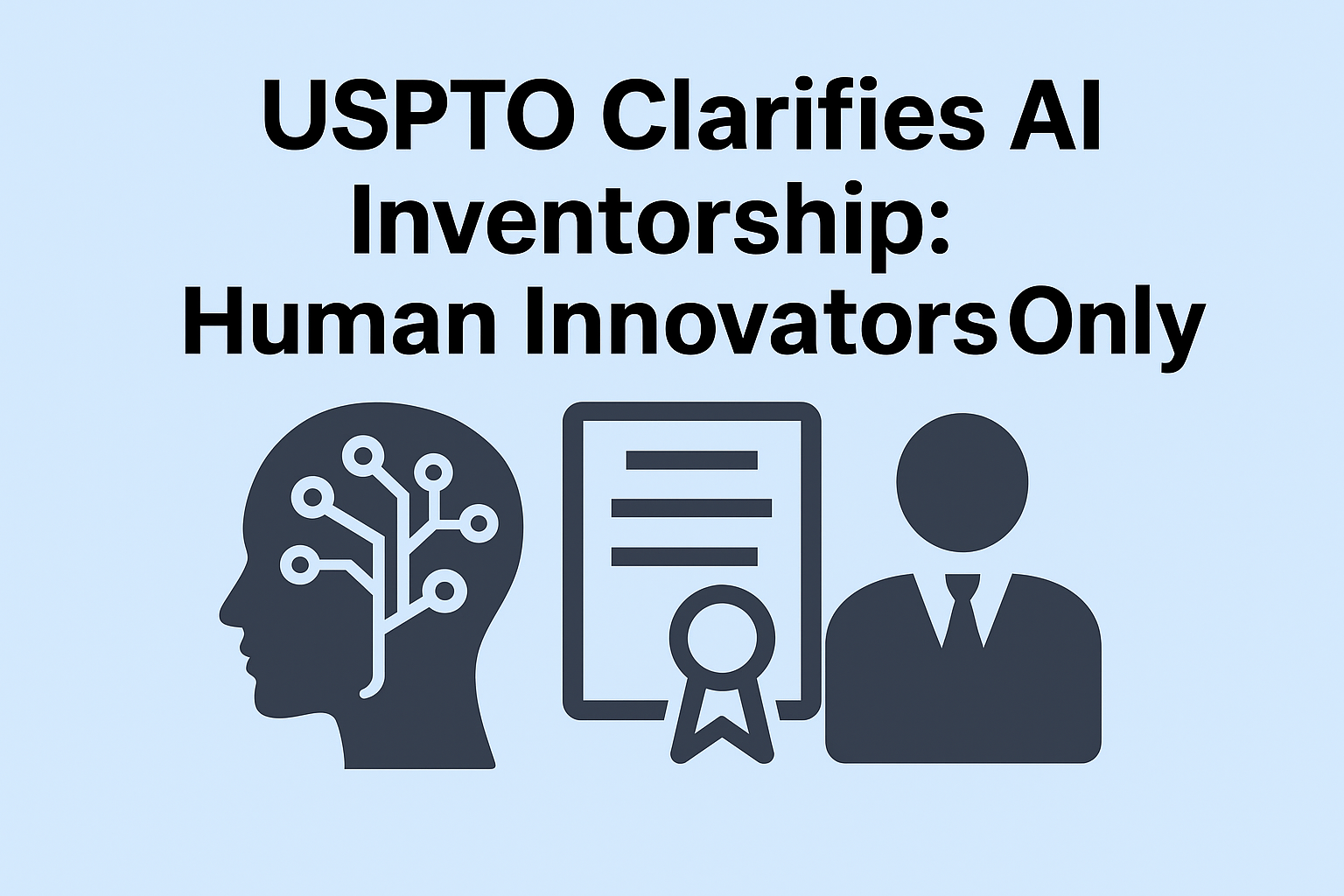
The United States Patent and Trademark Office (USPTO) has released new guidance that reshapes the debate on artificial intelligence in patent law. The agency has made it clear that AI systems cannot be recognised as inventors. Only human beings with genuine inventive contribution can hold that status. The announcement delivers clarity at a time when AI-assisted innovation is booming across sectors.

The USPTO confirmed that it will not introduce a special or separate test for inventions created with the help of AI. It withdrew its earlier proposal that sought to rely on the Pannu factors, a legal framework used to evaluate joint inventorship. The office said those factors were not designed for AI and should not apply to human inventors who merely use advanced tools. The agency stressed that the traditional inventorship standard remains fully intact.

Officials stated that generative AI, machine learning engines, and other computational systems function as sophisticated tools. They do not possess legal identity, intent, or the ability to conceive an invention. As a result, they cannot fulfil the legal requirements for inventorship. The office added that inventorship demands a human mind capable of forming the key inventive concept.

The guidance aims to prevent confusion as AI becomes more deeply embedded in research and development. Many applicants have questioned how to attribute inventorship when AI plays a major role in idea generation. The USPTO’s ruling places the burden on humans to show clear inventive contributions. Researchers must document how they shaped the idea, selected AI outputs, refined the concept, or solved the underlying technical problem.

The move brings the United States in line with major global jurisdictions. The European Patent Office, the UK Intellectual Property Office, Japan, China, and India also reject the idea of AI as an inventor. Only South Africa has accepted an AI-named inventor, and that decision was based on a procedural system that does not examine substantive requirements.

Industry experts view the USPTO’s decision as a stabilising force in a fast-moving landscape. They say the clarity will help companies file cleaner applications and avoid costly legal battles. They also note that the ruling could push lawmakers to consider future legislative changes as AI systems grow more independent.

The agency reaffirmed that AI-assisted inventions remain fully patentable. It emphasised that the decisive factor is human contribution, not the involvement of intelligent software. Innovators can freely use AI to ideate, analyse data, generate designs, or simulate outcomes. The key requirement is that a human must ultimately conceive the inventive idea and meet established patentability standards.

The USPTO’s guidance marks a pivotal moment in the evolution of intellectual property law. It reinforces human creativity as the foundation of inventorship while allowing powerful AI tools to accelerate innovation. The agency’s stance sends a strong message: AI can transform invention, but it cannot replace the human mind behind it.

Sun Pharma Achieves a High-Impact Breakthrough as Delhi HC Clears Trademark Suit to Proceed

The Delhi High Court has delivered a powerful setback to Artura Pharmaceuticals by refusing to return the plaint in Sun Pharmaceutical Industries Ltd.’s trademark infringement suit. The Court ruled that a part of the cause of action arose in Delhi, making the suit maintainable.

Court Rejects Artura’s Jurisdiction Challenge

Artura argued that the Delhi High Court lacked territorial jurisdiction because the company operates from Chennai and manufactures in Andhra Pradesh. The company insisted that its website was only informational and did not target Delhi consumers.

The Court disagreed.

It held that Artura’s online presence — including its website, brochure downloads, and enquiry mechanisms — showed that its products were accessible to consumers in Delhi. The Court stated that these features created a prima facie connection to the Delhi market.

Digital Footprints Matter, Says Court

The Bench highlighted that website accessibility, enquiry forms, and product brochures can amount to purposeful targeting of consumers in a jurisdiction. It emphasised that such online activities cannot be dismissed as passive.

The Court ruled that these factors were enough to demonstrate that the dispute was not confined to Artura’s home states.

Issues Require Trial, Not Pre-Trial Dismissal

The Court noted that determining the nature and impact of online activity involves mixed questions of fact and law. Such questions cannot be settled at a preliminary stage.

The Court stressed that only a full-fledged trial can determine:

  • Whether Artura’s website led to actual sales in Delhi
  • Whether Delhi-based consumers made enquiries
  • Whether confusion between the marks occurred
  • Whether Sun Pharma faced commercial harm in the capital

Sun Pharma’s Case Moves Forward

The decision keeps Sun Pharma’s suit alive. The Court has already granted Sun Pharma an interim injunction, and now the full trial will examine whether Artura’s marks are deceptively similar to Sun Pharma’s well-known brands.

A Powerful Message for Online Businesses

The ruling sends a clear and compelling message:
If your products are accessible online, your legal exposure can extend beyond your physical location.

This precedent strengthens the hands of trademark owners operating in the digital era.

What’s Next

The Court will frame jurisdiction as a preliminary issue during the trial. Both parties will present evidence on actual consumer interaction, website activity, and the likelihood of confusion.

The outcome may set a defining benchmark for Internet-based trademark jurisdiction in India.

Delhi High Court Delivers Major Relief, Revives Trident’s Air-Rich Yarn Patent Battle

The Delhi High Court has set aside the Patent Office’s 2021 order rejecting Trident Limited’s patent application for its “air-rich” yarn and fabric technology. The Court directed the Patent Office to conduct a fresh review and assess the application on its merits.

Court finds major flaws in earlier rejection

The Court observed that the Patent Office failed to properly examine the core inventive feature of the claimed invention. Trident had highlighted that its yarn contains pores distributed uniformly across the entire radial cross-section. The Court held that this structural feature was central to determining novelty and inventive step.

The earlier decision had questioned whether Trident used any special means to achieve this uniform pore structure. The Court disagreed. It noted that Trident had submitted detailed manufacturing parameters, and these disclosed how the unique pore distribution was achieved. It ruled that this evidence should have been assessed more carefully.

Trident’s claim and technical advantages

Trident’s technology relates to air-rich yarns and fabrics and the process for manufacturing them. The company claims its yarn improves wettability, absorbency, and drying speed. The fabric also offers enhanced thickness and a softer feel. Trident asserts that its terry fabrics can absorb water instantly and dry significantly faster than conventional fabrics.

Fresh hearing ordered

The Court reversed the earlier rejection and remanded the case to the Patent Office. It ordered that a different Controller must hear and decide the matter. The fresh examination must take place within six months. The Court also instructed the authority to evaluate the invention independently and without influence from the previous decision.

Significance for the textile industry

The ruling reinforces the requirement for reasoned and technically grounded decisions in patent matters. It highlights that structural and functional features of textile innovations must be examined thoroughly. The decision may encourage more patent filings in the textile and fibre-engineering sectors. For Trident, the judgement offers a renewed opportunity to secure exclusive rights over its air-rich yarn technology in India.

Delhi HC Stops Indian Firm from Using ‘Tesla’ Trademark, Grants Interim Relief

The Delhi High Court has granted an interim injunction in favour of Tesla Inc. It restrained Tesla Power India Pvt. Ltd. from using the “Tesla” name or any similar trademark. The order blocks the Indian company from using “Tesla,” “Tesla Power,” “Tesla Power USA,” or related variations in products, ads, or promotions.

The Court stated that Tesla Inc. enjoys strong global goodwill and prior rights. It found Tesla Power India’s branding identical or confusingly similar. It said the similarity could mislead consumers. The judge added that both companies operate in related mobility and power sectors, increasing the risk of confusion.

The injunction covers all business activities of Tesla Power India. The company must stop using the disputed mark on batteries, inverters, UPS systems, and electric scooters. It must also avoid the mark in any future EV-related promotion. The Court said continued use could dilute Tesla Inc.’s brand and harm consumers.

Tesla Inc. had initiated the action after accusing the Indian firm of ignoring a cease-and-desist notice. It said Tesla Power India continued to promote products under the “Tesla Power” brand. It argued that the Indian firm unfairly leveraged Tesla’s reputation in India’s fast-growing EV and clean-energy markets.

Tesla Power India had earlier claimed it only sold batteries and did not make EVs. However, the Court noted that its advertising and partnerships hinted at possible entry into the EV ecosystem. This, the Court said, strengthened Tesla Inc.’s demand for protection.

The injunction will remain in force until the final hearing. Tesla Power India must remove all materials that display the disputed trademark, including packaging, online listings, and promotional content.

This ruling marks an important moment in India’s trademark enforcement. It reinforces protection for global brands. It also warns companies against using famous names to gain market advantage.

The case will now move to a full trial, where the Court will decide on permanent relief.

Patents (Amendment) Rules 2025 Introduce New Digital System for Adjudication, Penalties and Appeals

Illustration of a gavel and a digital patent certificate with holographic legal icons, representing the Patents (Amendment) Rules 2025 and the new digital adjudication system in India

The Union Government has notified the Patents (Amendment) Rules, 2025, introducing a major overhaul in how patent-related violations are investigated and penalised in India. The amendment adds a new Chapter XIV-A, which creates a civil adjudication system for several contraventions under the Patents Act, 1970. The move shifts focus from criminal prosecution to a faster, digital and more transparent compliance regime.

New Digital Adjudication System

The new rules empower a designated Adjudicating Officer to handle complaints related to specific violations. These include unauthorized patent-rights claims, failure to furnish information demanded by the Controller, and practice by individuals who are not registered patent agents.

Complainants must file Form 32 electronically. The officer will examine the material and issue a digital notice if a prima facie case exists. The notice will offer the accused at least seven days to respond.

Clear, Time-Bound Inquiry Process

The adjudication process is fully digital. Hearings, notices and orders will be conducted or communicated only through electronic systems.
The Adjudicating Officer will explain the charge, allow representation, review evidence and call witnesses if needed. The inquiry may continue even if the accused fails to appear, provided reasons are recorded.

The officer must issue a reasoned order within three months of the notice. Penalties imposed under this chapter will be credited directly to the Consolidated Fund of India.

Appeal Mechanism with Strict Timelines

Any person aggrieved by the order can file an appeal in Form 33, again electronically. Appeals must be filed within 60 days, with delayed submissions permitted on valid grounds.

The appellate authority will issue notices, hear both sides and pass a detailed order. The appeal process must be completed within six months.
All orders must be dated, digitally signed and uploaded on the official portal.

Shift from Criminal to Civil Penalties

The rules reflect a policy shift towards civil enforcement. Earlier, several contraventions could attract criminal prosecution. The new framework emphasises monetary penalties along with a structured adjudication process, reducing the burden on criminal courts.

A Step Towards Modernised IP Enforcement

The amendment aims to streamline compliance and strengthen oversight in the patent ecosystem. It creates predictable procedures, reduces delays and encourages responsible conduct by applicants, agents and businesses.
Experts view this as a significant step toward aligning India’s IP enforcement with global best practices, especially in digital governance and administrative efficiency.

TCS and Wipro Face New Patent Lawsuits in US as Legal Risks Grow

Tata Consultancy Services (TCS) and Wipro have been hit with new patent infringement lawsuits in the United States, signaling rising legal risks for major Indian IT companies operating in global technology markets.

According to recent court filings, both companies are now facing separate lawsuits in U.S. federal courts in Texas, a jurisdiction known for patent litigation. The cases involve allegations related to software automation, wireless testing technologies and intellectual property misuse.


Details of the Lawsuits

In October, Calibrate Networks filed a case against TCS in the Marshall Division of Texas. The plaintiff alleges that TCS used and commercialized patented technology designed to modify or rename software applications without proper authorization. The lawsuit claims the patented process was used in enterprise solutions and software modernization services delivered to U.S. clients.

Wipro is facing a similar legal challenge. In November, Mobility Workx sued the company in the Sherman Division of Texas. The suit alleges that Wipro violated three patents linked to wireless testing systems, cellular device access frameworks and 5G network evaluation services. The plaintiff argues that Wipro’s telecom testing offerings incorporate protected technologies that require licensing.

Both lawsuits seek damages and potential injunctions that could restrict delivery or sale of related services in the U.S. market.


Legal Exposure Rising for Indian IT Firms

Industry analysts say such lawsuits reflect a shift in global IP sensitivity. Indian IT firms are moving from traditional outsourcing models to cloud platforms, digital products and automation tools — areas with dense patent ownership.

Legal experts note that U.S. courts, particularly in Texas, have historically issued significant penalties in patent disputes. For IT service providers, the risks extend beyond financial damage. Litigation can also result in operational disruption, delayed product rollouts and strained client relationships.


Industry Response and Implications

Both TCS and Wipro have not issued detailed public statements on the latest lawsuits. However, experts expect the companies to contest the allegations, challenge patent validity or pursue settlement options depending on the commercial impact.

The lawsuits highlight growing pressure on Indian IT companies to strengthen patent governance, licensing agreements and compliance procedures. With artificial intelligence, automation and 5G becoming core business areas, intellectual property exposure is expected to rise.


What Comes Next

The cases will now move through preliminary hearings and discovery phases in U.S. federal courts. The outcomes could influence future legal strategy for Indian technology firms and potentially shape compliance standards across the sector.

Investors and clients are expected to watch the developments closely, as the disputes could affect deal negotiations, innovation pipelines and technology partnerships.

LG Grants Patent License to Amazon for Wi-Fi Technology

LG Electronics has signed a patent licensing agreement with Amazon to allow the tech giant to use its Wi-Fi standard-essential patents (SEPs). The deal covers a wide range of Amazon products including Fire TV devices, Echo smart speakers, Fire Tablets and other connected devices that rely on Wi-Fi standards.

LG stated that Wi-Fi SEPs are core patented technologies required for any device that implements Wi-Fi connectivity under global technical standards. The agreement ensures that Amazon can continue to deploy Wi-Fi features in its products without risk of patent disputes or infringement.

The company highlighted that it currently owns 97,880 registered patents worldwide, with nearly half of them categorized as standard-related technologies. LG has been actively strengthening its patent licensing business as part of a long-term global intellectual property strategy.

The Korean electronics manufacturer also confirmed that it is in talks with several other global firms for similar Wi-Fi licensing arrangements. This indicates a strategic shift where LG sees intellectual property monetization as a major business pillar.

LG added that it plans to expand its patent portfolio in future technologies such as 6G, vehicle-to-everything (V2X) communications, artificial intelligence, and quantum computing. The company aims to reinforce its position in emerging technology ecosystems where standard-essential patents are expected to play a critical role.

Industry analysts expect more such licensing deals as connected devices, IoT ecosystems, and Wi-Fi-based communications continue to grow rapidly.

The agreement marks another significant milestone in the global technology licensing landscape and reflects increasing emphasis on fair access to essential wireless patents across industries.