Court Crushes Zydus Challenge – Helsinn Secures Akynzeo Patent Victory

Wooden judge's gavel resting on a sounding block, symbolizing a decisive court ruling in a legal battle over intellectual property.

The Delhi High Court slams the door on Zydus Healthcare’s bold challenge. Swiss innovator Helsinn Healthcare SA emerges victorious. Justice Tejas Karia dismisses Zydus’s writ petition outright on December 24, 2025. The court upholds a key patent for a breakthrough anti-nausea drug.

Zydus Lifesciences - Wikipedia

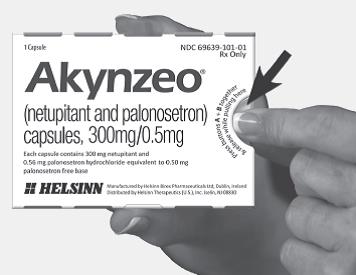
Helsinn triumphs. The patent protects Akynzeo, a powerful fixed-dose combination. It pairs netupitant (300 mg) with palonosetron (0.5 mg). This duo targets chemotherapy-induced nausea and vomiting (CINV). Cancer patients endure brutal side effects from treatment. Akynzeo attacks both acute and delayed phases. It blocks NK1 and 5-HT3 receptors simultaneously. Patients gain long-lasting relief in one capsule.

Zydus strikes first. The Indian generic giant files a pre-grant opposition in 2021. Helsinn submits voluntary amendments during prosecution. Zydus cries foul. It claims amendments expand claims illegally. It alleges violations of Section 59 of the Patents Act. The Mumbai Patent Office rejects these arguments. Controllers grant Indian Patent No. 426553 in March 2023.

Akynzeo: Package Insert / Prescribing Information / MOA

Zydus refuses to back down. It launches a writ petition in Delhi High Court. The company demands quashing the grant. It accuses the Patent Office of jurisdictional errors. It charges breaches of natural justice. Zydus insists it deserves a hearing on post-opposition amendments.

Justice Karia dismantles these claims. The court rules firmly: Delhi lacks territorial jurisdiction. The Mumbai Patent Office handled the grant. Challenges must target the appropriate High Court – Bombay. No jurisdictional error taints the process. Pre-grant opposition and examination run as separate tracks. Opponents hold no automatic right to hearings on amendments.

The judge stresses clarity. No separate order requires pre-First Examination Report amendments. Helsinn follows rules meticulously. The Patent Office issues proper notices. It provides fair opportunities. Zydus suffers no violation of natural justice.

This ruling fortifies originator protections. Helsinn shields its innovation fiercely. Akynzeo transforms cancer supportive care. Guidelines worldwide endorse this triple regimen with dexamethasone. It prevents nausea in highly emetogenic chemotherapy.

In India, Glenmark markets Akynzeo under license. Helsinn partners strategically. The drug reaches patients swiftly. Generic threats loom large. Zydus eyes early entry. Other firms like Hetero face similar battles. Helsinn secures interim injunctions elsewhere. It blocks infringing formulations aggressively.

Experts hail the decision. It curbs forum shopping. Patent challengers must file correctly. Courts intervene sparingly in administrative grants. Only glaring illegalities trigger writ relief.

Zydus explores options. The company may refile in Bombay High Court. Post-grant opposition remains open. Counterclaims arise in infringement suits. Helsinn stands ready to defend.

This clash spotlights India’s pharma battlefield. Originators safeguard rewards for risky R&D. Generics push affordable access aggressively. Combination therapies spark fierce disputes. Evergreening accusations fly often.

Patients win ultimately. Robust patents drive innovation. They deliver superior treatments like Akynzeo. Reliable relief empowers cancer fighters. They battle disease without debilitating nausea.

The industry watches closely. This precedent shapes future fights. Territorial rules tighten. Procedural challenges weaken. Innovators gain ground.

Helsinn celebrates quietly. The Swiss firm advances cancer care globally. Akynzeo leads its portfolio. Protection endures in key markets.

Zydus persists undeterred. The generic powerhouse expands relentlessly. It targets blockbuster opportunities.

India’s patent ecosystem evolves. Courts balance interests skillfully. Innovation thrives. Access improves gradually.

This victory resonates deeply. Helsinn protects a vital lifeline for millions. Cancer patients endure enough. Akynzeo eases their burden dramatically.

Enveric Biosciences Secures Key Patent for Non-Hallucinogenic Mental Health Treatments

Enveric Biosciences lab developing psychedelic therapeutics for mental health.

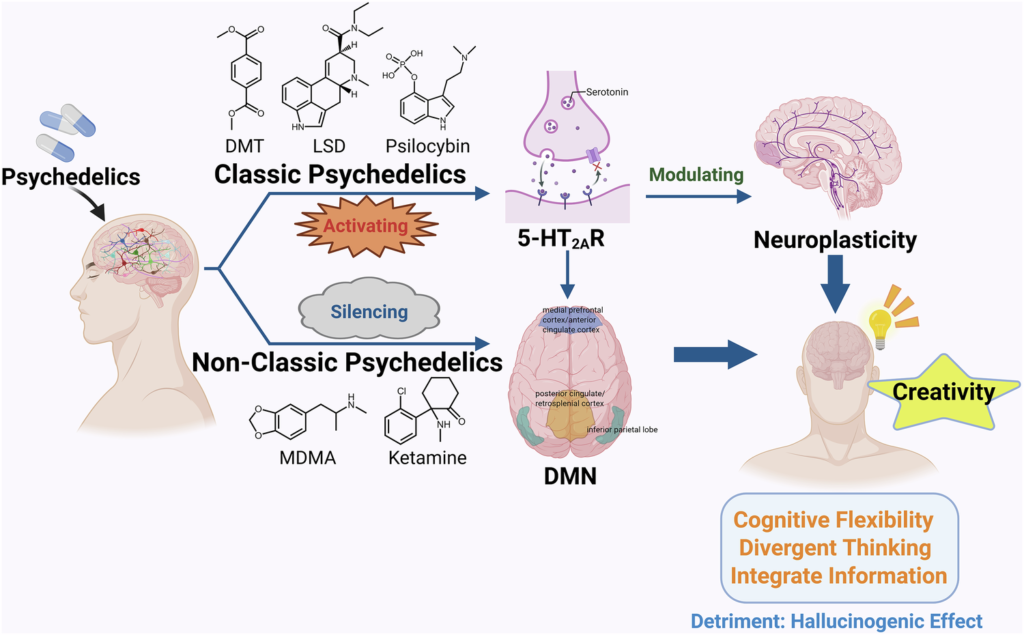
Enveric Biosciences bolsters its position in the booming psychedelic-inspired therapeutics market. The company announces a major intellectual property win. The United States Patent and Trademark Office issues U.S. Patent No. 12,492,179.

This patent covers novel molecules titled “Substituted Ethylamine Fused Heterocyclic Mescaline Derivatives.” Enveric designs these compounds to promote neuroplasticity. They target severe mental health disorders without causing hallucinations.

Patients struggle with depression, anxiety, PTSD, and addiction. Traditional treatments often fail. Enveric’s innovation addresses this gap. The new molecules derive from mescaline-like structures. Scientists modify them chemically. They enhance efficacy. They reduce side effects.

Hallucinogenic psychedelics show promise. Yet they pose challenges. Patients experience intense trips. Clinics require supervision. Regulators demand more data. Enveric avoids these hurdles. Its neuroplastogens deliver brain rewiring benefits. They skip the psychedelic experience.

Joseph Tucker, Ph.D., leads Enveric as CEO. He celebrates the milestone. “This patent expands our portfolio. It strengthens our pipeline. We target disorders with limited options. Our molecules interact with key receptors in novel ways. They promise better safety and outcomes.”

Composition-of-matter patents offer strong protection. They shield the core chemical structures. Enveric attracts partners. Big pharma seeks licensing deals. The company builds a competitive moat.

Enveric focuses on next-generation therapeutics. It develops small-molecule drugs. These promote neuroplasticity – the brain’s ability to form new connections. Neuroplasticity drives recovery in mental illness.

The psychedelic drugs market explodes. Analysts project growth from about $3-4 billion in 2024 to $8-10 billion by 2032. Compound annual rates hit 13-15%. Mental health crises fuel demand. Over 264 million people suffer depression worldwide. Treatment-resistant cases rise.

Companies chase non-hallucinogenic options. Enveric pioneers this shift. Its Psybrary™ platform generates thousands of candidates. Artificial intelligence aids discovery. The company holds dozens of patents. It issues more in 2025.

Enveric’s lead candidate shines. EB-003 advances rapidly. This first-in-class compound engages 5-HT2A and 5-HT1B receptors. It delivers fast antidepressant and anxiolytic effects. Preclinical data impress. Oral bioavailability works well. Brain penetration proves strong.

Enveric targets IND filing soon. Phase 1 trials follow. EB-003 treats outpatient settings. No need for therapists during sessions. Patients take pills at home. Convenience boosts adherence.

Other pipelines progress. EVM301 and EVM401 series expand. Notices of allowance arrive. Patents issue. Enveric licenses non-core assets. It funds core development.

Investors react positively. Shares jump in premarket trading after the December 29 announcement. The stock faces volatility. It trades as a micro-cap. Market cap hovers low. Yet milestones drive gains.

Enveric raises funds. Warrant exercises bring millions. Cash supports trials. The company regains Nasdaq compliance.

Experts praise the approach. Non-hallucinogenic drugs scale easier. They fit existing healthcare systems. Insurers cover standard pills. Clinics avoid psychedelic infrastructure.

Regulators warm to safer profiles. FDA grants breakthrough designations elsewhere. Enveric positions EB-003 for similar status.

Mental health innovation lags. Antidepressants date back decades. Side effects deter patients. Relapse rates stay high. Psychedelic research revives hope. Enveric refines it.

Researchers link neuroplasticity to recovery. Psychedelics boost dendritic growth. They increase synapses. Non-hallucinogenic versions isolate this mechanism.

Enveric collaborates. It presents at conferences. Data publications follow. Peer-reviewed papers validate methods.

Challenges remain. Clinical trials cost dearly. Enveric seeks partners. Out-licensing generates revenue.

The field attracts talent. Investors eye neuroplastogens. Enveric leads with patents and data.

Patients await better options. Suicide rates climb. Addiction devastates families. Enveric aims to help.

This patent marks progress. Enveric executes strategy. It builds value. The future looks brighter for mental health treatment.

Enveric Biosciences trades on Nasdaq as ENVB. It operates from Cambridge. The team drives innovation. They transform lives.

The mental health revolution gains speed. Enveric rides the wave. Non-hallucinogenic therapies emerge. Hope grows.

MDU Rohtak Patent: Laser-Free Tech Cuts Osmotic Tablet Cost

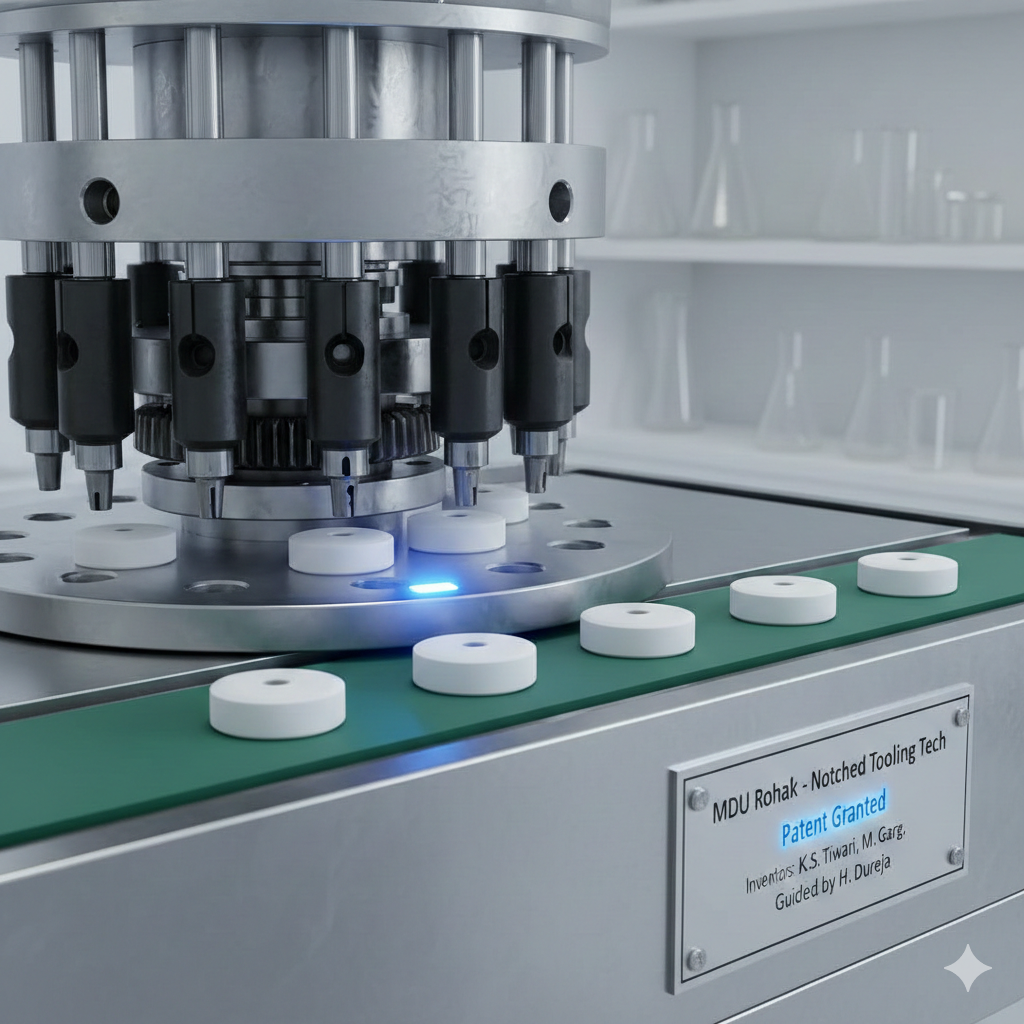
A detailed, realistic 3D render of a pharmaceutical manufacturing process. A stainless steel tablet compression machine with specialized notched tooling is actively drilling precise central holes into white, round osmotic tablets moving along a green conveyor belt. A plaque on the machine reads: "MDU Rohtak - Notched Tooling Tech," "Patent Granted," and lists the inventors: "K.S. Tiwari, M. Garg, Guided by H. Dureja." The background shows blurred laboratory glassware on shelves, signifying a research environment.

Maharshi Dayanand University (MDU) scientists achieved a major breakthrough. They secured a design patent for a new tablet manufacturing technique. This innovation directly affects the production of high-tech osmotic tablets.

New Tooling Cuts Production Costs

The MDU Pharmaceutical Sciences Department developed the technology. It uses notched tooling for standard tablet compression machines. This new tool creates the necessary hole in the tablet. The hole allows for controlled, constant drug release.

“This is a game-changer,” said a university spokesperson.

Expensive Lasers Become Obsolete

The pharmaceutical industry currently uses expensive laser drilling to create this orifice. This specialized step adds significant cost and time. The MDU team bypasses this costly process entirely.

Their notched tooling creates the precise hole during compression. This single-step method eliminates the need for extra laser equipment.

Faster, Cheaper Medication Delivery

The patented technology offers clear benefits:

  • Cost Reduction: Manufacturers save money on expensive machinery.
  • Time Savings: The process integrates drilling into the main production line.
  • Affordability: Reduced production costs can make complex drugs cheaper for patients.

Osmotic tablets treat chronic conditions. These include hypertension, diabetes, and ADHD. They rely on the small hole to deliver medication over many hours. This technology makes controlled-release dosage forms more accessible.

The team included Kirpa Shankar Tiwari, Professor Munish Garg, and Professor Harish Dureja. MDU’s research now promises to revolutionize the efficiency of tablet manufacturing worldwide.

COURT CLEARS SUN PHARMA TO EXPORT KEY WEIGHT LOSS DRUG; RESTRICTS INDIA SALE

Delhi High Court ruling in Sun Pharma versus Novo Nordisk patent dispute over the semaglutide drug (Ozempic/Wegovy) formulation.

The Delhi High Court today delivered a split verdict. It allowed Sun Pharmaceutical Industries to manufacture and export its version of the blockbuster drug semaglutide. However, the court strictly barred the company from selling the product in the domestic Indian market.

Court Upholds Patent Expiry Timeline

The decision is a major development in the pharmaceutical patent battle. Danish giant Novo Nordisk markets semaglutide globally. It is the active ingredient in its widely-used diabetes and weight-loss drugs, Ozempic and Wegovy.

Novo Nordisk sued Sun Pharma for patent infringement. The Danish company seeks to protect its secondary patent. This patent covers specific formulations and the delivery system of the drug. The patent remains valid until March 2026.

The court’s ruling respects this expiration date. It ordered Sun Pharma to refrain from all sales within India until the patent lapses.

Exports Allowed: A Win for Generics

Crucially, the court granted Sun Pharma permission to continue manufacturing. It also allowed exports to countries where Novo Nordisk does not hold patent protection.

This order mirrors a recent ruling against Dr. Reddy’s Laboratories (DRL). Justice Manmeet Pritam Singh Arora heard both cases. She had previously allowed DRL similar manufacturing and export rights.

Sun Pharma provided a formal undertaking to the court. The company will comply with the domestic sales ban. It will also provide the court with full details of its manufacturing and export accounts.

Evergreening Challenge Cited

The ongoing dispute centers on the validity of Novo Nordisk’s secondary patent. Generic makers argue the patent constitutes evergreening.

Evergreening is a common practice. Companies attempt to extend their patent monopoly. They secure new patents on minor modifications to an existing drug.

The Indian Patents Act, specifically Section 3(d), prohibits this. This section denies patents for new forms of a known substance. The new form must show a significant enhancement in therapeutic efficacy.

The court noted that Sun Pharma and DRL raised a “credible challenge” to the secondary patent’s validity. This legal challenge bolstered the generic companies’ position.

Market Impact: A Race for 2026

The ruling is a clear signal. It encourages Indian generic companies to prepare for market entry.

The global market for GLP-1 drugs like semaglutide is massive. Indian drug makers are now lining up to launch their generic versions.

The ban on domestic sales protects Novo Nordisk’s current market exclusivity. Yet, the export green light allows generic firms to gain a foothold. This prepares them for a competitive domestic launch in March 2026.

Novo Nordisk still holds an advantage in the Indian market. It recently cut the price of its product, Wegovy. This move increases competition against rivals like Eli Lilly’s Mounjaro.

Novo Nordisk has indicated it intends to appeal the court’s earlier decision in the DRL case. The legal battle for the lucrative weight-loss drug market will continue.

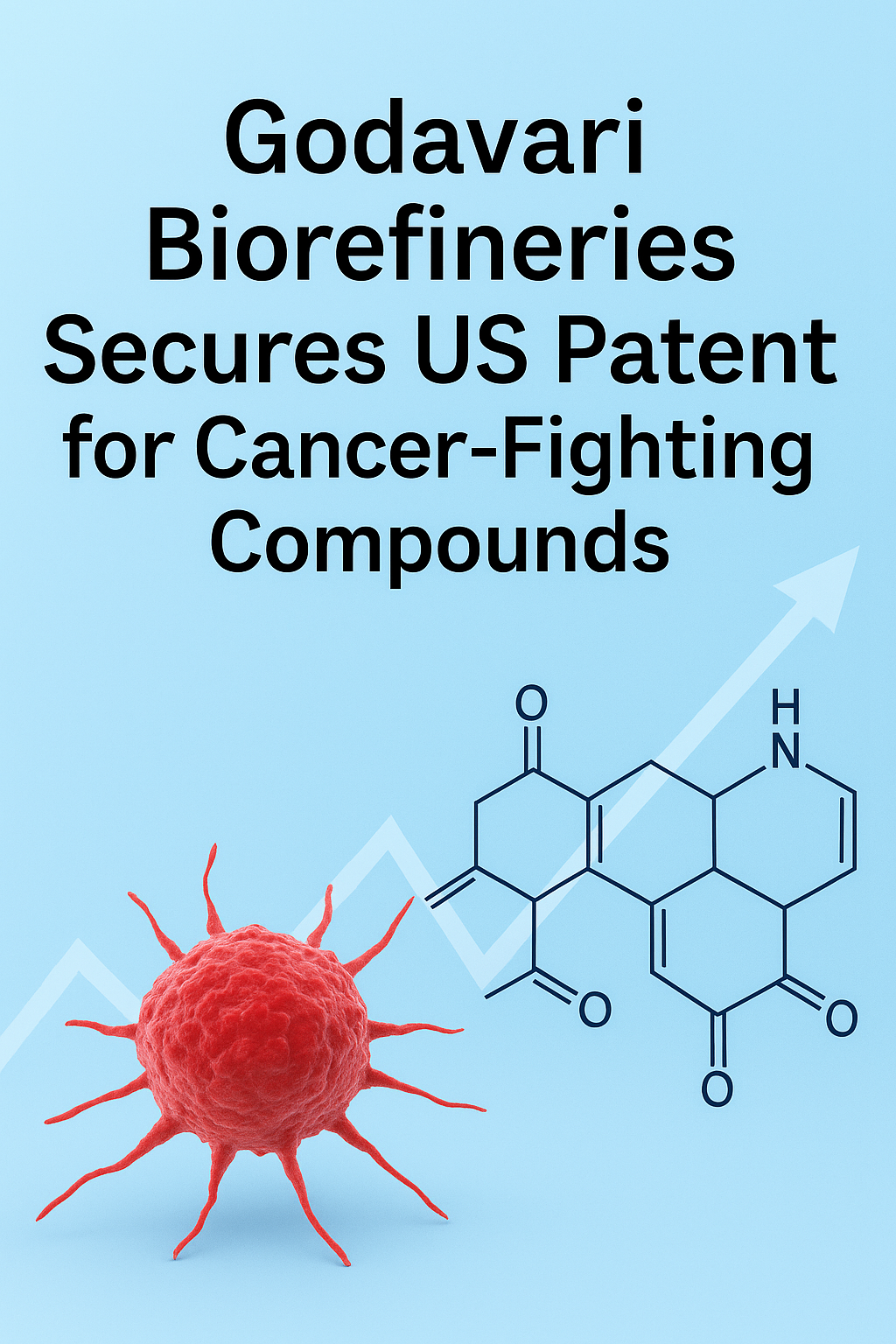
Godavari Biorefineries Secures US Patent for Cancer-Fighting Compounds; Stock Soars

Godavari Biorefineries Limited (GBL) has achieved a major scientific and strategic breakthrough. The company has secured a United States patent for a new class of cancer-fighting compounds designed to inhibit unregulated cell growth. These compounds show strong potential against cancer stem cells, a highly resistant category of cancer-driving cells.

The announcement sparked immediate excitement in the market. GBL’s stock surged nearly 17–18% in early trade as investors responded to what could become a transformative development for the company and for cancer research in India. The rally underscores growing investor confidence in the company’s expanding biotechnology capabilities.


A closer look at the patented science

The patented invention, titled “Compounds for the Inhibition of Unregulated Cell Growth,” gives GBL exclusive rights in the United States to produce, license, and commercialize the molecules.

According to the patent filing, the compounds demonstrate targeted action against cancer stem cells (CSCs). This is a small but powerful subset of tumour cells that fuel the growth, recurrence, and spread of cancer. CSCs are often responsible for treatment resistance, which is why many cancers return even after chemotherapy or radiation.

The patent includes compounds listed across multiple novel chemical formulae. Laboratory studies indicate promising results against breast and prostate cancer cell lines. These two cancer types remain among the most prevalent globally, making the discovery especially significant.

What makes the patented approach compelling is its precision. Traditional anti-cancer treatments target rapidly dividing cells, but they often miss slow-dividing or dormant CSCs. By attacking the core drivers of tumour regeneration, these molecules could one day lead to therapies that significantly reduce relapse rates.


A growing global footprint in cancer innovation

The US patent builds on GBL’s accelerating global presence in advanced cancer research. Earlier this year, the company secured a European patent for a similar anti-cancer molecule. The validation extended across Spain, the United Kingdom, and several European Union member nations, boosting the company’s intellectual-property coverage across major regulatory regions.

The company also received a Chinese patent earlier this year for another breakthrough anti-cancer compound known for inhibiting cancer cell proliferation and targeting CSCs. Preclinical research highlighted its strong activity against breast and prostate cancer lines, adding another high-value asset to its growing research portfolio.

To support its expansion, GBL has also established a dedicated subsidiary in the United States. This move positions the company to engage directly with the world’s largest pharmaceutical market and collaborate with global research institutions and biotech partners.


Why this matters: opportunities on the horizon

A breakthrough for Indian bioresearch

Securing a US patent in the oncology domain is a rare achievement for an Indian company. It signals that GBL is not just a leader in the biorefinery and biofuel sectors but is evolving into a serious contender in medical biotechnology.

Promising pathway toward targeted therapies

If future research validates the patented molecules, they could form the foundation for next-generation cancer drugs that destroy tumour-regenerating cells. Targeting CSCs represents one of the most ambitious goals in cancer science. Successful therapies in this space could dramatically reshape cancer treatment outcomes.

Attractive for global collaborations

The company’s expanding patent portfolio across three major regions — the US, Europe, and China — places it in a powerful position. Pharmaceutical giants often seek partnerships with early-stage innovators who hold strong patents. GBL could attract licensing deals, co-development agreements, or investment partnerships as its molecules advance.

Market confidence and investor traction

The sharp rise in the stock price reflects more than short-term excitement. Investors see growing scientific depth, diversified business potential, and long-term value creation opportunities driven by high-impact IP.


The challenges ahead: long journey to the clinic

Despite the breakthrough, the patented molecules are still in early-stage development. A patent protects the innovation, but it does not guarantee clinical success.

To become approved cancer therapies, the compounds must pass through multiple stages:

  • Preclinical safety testing
  • Toxicology assessments
  • Pharmacokinetics and pharmacodynamics studies
  • Phase I, II, and III human trials
  • Regulatory approvals in each market

Oncology drug development is expensive and time-intensive. Success rates are low, and many promising compounds fail due to toxicity or lack of efficacy. GBL may require strategic partnerships, research collaborations, or significant investment to advance the molecules through clinical trials.


A milestone moment — and the beginning of a new chapter

Godavari Biorefineries’ US patent win marks a bold moment for Indian innovation. The company is rapidly expanding beyond its traditional identity as a biorefinery pioneer. With patents across the world’s largest markets, GBL is positioning itself as a future player in global oncology research.

If the science progresses well, this breakthrough could transform not only the company’s trajectory but also contribute to a new generation of targeted cancer therapies. The recognition, the rising investor confidence, and the global IP strategy together point to a powerful new chapter in India’s biotech evolution.

Delhi High Court Rejects Interim Patent Block on Semaglutide, Calls Out ‘Evergreening’ Tactics

The Delhi High Court has delivered a decisive order in the high-stakes battle over semaglutide, the blockbuster diabetes and weight-loss drug. The court refused to grant Novo Nordisk a temporary injunction against Dr Reddy’s Laboratories (DRL), dealing a major blow to the Danish pharmaceutical giant’s attempt to control the Indian market until 2026. The ruling carries far-reaching implications for patent strategy, market competition, and the future of GLP-1 drugs in India.

The court held that DRL had raised a “credible challenge” to Novo Nordisk’s second patent on semaglutide. It found strong indicators of double-patenting, a practice that Indian law treats as an attempt to “evergreen” expired monopolies. The court’s message was clear: companies cannot use secondary patents to prolong control over blockbuster drugs.


Two Patents, One Molecule: How the Dispute Began

Novo Nordisk held two Indian patents related to semaglutide:

  1. Composition Patent (IN 275964)
    This patent covered the semaglutide molecule itself. It expired in September 2024, opening the door for generic manufacturing.
  2. Formulation Patent (IN 262697)
    This patent claims a specific formulation and delivery system for the same drug. It remains valid until March 2026.

When the core composition patent lapsed, DRL secured regulatory approval from the Central Drugs Standard Control Organization (CDSCO) to manufacture semaglutide for export. The approval triggered immediate friction. Novo Nordisk rushed to court, claiming that the formulation patent protected not only the delivery mechanism but effectively covered the drug.

It sought an emergency injunction to stop DRL’s manufacturing and export operations. The company argued that any commercial activity—even export—would cause irreparable harm.


The Court’s Ruling: A Firm Stand Against Evergreening

Justice Anish Dayal rejected the injunction request. The court held that DRL’s objections to the formulation patent were strong enough to deny temporary relief to Novo Nordisk.

1. Double-Patenting Concern

The court noted that the formulation patent appeared to reclaim the same invention for which Novo Nordisk’s composition patent had already expired. The claims overlapped heavily.

This amounted to “evergreening”—a tactic where pharmaceutical companies file secondary patents to extend monopoly periods.

Indian patent law, especially after Section 3(d), firmly discourages such strategies.

2. Lack of Inventive Step

The court observed that Novo Nordisk’s claimed improvements in the formulation patent did not appear novel or non-obvious.
The modifications were routine optimizations well known in pharmaceutical science. They did not represent a genuine leap in innovation.

This significantly weakened the validity of the formulation patent.

3. Balance of Convenience Favoured DRL

Since the core patent had expired, the court held that public interest and market competition must be prioritized.

Blocking DRL without conclusive proof of infringement would be unfair, especially when DRL was manufacturing the drug only for export markets.


Exports Allowed, But Indian Market Stays Closed—for Now

The court made a nuanced distinction. DRL may:

  • continue manufacturing semaglutide, and
  • export it freely to international markets.

However, domestic sales remain prohibited until the formulation patent expires in March 2026, unless the patent is invalidated earlier.

This split ruling reinforces India’s position as the world’s largest exporter of affordable generics, while still respecting valid patent rights inside the country.


A Major Win for Generic Manufacturers

The decision strengthens the confidence of Indian pharmaceutical companies entering high-value therapeutic categories. Semaglutide, widely used for Type-2 diabetes and explosive global demand for weight-loss treatments, represents one of the most lucrative drug classes today.

DRL is not alone. Cipla, Sun Pharma, Biocon, and Mankind Pharma are exploring GLP-1 opportunities. The Delhi HC’s ruling sends a bold signal: secondary patents will face strict scrutiny.

Indian courts have repeatedly warned against evergreening. This judgment continues that legacy, following similar rulings in the cases of imatinib, sofosbuvir, and darunavir.


Why This Case Matters Globally

The global pharmaceutical industry is watching India closely. Semaglutide is one of the world’s most valuable drugs, powering Novo Nordisk’s meteoric rise in recent years.

A single ruling from an Indian court can influence:

  • global supply chains,
  • generic entry timelines,
  • price dynamics across continents.

India produces nearly 40% of the world’s generics. Any shift in the patent landscape here disrupts international markets.

By allowing export manufacturing, the court has opened a potential pipeline of affordable semaglutide to emerging markets struggling with diabetes and obesity crises.


What Happens Next?

Novo Nordisk has several options:

  • Appeal before a division bench of the Delhi High Court.
  • Initiate a full trial to defend the validity of the formulation patent.
  • Seek tighter regulatory restrictions on generic manufacturing.

DRL, meanwhile, may accelerate export production and explore challenging the patent’s validity to unlock the domestic market earlier.

Legal experts expect this case to set an important precedent for future GLP-1 patent disputes, especially as rival companies race to launch their own weight-loss drugs.


Conclusion

The Delhi High Court’s rejection of Novo Nordisk’s interim injunction is a striking affirmation of India’s sharp stance against patent evergreening. The ruling protects open competition, enables affordable access through exports, and reinforces India’s leadership in generic pharmaceuticals.

As demand for semaglutide surges worldwide, the judgment could reshape the global supply chain for one of modern medicine’s most influential drug classes.

Delhi High Court Restrains Dr. Reddy’s, OneSource in Novo Nordisk’s Weight Loss Drug Patent Dispute

In a significant legal development, the Delhi High Court has issued an interim injunction restraining Indian pharmaceutical major Dr. Reddy’s Laboratories and OneSource Nutra from manufacturing, selling, or distributing generic versions of a weight loss drug patented by Danish pharmaceutical company Novo Nordisk.

The dispute centers around semaglutide, the active ingredient in Novo Nordisk’s blockbuster drug Wegovy, which is used for chronic weight management and has gained global popularity due to its high efficacy in combating obesity. Semaglutide, also used in the diabetes medication Ozempic, has seen skyrocketing demand, making it a highly valuable asset for the company.

The Court’s Interim Order

On Thursday, Justice Sanjeev Narula of the Delhi High Court granted an ex parte ad interim injunction in favor of Novo Nordisk, barring Dr. Reddy’s and OneSource from infringing on the company’s patent rights related to semaglutide. The order came in response to a lawsuit filed by Novo Nordisk India Pvt. Ltd. and Novo Nordisk A/S, which alleged unauthorized use and commercialization of the patented compound by the defendants.

The court observed that a prima facie case of patent infringement had been established and that irreparable harm could be caused to Novo Nordisk if interim relief was not granted. The order restrains the defendants from importing, manufacturing, marketing, or offering for sale any product containing semaglutide until the matter is fully adjudicated.

Background of the Dispute

Novo Nordisk holds a valid Indian patent for semaglutide, which is protected until 2033. The company claimed that Dr. Reddy’s and OneSource had begun producing and marketing unauthorized generic versions of the compound in violation of its intellectual property rights.

In its petition, Novo Nordisk argued that such actions not only amounted to infringement but also posed a serious threat to its commercial interests and research investments in India and globally.

The Danish drugmaker submitted evidence including product listings and promotional material from the defendants, suggesting active commercialization efforts despite the subsistence of the patent.

Industry Impact

The injunction is likely to have far-reaching implications for the Indian pharmaceutical sector, particularly in the context of patent law enforcement and the growing market for obesity treatment drugs. With semaglutide-based therapies becoming a major growth driver for Novo Nordisk, the ruling underscores the increasing significance of patent protection in high-value therapeutic categories.

While Indian generic manufacturers have historically played a critical role in making affordable medications accessible, this case reaffirms the judiciary’s stance on respecting patent laws, particularly when infringement is clearly established.

Responses from the Parties

As of the time of publication, Dr. Reddy’s Laboratories has not issued an official statement on the court’s order. OneSource Nutra also remains silent on the issue.

Novo Nordisk, on the other hand, welcomed the decision, stating it was a “vindication of our ongoing commitment to protecting innovation and ensuring patient safety.” The company emphasized that unregulated generics could compromise treatment efficacy and patient outcomes.

Next Steps

The matter is scheduled for further hearing in July 2025, during which the defendants are expected to present their responses. Legal experts suggest that the final outcome could set a precedent for similar cases involving high-demand biologics and patented pharmaceuticals.

As India continues to balance public health interests with intellectual property rights, the resolution of this case will be closely monitored by stakeholders in the pharmaceutical and healthcare sectors both domestically and internationally.

University of Hyderabad Researchers Secure Patents for Pioneering Innovations in Materials Science

The University of Hyderabad (UoH), one of India’s premier research institutions, continues to solidify its reputation in scientific innovation, with two newly granted patents in the field of materials science and microwave technology.

The patents, awarded to faculty members from the School of Physics and the Advanced Centre of Research in High Energy Materials (ACRHEM), underscore UoH’s growing impact in high-performance materials research with wide-ranging industrial applications.

Innovation in 3D Ceramic Resonators
The first patent, titled “Dielectric Resonators with Complex 3D Geometries Using Gel Casting Techniques,” is credited to Professors K.C. James Raju and V. Seshubai, along with research scholars T. Anil and Swarup Raju. This novel method facilitates the production of high-temperature ceramic dielectric resonators molded into intricate three-dimensional structures.

Traditionally, creating 3D resonators from ceramic materials poses significant challenges due to their brittle nature and high processing temperatures. The patented gel casting approach overcomes these limitations, enabling the fabrication of compact and high-performance resonators suitable for next-generation microwave and millimeter-wave communication systems.

“This technique opens new pathways for designing miniaturized antennas and frequency filters, particularly in 5G and satellite communication devices,” explained Prof. Raju.

Breakthrough in Low-Temperature Crystallization
The second patent focuses on the laser-based crystallization of ferroelectric thin films, a breakthrough that significantly lowers the thermal requirements for these critical materials. Spearheaded again by Prof. K.C. James Raju and his team, the technique successfully reduces the crystallization temperature from 700°C to 300°C by utilizing controlled laser irradiation.

This innovation has significant implications for the electronics industry, particularly in the integration of ferroelectric materials into semiconductor devices, which typically cannot endure high processing temperatures. Lower thermal thresholds enable the application of these films in tunable microwave components, sensors, and energy-efficient electronic devices.

“This development bridges the gap between high-performance ferroelectric materials and practical device manufacturing,” noted Prof. Raju.

UoH’s Growing Patent Portfolio
With these two patents, the University of Hyderabad continues to expand its footprint in applied scientific research and industrial collaboration. The institution has increasingly focused on promoting innovation that addresses real-world challenges in communication, electronics, and advanced materials.

Vice-Chancellor Prof. B.J. Rao praised the research teams for their work, stating, “These achievements are a testament to the University’s commitment to fostering a research environment that supports both theoretical advancement and practical application.”

Looking Ahead
As global industries seek cost-effective and scalable technologies in electronics and telecommunications, the breakthroughs from UoH researchers could play a pivotal role in shaping future solutions. The university also aims to collaborate with industries and startups to bring these patented technologies from the lab to the market.

While the university has yet to announce any patent specifically related to alpha alumina platelets, these recent innovations indicate that UoH remains a leader in cutting-edge materials science research with broad commercial potential.

Delaware Court Upholds Acadia’s Patent Rights, Secures Protection for Nuplazid Formulation

In a significant legal victory for Acadia Pharmaceuticals Inc., a Delaware district court has ruled in favor of the company’s arguments concerning patent infringement and validity, providing crucial protection for its flagship product, Nuplazid. The ruling reinforces Acadia’s intellectual property rights and ensures continued exclusivity for the formulation of the drug, which is widely used in the treatment of Parkinson’s disease-related psychosis.

The decision, issued earlier this week by the U.S. District Court for the District of Delaware, concluded that Acadia’s patent covering the specific formulation of Nuplazid is both valid and enforceable, and that a proposed generic version would infringe on this patent. The case centered around challenges brought by a generic drug manufacturer seeking to introduce a competing product ahead of patent expiration.

Chief Executive Officer Catherine Owen Adams welcomed the ruling, stating, “This decision is a critical validation of our intellectual property strategy and our commitment to protecting innovations that bring value to patients. Patent protection for Nuplazid’s formulation is essential to ensuring we can continue investing in research and development to address unmet medical needs.”

Nuplazid, approved by the U.S. Food and Drug Administration in 2016, is known for Its unique formulation has been central to its clinical effectiveness and commercial success, making the preservation of its patent rights a top priority for Acadia.

The court’s ruling effectively blocks the launch of a generic version until the expiration of Acadia’s patent, currently set for 2030. Legal analysts noted that the decision could have broader implications for similar cases involving branded pharmaceuticals defending their market exclusivity against generic challengers.

Investors responded positively to the news, with Acadia’s shares rising in after-hours trading. The company reaffirmed its financial guidance for the year, citing confidence in the continued revenue stream from Nuplazid.

This ruling is expected to bolster confidence among stakeholders and reinforces the legal protections afforded to novel pharmaceutical formulations under U.S. patent law.

Delhi High Court Clarifies Patent Law Standards in Landmark Ruling on Section 3(d) of the Indian Patents Act, 1970

In a landmark judgment, the Delhi High Court has provided critical clarity on the interpretation and application of Section 3(d) of the Indian Patents Act, 1970, particularly in cases concerning pharmaceutical innovations. The decision, rendered in the matter of Ischemix LLC v. The Controller of Patents, emphasizes the standards of patentability and the admissibility of post-filing data in applications involving new forms of known substances.

Section 3(d): A Barrier to Evergreening
Section 3(d) of the Indian Patents Act is a unique provision designed to prevent the “evergreening” of patents—where pharmaceutical companies attempt to extend patent monopolies by making minor modifications to known substances. The provision stipulates that a new form of a known substance is patentable only if it results in a significant enhancement of efficacy. In the context of pharmaceutical inventions, the Supreme Court, in its 2013 ruling in Novartis AG v. Union of India, interpreted “efficacy” to mean “therapeutic efficacy.”

The Ischemix LLC Case: Background
Ischemix LLC filed an appeal against the rejection of its patent application (No. 9739/DELNP/2011) by the Indian Patent Office on the grounds of Section 3(d). The applicant argued that they had submitted robust data—spanning in-vitro, in-vivo, and clinical trial results—along with expert opinions to demonstrate the enhanced therapeutic efficacy of the compound.

The Patent Office, however, rejected the application, noting that while comparative data had been submitted after the oral hearing, the data was not clearly explained or sufficiently correlated to therapeutic enhancement as claimed in the specification.

High Court’s Ruling: Key Takeaways
1. Therapeutic Efficacy as the Benchmark
The Delhi High Court reaffirmed the principle established in Novartis AG v. Union of India—that efficacy in the context of pharmaceutical patents must be understood as therapeutic efficacy. Mere improvements in physicochemical properties like stability or solubility are insufficient unless they translate to demonstrable therapeutic benefits.

2. Comparative Data: A Necessary Requirement
Drawing from its earlier ruling in DS Biopharma Limited v. Controller of Patents, the Court stressed that applicants must furnish comparative efficacy data to demonstrate enhancement over known substances. Importantly, this data should be provided in the form of structured comparative tables and supported by appropriate scientific evidence.

3. Admissibility of Post-Filing Data
The Court recognized the inherent delay in generating empirical efficacy data, especially in the pharmaceutical sector where clinical trials are time-intensive. It ruled that while some indication of efficacy should be included at the time of filing, post-filing data may be considered if it corroborates the technical effects disclosed in the original specification. This position is consistent with the Calcutta High Court’s judgment in Oyster Point Pharma Inc. v. Controller of Patents, which acknowledged the prolonged timeline for drug development.

4. Timing and Explanation of Additional Data
The Court made it clear that post-filing data must be submitted well before the final hearing at the Patent Office and should be clearly explained. Submitting complex efficacy data during written submissions post-hearing without oral explanation could render it ineffective, as the Controller may struggle to appreciate the technical details.

5. Requirement for Correlation with Specification
Referring to AstraZeneca AB v. Intas Pharmaceuticals Ltd., the Court ruled that post-filing data should only confirm technical effects already hinted at or described in the specification. It cannot be used to introduce an entirely new technical effect.

Court’s Direction in Ischemix Case
Recognizing the importance of the data but noting the lack of explanation linking the data to therapeutic efficacy, the Court directed Ischemix LLC to submit an explanatory note correlating the submitted evidence to enhanced efficacy. Upon the Patent Office’s consent, the Court remanded the application for re-examination, thereby allowing a fair opportunity for reconsideration.

Broader Implications for Patent Law
This judgment offers significant guidance to pharmaceutical companies and patent practitioners navigating Section 3(d). It strikes a delicate balance between encouraging genuine innovation and preventing the misuse of the patent system to monopolize marginal improvements. The judgment also reinforces procedural discipline, requiring that critical data be timely, complete, and clearly presented.

Conclusion
The Delhi High Court’s decision in Ischemix LLC v. The Controller of Patents builds upon the jurisprudence laid down in Novartis and contributes to a growing body of case law interpreting Section 3(d). As patent litigation continues to evolve in India’s dynamic pharmaceutical sector, such decisions will serve as important references for determining the scope of patentable subject matter and the treatment of post-filing evidence.

Legal experts expect that the continued engagement of the judiciary with Section 3(d) will bring greater predictability and transparency to India’s patent system, particularly for drug-related inventions.